
Kirjojen hintavertailu. Mukana 12 595 353 kirjaa ja 12 kauppaa.

Kirjailija

Martin Ridge

Kirjat ja teokset yhdessä paikassa: 3 kirjaa, julkaisuja vuosilta 2001-2020, suosituimpien joukossa Contested Empire. Vertaile teosten hintoja ja tarkista saatavuus suomalaisista kirjakaupoista.

3 kirjaa

Kirjojen julkaisuhaarukka 2001-2020.

Contested Empire

Contested Empire

John Phillip Reid; Martin Ridge

University of Oklahoma Press
2020
nidottu
Do law and legal procedures exist only so long as there is an official authority to enforce them? Or do we have an unspoken sense of law and ethics?To answer these questions, John Phillip Reid's Contested Empire explores the implicit notions of law shared by American and British fur traders in the Snake River country of Idaho and surrounding areas in the early nineteenth century. Both the United States and Great Britain had claimed this region, and passions were intense. Focusing mainly on Canadian explorer and trader Peter Skene Ogden, Reid finds that both side largely avoided violence and other difficulties because they held the same definitions of property, contract, conversion, and possession.In 1824, the Hudson's Bay Company directed Ogden to decimate the furbearing animal population of the Snake River country, thus marking the region a ""fur desert."" With this mandate, Great Britain hoped to neutralize any interest American furtrappers could have in the area. Such a mandate set British and American fur men on a collision course, but Ogden and his American counterparts implicitly followed a kind of law and procedure and observed a mutual sense of property and rights even as the two sides vied for control of the fur trade.Failing to take legal culture into consideration, some previous accounts have depicted these conflicts as mere episodes of lawless frontier violence. Reid expands our understanding of the West by considering the unspoken sense of law that existed, despite the lack of any formalized authorities, in what had otherwise been considered a ""lawless"" time.
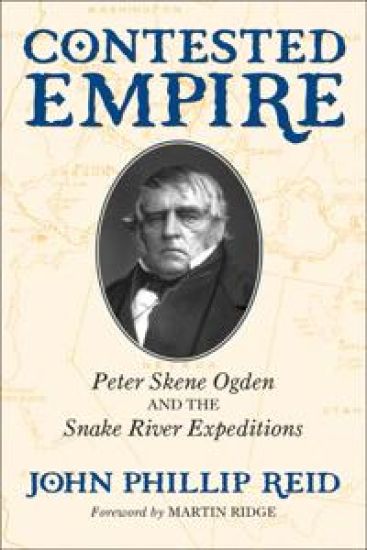
Contested Empire

Contested Empire

John Phillip Reid; Martin Ridge

University of Oklahoma Press
2002
sidottu
Do law and legal procedures exist only so long as there is an official authority to enforce them? Or do we have an unspoken sense of law and ethics?To answer these questions, John Phillip Reid's Contested Empire explores the implicit notions of law shared by American and British fur traders in the Snake River country of Idaho and surrounding areas in the early nineteenth century. Both the United States and Great Britain had claimed this region, and passions were intense. Focusing mainly on Canadian explorer and trader Peter Skene Ogden, Reid finds that both side largely avoided violence and other difficulties because they held the same definitions of property, contract, conversion, and possession.In 1824, the Hudson's Bay Company directed Ogden to decimate the furbearing animal population of the Snake River country, thus marking the region a ""fur desert."" With this mandate, Great Britain hoped to neutralize any interest American furtrappers could have in the area. Such a mandate set British and American fur men on a collision course, but Ogden and his American counterparts implicitly followed a kind of law and procedure and observed a mutual sense of property and rights even as the two sides vied for control of the fur trade.Failing to take legal culture into consideration, some previous accounts have depicted these conflicts as mere episodes of lawless frontier violence. Reid expands our understanding of the West by considering the unspoken sense of law that existed, despite the lack of any formalized authorities, in what had otherwise been considered a ""lawless"" time.
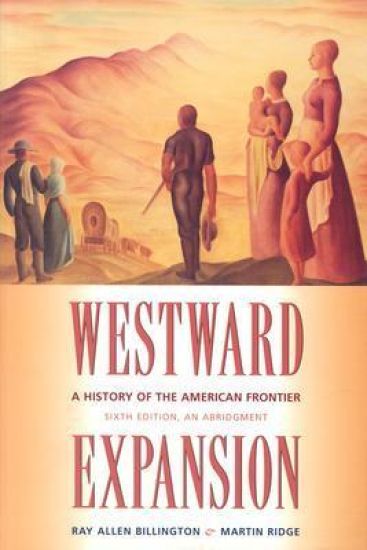
Westward Expansion

Westward Expansion

Ray Allen Billington; Henry E. Huntington; Martin Ridge

University of New Mexico Press
2001
nidottu
When it appeared in 1949, the first edition of Ray Allen Billington's 'Westward Expansion' set a new standard for scholarship in western American history, and the book's reputation among historians, scholars, and students grew through four subsequent editions. This abridgment and revision of Billington and Martin Ridge's fifth edition, with a new introduction and additional scholarship by Ridge, as well as an updated bibliography, focuses on the Trans-Mississippi frontier. Although the text sets out the remarkable story of the American frontier, which became, almost from the beginning, an archetypal narrative of the new American nation's successful expansion, the authors do not forget the social, environmental, and human cost of national expansion.