Kirjojen hintavertailu. Mukana 12 595 353 kirjaa ja 12 kauppaa.
Kirjailija
Martin Sanchez-Jankowski
Kirjat ja teokset yhdessä paikassa: 7 kirjaa, julkaisuja vuosilta 1991-2022, suosituimpien joukossa Burning Dislike. Vertaile teosten hintoja ja tarkista saatavuus suomalaisista kirjakaupoista.
Mukana myös kirjoitusasut: Martín Sánchez Jankowski
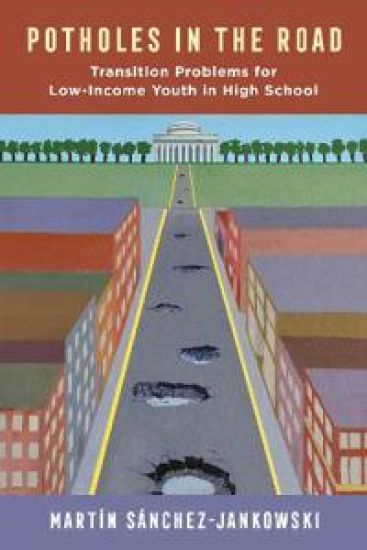
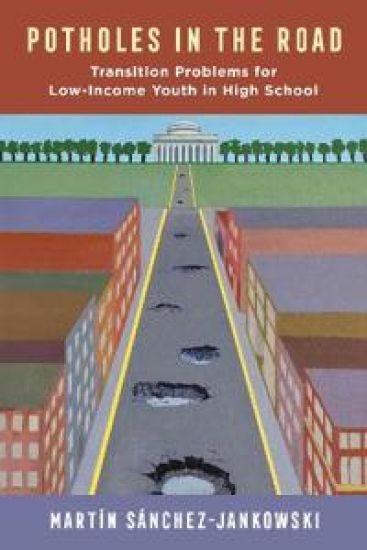
Education has been increasingly lauded as the path to achieving the American Dream, and in this book Martín Sánchez-Jankowski uses extensive ethnographic research to explore the dynamics of the interrelated barriers that low-income students must surpass in order to make transitions successfully from high school to college. With rigor and compassion, and engaging in participant observation to examine how individual students confront the education system, Potholes in the Road shows how obstacles related to issues of structure, culture, and agency make achieving the American Dream through education particularly challenging.
Education has been increasingly lauded as the path to achieving the American Dream, and in this book Martín Sánchez-Jankowski uses extensive ethnographic research to explore the dynamics of the interrelated barriers that low-income students must surpass in order to make transitions successfully from high school to college. With rigor and compassion, and engaging in participant observation to examine how individual students confront the education system, Potholes in the Road shows how obstacles related to issues of structure, culture, and agency make achieving the American Dream through education particularly challenging.
Violence in schools has more potential to involve large numbers of students, produce injuries, disrupt instructional time, and cause property damage than any other form of youth violence. Burning Dislike is the first book to use direct observation of everyday violent interactions to explore ethnic conflict in high schools. Why do young people engage in violence while in school? What is it about ethnicity that leads to fights? Through the use of two direct observational studies conducted twenty-six years apart, Martin Sanchez-Jankowski documents the process of ethnic school violence from start to finish. In addition to shedding light on what causes this type of violence and how it progresses over time, Burning Dislike provides strategic policy suggestions to address this troubling phenomenon.
Violence in schools has more potential to involve large numbers of students, produce injuries, disrupt instructional time, and cause property damage than any other form of youth violence. Burning Dislike is the first book to use direct observation of everyday violent interactions to explore ethnic conflict in high schools. Why do young people engage in violence while in school? What is it about ethnicity that leads to fights? Through the use of two direct observational studies conducted twenty-six years apart, Martin Sanchez-Jankowski documents the process of ethnic school violence from start to finish. In addition to shedding light on what causes this type of violence and how it progresses over time, Burning Dislike provides strategic policy suggestions to address this troubling phenomenon.
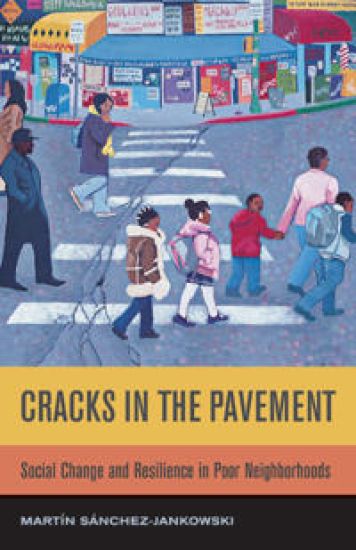
Woven throughout with rich details of everyday life, this original, on-the-ground study of poor neighbourhoods challenges much prevailing wisdom about urban poverty, shedding new light on the people, institutions, and culture in these communities. Over the course of nearly a decade, Martin Sanchez-Jankowski immersed himself in life in neighbourhoods in New York and Los Angeles to investigate how social change and social preservation transpire among the urban poor. Looking at five community mainstays - the housing project, the small grocery store, the barbershop and the beauty salon, the gang, and the local high school - he discovered how these institutions provide a sense of order, continuity, and stability in places often thought to be chaotic, disorganized, and disheartened.His provocative and ground-breaking study provides new data on urban poverty and also advances a new theory of how poor neighbourhoods function, illuminating the creativity and resilience that characterize the lives of those who experience the hardships associated with economic deprivation.
As debate rages over the widening and destructive gap between the rich and the rest of Americans, Claude Fischer and his colleagues present a comprehensive new treatment of inequality in America. They challenge arguments that expanding inequality is the natural, perhaps necessary, accompaniment of economic growth. They refute the claims of the incendiary bestseller The Bell Curve (1994) through a clear, rigorous re-analysis of the very data its authors, Richard Herrnstein and Charles Murray, used to contend that inherited differences in intelligence explain inequality. Inequality by Design offers a powerful alternative explanation, stressing that economic fortune depends more on social circumstances than on IQ, which is itself a product of society. More critical yet, patterns of inequality must be explained by looking beyond the attributes of individuals to the structure of society. Social policies set the "rules of the game" within which individual abilities and efforts matter. And recent policies have, on the whole, widened the gap between the rich and the rest of Americans since the 1970s. Not only does the wealth of individuals' parents shape their chances for a good life, so do national policies ranging from labor laws to investments in education to tax deductions. The authors explore the ways that America--the most economically unequal society in the industrialized world--unevenly distributes rewards through regulation of the market, taxes, and government spending. It attacks the myth that inequality fosters economic growth, that reducing economic inequality requires enormous welfare expenditures, and that there is little we can do to alter the extent of inequality. It also attacks the injurious myth of innate racial inequality, presenting powerful evidence that racial differences in achievement are the consequences, not the causes, of social inequality. By refusing to blame inequality on an unchangeable human nature and an inexorable market--an excuse that leads to resignation and passivity--Inequality by Design shows how we can advance policies that widen opportunity for all.
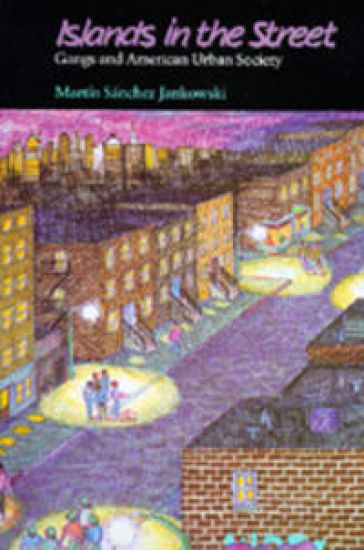
From the Introduction: The overall goal of the research project was to understand the gang phenomenon in the United States. In order to accomplish this goal, I thought it necessary to understand what was similar in the way all gangs behaved and what was idiosyncratic to certain gangs. In addition, I thought it was also necessary to understand why certain gangs grew, others declined but lingered on, and others declined and died. What follows is an explanation of the research design, the method of data gathering, the method of data analysis and presentation, and some ethical issues related to the research. Past research on gangs had for the most part focused on gangs in one section of a city, gangs in one city, or gangs of one ethnic group. In order to understand the nature of the gang as an organization and the gang phenomenon in general, I believed it was necessary to undertake a comparative study. This was the only way to understand what gangs have in common with each other and what is idiosyncratic to particular gangs.