

Kirjailija
Martin Shaw
Kirjat ja teokset yhdessä paikassa: 40 kirjaa, julkaisuja vuosilta 1991-2026, suosituimpien joukossa Heaven's Gate. Vertaile teosten hintoja ja tarkista saatavuus suomalaisista kirjakaupoista.
40 kirjaa
Kirjojen julkaisuhaarukka 1991-2026.

‘A modern-day bard.’ Madeline Miller, author of Circe and The Song of Achilles ‘Shaw has so much wisdom and knowledge about the old stories, it emanates from his pores.’ John Densmore, The Doors ‘Through feral tales and poetic exegesis, Martin Shaw makes you re-see the world, as a place of adventure and of initiation, as perfect home and as perfectly other. What a gift.’ David Keenan, author of Xstabeth ‘I can still remember the first time I heard Martin Shaw tell a story. The tale that emerged was like a living thing, bounding around, throwing itself at us there listening. I had never heard anything like it before.’ Paul Kingsnorth, Booker shortlisted author of The Wake Today, as we are confronted by not one, but many crossroads in our lives – identity, technology, love, seduction, politics – celebrated mythologist and wilderness guide Martin Shaw delivers Smoke Hole – three ancient myths that serve as metaphors for our world today. Assailed by the seductive promises of social media and shadowed by a pandemic that brought loneliness to an all-time high, Martin argues that we are losing our sense of direction, our sense of self. He invites us to use these stories to help find ‘a commons for the imagination, a place to breathe deeper, feel steadier and become acquainted with rapture.’ Smoke Hole is a passionate call to arms and an invitation to use these stories to face the complexities of contemporary life, from fake news to parenthood, climate crises, addictive technology and more. Available now as a podcast! Subscribe to Smoke Hole Sessions to hear amazing conversations between Martin Shaw and some of our most admired writers, actors, comedians, musicians and more, including Sir Mark Rylance and Tommy Tiernan (Derry Girls).

Dramatic new retellings of Celtic poetry's great lyrics and legends Cinderbiter collects tales and poems originally composed and performed centuries ago in Ireland, Scotland, and Wales, when notions of history and authorship were indistinguishable from the oral traditions of myth and storytelling. In the spirit of recasting these legends and voices for new audiences, celebrated mythologist and storyteller Martin Shaw and award-winning poet Tony Hoagland have created extraordinary new versions of these bardic lyrics, folkloric sagas, and heroes' journeys, as they have never been rendered before. In long, shaggy tales of the unlikely ascensions of previously unknown heroes such as Cinderbiter, in the shrouded origin stories of figures such as Arthur and Merlin, and in anonymous flickering lyrics of elegy, praise, and heartbreak, these poems retain at once the rapturous, supernatural imagination of the deep past layered with an austere, devout allegiance to the Christian faith. Shaw and Hoagland's collaboration summons the power within this storehouse of the Celtic mind to arrive at this rare book--distinctive, audacious, and tuned to our time and condition with a convincing resonance.

‘Fabulous.’ Dan Richards, author of Holloway ‘Terrifically strange and thrilling.’ Melissa Harrison, author of All Among the Barley 'A modern-day bard.' Madeline Miller, author of Circe This is a book of literary activism – an antidote to the shallow thinking that typifies our age. In Courting the Wild Twin, acclaimed scholar, mythologist and author of Smoke Hole and Bardskull, Martin Shaw unravels two ancient European fairy tales concerning the mysterious ‘wild twin’ located deep inside all of us. By reading these tales and becoming storytellers ourselves, he challenges us to confront modern life with purpose, courage, and creativity. Martin summons the reader to the ‘ragged edge of the dark wood’ to seek out this estranged, exiled self – the part we generally shun or ignore to conform to societal norms – and invite it back into our consciousness. If there was something we were meant to do with our few, brief years on Earth, we can be sure that our wild twin is holding the key. After all, stories are our secret weapons – and they might just save us.


This fully revised edition of Martin Shaw's classic, award-winning text proposes a way through the intellectual confusion surrounding genocide. In a thorough account of the idea's history, Shaw considers its origins and development and its relationships to concepts like ethnic cleansing and politicide. Offering a radical critique of the existing literature on genocide, he argues that what distinguishes genocide from more legitimate warfare is that the 'enemies' targeted are groups and individuals of a civilian character. He vividly illustrates his argument with a wide range of historical examples - from the Holocaust to Rwanda and Palestine to Yugoslavia - and shows how the question 'What is genocide?' matters politically whenever populations are threatened by violence. The second edition of this compelling book will continue to spark interest and vigorous debate, appealing to students and scholars across the social sciences and in international law.

Die Wise does not offer seven steps for coping with death. It does not suggest ways to make dying easier. It pours no honey to make the medicine go down. Instead, with lyrical prose, deep wisdom, and stories from his two decades of working with dying people and their families, Stephen Jenkinson places death at the center of the page and asks us to behold it in all its painful beauty. Die Wise teaches the skills of dying, skills that have to be learned in the course of living deeply and well. Die Wise is for those who will fail to live forever. Dying well, Jenkinson writes, is a right and responsibility of everyone. It is not a lifestyle option. It is a moral, political, and spiritual obligation each person owes their ancestors and their heirs. Die Wise dreams such a dream, and plots such an uprising. How we die, how we care for dying people, and how we carry our dead: this work makes our capacity for a village-mindedness, or breaks it. Table of ContentsThe Ordeal of a Managed DeathStealing Meaning from DyingThe Tyrant HopeThe Quality of LifeYes, But Not Like ThisThe WorkSo Who Are the Dying to You? Dying Facing HomeWhat Dying Asks of Us AllKidsAh, My Friend the Enemy
Globalisation is widely understood as a set of processes driven by technological, economic and cultural change. Few have successfully defined the changing character and role of politics in global change. Political institutions such as the nation-state have been seen as undermined by globalisation, or needing to respond to it. This book clarifies the tensions which global change has provoked in our understanding of politics. Politics and Globalisation suggests that globalisation is a process which is politically contested and even politically constituted. The volume presents five key intellectual and political contests in globalisation: · the extent and political significance of globalising changes in economy and society · how and how far the relations and forms of nation-state organisation are transformed · whether the given concepts and methods of political science as a discipline can be applied to global and regional politics, and whether they require radical reformulation; · the role and significance of ethical questions in global change · whether global change is constituted by, or denies, radical political agency

Genocide and International Relations lays the foundations for a new perspective on genocide in the modern world. Genocide studies have been influenced, negatively as well as positively, by the political and cultural context in which the field has developed. In particular, a narrow vision of comparative studies has been influential in which genocide is viewed mainly as a 'domestic' phenomenon of states. This book emphasizes the international context of genocide, seeking to specify more precisely the relationships between genocide and the international system. Shaw aims to re-interpret the classical European context of genocide in this frame, to provide a comprehensive international perspective on Cold War and post-Cold War genocide, and to re-evaluate the key transitions of the end of the Second World War and the end of the Cold War.

Genocide and International Relations lays the foundations for a new perspective on genocide in the modern world. Genocide studies have been influenced, negatively as well as positively, by the political and cultural context in which the field has developed. In particular, a narrow vision of comparative studies has been influential in which genocide is viewed mainly as a 'domestic' phenomenon of states. This book emphasizes the international context of genocide, seeking to specify more precisely the relationships between genocide and the international system. Shaw aims to re-interpret the classical European context of genocide in this frame, to provide a comprehensive international perspective on Cold War and post-Cold War genocide, and to re-evaluate the key transitions of the end of the Second World War and the end of the Cold War.

Mansfield Town Football Club: Images of Sport
Paul Taylor; Martin Shaw
The History Press Ltd
2007
nidottu
This collection covers 110 years of a proud club, from its birth as a pastime for the younger members of the congregation at the Bridge Street Wesleyan Chapel in Mansfield, through to the Football League, and the present day. Legendary Stags players featured in this pictorial history include Ted Harston, Ken Wagstaff, Peter Morris, Dudley Roberts, Ray Clarke, Terry Eccles, Jim McCaffrey, Dave Caldwell and Chris Greenacre. Written by two Stags historians, this superb collection includes team photos, action shots, player portraits and photographs of the Field Mill Stadium as it has been developed, and is a must-have for any Stags fans.
Narrating Gypsies, telling travellers : a study of the relational self in four life stories
Martin Shaw
Umeå Universitet
2006
nidottu
To say that Gypsy and/or Traveller and/or Romany life stories have existed on the periphery of literary studies can be considered an understatement. In this study of the relational self, Narrating Gypsies, Telling Travellers, examines the discursive and structural complexities involved in the practices of writing and speaking in the production process and narrative trajectories of the life stories of Gordon Sylvester Boswell (1970), Nan Joyce (1985), Jimmy Stockins (2000), and Jess Smith (2002 and 2003). The study emphasizes relational aspects of self-construction, which includes links to the national (hi)stories of Scotland, Ireland and England. Beginning with an eighteenth-century scaffold confession and moving through colonial narratives, the study follows a discursive path that re-emerges and reverberates in the spoken and/or written words of the life story narrators. The study problematizes the effectiveness of resistance as the historical depth and relationally produced dual-nature of domination is analysed. Above all the study positions modes of domination and self-domination within processes of forgetting forged through consensual, subtle and coercive practices related to points of view and the taken-for-granted.

In this seminal new work, Martin Shaw, a leading expert on the sociology of war, argues that the new Western way of war is in crisis. He charts the development of a new warfare, after Vietnam, through the Falklands, the Gulf, Kosovo and Afghanistan. He argues that in the Iraq (mis)adventure (of which he provides a detailed analysis) and the War on Terror, the US has consistently flouted the key rules that enabled Western states to fight these earlier wars successfully. The results are not only political failure and a disaster in Iraq, but also a loss of credibility for the very idea of Western warfare. For Shaw, the new way of war focuses on containing risks to the lives of Western soldiers in order to minimise political and electoral risk to governments. Risk is transferred to innocent civilians, whose killing is explained away as 'accidental'. Yet the idea of managing risk is fundamentally at odds with the brutal, unpredictable nature of war. Ultimately, attempts to manage, govern and rule over the risks of war produce greater risks for those in power. The New Western Way of War is a moral and political statement as well as a major contribution to sociology and international relations. It will make compelling reading not only for students and scholars of these disciplines, but for anyone concerned about Western political and military power, and the future for global justice.

In this seminal new work, Martin Shaw, a leading expert on the sociology of war, argues that the new Western way of war is in crisis. He charts the development of a new warfare, after Vietnam, through the Falklands, the Gulf, Kosovo and Afghanistan. He argues that in the Iraq (mis)adventure (of which he provides a detailed analysis) and the War on Terror, the US has consistently flouted the key rules that enabled Western states to fight these earlier wars successfully. The results are not only political failure and a disaster in Iraq, but also a loss of credibility for the very idea of Western warfare. For Shaw, the new way of war focuses on containing risks to the lives of Western soldiers in order to minimise political and electoral risk to governments. Risk is transferred to innocent civilians, whose killing is explained away as 'accidental'. Yet the idea of managing risk is fundamentally at odds with the brutal, unpredictable nature of war. Ultimately, attempts to manage, govern and rule over the risks of war produce greater risks for those in power. The New Western Way of War is a moral and political statement as well as a major contribution to sociology and international relations. It will make compelling reading not only for students and scholars of these disciplines, but for anyone concerned about Western political and military power, and the future for global justice.

This comprehensive introduction to the study of war and genocide presents a disturbing case that the potential for slaughter is deeply rooted in the political, economic, social and ideological relations of the modern world. Most accounts of war and genocide treat them as separate phenomena. This book thoroughly examines the links between these two most inhuman of human activities. It shows that the generally legitimate business of war and the monstrous crime of genocide are closely related. This is not just because genocide usually occurs in the midst of war, but because genocide is a form of war directed against civilian populations. The book shows how fine the line has been, in modern history, between ‘degenerate war’ involving the mass destruction of civilian populations, and ‘genocide’, the deliberate destruction of civilian groups as such. Written by one of the foremost sociological writers on war, War and Genocide has four main features: an original argument about the meaning and causes of mass killing in the modern world;a guide to the main intellectual resources – military, political and social theories – necessary to understand war and genocide;summaries of the main historical episodes of slaughter, from the trenches of the First World War to the Nazi Holocaust and the killing fields of Cambodia, Bosnia and Rwanda;practical guides to further reading, courses and websites. This book examines war and genocide together with their opposites, peace and justice. It looks at them from the standpoint of victims as well as perpetrators. It is an important book for anyone wanting to understand – and overcome – the continuing salience of destructive forces in modern society.

This ambitious study rewrites the terms of debate about globalization. Martin Shaw argues that the deepest meaning of globality is the growing sense of worldwide human commonality as a practical social force, arising from political struggle not technological change. The book focuses upon two new concepts: the unfinished global-democratic revolution and the global-Western state. Shaw shows how an internationalized, post-imperial Western state conglomerate, symbiotically linked to global institutions, is increasingly consolidated amidst worldwide democratic upheavals against authoritarian, quasi-imperial non-Western states. This study explores the radical implications of these concepts for social, political and international theory, through a fundamental critique of modern ‘national-international’ social thought and dominant economistic versions of global theory. Required reading for sociology and politics as well as international relations, Theory of the Global State offers a historical, theoretical and political framework for understanding state and society in the emerging global age.
This ambitious study, first published in 2000, rewrites the terms of debate about globalization. Martin Shaw argues that the deepest meaning of globality is the growing sense of worldwide human commonality as a practical social force, arising from political struggle not technological change. The book focuses upon two new concepts: the unfinished global-democratic revolution and the global-Western state. Shaw shows how an internationalized, post-imperial Western state conglomerate, symbiotically linked to global institutions, is increasingly consolidated amidst worldwide democratic upheavals against authoritarian, quasi-imperial non-Western states. This study explores the radical implications of these concepts for social, political and international theory, through a fundamental critique of modern 'national-international' social thought and dominant economistic versions of global theory. Required reading for sociology and politics as well as international relations, Theory of the Global State offers a historical, theoretical and political framework for understanding state and society in the emerging global age.
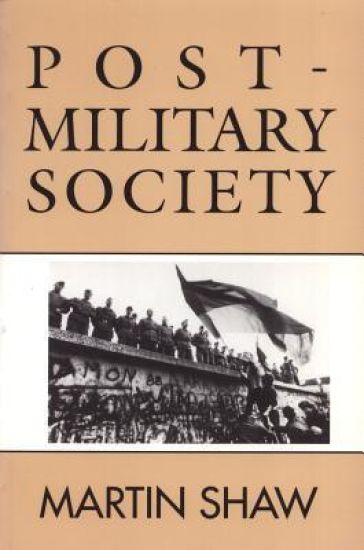
With the collapse of the Cold War following the Eastern European revolutions and the ongoing democratization of the Soviet republics, optimism about peace has transformed the international political climate. Incidents such as the Gulf War, however, have tempered this optimism and cast doubts on the prospects for demilitarization. In this book, Martin Shaw examines some of the developments that lie behind the recent momentous changes and argues that, despite the Gulf War and other regional wars, militarism is in decisive retreat.Writing from a broadly sociological perspective, Shaw examines the roles of war and military institutions in human society and the ways in which preoccupation with war has affected domestic, regional, and international politics in the twentieth century. In doing so, he asks: When does the post-war era end? How have nuclear weapons altered the perception of war by society? What is the relationship between industrialism and militarism?The author contends that, despite the militarism of some Third World countries, societies in the advanced industrial world (especially in Europe) have been undergoing a profound demilitarization. These societies have become politically insulated from war preparation, have recognized the effect of social movements on inter-state relations, and are experiencing a "revolution of rising expectations."Offering evidence of "post-military citizenship," Shaw describes the increasing resistance to military conscription throughout the Western world, the replacement of blind obedience with demand for accountability in Eastern bloc countries, and the simultaneous rise of nationalism and communitarianism among common market members. And, in light of the collapse of Stalinist militarism in Europe and the USSR, Shaw suggests some of the changes that face Soviet society.

With the collapse of the Cold War following the Eastern European revolutions and the ongoing democratization of the Soviet republics, optimism about peace has transformed the international political climate. Incidents such as the Gulf War, however, have tempered this optimism and cast doubts on the prospects for demilitarization. In this book, Martin Shaw examines some of the developments that lie behind the recent momentous changes and argues that, despite the Gulf War and other regional wars, militarism is in decisive retreat. Writing from a broadly sociological perspective, Shaw examines the roles of war and military institutions in human society and the ways in which preoccupation with war has affected domestic, regional, and international politics in the twentieth century. In doing so, he asks: When does the post-war era end? How have nuclear weapons altered the perception of war by society? What is the relationship between industrialism and militarism? The author contends that, despite the militarism of some Third World countries, societies in the advanced industrial world (especially in Europe) have been undergoing a profound demilitarization. These societies have become politically insulated from war preparation, have recognized the effect of social movements on inter-state relations, and are experiencing a "revolution of rising expectations." Offering evidence of "post-military citizenship," Shaw describes the increasing resistance to military conscription throughout the Western world, the replacement of blind obedience with demand for accountability in Eastern bloc countries, and the simultaneous rise of nationalism and communitarianism among common market members. And, in light of the collapse of Stalinist militarism in Europe and the USSR, Shaw suggests some of the changes that face Soviet society. Author note: Martin Shaw is Senior Lecturer in Sociology at Hull University, U.K., and Director of the Centre for Security Studies. He is the author of Dialectics of War: An Essay on the Social Theory of War and Peace.