

Kirjailija
Martin van Creveld
Kirjat ja teokset yhdessä paikassa: 29 kirjaa, julkaisuja vuosilta 1982-2020, suosituimpien joukossa Hitler in Hell. Vertaile teosten hintoja ja tarkista saatavuus suomalaisista kirjakaupoista.
29 kirjaa
Kirjojen julkaisuhaarukka 1982-2020.

If there is anything that distinguishes us from animals, it is our ability to understand that such a thing as the future exists and our willingness to try and look into it.But how have people through the ages gone about making predictions? What were their underlying assumptions, and what methods did they use? Have increased computer power and the newest algorithms improved our success in anticipating the future, or are we still only as good (or as bad) at it as our ancestors?From the ancients watching the flight of birds to the murky activities of Google and Facebook today, Seeing into the Future gives us an insight into the past, present and future of prediction.

Created by the bestselling SF novelist Jerry Pournelle, THERE WILL BE WAR is a landmark science fiction anthology series that combines top-notch military science fiction with factual essays by various generals and military experts on everything from High Frontier and the Strategic Defense Initiative to the aftermath of the Vietnam War. It features some of the greatest military science fiction ever published, such Orson Scott Card's "Ender's Game" in Volume I and Joel Rosenberg's "Cincinnatus" in Volume II. Many science fiction greats were featured in the original nine-volume series, which ran from 1982 to 1990, including Robert Heinlein, Arthur C. Clarke, Philip K. Dick, Gordon Dickson, Poul Anderson, John Brunner, Gregory Benford, Robert Silverberg, Harry Turtledove, and Ben Bova. 25 years after the end of the Cold War and the publication of the ninth volume, Dr. Pournelle has revived his classic science fiction series with Castalia House. THERE WILL BE WAR Volume X continues the tradition of combining top-notch military science fiction with first-rate real-world analysis by military experts. The Cold War may have ended, but as recent events everywhere from Paris to Syria have demonstrated, war has not. THERE WILL BE WAR Volume X is edited by Jerry Pournelle and features 18 stories, articles, and poems. Of particular note are "Battle Station" by Ben Bova, "Flashpoint: Titan" by Cheah Kai Wai, "What Price Humanity?" by David VanDyke, and the eerily prescient "The Man Who Wasn't There" by Gregory Benford. Volume X also includes timely essays on "War and Migration" by Martin van Creveld, "The 4GW Counterforce" by William S. Lind and LtCol Gregory A. Thiele, USMC, and "The Deadly Future of Littoral Sea Control" by CDR Phillip E. Pournelle, USN, which was awarded the 2015 Literary Award by the Surface Navy Association for "the best professional article in any publication addressing Surface Navy or surface warfare issues."

After his death in the Berlin bunker, Adolf Hitler finds himself in Hell. To his surprise, he finds it to be a place of more tedium than torment, although he is depressed to learn that he will never see his beloved German Shepherd Blondi again because all dogs go to Heaven. With nothing better to do than to pass the time, Hitler reflects upon his life in light of the post-World War II world. He is boastful, unrepentant, and absolutely determined to tell his side of the story, set the record straight, and get even with his enemies--both his contemporaries and those who abused his legend since his demise. In Hell, Adolf Hitler is finally free to tell the true story of the Nazi Party, World War II, and the final solution that eventually came to be known as the Holocaust. HITLER IN HELL is Martin van Creveld's first novel. Dr. Martin van Creveld is a military historian who is a major contributor to the literature of war. Professor Emeritus at the Hebrew University in Jerusalem, Dr. van Creveld is one of the world's leading writers on military history and strategy, with a special interest in the future of war. He is fluent in Hebrew, German, Dutch, and English, and has authored more than twenty books.

'War is the most important thing in the world', writes Martin van Creveld, one of the world's best-known experts on military history and strategy. The survival of every country, government, and individual is ultimately dependent on war - or the ability to wage it in self-defence. That is why, though it may come but once in a hundred years, it must be prepared for every day. When it is too late-when the bodies lie stiff and people weep over them-those in charge have failed in their duty. Nevertheless, in spite of the centrality of war to human history and culture, there has for long been no modern attempt to provide a replacement for the classics on war and strategy, Sun Tzu's The Art of War, dating from the 5th or 6th century BC, and Carl von Clausewitz's On War, written in the aftermath of the Napoleonic Wars. What is needed is a modern, comprehensive, easy to read and understand theory of war for the 21st century that could serve as a replacement for these classic texts. The purpose of the present book is to provide just such a theory.

Pussycats: Why the Rest Keeps Beating the West
Martin Van Creveld
Createspace Independent Publishing Platform
2016
nidottu
In the kingdom(s) of the West, something is rotten. Collectively, the countries of NATO are responsible for almost two thirds of global military spending. In terms of military technology, particularly electronics, communications and logistics, they have left the rest so far behind that it is no contest. Yet ever since the Korean War ended in 1953, almost every time they went abroad and fought non-Westerners they were defeated and had to withdraw. As happened, to cite but two recent cases, in Iraq and Afghanistan; and as may yet happen if and when Islamic terrorism spreads into Europe, as it is quite likely to do.What went wrong? How did the ferocious soldiers who, between 1492 and 1914, brought practically the entire world under their sway, become pussycats? The present study, unique of its kind, seeks to answer these questions. Chapter I, "Subduing the Young," focuses on the way Western people raise their scanty offspring. Infantilizing them, depriving them of any kind of independence, and, in the words of a recent best-seller, turning them into "excellent sheep." Chapter II, "Defanging the Troops," shows how the same is happening in the military. Chapter III, "The War on Men," examines the way in which the forces are being feminized affects, indeed infects, their fighting power. Chapter IV, "Constructing PTSD," looks at the way returning soldiers are almost obliged to develop Post Traumatic Stress Disorder. Finally, chapter V outlines the emergence of modern societies which, exalting rights and forgetting about duty, have come very close to delegitimizing war itself.The book is about 73,000 words long. It is written in jargon-less language laymen can understand. It is also thoroughly documented. Readership should include anybody with an interest in national security, and then some.


Many consider conscience to be one of the most important and fundamental qualities that distinguishes humans from animals and machines, but to this day it remains a largely unknowable concept. What is conscience? Is it a product of our biological roots, as Darwin thought, or is it a purely social invention? If so, how did it come to be? Beginning in ancient Egypt, Martin van Creveld explores conscience throughout history, ranging across numerous subjects from human rights to health. Along the way van Creveld considers the evolution of conscience in its myriad, occasionally strange and ever surprising permutations. The book examines the Old Testament, which - erroneously, it turns out - is normally seen as the fountainhead from which the Western idea of conscience sprang. As we journey through the ages, we meet Antigone, the first person on record to speak explicitly of conscience, and encounter the philosophers Zeno, Cicero and Seneca; outstanding Christian thinkers such as St Paul, Augustine, Thomas Aquinas and, above all, Martin Luther; and modern intellectual giants such as Machiavelli, Rousseau, Kant, Hegel,Nietzsche and Freud. Individual chapters are devoted to Japan, China and the Nazis, as well as the most recent discoveries in robotics and neuroscience. The book concludes by arguing that the claims of the artificial intelligence community notwithstanding, we are still no closer to understanding the nature of conscience. As one computer expert has said, we shall probably build machines able to mimic conscience before we know what it really is.
Where did wargames come from? Who participated in them, and why? How is their development related to changes in real-life warfare? Which aspects of war did they capture, which ones did they leave out, how, and why? What do they tell us about the conduct of war in the times and places where they were played? How useful are they in training and preparation for war? Why are some so much more popular than others, and how do men and women differ in their interest? Starting with the combat of David versus Goliath, passing through the gladiatorial games, tournaments, trials by battle, duels, and board games such as chess, all the way to the latest simulations and computer games, this unique book traces the subject in all its splendid richness. As it does so, it provides new and occasionally surprising insights into human nature.
Where did wargames come from? Who participated in them, and why? How is their development related to changes in real-life warfare? Which aspects of war did they capture, which ones did they leave out, how, and why? What do they tell us about the conduct of war in the times and places where they were played? How useful are they in training and preparation for war? Why are some so much more popular than others, and how do men and women differ in their interest? Starting with the combat of David versus Goliath, passing through the gladiatorial games, tournaments, trials by battle, duels, and board games such as chess, all the way to the latest simulations and computer games, this unique book traces the subject in all its splendid richness. As it does so, it provides new and occasionally surprising insights into human nature.
In this fascinating narrative history, internationally recognized military expert Martin van Creveld narrates the rise and fall of the most glamorous offensive and defensive instrument of war in military history,airpower. From the scenes of its greatest exploits during World War I and II, to present day where the advent of ballistic missiles, drones, and other computer-controlled weaponry threaten to eclipse its use all together, van Creveld recounts the successes and failures of airpower to date and shows how its triumphs are fast becoming a thing of the past.

The Land of Blood and Honey: The Rise of Modern Israel
Martin Van Creveld
St. Martins Press-3pl
2010
nidottu
The definitive one-volume history of Israel by its most distinguished historian From its Zionist beginnings at the end of the nineteenth century through the past sixty, tumultuous years, the state of Israel has been, as van Creveld argues, "the greatest success story in the entire twentieth century." In this crisp volume, he skillfully relates the improbable story of a nationless people who, given a hot and arid patch of land and coping with every imaginable obstacle, founded a country that is now the envy of surrounding states. While most studies on Israel focus on the political, this encompassing history weaves together the nation's economic, social, cultural and religious narratives while also offering diplomatic solutions to help Israel achieve peace. Without question, this is the best one-volume history of Israel and its people.

Spændende beretning om krigens hæsblæsende og uhyggelige forvandling igennem de seneste hundrede år. På én gang et fængslende stykke historie og et øjenåbnende kig dybt ind i de konflikter, der præger verden i dag. Vi følger med fra Flanderns skyttegrave og Normandiets strande - over Mellemøstens ørkenkrige, Koreakrigens kolde bjerge og Vietnams jungle - helt frem til Sydlibanon og Bagdad, hvor moderne hære kæmper en ofte forgæves kamp mod guerilla- og terrorgrupper. Vi kommer tæt på krigens hoved- og bipersoner og ind i tekniske nyskabelser som panserkøretøjer og ubåde sammen med de svedende mandskaber - og oplever både slagmarkens voldsomme forandring og den moderne krigs lidelser. Martin van Creveld er en af verdens førende militærhistorikere. Han giver et enestående overblik over et århundredes krigshistorie og en mængde detaljerige dyk ned i dramatiske enkeltbegivenheder frem til i dag. Illustreret
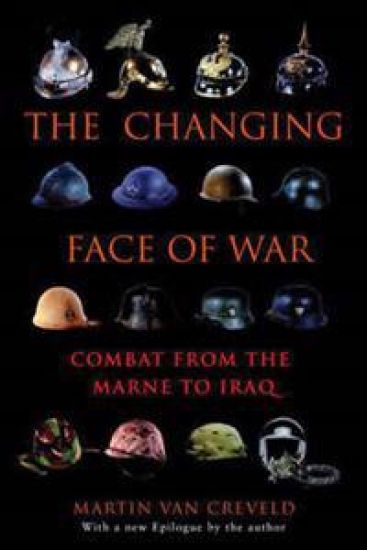
`The most important Israeli historian'- Sunday TelegraphTo understand the present, one must study the past. Where did twentieth-century warfare come from? How did it develop out of its nineteenth-century predecessor? How did it reach the point where, at one time, the forces that waged it were capable of overrunning entire continents? When did those forces peak, why did they start to decline, and how did they reach the present impasse?One of the most influential experts on military history and strategy has now written his magnum opus, an original and provocative account of the past hundred years of global conflict. The Changing Face of War is the book that reveals the path that led to the impasse in Iraq, why powerful standing armies are now helpless against ill-equipped insurgents, and how the security of sovereign nations may be maintained in the future.The Changing Face of War is a short history of war over the last century, and, in studying this period, it attempts to answer these questions. It also addresses another important question - Why are regular, state-owned, armed forces now coming second to bedraggled, ill-organized, terrorists?Martin Van Creveld is Professor of History at Hebrew University, Jerusalem, and he is one of the best-known experts on military history and strategy. He has written 17 books which have been translated into 14 languages, including Supplying War, Command in War and The Transformation of War.

Analyses the performance of two key parties engaged in fighting during World War II.