Kirjojen hintavertailu. Mukana 12 595 353 kirjaa ja 12 kauppaa.

Kirjailija

Martin Watts

Kirjat ja teokset yhdessä paikassa: 9 kirjaa, julkaisuja vuosilta 2002-2019, suosituimpien joukossa The Royal Marines and the War at Sea 1939-45. Vertaile teosten hintoja ja tarkista saatavuus suomalaisista kirjakaupoista.

9 kirjaa

Kirjojen julkaisuhaarukka 2002-2019.

Macroeconomics

Macroeconomics

William Mitchell; L. Randall Wray; Martin Watts

Red Globe Press
2019
nidottu
This groundbreaking new core textbook encourages students to take a more critical approach to the prevalent assumptions around the subject of macroeconomics, by comparing and contrasting heterodox and orthodox approaches to theory and policy. The first such textbook to develop a heterodox model from the ground up, it is based on the principles of Modern Monetary Theory (MMT) as derived from the theories of Keynes, Kalecki, Veblen, Marx, and Minsky, amongst others. The internationally-respected author team offer appropriate fiscal and monetary policy recommendations, explaining how the poor economic performance of most of the wealthy capitalist countries over recent decades could have been avoided, and delivering a well-reasoned practical and philosophical argument for the heterodox MMT approach being advocated.The book is suitable for both introductory and intermediate courses, offering a thorough overview of the basics and valuable historical context, while covering everything needed for more advanced courses. Issues are explained conceptually, with the more technical, mathematical material in chapter appendices, offering greater flexibility of use.Accompanying online resources for this title can be found at bloomsburyonlineresources.com/mitchell-macroeconomics. These resources are designed to support teaching and learning when using this textbook and are available at no extra cost.
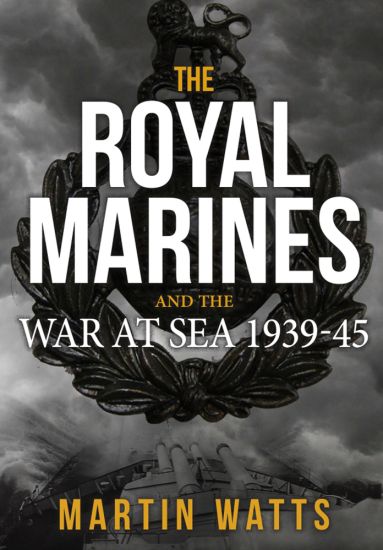
The Royal Marines and the War at Sea 1939-45

The Royal Marines and the War at Sea 1939-45

Martin Watts

Amberley Publishing
2018
nidottu
In The Royal Marines and the War at Sea 1939–45 military and naval historian Martin Watts records how marines fought at sea, their relationship with the Royal Navy, and the overall contribution they made to victory in the Second World War. Combining personal narrative with strategical, tactical and technical analysis, this book is centred on the career of the author’s great-uncle, Colour Sergeant Albert ‘Nobby’ Elliott, who saw active service in the Atlantic, Mediterranean, Arctic and Indian Oceans. He was Mentioned in Despatches at the Second Battle of Sirte, took part in Operation Torch, and was a gun layer in HMS Jamaicawhen she took part in the sinking of the German battleship Scharnhorston Boxing Day 1943. Nobby finished the war recovering Allied prisoners of war from the south-west Pacific, and was present at the surrender of Japanese forces while on board HMS Glory.
Prehistoric and Medieval Occupation at Moreton-in-Marsh and Bishop's Cleeve, Gloucestershire
Two reports are published in this volume: excavations in 2003 at Blenheim Farm, Moreton-in-Marsh (by Jonathan Hart and Mary Alexander) and excavations in 2004 at 21 Church Road, Bishop's Cleeve (by Kate Cullen and Annette Hancocks). Significant remains recorded at Moreton-in-Marsh include a Middle Bronze Age settlement of four post-built circular structures partly enclosed by a segmented ditch, and a series of medieval fields and paddocks with a possible sheepcote structure. A Middle Palaeolithic handaxe was also recovered. The Iron Age and medieval remains recorded at Bishop's Cleeve add to our understanding of past settlement in and around the village, where extensive development has resulted in a number of significant excavations in recent years.
Two Cemeteries from Bristol's Northern Suburbs

Two Cemeteries from Bristol's Northern Suburbs

Martin Watts

Cotswold Archaeological Trust Ltd
2006
nidottu
Two reports are published in this volume: excavations in 2004 at Henbury School, Bristol (by Derek Evans, Neil Holbrook and E.R. McSloy) and excavations in 2005 at Hewlett Packard, Filton, South Gloucestershire (by Kate Cullen, Neil Holbrook, Martin Watts, Anwen Caffell and Malin Holst). Excavations in 2004 at Henbury School, Bristol, revealed the truncated remains of 21 inhumation burials, making a total of 28 burials recorded at the site since 1982. Of these, 24 burials formed a dispersed cemetery of crouched inhumations, the vast majority of which were aligned north/south and lay on their left sides, with equal numbers of males and females (where sex could be determined) and only one child. Poor bone survival rendered radiocarbon dating invalid, and the cemetery is dated by only one grave good: a finger ring from the mid to late Iron Age. However, the cemetery clearly pre-dated a later rectangular enclosure of very late Iron Age (early 1st-century AD) date. Crouched inhumations from the later Iron Age are known from the region but usually from pits or scattered, so the presence of this cemetery at Henbury is significant. Inhumation cemeteries of this date are rare in Western Britain, although they may have been quite widespread. Despite the dearth of surviving features within the subsequent enclosure, the scale of the ditches suggests it was a farmstead, and environmental evidence hints at both livestock rearing and cereal cultivation. Subsequent Roman activity was clearly intensive, and included a further four burials; although difficult to interpret, it adds to a substantial amount of evidence for Roman activity to the north-west of Bristol. Excavations in 2005 at Hewlett Packard, Filton, revealed the truncated remains of 51 inhumation burials within an isolated post-Roman cemetery. All of the burials were extended and east-west aligned, and were arranged in rows and groups. The tradition of east/west-aligned graves is a common late Roman and post-Roman practice, and these were not necessarily Christian. The largest group comprised 24 burials clustered around a central grave that contained an unusual skeleton and evidence for a distinctive burial rite. Overall there were slightly more females than males (where sex could be determined) and ten children. Adult stature could only be calculated in a few cases; males were generally taller that the early medieval average, females shorter. No grave goods were recovered, but four radiocarbon dates obtained from human bone suggest a period of use sometime between the 5th and 7th centuries AD. There was no evidence for contemporary settlement within the immediate vicinity. Other post-Roman cemeteries that are culturally distinct from Anglo-Saxon influenced burials are known from the region. The absence of Anglo-Saxon cemeteries in South Gloucestershire suggests this area remained under British control in the 5th and 6th centuries. The abandonment of this cemetery may have been the result of changes in the religious landscape once the area finally came under Saxon control in the late 7th century.
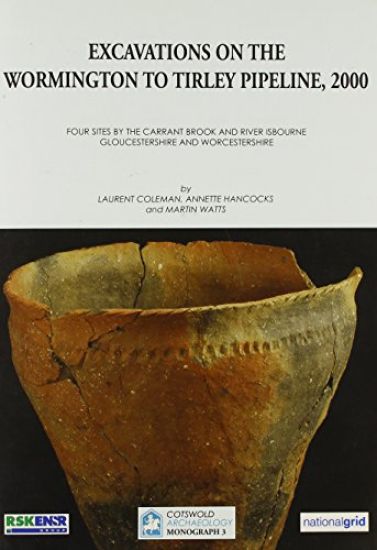
Excavations on the Wormington to Tirley Pipeline, 2000

Excavations on the Wormington to Tirley Pipeline, 2000

Laurent Coleman; Annette Hancocks; Martin Watts

Cotswold Archaeological Trust Ltd
2006
nidottu
Archaeological work in advance of pipeline construction culminated in excavation at four sites on the Gloucestershire/Worcestershire border by the Carrant Brook and River Isbourne. Geophysical and cropmark evidence has been used to enhance interpretation of the excavated 'slices' across these sites, revealing a changing pattern of human activity and density of settlement from the Mesoltihic to the medieval period. Early features, including a possible Early Neolithic flat grave, suggest that activity in the area prior to the Middle Iron Age was largely ritual in nature. From the Middle Iron Age onwards substantial settlement enclosures were constructed and remained in use to the end of the 1st century AD, when an increased level of activity saw some enlarged and others abandoned and replaced. All four sites were typical of low status Iron Age and Roman rural settlement in southern England, and all were abandoned by the 4th century AD, but with some evidence for later Anglo-Saxon and medieval activity. These excavations add considerably to our understanding of life and death in the late prehistoric and Roman periods, and of the distribution of archaeological remains of all periods, in an area of known archaeological significance close to the confluence of two major rivers: the Severn and Avon.
Watermills

Watermills

Martin Watts

Shire Publications
2006
nidottu
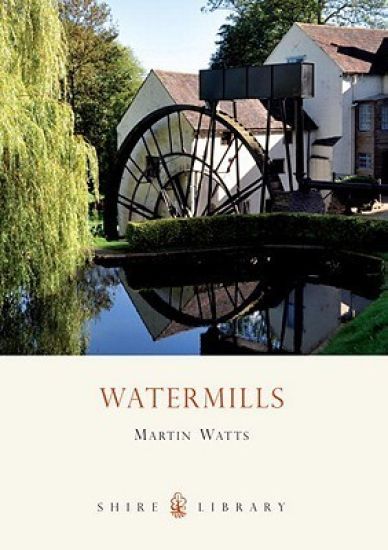
Watermills were once commonplace but, because of their domestic scale and their often picturesque waterside locations, many have now lost their waterwheels and machinery and the buildings have been converted to other uses. Water power has been used for over 2000 years, initially for grinding grain and pumping water, and later for driving processing machinery for a wide variety of industries, which had a far-reaching effect on the economic and social development of Britain from the middle of the eighteenth century. In this new book, watermill expert Martin Watts, author of the Shire book "Water and Wind Power", explains the history and development of watermills as working buildings and the importance of the wider appreciation of the built environment and the use of natural sources of power.
Windmills

Windmills

Martin Watts

Shire Publications
2006
nidottu
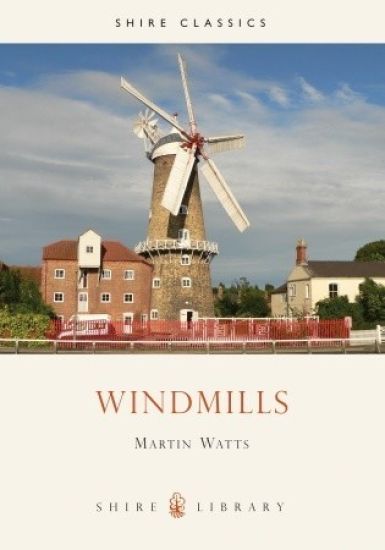
Windmills have been in existence for over 800 years and although only a fraction of those that once ground corn, pumped water and provided power for industry and agriculture, now survive. Among the most important features of these survivors are the variations in design that have come about through their different origins, the use of local materials in their construction, and the influence of millwrights and millers - those who built and worked them - in different parts of the country. Understanding these variations provides important clues to the need to protect and maintain windmills, the continued survival of which allows a fascinating insight into the historic use of renewable energy, the development of engineering, and the processing of grain, for flour and bread, as well as other essential products.
A Romano-British and Medieval Settlement Site at Stoke Road, Bishop's Cleeve, Gloucestershire
Excavations at Stoke Road, Bishop's Cleeve in 1997 revealed Romano-British agricultural enclosures, evidence of small-scale ironworking, possible structures and a small burial plQt, dating from the 3rd century AD to the last quarter of the 4th century AD. A small post-built structure, probably a temporary shelter or windbreak, was dated by a single sherd of grass-tempere~ pottery to the Saxon period between the 7th and 9th centuries AD. Medieval remains, dating ftom the 12th to 15th century, comprised a possible stock enclosure, garden plots and the rea~ of toft boundaries running perpendicular to the Stoke Road frontage. A small building, with an ~ntemal cobbled surface and an external stone-lined drain, and several waterlogged pits were r~ealed within one toft. The absence ofbiological remains from other medieval rural sites in Gloucestershire to date makes those from the waterlogged pits of particular note. Evidence of small-scale ironworking from the medieval period was also recovered.
The Archaeology of Mills and Milling

The Archaeology of Mills and Milling

Martin Watts

NPI Media Group
2002
nidottu
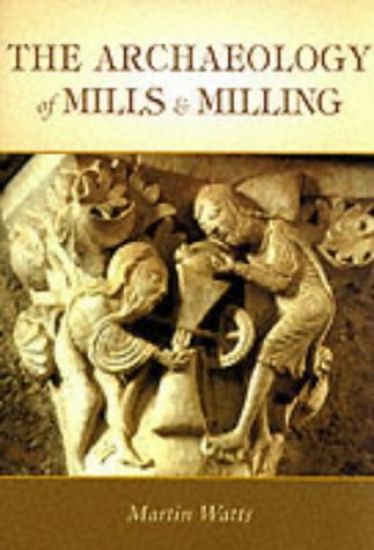
This account of grain mills and milling from prehistory, through Roman and medieval times, to the post-medieval and modern period is not just another book about windmills and watermills. Concentrating on Britain, it looks at the archaeological evidence for the early periods and at the interpretation of remains and standing mills, along with documentary evidence, for the last millennium. Individual chapters cover a brief history of the study of mills; the prehistory of milling; the introduction of mechanical milling by the Romans; the Anglo-Saxon mills; medieval mills, whether monastic, castle-based or secular; post-medieval and modern mills. The work is completed by a full glossary of technical terms and a bibliography for further reading.