Kirjailija
Martina Maria Sam
Kirjat ja teokset yhdessä paikassa: 5 kirjaa, julkaisuja vuosilta 2010-2025, suosituimpien joukossa Rudolf Steiner. Vertaile teosten hintoja ja tarkista saatavuus suomalaisista kirjakaupoista.
5 kirjaa
Kirjojen julkaisuhaarukka 2010-2025.

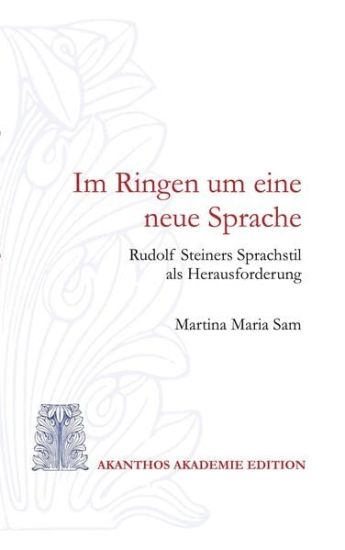
Im Ringen um eine neue Sprache: Rudolf Steiners Sprachstil als Herausforderung
Martina Maria Sam
BoD - Books on Demand
2025
nidottu
Rudolf Steiner versuchte in seinen Schriften und Vortr gen mit der teils vernutzten Sprache der Gegenwart so beweglich umzugehen, dass er den spirituellen Inhalten gerecht wurde. Zugleich musste er die Art seines Schreibens und Sprechens so gestalten, dass keine suggestive Beeinflussung stattfand, sondern Leser und H rer innerlich mitschaffend werden konnten. Wie er diese Anforderungen konkret umzusetzen suchte, wird in den einzelnen Kapiteln dieses B chleins skizziert. I - Ist Rudolf Steiners Sprache heute noch zu verstehen? II - Warum Rudolf Steiner eine neue Sprache entwickeln musste III - ber den besonderen Charakter der Vortr ge IV - Charakterisieren statt Definieren V - Das bildhafte Element in der Sprache VI - Zur Gestaltung und zum Erleben der Mantren VII - Geisteswissenschaftliche Sprache als Kunstwerk
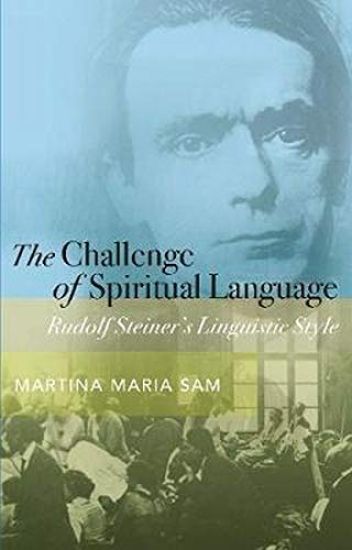
‘Development in the science of the spirit will always … involve what we may call developing the inner meaning and inner configuration of our language.’ – Rudolf Steiner Our present-day language cannot easily convey spiritual concepts. Rudolf Steiner’s search for the words and style to bring to expression a contemporary spiritual worldview epitomises this. In seven organically developing chapters, this little book presents Martina Maria Sam’s long-standing research into this subject. As a writer, editor and lecturer she observed the increasing difficulty that many people – particularly those with an academic training – have with Steiner’s style. However, this style was something that Rudolf Steiner developed very deliberately. As she states: ‘What was most important for me in this was to point out Rudolf Steiner’s intentions in his specific and often original linguistic forms and, consequently, to create the introductory basis for a deeper understanding.’ Gaining such understanding, she says, can in turn enable us to develop insight into the spirit. Sam begins by quoting some of Steiner’s contemporaries, who criticized his ‘grating’ style. She describes why he had to create new forms of expression and examines the specific character of his lectures. She considers two comprehensive stylistic principles that permeate Steiner’s entire body of work, and his special handling of the pictorial element in language. Close attention is paid to Rudolf Steiner’s construction of meditative verses and mantras, and the development of an artistic, linguistically-creative element that will only be possible in the future.