Kirjojen hintavertailu. Mukana 12 390 323 kirjaa ja 12 kauppaa.

Kirjailija

Martina Sprague

Kirjat ja teokset yhdessä paikassa: 75 kirjaa, julkaisuja vuosilta 2010-2023, suosituimpien joukossa The Bodyweight Challenge. Vertaile teosten hintoja ja tarkista saatavuus suomalaisista kirjakaupoista.

75 kirjaa

Kirjojen julkaisuhaarukka 2010-2023.

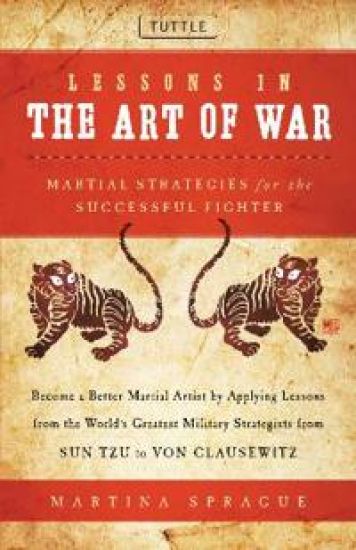
Lessons in the Art of War

Lessons in the Art of War

Martina Sprague

TUTTLE PUBLISHING
2023
sidottu
Become a Better Martial Artist by Applying Lessons from the World's Greatest Military Strategists from Sun Tzu to Von ClausewitzLessons in the Art of War investigates the theories and philosophies of the most prominent military thinkers in Asia and Europe and examines the combat roots of a variety of fighting styles from traditional Chinese, Japanese, and Korean martial arts to the fighting arts of the ancient Greeks and modern Israelis. It also demonstrates how the martial arts, whether Asian or Western in origin, were historically about brutal fighting, often to the death, and how ancient attitudes and beliefs can be adapted for success in today's MMA steel cage, judo or karate tournament as they were in ancient armies.Including an introduction to Asian and Western military thought, chapters include:The Nature and Conduct of CombatWhat is Combat?Preparing for BattleElements of Tactics and StrategyImposing Your WillDestroying the Enemy ForceStrength of the Defensive PositionFailureMoral Quality of CourageSecuring Victory
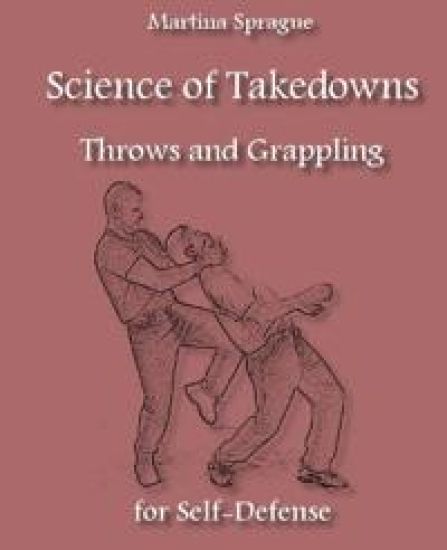
Science of Takedowns, Throws, and Grappling for Self-Defense

Science of Takedowns, Throws, and Grappling for Self-Defense

Martina Sprague

Createspace Independent Publishing Platform
2018
pokkari
The odds are, if you're attacked on the street you will have to defend yourself against a bigger and stronger assailant, or against one with a weapon. When this happens, strength alone will not be enough to stop your attacker. Science of Takedowns, Throws, and Grappling for Self-Defense addresses the concepts and mindset required to survive an encounter with a larger attacker or one armed with a weapon. Illustrated with hundreds of photos, it shows you what types of throws, takedowns, locks, and presses work on the street and teaches you how to apply concepts like timing and positioning to make your techniques more effective, how to defend against common attacks with a weapon and what you can do to use that weapon in your favor, which mistakes are the most common and how you can prevent them from weakening your defense, and much more. A takedown or throw requires the ability to disturb your opponent's balance. When first getting introduced to takedowns in martial arts class, we tend to outmuscle or force our adversary down. This frequently results in the stronger or bigger person claiming victory and makes takedown practice discouraging for the lighter weight martial artist. A successful and effortless takedown, by contrast, relies on scientific principles, primarily the location of the center of gravity. Science of Takedowns, Throws, and Grappling for Self-Defense focuses on learning to disturb an adversary's center of gravity while retaining our own; in short, how to get our opponent on the ground without going down with him. Since the principle used for shifting the center of gravity is identical regardless of a person's physical build, understanding this principle allows a smaller person to take a larger adversary down with relative ease. The book's primary aim of discussing principles rather than specific techniques makes it adaptable to almost any situation that warrants a takedown.
Norse Warfare: A Portrayal of Combat, Raids, and Plunder in the Viking Age

Norse Warfare: A Portrayal of Combat, Raids, and Plunder in the Viking Age

Martina Sprague

Createspace Independent Publishing Platform
2017
nidottu
The Vikings burst onto the scene in a flash, startling the world with the reach and extent of their raids and the overwhelming destruction they wrought. Their unconventional war strategies, which left the enemy helpless and defenseless, built their reputation as brutal, bloodthirsty barbarians with no regard for God or human life. The reckless raiding of churches and monasteries was due in large part to their ignorance of the unspoken rules of warfare, giving holy sites immunity, but it earned the Christian world's contempt. The Vikings excelled militarily because they ignored traditional Western fighting methods. They did not bother to arrange a time and place for battle, as was often customary in Europe. Deception, attacking by stealth when the enemy was not fully prepared, or striking in a seemingly undisciplined manner was by no means considered cowardly or dishonorable from the Viking perspective. The Vikings, unconcerned by, indeed oblivious to, religious prohibitions, believed that war was worth any risk because it compensated so well in terms of adventure and spoils. Even the high numbers of casualties suffered did not dissuade the Vikings from their lives as warriors.
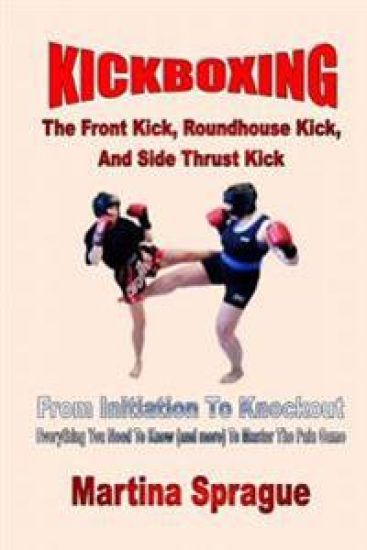
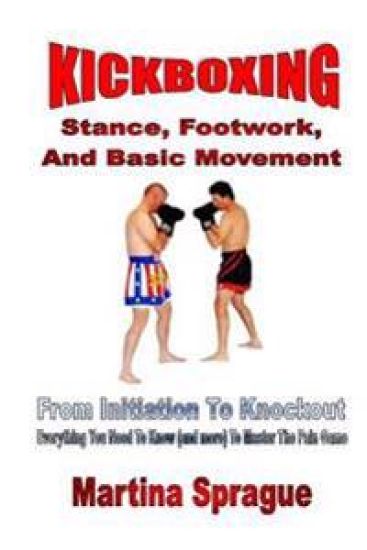
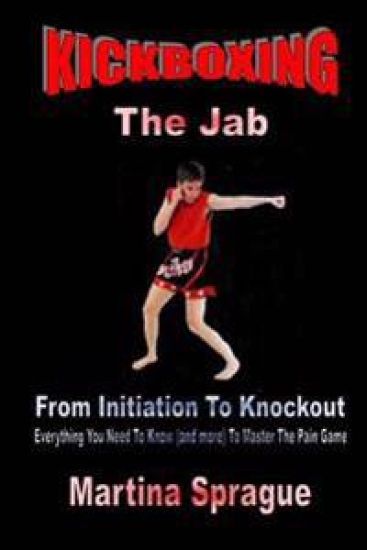
Kickboxing: Short Range Fighting: From Initiation to Knockout: Everything You Need to Know (and More) to Master the Pain Game
The fighter who controls distance controls the fight. This is true both in long and short range fighting. The difficult part about fighting at short range is moving in and achieving the superior position. Distance should generally be closed when your opponent experiences a moment of weakness. Although long arms and legs are advantageous in kickboxing, your long reach is only as good as you are at using it. You can exploit the strength of your opponent's longer reach by developing superior short range fighting techniques. When you move from the out-fighting zone to the in-fighting zone, you are very close to your opponent and many long range techniques are no longer effective. Once you get past your opponent's long range techniques, you have taken from him many of his weapons. The purpose of working your way to short range is to throw powerful short range techniques, so once there, you must make an effort to stay there until something decisive happens; until you knock out your opponent or choose to move back to long range for some other reason. Kickboxing: From Initiation To Knockout comprises a series of short books with focus on learning specific techniques and strategies for the exciting sport of competition kickboxing. With plenty of pictures, each book breaks the material down into bite-size pieces that allow you to practice to perfection. The material in this book previously appeared in Complete Kickboxing, now out of print, and is great for straight boxing, too.
Best Swordsman, Best Sword

Best Swordsman, Best Sword

Martina Sprague

Createspace Independent Publishing Platform
2017
pokkari
If you are looking for an instructional manual full of step-by-step illustrations for learning Japanese and European swordsmanship, do not buy this book This book does not tell you everything you need to know about specific techniques and does not contain hundreds of pictures detailing each step involved in attacking and defending with the sword. Nor is it a suitable reference manual for arms collectors. Like my previous books on edged weaponry, the focus is critical thinking through historical analysis. Our purpose is to pit a samurai against a medieval knight to determine who proved to be the better swordsman, who wielded the better sword, and who came from the superior culture. Our analysis will encourage you to think about the many nuances of swordsmanship in different terrains and cultural settings, and how a Japanese samurai might have acted and reacted had he crossed swords with a European medieval knight, and vice versa. It is of interest to those who have some experience practicing with the sword, but primarily to those who like to ponder the use of the sword in a historical context; neither for sports or to settle points of honor, nor for health or personal fulfillment, but on the battlefield where the objective was to kill the opponent. The intent is to discern relationships between seemingly separate histories and lead us toward a broader horizon regarding historical swordsmanship.To reach our objective, we will discuss practical sword designs and their purposes, sword dynamics and the principles of physics, and common tactics of offense and defense. As we proceed, consider that in martial arts as practiced today, many combat techniques and forms are overly ritualized and complex. In sword combat to the death, by contrast, the straightest and fewest moves possible were used to reach the objective. The tactics that the samurai and medieval knight chose were not about looking and feeling good, but about getting it done. They picked up the sword in defense of their king, master, or country, and were prepared to fight to the death.
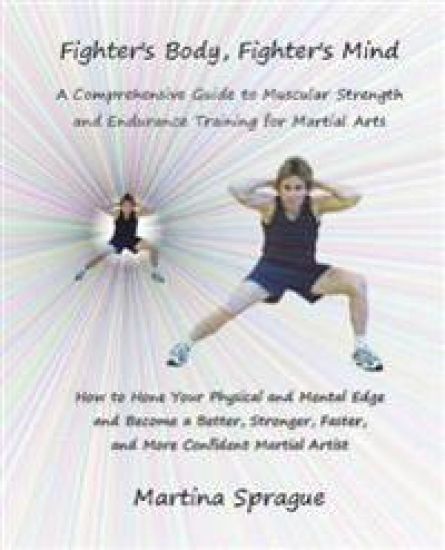
Fighter's Body, Fighter's Mind

Fighter's Body, Fighter's Mind

Martina Sprague

Createspace Independent Publishing Platform
2016
pokkari
Strength and endurance are essential attributes for any martial artist, affecting everything from how hard you punch to how high you jump. Whether your goal is to defeat an opponent in the ring or on the street, the stronger you are, the better the odds of walking away as the victor.Fighter's Body, Fighter's Mind: A Comprehensive Guide to Muscular Strength and Endurance Training for Martial Arts is a total approach to building your strength base. Learn how to use machines, free weights, bodyweight exercises, and plyometrics to build your muscles while increasing speed and flexibility. Each muscle group is discussed in detail; how it is used in martial arts and how to develop it; which exercises are most effective; and how to take advantage of anatomical strengths when striking, kicking, blocking, and grappling.Beyond muscular strength, this book looks at the concepts of cardiovascular strength endurance; the impact of flexibility on strength; how to gain a psychological edge on your opponent; and the anatomy, physics and biomechanics of power. The book also covers discussions on whether winners are born or made; what it means to be fit, and fit for what; principles of overload, progression, and specificity; cross training to prepare your body for combat; comparisons between male and female physiology; risk factors and practicing while hurt; and fluid intake and regulating the body's temperature for maximum performance.Fighter's Body, Fighter's Mind: A Comprehensive Guide to Muscular Strength and Endurance Training for Martial Arts wraps up with training plans for karate, tae-kwon-do, hapkido, judo, jiu-jitsu, aikido, muay Thai/kickboxing and mixed martial arts as well as advice on designing your own personalized strength training plan. An earlier version of this book (now out of print) was previously published under the title Strength and Power Training for Martial Arts.
We the People

We the People

Martina Sprague

Createspace Independent Publishing Platform
2015
pokkari
Democratic socialism is a branch of politics that is built on certain core values, the first of which is the development of a society that openly embraces equality and social justice through powerful action. But the pendulum's swing between Utopia and the apocalypse has always been short, and every belief in a predestined future is dangerous. To retain vitality, a democratic nation must constantly press the frontier forward, and the first responsibility of a political leader is a desire to listen to the voices of the masses.In light of the fiery political debates since President Barack Obama took executive office in the United States, particularly with respect to social issues such as universal healthcare, affordable education, and the rights of workers to organize, this brief analysis sheds light on a subject that many Americans do not understand and even fear, or at least have failed to examine in depth. It defines our understanding of democratic socialism and also discusses what it means to the ordinary citizen when we say that we want to be free of government interference. It builds on the ideology of former prime minister of Sweden, Olof Palme, who many view as the epitome of social justice, and questions the extent to which his ideas have merit and can be implemented in modern American society.The book is of interest to scholars of political ideologies and popular social movements; people with left-leaning views; and lay persons wishing to learn about the forces that stir politics in America today. The value of a society is a direct measurement of the value we place on our people, along with the recognition that everybody travels essentially the same road from birth to death. It is in this spirit that I present We the People: New Socialism for a Modern World.
Knives, Swords, and Bayonets: A World History of Edged Weapon Warfare (the Full Series)

Knives, Swords, and Bayonets: A World History of Edged Weapon Warfare (the Full Series)

Martina Sprague

Createspace Independent Publishing Platform
2015
nidottu
This book examines the history of edged weapons in Europe, Asia, Africa, the Americas, and the Middle East and surrounding areas before gunpowder increased the distance between combatants. It takes a critical look at the relationship between the soldier, his weapon, and the social and political mores of the times; examines the historical background and metallurgic science of the knife, sword, or bayonet respectively; and explores the handling characteristics and combat applications of each weapon.The book is written for those with an interest in exploring the historical beginnings of edged weaponry, how edged weapons have been used in war in different parts of the world, and the value the soldier attached to his weapon. Military, social, and political history is discussed. Although more than one-hundred photos and illustrations are represented, arms collectors or others with detailed interest in the finer points of weaponsmithing may want to look for books that are more heavily illustrated.The book comprises the full series of ten previously published shorter book on specialized edged weapons and regions, each of which can also be purchased separately: 1. Kukris and Gurkhas: Nepalese Kukri Combat Knives and the Men Who Wield Them2. Machete, Kris, and Throwing Iron: Edged Weapons of Latin America, Indonesia, and Africa3. Cold Steel: The Knife in Army, Navy, and Special Forces Operations4. Japanese Swords: The Katana and Gunto in Medieval and Modern Japanese Warfare5. Chinese Swords: The Evolution and Use of the Jian and Dao6. Yatagan, Khanda, and Jamdhar: Swords and Sabers of Persia and India7. Sickle Sword and Battle Axe: Edged Weapons of Ancient Egypt8. Gladius and Spatha: Swords and Warfare in the Classical World9. Longsword and Saber: Swords and Swordsmen of Medieval and Modern Europe10. Pike, Halberd, and Bayonet: Sharp Weapons in Near Modern and Modern Warfare
Knife Defense (Five Books in One)

Knife Defense (Five Books in One)

Martina Sprague

Createspace Independent Publishing Platform
2015
pokkari
The Knife Training Methods and Techniques for Martial Artists series gives the martial arts interested person a solid background on the importance of the knife as a combat weapon, inspires the reader about the benefits of knife training, and provides detailed instruction in how to manipulate and defend against a knife with speed, proficiency, and confidence.Almost any martial art, traditional or modern, can be adapted to knife offense and defense without changing the basic principles of the art. Since the knife is a relatively small and lightweight weapon, many of the moves and movement patterns you use in your empty-hand art are easily transferable to your knife techniques, and vice versa. The practical lessons you learn by adding knife training to your arsenal include quick reaction skills, physical and mental control, footwork and evasion tactics, distance control, and target precision. Knife training gives you a decided physical and mental edge and opens new dimensions that will deepen your understanding of the martial arts.This special volume contains books 6 through 10 of the Knife Training Methods and Techniques for Martial Artists series, with focus on defending and counterattacking with the knife (each book can also be purchased separately):6. Knife Defense Basics7. Knife Defense Dynamics8. Knife-on-Knife and Multiple Opponent Knife Defense Strategies9. Knife and Empty-Hand Defenses Compared10. Knife Training and Advanced Martial Arts ConceptsBooks 1 through 5 of the Knife Training Methods and Techniques for Martial Artists series can be found in the Knife Offense (Five Books in One) volume, and can also be purchased separately.
Understanding Carl von Clausewitz

Understanding Carl von Clausewitz

Martina Sprague

Createspace Independent Publishing Platform
2015
pokkari
Carl von Clausewitz's book, On War, has stood the test of time. Clausewitz's greatest contribution may have been in the organization and compilation of commonly known facts, rather than in the discovery of new truths with respect to combat and war. He succeeded because he analyzed a great number of elements, shedding light on old ideas, and clarifying these in a format that the masses of military men could understand. He recognized the importance of studying failure brought by uncertainty and chance. Clausewitz necessarily requires deep analysis, however, which is not possible in a book this size, intended only to highlight his most important arguments. To get the most out of Clausewitz, focus should be placed on the nature of war (a set of universal principles) as opposed to the conduct of war (the specific methods by which war is waged).There are many prisms through which one can view Clausewitz and the ways in which he expressed military theory. Rather than examining specific battles or simply giving the reader a rundown of facts for memorization, this brief book introduces the major issues that appear in On War. The intent is not to go into depth about Clausewitz, but to give the reader a good start through brevity, in the hope that it will trigger further analysis and discussion. The text includes the following topics:1. On the Theory of War2. What is War?3. Absolute versus Real War4. Defense as the Stronger Form of War5. On Strategy and Tactics in War6. On Victory and Defeat7. On the Commander and Military Genius8. Topics for Further Study and DebateThe book is suitable for history interested readers looking for thought provoking topics, but not having a lot of time; and for teachers preparing the class for critical thinking about historical events, and how they have come to affect current affairs. More books with focus on domestic and international military history will be forthcoming in this series titled, A 59-Minute Perspective.