Kirjojen hintavertailu. Mukana 12 595 353 kirjaa ja 12 kauppaa.

Kirjailija

Martyn Bond

Kirjat ja teokset yhdessä paikassa: 4 kirjaa, julkaisuja vuosilta 2011-2025, suosituimpien joukossa Hitler's Cosmopolitan Bastard. Vertaile teosten hintoja ja tarkista saatavuus suomalaisista kirjakaupoista.

4 kirjaa

Kirjojen julkaisuhaarukka 2011-2025.

Hitler's Cosmopolitan Bastard

Hitler's Cosmopolitan Bastard

Martyn Bond

MCGILL-QUEEN'S UNIVERSITY PRESS
2025
nidottu
In the turbulent period following the First World War the young Count Richard Coudenhove-Kalergi founded the Pan-European Union, offering a vision of peaceful, democratic unity for Europe, with no borders, a common currency, and a single passport. His political congresses in Vienna, Berlin, and Basel attracted thousands from the intelligentsia and the cultural elite, including Albert Einstein, Thomas Mann, and Sigmund Freud, who wanted a United States of Europe brought together by consent. The Count's commitment to this cooperative ideal infuriated Adolf Hitler, who referred to him as a "cosmopolitan bastard" in Mein Kampf.Communists and nationalists, xenophobes and populists alike hated the Count and his political mission. When the Nazis annexed Austria, the Count and his wife, the famous actress Ida Roland, narrowly escaped the Gestapo. He fled to the United States, where he helped shape American policy for postwar Europe. Coudenhove-Kalergi's profile was such that he served as the basis for the fictional resistance hero Victor Laszlo in the film Casablanca.A brilliant networker, the Count guided many European leaders, notably advising Winston Churchill before his 1946 Zürich speech on Europe. A friend to both Chancellor Konrad Adenauer and President Charles de Gaulle, Coudenhove-Kalergi was personally invited to the High Mass in Rheims Cathedral in 1961 to celebrate Franco-German reconciliation. A provocative visionary for Europe, Coudenhove-Kalergi thought and acted in terms of continents, not countries.For the Count, the United States of Europe was the answer to the challenges of communist Russia and capitalist America. Indeed, he launched his Pan-European Union thirty years before Jean Monnet set up the European Coal and Steel Community, the precursor to the European Union. Timely and captivating, Martyn Bond's biography offers an opportunity to explore a remarkable life and revisit the impetus and origins of a unified Europe.
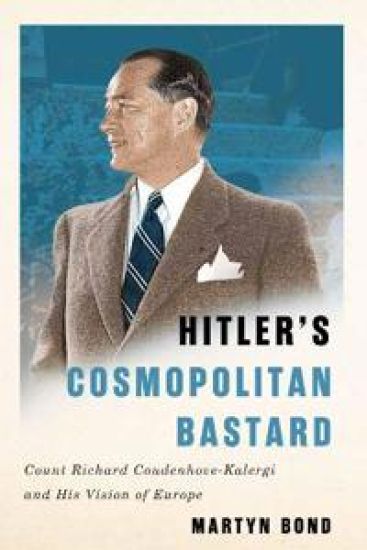
Hitler's Cosmopolitan Bastard

Hitler's Cosmopolitan Bastard

Martyn Bond

McGill-Queen's University Press
2021
sidottu
In the turbulent period following the First World War the young Count Richard Coudenhove-Kalergi founded the Pan-European Union, offering a vision of peaceful, democratic unity for Europe, with no borders, a common currency, and a single passport. His political congresses in Vienna, Berlin, and Basel attracted thousands from the intelligentsia and the cultural elite, including Albert Einstein, Thomas Mann, and Sigmund Freud, who wanted a United States of Europe brought together by consent. The Count's commitment to this cooperative ideal infuriated Adolf Hitler, who referred to him as a "cosmopolitan bastard" in Mein Kampf.Communists and nationalists, xenophobes and populists alike hated the Count and his political mission. When the Nazis annexed Austria, the Count and his wife, the famous actress Ida Roland, narrowly escaped the Gestapo. He fled to the United States, where he helped shape American policy for postwar Europe. Coudenhove-Kalergi's profile was such that he served as the basis for the fictional resistance hero Victor Laszlo in the film Casablanca.A brilliant networker, the Count guided many European leaders, notably advising Winston Churchill before his 1946 Zürich speech on Europe. A friend to both Chancellor Konrad Adenauer and President Charles de Gaulle, Coudenhove-Kalergi was personally invited to the High Mass in Rheims Cathedral in 1961 to celebrate Franco-German reconciliation. A provocative visionary for Europe, Coudenhove-Kalergi thought and acted in terms of continents, not countries.For the Count, the United States of Europe was the answer to the challenges of communist Russia and capitalist America. Indeed, he launched his Pan-European Union thirty years before Jean Monnet set up the European Coal and Steel Community, the precursor to the European Union. Timely and captivating, Martyn Bond's biography offers an opportunity to explore a remarkable life and revisit the impetus and origins of a unified Europe.
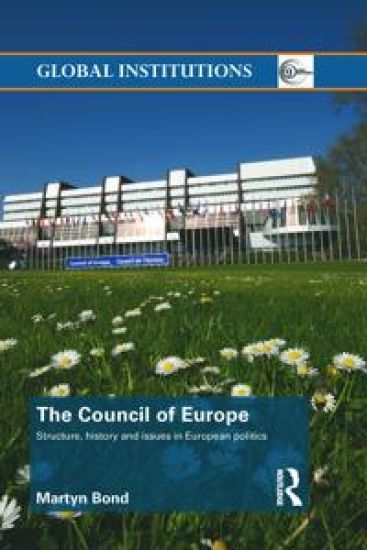
The Council of Europe

The Council of Europe

Martyn Bond

Routledge
2013
nidottu
The book provides a succinct and much needed introduction to the Council of Europe from its foundation through the early conventions on human rights and culture to its expansion into the fields of social affairs, environment and education. Founded in 1949 within a month of NATO, the Council of Europe was the hub of political debate about integrating Europe after the Second World War. After the Berlin Wall came down in 1989, it was thrust into the limelight again as the test bed where all newly liberated European states had to prove their democratic credentials. Now it is the political arena in which the closely integrating states of the European Union face the twenty European states still outside the EU. Its European Court of Human Rights hands down judgments which all member states must respect, and its monitoring activities report on conditions concerning democracy, human rights and the rule of law across the whole continent. The Council of Europe has negotiated international agreements against the death penalty, torture, corruption, cybercrime and terrorism. It works for political pluralism, media freedom and fair elections. The treatment for minorities, efficient local government and strengthening non-government organisations are part of its daily agenda. Today the states of Greater Europe come together to discuss their present and their future in the Council of EuropeProviding a wealth of factual information and describing and analysing the key debates within the organization, this work will be of great interest to students and scholars of international organizations, European politics and international relations.
The Council of Europe

The Council of Europe

Martyn Bond

Routledge
2011
sidottu
The book provides a succinct and much needed introduction to the Council of Europe from its foundation through the early conventions on human rights and culture to its expansion into the fields of social affairs, environment and education. Founded in 1949 within a month of NATO, the Council of Europe was the hub of political debate about integrating Europe after the Second World War. After the Berlin Wall came down in 1989, it was thrust into the limelight again as the test bed where all newly liberated European states had to prove their democratic credentials. Now it is the political arena in which the closely integrating states of the European Union face the twenty European states still outside the EU. Its European Court of Human Rights hands down judgments which all member states must respect, and its monitoring activities report on conditions concerning democracy, human rights and the rule of law across the whole continent. The Council of Europe has negotiated international agreements against the death penalty, torture, corruption, cybercrime and terrorism. It works for political pluralism, media freedom and fair elections. The treatment for minorities, efficient local government and strengthening non-government organisations are part of its daily agenda. Today the states of Greater Europe come together to discuss their present and their future in the Council of EuropeProviding a wealth of factual information and describing and analysing the key debates within the organization, this work will be of great interest to students and scholars of international organizations, European politics and international relations.