

Kirjailija
Martyn Rady
Kirjat ja teokset yhdessä paikassa: 10 kirjaa, julkaisuja vuosilta 2015-2024, suosituimpien joukossa Die Habsburger. Vertaile teosten hintoja ja tarkista saatavuus suomalaisista kirjakaupoista.
10 kirjaa
Kirjojen julkaisuhaarukka 2015-2024.
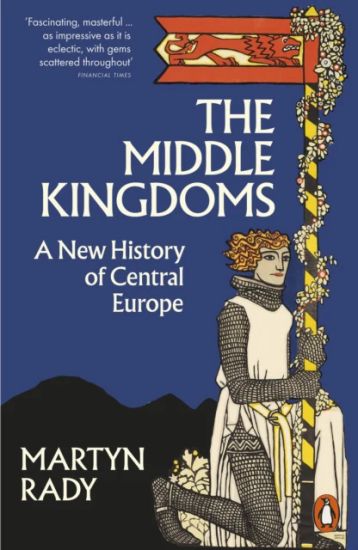
'Fascinating, masterful ... gems scattered throughout the book' Peter Frankopan, Spectator'Quirkily original but also scholarly and authoritative, to be read for pleasure and serious reflection' Telegraph*The dramatic history of Europe's shape-shifting centre, from the author of The Habsburgs*Central Europe is not just a space on a map but also a region of shared experience - of mutual borrowings, impositions and misapprehensions. From the Roman Empire onwards, it has been the target of invasion from the east. In the Middle Ages, Central Europeans cast their eastern foes as 'the dogmen'. They would later become the Turks, Swedes, Russians and Soviets, all of whom pulled the region apart and remade it according to their own vision.Competition among Europe's Middle Kingdoms yielded repeated cultural effervescences. This was the first home of the High Renaissance outside Italy, the cradle of the Reformation, the starting point of the Enlightenment, Romanticism, the symphony and modern nationalism. It was a permanent battleground too for religious and political ideas.Most recent histories of Central Europe confine themselves to the lands in between Germany and Russia, homing in on Poland, Hungary, and what is now the Czech Republic. This new history embraces the whole of Central Europe, including the German lands as well as Ukraine and Switzerland. The story of Europe's Middle Kingdoms is a reminder of Central Europe's precariousness, of its creativity and turbulence, and of the common cultural trends that make these lands so distinctive.

An essential new history of Central Europe, the contested lands so often at the heart of world history Central Europe has long been infamous as a region beset by war, a place where empires clashed and world wars began. In The Middle Kingdoms, Martyn Rady offers the definitive history of the region, demonstrating that Central Europe has always been more than merely the fault line between West and East. Even as Central European powers warred with their neighbors, the region developed its own cohesive identity and produced tremendous accomplishments in politics, society, and culture. Central Europeans launched the Reformation and Romanticism, developed the philosophy of the Renaissance and the Enlightenment, and advanced some of the twentieth century's most important artistic movements. Drawing on a lifetime of research and scholarship, The Middle Kingdoms tells as never before the captivating story of two thousand years of Central Europe's history and its enduring significance in world affairs.

"A feat of both scholarship and storytelling" (Wall Street Journal)--the definitive history of a powerful family dynasty who dominated Europe for centuries. In The Habsburgs, Martyn Rady tells the epic story of a dynasty and the world it built--and then lost--over nearly a millennium. From modest origins, the Habsburgs gained control of the Holy Roman Empire in the fifteenth century. Then, in a few decades, their possessions rapidly expanded to take in a large part of Europe, stretching from Hungary to Spain, and parts of the New World and the Far East. The Habsburgs dominated Central Europe through the First World War. Historians often depict the Habsburgs as leaders of a ramshackle empire. But Rady reveals their enduring power, driven by the belief that they were destined to rule the world as defenders of the Roman Catholic Church, guarantors of peace, and patrons of learning. This is the remarkable history of a dynasty that forever changed Europe and the world.
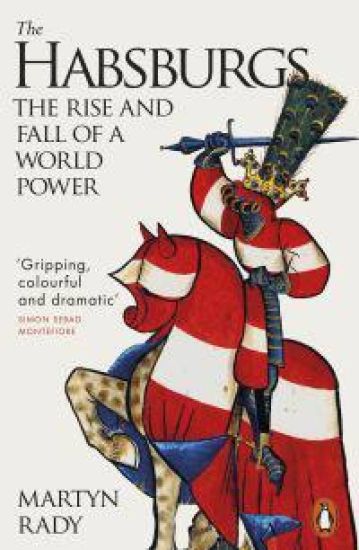
'This is probably the best book ever written on the Habsburgs in any language, certainly the best I have ever read ... Students, scholars and the general reader will never find a better guide to Habsburg history' Alan Sked, Times Literary SupplementIn The Habsburgs, Martyn Rady tells the epic story of a dynasty and the world it built - and then lost - over nearly a millennium.From modest origins, the Habsburgs grew in power to gain control of the Holy Roman Empire in the fifteenth century. Then, in just a few decades, their possessions rapidly expanded to take in a large part of Europe stretching from Hungary to Spain, and from the Far East to the New World. The family continued to dominate Central Europe until the catastrophe of the First World War.With its seemingly disorganized mass of large and small territories, its tangle of laws and privileges and its medley of languages, the Habsburg Empire has always appeared haphazard and incomplete. But here Martyn Rady shows the reasons for the family's incredible endurance, driven by the belief that they were destined to rule the world as defenders of the Roman Catholic Church, guarantors of peace and patrons of learning. The Habsburg emperors were themselves absurdly varied in their characters - from warlords to contemplatives, from clever to stupid, from idle to frenzied - but all driven by the same sense of family mission. Scattered around the world, countless buildings, institutions and works of art continue to bear witness to their overwhelming impact.The Habsburgs is the definitive history of a remarkable dynasty that, for better or worse, shaped Europe and the world.


The definitive history of a powerful family dynasty who dominated Europe for centuries -- from their rise to power to their eventual downfall.In The Habsburgs, Martyn Rady tells the epic story of a dynasty and the world it built -- and then lost -- over nearly a millennium. From modest origins, the Habsburgs gained control of the Holy Roman Empire in the fifteenth century. Then, in just a few decades, their possessions rapidly expanded to take in a large part of Europe, stretching from Hungary to Spain, and parts of the New World and the Far East. The Habsburgs continued to dominate Central Europe through the First World War. Historians often depict the Habsburgs as leaders of a ramshackle empire. But Rady reveals their enduring power, driven by the belief that they were destined to rule the world as defenders of the Roman Catholic Church, guarantors of peace, and patrons of learning. The Habsburgs is the definitive history of a remarkable dynasty that forever changed Europe and the world.

The Habsburgs are the most famous dynasty in continental Europe. From the thirteenth to the twentieth centuries, they ruled much of Central Europe, and for two centuries were also rulers of Spain. Through the Spanish connection, they acquired lands around the Mediterranean and a chunk of the New World, spreading eastwards to include the Philippines. Reaching from South-East Asia to what is now Ukraine, the Habsburg Empire was truly global. In this Very Short Introduction Martin Rady looks at the history of the Habsburgs, from their tenth-century origins in Switzerland, to the dissolution of the Habsburg Empire in 1918. He introduces the pantheon of Habsburg rulers, which included adventurers, lunatics, and at least one monarch who was so malformed that his true portrait could never be exhibited. He also discusses the lands and kingdoms that made up the Habsburg Empire, and the decisive moments that shaped their history. Dynasty, Europe, global power, and the idea of the multi-national state all converge on the history of the Habsburg Empire. ABOUT THE SERIES: The Very Short Introductions series from Oxford University Press contains hundreds of titles in almost every subject area. These pocket-sized books are the perfect way to get ahead in a new subject quickly. Our expert authors combine facts, analysis, perspective, new ideas, and enthusiasm to make interesting and challenging topics highly readable.

Charles V was elected Holy Roman Emperor and, until his death in 1558, he was to play a central role on the European political stage. The book is a clear introduction to the often confusing train of events in the first half of the sixteenth century. It looks at Charles's response to the Protestant Reformation in Germany; his efforts to retain the Netherlands under Habsburg control; his struggle with France for domination over Italy; and his attempts to check the expansion of Ottoman power in the Mediterranean.
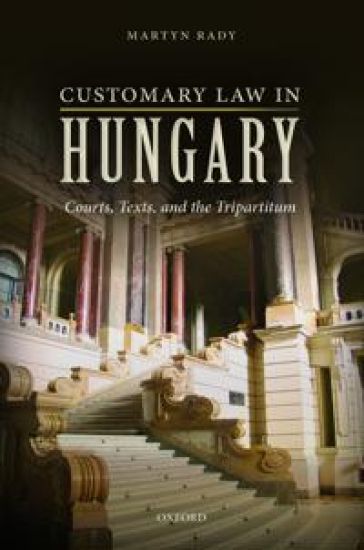
This is the first comprehensive treatment in any language of the history of customary law in Hungary, from the thirteenth to the twentieth centuries. Hungary's customary law was described by Stephen Werboczy in 1517 in the extensive law code known as the Tripartitum. As Werboczy explained, Hungarian law derived from the interplay of Romano-canonical law, statute, written instruments, and court judgments. It was also responsive, however, to popular conceptions of the law's content and application, as communicated through the lay membership of the kingdom's courts. Publication of the Tripartitum was intended to make the law more certain by fixing it in writing. Nevertheless, its text was customized by actual use, in the same way as the statute laws of the kingdom were adjusted as a consequence of court practice and of errors in their transmission. The reputation attaching to the Tripartitum and Hungary's insulation from the Roman Law Reception meant that the Tripartitum continued to retain authority until well into the nineteenth century. Attempts to replace it foundered and it was the principal text on which the courts and the schools relied, not only in Habsburg Hungary but also in Transylvania. Courts, nevertheless, continued to modify its provisions in the interests of rendering judgments that they deemed either to be right or in conformity with developing practices. Even after the establishment of a parliamentary form of government in the nineteenth century, a strong customary element attached to Hungarian law, which was amplified by the association of customary law with national traditions. The consequence was that Hungary maintained aspects of a customary law regime until the Communist period.