Kirjojen hintavertailu. Mukana 12 390 323 kirjaa ja 12 kauppaa.

Kirjailija

Marvin D Feit

Kirjat ja teokset yhdessä paikassa: 15 kirjaa, julkaisuja vuosilta 1989-2016, suosituimpien joukossa Financial Management in Human Services. Vertaile teosten hintoja ja tarkista saatavuus suomalaisista kirjakaupoista.

15 kirjaa

Kirjojen julkaisuhaarukka 1989-2016.

Capturing the Power of Diversity

Capturing the Power of Diversity

Marvin D Feit; John S Wodarski; John H Ramey; Aaron R Mann

Routledge
2016
nidottu
This stimulating book explores the many ways in which social group workers approach diversity. Capturing the Power of Diversity represents a range of interests and approaches to the challenges faced by group workers throughout the world. It illustrates the complexity, creativity, and excitement of the diversity concept and it explores how practitioners manage and adjust to diversity and use its power constructively. The contributing authors discuss macro approaches to inequality in social, political, and economic spheres and address concerns about the fit of group work into the social work curriculum and practitioners’techniques. In this guidebook, readers can discover how to emphasize social group work to enhance the education of social work students and to help professionals deal more effectively with cultural diversity.Capturing the Power of Diversity covers practice, theory building, teaching, research, and various age and ethnic groups. Chapters explore topics related to: the value and importance of using social group work practice at the macro level educational and practice dimensions of diversity the necessity of dealing with inequality the macro system and its economic and political consequences teaching and practice issues emerging from the effects of race and class on practiceAn enlightening reference and guide, Capturing the Power of Diversity is a much-needed source of information for social work practitioners and students who are interested in how diversity impacts social group work and are curious as to how to make group work more effective.

Making Business Districts Work

Making Business Districts Work

Marvin D Feit; David Feehan

Routledge Member of the Taylor and Francis Group
2006
sidottu
Unprecedented, broad coverage of downtown and community development topics from a practitioner’s viewpoint!Making Business Districts Work: Leadership and Management of Downtown, Main Street, Business District, and Community Development Organizations is the essential desk reference for downtown and community business district professionals and board members. It’s also a complete survey of all the skills and information students will need as they emerge from school and begin work in this challenging profession. The book covers nearly all aspects of leading and managing downtown and community development organizations, from planning and implementing programs and policies, to evaluating successes and failures. Charts, tables, photographs, chapter analyses, and Web resources make this vital text even more essential.An unprecedented diversity of perspectives makes this book unique, with contributions from the United States, Canada, and Portugal, and from small, medium, and large cities. Case studies provide a sharp focus on events that have something to teach every student and professional in the field. These include a look at how Lower Manhattan dealt with the crisis during and after September 11, 2001, how Los Angeles deals with an overwhelming homelessness crisis, and the 20-year planning and development of a major revitalization project in Kalamazoo, Michigan. In addition, Making Business Districts Work covers: downtown/business district managementan essential state-of-the-art overview plus examinations of developing leadership roles, vision-driven organizations, and the leadership versus management debate organizationstructures, governance, human resources, staffing structure, finance, and fundraising operationsstrategic planning, diversity, and advocacy marketing and communicatingwith downtown, shopping, and electronic applications management of a downtown districtsafety and cleanliness, urban design, hospitality, transportation, parking, social atmosphere, and hiring consultants development secrets for downtown districtseconomic and residential development, attracting the right retailers and a solid retail base, regional attractions, and political considerations international perspectives from Canada and Portugal a look at how the field has evolvedand where it is likely to go in the near futureMaking Business Districts Work presents step-by-step instructions for performing a host of essential tasks in the business district revitalization field, but more than that, it clearly shows how America’s most experienced and successful downtown executives handle these responsibilities. Whether you are involved in practice or academia in urban planning, public administration, social work, architecture, international studies, public policy, political science, or business administration, Making Business Districts Work provides tools, skills, and insights to help youor your studentssucceed.
Making Business Districts Work

Making Business Districts Work

Marvin D Feit; David Feehan

Routledge Member of the Taylor and Francis Group
2006
nidottu
Unprecedented, broad coverage of downtown and community development topics from a practitioner’s viewpoint!Making Business Districts Work: Leadership and Management of Downtown, Main Street, Business District, and Community Development Organizations is the essential desk reference for downtown and community business district professionals and board members. It’s also a complete survey of all the skills and information students will need as they emerge from school and begin work in this challenging profession. The book covers nearly all aspects of leading and managing downtown and community development organizations, from planning and implementing programs and policies, to evaluating successes and failures. Charts, tables, photographs, chapter analyses, and Web resources make this vital text even more essential.An unprecedented diversity of perspectives makes this book unique, with contributions from the United States, Canada, and Portugal, and from small, medium, and large cities. Case studies provide a sharp focus on events that have something to teach every student and professional in the field. These include a look at how Lower Manhattan dealt with the crisis during and after September 11, 2001, how Los Angeles deals with an overwhelming homelessness crisis, and the 20-year planning and development of a major revitalization project in Kalamazoo, Michigan. In addition, Making Business Districts Work covers: downtown/business district managementan essential state-of-the-art overview plus examinations of developing leadership roles, vision-driven organizations, and the leadership versus management debate organizationstructures, governance, human resources, staffing structure, finance, and fundraising operationsstrategic planning, diversity, and advocacy marketing and communicatingwith downtown, shopping, and electronic applications management of a downtown districtsafety and cleanliness, urban design, hospitality, transportation, parking, social atmosphere, and hiring consultants development secrets for downtown districtseconomic and residential development, attracting the right retailers and a solid retail base, regional attractions, and political considerations international perspectives from Canada and Portugal a look at how the field has evolvedand where it is likely to go in the near futureMaking Business Districts Work presents step-by-step instructions for performing a host of essential tasks in the business district revitalization field, but more than that, it clearly shows how America’s most experienced and successful downtown executives handle these responsibilities. Whether you are involved in practice or academia in urban planning, public administration, social work, architecture, international studies, public policy, political science, or business administration, Making Business Districts Work provides tools, skills, and insights to help youor your studentssucceed.
The Conundrum of Human Behavior in the Social Environment

The Conundrum of Human Behavior in the Social Environment

Marvin D Feit; John S Wodarski

Routledge Member of the Taylor and Francis Group
2005
sidottu
Get the new educational standard under the Council of Social Work Education for human behavior and social environment studies!Critical thinking skills are an indispensable component of any educational program, but especially the HBSE curriculum. The Conundrum of Human Behavior in the Social Environment shows ways to spark those needed skills while providing a comprehensive framework on the social environment impact and human behavior theory crucial for graduate and undergraduate courses. Macro, mezzo, and micro forces are examined in depth, along with considerations for redesigning the content in HBSE curricula in accordance with current educational standards. Noted authorities detail evidence-based practices and present extensive referencing along with offering Web site listings and syllabi for coursework.The Conundrum of Human Behavior in the Social Environment presents theories of behavioral change that can be facilitated by practitioners to eliminate or modify undesirable behaviors, as well as provides a framework useful for understanding how a macro-system consisting of four societal forces (social justice, social problems, social policy, and the political economy) works to influence a micro-system of community, organizational, and group dynamic. Four types of HB and SE course outlines are presented and discussed with an eye toward strengthening foundation courses, along with an analysis of fourteen frequently used Human Behavior and Social Environment textbooks based on the Council on Social Work Education’s 2001 guidelines that also offers a framework for integrating content. The application of the transtheoretical model of behavioral change to the welfare to work transition with public housing residents is presented using both quantitative and qualitative data that has been closely analyzed.The Conundrum of Human Behavior in the Social Environment provides: extensive references clear and helpful figures and tables of data numerous appendices of useful detailed outlines and descriptions of textbooks lists of Web sites a syllabi and course sequence description for micro/macro/mezzo issues The Conundrum of Human Behavior in the Social Environment is valuable reading for students, educators, social workers, health professionals, psychologists, sociologists, and other human services professionals interested in staying on top of the shifts of focus in human behavior and social environmental curriculums.
The Conundrum of Human Behavior in the Social Environment

The Conundrum of Human Behavior in the Social Environment

Marvin D Feit; John S Wodarski

Routledge Member of the Taylor and Francis Group
2005
nidottu
Get the new educational standard under the Council of Social Work Education for human behavior and social environment studies!Critical thinking skills are an indispensable component of any educational program, but especially the HBSE curriculum. The Conundrum of Human Behavior in the Social Environment shows ways to spark those needed skills while providing a comprehensive framework on the social environment impact and human behavior theory crucial for graduate and undergraduate courses. Macro, mezzo, and micro forces are examined in depth, along with considerations for redesigning the content in HBSE curricula in accordance with current educational standards. Noted authorities detail evidence-based practices and present extensive referencing along with offering Web site listings and syllabi for coursework.The Conundrum of Human Behavior in the Social Environment presents theories of behavioral change that can be facilitated by practitioners to eliminate or modify undesirable behaviors, as well as provides a framework useful for understanding how a macro-system consisting of four societal forces (social justice, social problems, social policy, and the political economy) works to influence a micro-system of community, organizational, and group dynamic. Four types of HB and SE course outlines are presented and discussed with an eye toward strengthening foundation courses, along with an analysis of fourteen frequently used Human Behavior and Social Environment textbooks based on the Council on Social Work Education’s 2001 guidelines that also offers a framework for integrating content. The application of the transtheoretical model of behavioral change to the welfare to work transition with public housing residents is presented using both quantitative and qualitative data that has been closely analyzed.The Conundrum of Human Behavior in the Social Environment provides: extensive references clear and helpful figures and tables of data numerous appendices of useful detailed outlines and descriptions of textbooks lists of Web sites a syllabi and course sequence description for micro/macro/mezzo issues The Conundrum of Human Behavior in the Social Environment is valuable reading for students, educators, social workers, health professionals, psychologists, sociologists, and other human services professionals interested in staying on top of the shifts of focus in human behavior and social environmental curriculums.
The Politics of Youth, Sex, and Health Care in American Schools

The Politics of Youth, Sex, and Health Care in American Schools

Marvin D Feit; Barbara A Rienzo

Routledge Member of the Taylor and Francis Group
2002
sidottu
Examine school-based health clinics and the political considerations and strategies that can help them succeed!The Politics of Youth, Sex, and Health Care in American Schools reveals the history and political dynamics involved in building and sustaining an important innovation in the way health care services are delivered to America’s youth: the school-based health clinic. These clinics provide vital health services--including crucial yet controversial reproductive services--to youth. In addition to analyzing the nature and extent of the political barriers facing school-based clinics, this vital book describes the strategies that have proven most effective in overcoming them.This essential book begins with an overview of the existing literature on the history and provision of health care for youth. Then it presents the results of a study that utilized a two-pronged approach: a nationwide survey of clinic administrators (supplemented with aggregate data) and intensive case studies of five representative locales. By combining the quantitative data from the national survey with the more qualitative information gleaned from the case study field work, The Politics of Youth, Sex, and Health Care in American Schools can deliver broad yet accurate generalizations as well as detailed interpretation of the authors’findings.This informative and insightful volume explores: the ways that school-based health clinics (SBHCs) have evolved, confronted opposition, and grown day-to-day issues that SBHCs face, including inadequate funding, lack of parental involvement, unsupportive teachers and schools, staffing/training issues, cultural issues, and more sources of opposition to SBHCs, including fundamentalist Protestants, Black Evangelicals, Catholics, and conservative parent groups ways to establish successful school health care reforms issues and recommendations for SBHCs in the futureTo date, there have been very few empirical studies of the politics of school health or of the provision of sexuality-related health services for youth. The greatest depth and breadth of information you can find on the subject is here, in The Politics of Youth, Sex, and Health Care in American Schools.
The Politics of Youth, Sex, and Health Care in American Schools

The Politics of Youth, Sex, and Health Care in American Schools

Marvin D Feit; Barbara A Rienzo

Routledge Member of the Taylor and Francis Group
2002
nidottu
Examine school-based health clinics and the political considerations and strategies that can help them succeed!The Politics of Youth, Sex, and Health Care in American Schools reveals the history and political dynamics involved in building and sustaining an important innovation in the way health care services are delivered to America’s youth: the school-based health clinic. These clinics provide vital health services--including crucial yet controversial reproductive services--to youth. In addition to analyzing the nature and extent of the political barriers facing school-based clinics, this vital book describes the strategies that have proven most effective in overcoming them.This essential book begins with an overview of the existing literature on the history and provision of health care for youth. Then it presents the results of a study that utilized a two-pronged approach: a nationwide survey of clinic administrators (supplemented with aggregate data) and intensive case studies of five representative locales. By combining the quantitative data from the national survey with the more qualitative information gleaned from the case study field work, The Politics of Youth, Sex, and Health Care in American Schools can deliver broad yet accurate generalizations as well as detailed interpretation of the authors’findings.This informative and insightful volume explores: the ways that school-based health clinics (SBHCs) have evolved, confronted opposition, and grown day-to-day issues that SBHCs face, including inadequate funding, lack of parental involvement, unsupportive teachers and schools, staffing/training issues, cultural issues, and more sources of opposition to SBHCs, including fundamentalist Protestants, Black Evangelicals, Catholics, and conservative parent groups ways to establish successful school health care reforms issues and recommendations for SBHCs in the futureTo date, there have been very few empirical studies of the politics of school health or of the provision of sexuality-related health services for youth. The greatest depth and breadth of information you can find on the subject is here, in The Politics of Youth, Sex, and Health Care in American Schools.
Financial Management in Human Services

Financial Management in Human Services

Marvin D Feit; Peter K Li

Routledge Member of the Taylor and Francis Group
1998
sidottu
Rather than treating financial management as an independent administrative practice, Financial Management in Human Services provides students and social service administrators with a conceptual framework in which financial management is the major responsibility of an administration, not just a separate practice. This text describes how the integration of administrative practice with fiscal responsibility and accountability will help you plan better programs, account for all fiscal transactions, and coordinate and evaluate services more effectively.Containing many different approaches on how to determine costs, obtain information, and collect data, this text will help you clearly evaluate your organization’s progress and determine if your program goals are being reached. Financial Management in Human Services also discusses other topics related to efficient management, including:applying financial management techniques to the areas of program planning, service monitoring, estimating service and unit costs, and setting future service priorities in order to make better business decisions utilizing the information generated from the Financial Management System (FMS) to improve administrative functions, such as forecasting and goal determination, activity flow and service provision monitoring, and service planning according to program policy examining the importance of the four administrative subsystems-- budgeting and accounting, service coordination, program planning, and program evaluation choosing a FMS with consideration to certain factors, such as availability of information and identifying informational needs of the administration listing of reactive and proactive types of financial reports that help administrators evaluate the costs of services provided and identify problems in balancing the fiscal budget using methods such as a line item analysis to accurately compute the costs of staff involvement in a programThis organized, straightforward text will help you evaluate all costs-- from salaries, travel time, and office supplies to direct costs to make your office more organized and productive. Complete with questions and answers about starting and maintaining a FMS, Financial Management in Human Services will enable you to manage finances more efficiently, making it easier for you to reach and set goals that better serve your clients.
Financial Management in Human Services

Financial Management in Human Services

Marvin D Feit; Peter K Li

Routledge Member of the Taylor and Francis Group
1998
nidottu
Rather than treating financial management as an independent administrative practice, Financial Management in Human Services provides students and social service administrators with a conceptual framework in which financial management is the major responsibility of an administration, not just a separate practice. This text describes how the integration of administrative practice with fiscal responsibility and accountability will help you plan better programs, account for all fiscal transactions, and coordinate and evaluate services more effectively.Containing many different approaches on how to determine costs, obtain information, and collect data, this text will help you clearly evaluate your organization’s progress and determine if your program goals are being reached. Financial Management in Human Services also discusses other topics related to efficient management, including:applying financial management techniques to the areas of program planning, service monitoring, estimating service and unit costs, and setting future service priorities in order to make better business decisions utilizing the information generated from the Financial Management System (FMS) to improve administrative functions, such as forecasting and goal determination, activity flow and service provision monitoring, and service planning according to program policy examining the importance of the four administrative subsystems-- budgeting and accounting, service coordination, program planning, and program evaluation choosing a FMS with consideration to certain factors, such as availability of information and identifying informational needs of the administration listing of reactive and proactive types of financial reports that help administrators evaluate the costs of services provided and identify problems in balancing the fiscal budget using methods such as a line item analysis to accurately compute the costs of staff involvement in a programThis organized, straightforward text will help you evaluate all costs-- from salaries, travel time, and office supplies to direct costs to make your office more organized and productive. Complete with questions and answers about starting and maintaining a FMS, Financial Management in Human Services will enable you to manage finances more efficiently, making it easier for you to reach and set goals that better serve your clients.
Capturing the Power of Diversity

Capturing the Power of Diversity

Marvin D Feit; John S Wodarski; John H Ramey; Aaron R Mann

Routledge Member of the Taylor and Francis Group
1995
sidottu
This stimulating book explores the many ways in which social group workers approach diversity. Capturing the Power of Diversity represents a range of interests and approaches to the challenges faced by group workers throughout the world. It illustrates the complexity, creativity, and excitement of the diversity concept and it explores how practitioners manage and adjust to diversity and use its power constructively. The contributing authors discuss macro approaches to inequality in social, political, and economic spheres and address concerns about the fit of group work into the social work curriculum and practitioners’techniques. In this guidebook, readers can discover how to emphasize social group work to enhance the education of social work students and to help professionals deal more effectively with cultural diversity.Capturing the Power of Diversity covers practice, theory building, teaching, research, and various age and ethnic groups. Chapters explore topics related to: the value and importance of using social group work practice at the macro level educational and practice dimensions of diversity the necessity of dealing with inequality the macro system and its economic and political consequences teaching and practice issues emerging from the effects of race and class on practiceAn enlightening reference and guide, Capturing the Power of Diversity is a much-needed source of information for social work practitioners and students who are interested in how diversity impacts social group work and are curious as to how to make group work more effective.

Evaluation of Employee Assistance Programs

Evaluation of Employee Assistance Programs

Marvin D Feit; Michael J Holosko

Routledge Member of the Taylor and Francis Group
1989
sidottu
This timely book brings together for the first time critical information about the evaluation of employee assistance programs. Although EAPs have existed for over 40 years, the assessment of their value has been fragmented. Contributors to this new volume--blending practical and academic insights--document concerns, address the newer issues and developments in the field of EAPs, and present case examples of actual evaluations. The range and diversity of topics reflect EAPs in transition, their growth patterns, evaluation needs, and evaluation methods. Overall, this important volume emphasizes that successful evaluations depend not only on methodological expertise but a consideration of much broader salient and societal issues.
Changing Welfare Services

Changing Welfare Services

Michael J Austin; Marvin D Feit

Routledge Member of the Taylor and Francis Group
2004
sidottu
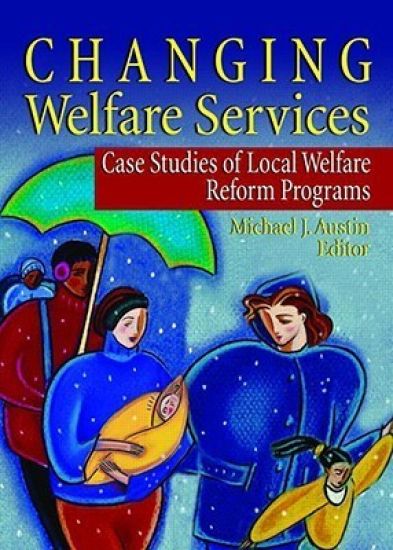
Contains field-tested techniques to enhance the effectiveness of your local social services! Changing Welfare Services: Case Studies of Local Welfare Reform Programs describes promising programs and practices that have emerged in the United States since the enactment of the Personal Responsibility and Work Opportunity Reconciliation Act of 1996. Using case studies, this reference provides important lessons that will help social service directors and staff to develop strategies that will improve local welfare-to-work services. This casebook focuses on the agencies rather than the welfare population, emphasizing the guiding values of these agencies and the lessons they learned. Changing Welfare Services explores new approaches to service delivery, with emphasis on removing barriers to work force participation and promoting self-sufficiency through support services. The case studies involve programs focused on working with the community by developing partnerships with local organizations to provide better services. This text emphasizes the organizational changessuch as the development of new training programs, merging employment and social service agencies, and restructuring agency programs to foster collaboration between child welfare services and welfare-to-work programsthat were successful strategies used to implement welfare reform. In Changing Welfare Services, you will learn about: the Connections Shuttle and the Guaranteed Ride Home Programtransportation services for welfare-to-work participants the Exempt Provider Training Program trains Temporary Assistance to Needy Families (TANF) participants and others to launch and improve their own high-quality child care businesses co-location of support servicessituating mental health and substance abuse services near the social services agency so TANF participants can make a single visit for all necessary services the Family Loan Programhelps low-income families deal with large or unexpected one-time expenses the JobKeeper Hotlineprovides round-the-clock counseling, crisis intervention, and referral services to help participants stay employed and much more! Changing Welfare Services shows how these agencies discovered new ways to serve the needs of low-income residents and offers you a variety of inventive techniques for improving your own agency’s support for welfare recipients. Enhanced with tables, figures, and appendixes, this practitioner-oriented casebook is a much-needed complement to the many quantitative studies of the welfare population. This book is a valuable resource for state and local human service administrators and staff, policymakers, and university faculty and students of public policy.
Changing Welfare Services

Changing Welfare Services

Michael J Austin; Marvin D Feit

Routledge Member of the Taylor and Francis Group
2004
nidottu
Contains field-tested techniques to enhance the effectiveness of your local social services! Changing Welfare Services: Case Studies of Local Welfare Reform Programs describes promising programs and practices that have emerged in the United States since the enactment of the Personal Responsibility and Work Opportunity Reconciliation Act of 1996. Using case studies, this reference provides important lessons that will help social service directors and staff to develop strategies that will improve local welfare-to-work services. This casebook focuses on the agencies rather than the welfare population, emphasizing the guiding values of these agencies and the lessons they learned. Changing Welfare Services explores new approaches to service delivery, with emphasis on removing barriers to work force participation and promoting self-sufficiency through support services. The case studies involve programs focused on working with the community by developing partnerships with local organizations to provide better services. This text emphasizes the organizational changessuch as the development of new training programs, merging employment and social service agencies, and restructuring agency programs to foster collaboration between child welfare services and welfare-to-work programsthat were successful strategies used to implement welfare reform. In Changing Welfare Services, you will learn about: the Connections Shuttle and the Guaranteed Ride Home Programtransportation services for welfare-to-work participants the Exempt Provider Training Program trains Temporary Assistance to Needy Families (TANF) participants and others to launch and improve their own high-quality child care businesses co-location of support servicessituating mental health and substance abuse services near the social services agency so TANF participants can make a single visit for all necessary services the Family Loan Programhelps low-income families deal with large or unexpected one-time expenses the JobKeeper Hotlineprovides round-the-clock counseling, crisis intervention, and referral services to help participants stay employed and much more! Changing Welfare Services shows how these agencies discovered new ways to serve the needs of low-income residents and offers you a variety of inventive techniques for improving your own agency’s support for welfare recipients. Enhanced with tables, figures, and appendixes, this practitioner-oriented casebook is a much-needed complement to the many quantitative studies of the welfare population. This book is a valuable resource for state and local human service administrators and staff, policymakers, and university faculty and students of public policy.
Adolescent Substance Abuse

Adolescent Substance Abuse

John S Wodarski; Marvin D Feit

Routledge Member of the Taylor and Francis Group
1995
nidottu
Here is a comprehensive review of adolescent substance abuse issues and an expansive, empirically based curriculum for school-based programs to teach adolescents about the dangers of drugs and alcohol. The abuse of alcohol and other drugs among young people is a problem of alarming scope and gravity. Adolescent Substance Abuse explores the multiple forces which impact adolescents and can push them toward drug and alcohol abuse.Adolescent Substance Abuse proposes means by which to effect macro-level change in societal norms and values regarding substance abuse. The authors describes in detail an effective means of teaching adolescents about drugs and alcohol using an empirically based teaching method called Teams-Games-Tournaments (TGT). TGT was developed through extensive research on games used as teaching devices. It uses small groups as classroom work units and capitalizes on peer influence by using peers as teachers and supporters. The book explains an effective curriculum which utilizes the TGT approach and provides a program for parents. The curriculum is unique in that it is anchored in empirical data and delivered via adolescent peer groups. Adolescent Substance Abuse addresses other issues pertinent to the reduction of adolescent substance abuse by exploring subsystems of change, including school and peer group environments, home and family, the media, community movements, and business and industry. The book is a great source of innovative ideas for beginning and expert counselors, social workers, mental health professionals, school psychologists, and others who want to prevent adolescent abuse of drugs and alcohol.
Adolescent Substance Abuse

Adolescent Substance Abuse

John S Wodarski; Marvin D Feit

Routledge Member of the Taylor and Francis Group
1995
sidottu
Here is a comprehensive review of adolescent substance abuse issues and an expansive, empirically based curriculum for school-based programs to teach adolescents about the dangers of drugs and alcohol. The abuse of alcohol and other drugs among young people is a problem of alarming scope and gravity. Adolescent Substance Abuse explores the multiple forces which impact adolescents and can push them toward drug and alcohol abuse.Adolescent Substance Abuse proposes means by which to effect macro-level change in societal norms and values regarding substance abuse. The authors describes in detail an effective means of teaching adolescents about drugs and alcohol using an empirically based teaching method called Teams-Games-Tournaments (TGT). TGT was developed through extensive research on games used as teaching devices. It uses small groups as classroom work units and capitalizes on peer influence by using peers as teachers and supporters. The book explains an effective curriculum which utilizes the TGT approach and provides a program for parents. The curriculum is unique in that it is anchored in empirical data and delivered via adolescent peer groups. Adolescent Substance Abuse addresses other issues pertinent to the reduction of adolescent substance abuse by exploring subsystems of change, including school and peer group environments, home and family, the media, community movements, and business and industry. The book is a great source of innovative ideas for beginning and expert counselors, social workers, mental health professionals, school psychologists, and others who want to prevent adolescent abuse of drugs and alcohol.