Kirjojen hintavertailu. Mukana 12 390 323 kirjaa ja 12 kauppaa.

Kirjailija

Mary Ann Doane

Kirjat ja teokset yhdessä paikassa: 5 kirjaa, julkaisuja vuosilta 1991-2022, suosituimpien joukossa Bigger Than Life. Vertaile teosten hintoja ja tarkista saatavuus suomalaisista kirjakaupoista.

5 kirjaa

Kirjojen julkaisuhaarukka 1991-2022.

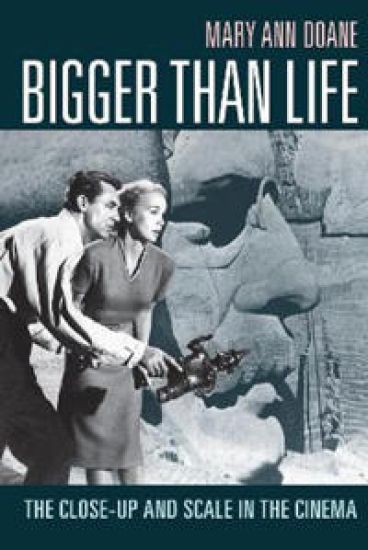
Bigger Than Life

Bigger Than Life

Mary Ann Doane

Duke University Press
2022
pokkari
In Bigger Than Life Mary Ann Doane examines how the scalar operations of cinema, especially those of the close-up, disturb and reconfigure the spectator's sense of place, space, and orientation. Doane traces the history of scalar transformations from early cinema to the contemporary use of digital technology. In the early years of cinema, audiences regarded the monumental close-up, particularly of the face, as grotesque and often horrifying, even as it sought to expose a character's interiority through its magnification of detail and expression. Today, large-scale technologies such as IMAX and surround sound strive to dissolve the cinematic frame and invade the spectator's space, “immersing” them in image and sound. The notion of immersion, Doane contends, is symptomatic of a crisis of location in technologically mediated space and a reconceptualization of position, scale, and distance. In this way, cinematic scale and its modes of spatialization and despatialization have shaped the modern subject, interpolating them into the incessant expansion of commodification.
Bigger Than Life

Bigger Than Life

Mary Ann Doane

Duke University Press
2022
sidottu
In Bigger Than Life Mary Ann Doane examines how the scalar operations of cinema, especially those of the close-up, disturb and reconfigure the spectator's sense of place, space, and orientation. Doane traces the history of scalar transformations from early cinema to the contemporary use of digital technology. In the early years of cinema, audiences regarded the monumental close-up, particularly of the face, as grotesque and often horrifying, even as it sought to expose a character's interiority through its magnification of detail and expression. Today, large-scale technologies such as IMAX and surround sound strive to dissolve the cinematic frame and invade the spectator's space, “immersing” them in image and sound. The notion of immersion, Doane contends, is symptomatic of a crisis of location in technologically mediated space and a reconceptualization of position, scale, and distance. In this way, cinematic scale and its modes of spatialization and despatialization have shaped the modern subject, interpolating them into the incessant expansion of commodification.
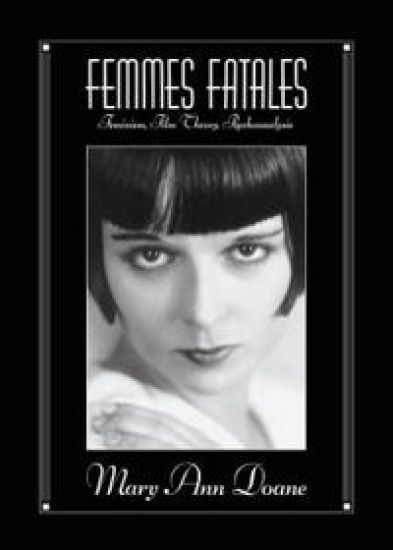
Femmes Fatales

Femmes Fatales

Mary Ann Doane

Routledge
2016
sidottu
In this work of feminist film criticism, Mary Ann Doane examines questions of sexual difference and knowledge in cinematic, theoretical, and psychoanalytic discourses. "Femmes Fatales" examines Freud, the female spectator, the meaning of the close-up, and the nature of stardom. Doane's analyses of such figures as Pabst's Lulu and Rita Hayworth's Gilda trace the thematics and mechanics of maskes, masquerade, and veiling, with specific attention to the form and technology of the cinema. Working through and against the intellectual frameworks of post-structuralist and psychoanalytic theory, Doane interrogates cinematic and theoretical claims to truth about women which rely on judgements about vision and its stability or instability. Reflecting the shift in conceptual priorities within feminist film theory over the last decade, "Femmes Fatales" addresses debates over female spectatorhsip, essentialism and anti-essentialism, the tensions between psychoanalysis and history, and the relations between racial and sexual difference. Doane's nuanced and original readings of the "femme fatale" in cinema illustrate confrontations between feminism, film theory and psychoanalysis. This book should be of interest to students and lecturers in women's studies, communications studies and film theory.
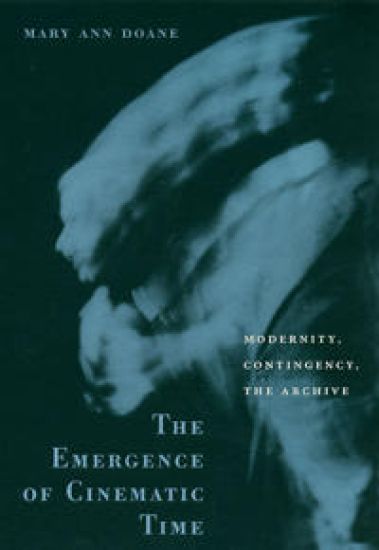
The Emergence of Cinematic Time

The Emergence of Cinematic Time

Mary Ann Doane

Harvard University Press
2002
nidottu
Hailed as the permanent record of fleeting moments, the cinema emerged at the turn of the nineteenth century as an unprecedented means of capturing time--and this at a moment when disciplines from physics to philosophy, and historical trends from industrialization to the expansion of capitalism, were transforming the very idea of time. In a work that itself captures and reconfigures the passing moments of art, history, and philosophy, Mary Ann Doane shows how the cinema, representing the singular instant of chance and ephemerality in the face of the increasing rationalization and standardization of the day, participated in the structuring of time and contingency in capitalist modernity.At this book's heart is the cinema's essential paradox: temporal continuity conveyed through "stopped time," the rapid succession of still frames or frozen images. Doane explores the role of this paradox, and of notions of the temporal indeterminacy and instability of an image, in shaping not just cinematic time but also modern ideas about continuity and discontinuity, archivability, contingency and determinism, and temporal irreversibility. A compelling meditation on the status of cinematic knowledge, her book is also an inquiry into the very heart and soul of modernity.
Femmes Fatales

Femmes Fatales

Mary Ann Doane

Routledge
1991
nidottu
In this work of feminist film criticism, Mary Ann Doane examines questions of sexual difference and knowledge in cinematic, theoretical, and psychoanalytic discourses. "Femmes Fatales" examines Freud, the female spectator, the meaning of the close-up, and the nature of stardom. Doane's analyses of such figures as Pabst's Lulu and Rita Hayworth's Gilda trace the thematics and mechanics of maskes, masquerade, and veiling, with specific attention to the form and technology of the cinema. Working through and against the intellectual frameworks of post-structuralist and psychoanalytic theory, Doane interrogates cinematic and theoretical claims to truth about women which rely on judgements about vision and its stability or instability. Reflecting the shift in conceptual priorities within feminist film theory over the last decade, "Femmes Fatales" addresses debates over female spectatorhsip, essentialism and anti-essentialism, the tensions between psychoanalysis and history, and the relations between racial and sexual difference. Doane's nuanced and original readings of the "femme fatale" in cinema illustrate confrontations between feminism, film theory and psychoanalysis. This book should be of interest to students and lecturers in women's studies, communications studies and film theory.