Kirjojen hintavertailu. Mukana 12 485 490 kirjaa ja 12 kauppaa.

Kirjailija

Mary Ann Gillies

Kirjat ja teokset yhdessä paikassa: 4 kirjaa, julkaisuja vuosilta 1996-2007, suosituimpien joukossa Professional Literary Agent in Britain. Vertaile teosten hintoja ja tarkista saatavuus suomalaisista kirjakaupoista.

4 kirjaa

Kirjojen julkaisuhaarukka 1996-2007.

Professional Literary Agent in Britain

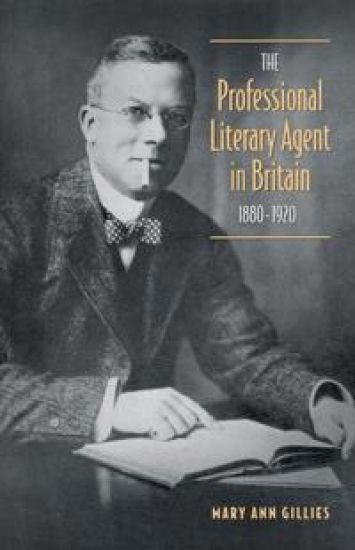
Professional Literary Agent in Britain

Mary Ann Gillies

University of Toronto Press
2007
sidottu
Breaking new ground in the study of British literary culture during an important, transitional period, this new work by Mary Ann Gillies focuses on the professional literary agent whose emergence in Britain around 1880 coincided with, and accelerated, the transformation of both publishing and authorship. Like other recent studies in book and print culture, The Professional Literary Agent in Britain, 1880-1920 starts from the central premise that the business of authorship is inextricably linked with the aesthetics of literary praxis. Rather than provide a broad overview of the period, however, Gillies focuses on a specific figure, the professional literary agent. She then traces the influence of two prominent agents - A. P. Watt (generally acknowledged as the first professional literary agent) and J. B. Pinker (the leading figure in the second wave of agents) - focusing on their respective relationships with two key clients. The case studies not only provide insight into the business dynamics of the literary world at this time, but also illustrate the shifting definition of literature itself during the period.
Modernist Literature

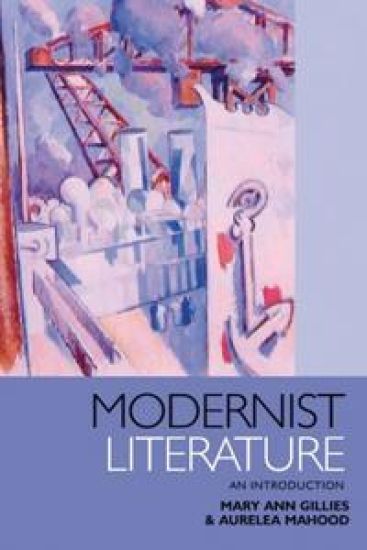
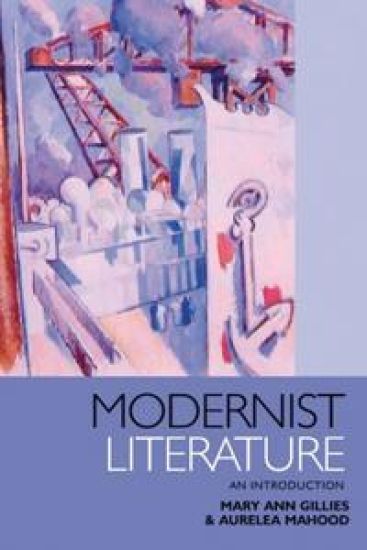
Modernist Literature

Mary Ann Gillies; Aurelea Mahood

Edinburgh University Press
2007
nidottu
This engaging textbook provides a critical assessment of British modernist literature produced between 1900 and 1945. Each chapter focuses on a single decade, a distinct genre and a specific theme: the 1900s - the short story - gender and sexuality; the 1910s - poetry - war, technology and propaganda; the 1920s - the novel - new modes of literary expression; the 1930s - the documentary - political engagement. A final chapter covers the 1940s and beyond looking at new literary and artistic movements and 'other' modernisms. Covering canonical texts and lesser-known works, Modernist Literature introduces students to current debates in Modernism and a range of literature in its historical and aesthetic contexts. Features: *Examines four distinct genres - the short story, poetry, novel and documentary - decade-by-decade. *Combines close readings with cultural and political analyses of British modernism. *Includes a Chronology and Further Readings with each chapter.
Modernist Literature

Modernist Literature

Mary Ann Gillies; Aurelea Mahood

Edinburgh University Press
2007
sidottu
This engaging textbook provides a critical assessment of British modernist literature produced between 1900 and 1945. Each chapter focuses on a single decade, a distinct genre and a specific theme: the 1900s - the short story - gender and sexuality; the 1910s - poetry - war, technology and propaganda; the 1920s - the novel - new modes of literary expression; the 1930s - the documentary - political engagement. A final chapter covers the 1940s and beyond looking at new literary and artistic movements and 'other' modernisms. Covering canonical texts and lesser-known works, Modernist Literature introduces students to current debates in Modernism and a range of literature in its historical and aesthetic contexts. Features: *Examines four distinct genres - the short story, poetry, novel and documentary - decade-by-decade. *Combines close readings with cultural and political analyses of British modernism. *Includes a Chronology and Further Readings with each chapter.
Henri Bergson and British Modernism

Henri Bergson and British Modernism

Mary Ann Gillies

McGill-Queen's University Press
1996
sidottu
Focusing on the work of T.E. Hulme, the Men of 1914, the Bloomsbury Group, T.S. Eliot, and John Middleton Murry, Gillies convincingly demonstrates that Bergson's theories underlie the literary aesthetics of the period that forms the intellectual basis of modern literature. She then turns her critical eye to five major modernist writers - T.S. Eliot, Virginia Woolf, James Joyce, Dorothy Richardson, and Joseph Conrad - and provides insightful and detailed Bergsonian readings of their major works. Drawing on material not previously available, Gillies persuasively argues that Bergson was a major intellectual force in British literature during the first thirty years of the twentieth century.