Kirjojen hintavertailu. Mukana 12 390 323 kirjaa ja 12 kauppaa.

Kirjailija

Mary Ann Smart

Kirjat ja teokset yhdessä paikassa: 2 kirjaa, julkaisuja vuosilta 2004-2018, suosituimpien joukossa Mimomania. Vertaile teosten hintoja ja tarkista saatavuus suomalaisista kirjakaupoista.

2 kirjaa

Kirjojen julkaisuhaarukka 2004-2018.

Waiting for Verdi

Waiting for Verdi

Mary Ann Smart

University of California Press
2018
sidottu
The name Giuseppe Verdi conjures images of Italians singing opera in the streets and bursting into song at political protests or when facing the firing squad. While many of the accompanying stories were exaggerated, or even invented, by later generations, Verdi's operas—along with those by Rossini, Donizetti, and Mercadante—did inspire Italians to imagine Italy as an independent and unified nation. Capturing what it was like to attend the opera or to join in the music at an aristocratic salon, Waiting for Verdi shows that the moral dilemmas, emotional reactions, and journalistic polemics sparked by these performances set new horizons for what Italians could think, feel, say, and write. Among the lessons taught by this music were that rules enforced by artistic tradition could be broken, that opera could jolt spectators into intense feeling even as it educated them, and that Italy could be in the vanguard of stylistic and technical innovation rather than clinging to the glories of centuries past. More practically, theatrical performances showed audiences that political change really was possible, making the newly engaged spectator in the opera house into an actor on the political stage.
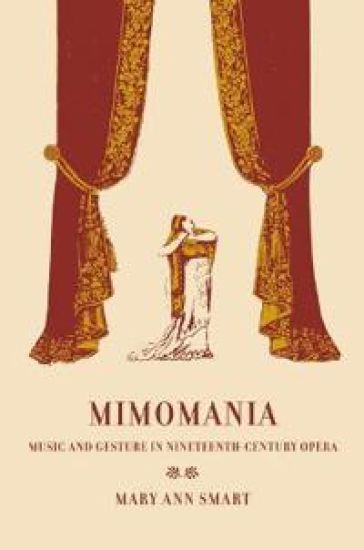
Mimomania

Mimomania

Mary Ann Smart

University of California Press
2004
pokkari
When Nietzsche dubbed Richard Wagner 'the most enthusiastic mimomaniac' ever to exist, he was objecting to a hollowness he felt in the music, a crowding out of any true dramatic impulse by extravagant poses and constant nervous movements. Mary Ann Smart suspects that Nietzsche may have seen and heard more than he realized. In "Mimomania", she takes his accusation as an invitation to listen to Wagner's music - and that of several of his near-contemporaries - for the way it serves to intensify the visible and the enacted. As Smart demonstrates, this productive fusion of music and movement often arises when music forsakes the autonomy so prized by the Romantics to function mimetically, underlining the sighs of a Bellini heroine, for instance, or the authoritarian footsteps of a Verdi baritone. "Mimomania" tracks such effects through readings of operas by Auber, Bellini, Meyerbeer, Verdi, and Wagner. Listening for gestural music, we find resemblance in unexpected places: between the overwrought scenes of supplication in French melodrama of the 1820s and a cluster of late Verdi arias that end with the soprano falling to her knees, or between the mute heroine of Auber's "La Muette de Portici" and the solemn, almost theological pantomimic tableaux Wagner builds around characters such as Sieglinde or Kundry. "Mimomania" shows how attention to gesture suggests a new approach to the representation of gender in this repertoire, replacing aural analogies for voyeurism and objectification with a more specifically musical sense of how music can surround, propel, and animate the body on stage.