Kirjojen hintavertailu. Mukana 12 657 676 kirjaa ja 12 kauppaa.

Kirjailija

Mary Beth Harris

Kirjat ja teokset yhdessä paikassa: 3 kirjaa, julkaisuja vuosilta 2007-2024, suosituimpien joukossa A Genealogy of the Gentleman. Vertaile teosten hintoja ja tarkista saatavuus suomalaisista kirjakaupoista.

3 kirjaa

Kirjojen julkaisuhaarukka 2007-2024.

A Genealogy of the Gentleman

A Genealogy of the Gentleman

Mary Beth Harris

University of Delaware Press
2024
sidottu
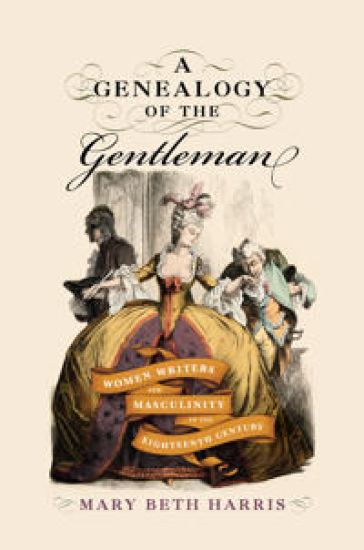
A Genealogy of the Gentleman argues that eighteenth-century women writers made key interventions in modern ideals of masculinity and authorship through their narrative constructions of the gentleman. It challenges two latent critical assumptions: first, that the gentleman’s masculinity is normative, private, and therefore oppositional to concepts of performance; and second, that women writers, from their disadvantaged position within a patriarchal society, had no real means of influencing dominant structures of masculinity. By placing writers such as Mary Davys, Eliza Haywood, Charlotte Lennox, Elizabeth Inchbald, and Mary Robinson in dialogue with canonical representatives of the gentleman author-Joseph Addison and Richard Steele, David Hume, Samuel Johnson, and Samuel Richardson-Mary Beth Harris shows how these women carved out a space for their literary authority not by overtly opposing their male critics and society’s patriarchal structure, but by rewriting the persona of the gentleman as a figure whose very desirability and appeal were dependent on women’s influence. Ultimately, this project considers the import of these women writers’ legacy, both progressive and conservative, on hegemonic standards of masculinity that persist to this day.
A Genealogy of the Gentleman

A Genealogy of the Gentleman

Mary Beth Harris

University of Delaware Press
2024
nidottu
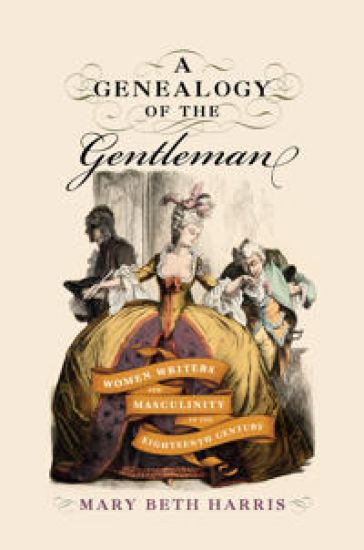
A Genealogy of the Gentleman argues that eighteenth-century women writers made key interventions in modern ideals of masculinity and authorship through their narrative constructions of the gentleman. It challenges two latent critical assumptions: first, that the gentleman’s masculinity is normative, private, and therefore oppositional to concepts of performance; and second, that women writers, from their disadvantaged position within a patriarchal society, had no real means of influencing dominant structures of masculinity. By placing writers such as Mary Davys, Eliza Haywood, Charlotte Lennox, Elizabeth Inchbald, and Mary Robinson in dialogue with canonical representatives of the gentleman author-Joseph Addison and Richard Steele, David Hume, Samuel Johnson, and Samuel Richardson-Mary Beth Harris shows how these women carved out a space for their literary authority not by overtly opposing their male critics and society’s patriarchal structure, but by rewriting the persona of the gentleman as a figure whose very desirability and appeal were dependent on women’s influence. Ultimately, this project considers the import of these women writers’ legacy, both progressive and conservative, on hegemonic standards of masculinity that persist to this day.

Taking Charge

Taking Charge

Mary Beth Harris; Cynthia Franklin

Oxford University Press Inc
2007
nidottu
Taking Charge is the first empirically tested program of its kind, designed specifically to improve academic achievement and self-sufficiency for adolescent and teenage mothers, who face increased risk of dropping out and experiencing poverty. This eight-session, in-school group intervention uses cognitive-behavioral principles to bolster life skills such as focusing on action, setting goals, solving problems, and coping. The message embedded in the curriculum is one of self-efficacy and self-confidence, drawing on young womens strengths and teaching them how to manage the challenges of school, relationships, parenting, and employment. A treatment manual with detailed guidelines for establishing and leading a culturally diverse group, this guide also reviews the successful results of three school-based trials of the program, vividly illustrated with vignettes and containing all of the handouts and materials necessary for a school-based professional to implement the program. -- Groups can be led by social workers, counselors, school nurses, teachers, and even volunteers with little additional training -- An all-in-one treatment manual provides dialogue, forms, and handouts for facilitators to use in each session -- Empowers young women to take charge of their education and develop skills that will help them succeed in school and in life