Kirjojen hintavertailu. Mukana 12 595 353 kirjaa ja 12 kauppaa.

Kirjailija

Mary Beth Williams

Kirjat ja teokset yhdessä paikassa: 10 kirjaa, julkaisuja vuosilta 2001-2024, suosituimpien joukossa How to Grieve What We've Lost. Vertaile teosten hintoja ja tarkista saatavuus suomalaisista kirjakaupoista.

10 kirjaa

Kirjojen julkaisuhaarukka 2001-2024.

How to Grieve What We've Lost

How to Grieve What We've Lost

Alexandra Kennedy; Mary Beth Williams; Russ Harris; Sameet M Kumar; Soili Poijula

NEW HARBINGER PUBLICATIONS
2024
pokkari
Grief is a journey that can lead to powerful, personal growth. This compassionate guide, written by a team of mental health and grief experts, will help you heal the pain of loss—no matter the cause—and move forward in life with a renewed sense of meaning and purpose.Grief comes in many forms. You may grieve a loved one who has passed on, a romantic relationship which has ended, the loss of a job you loved, or even a place you used to go that no longer exists or has changed. You may also be dealing with another kind of loss—a sense of who you are and how you can live your life in an increasingly uncertain and changed world. But what if you could transform your grief into lasting positive growth?Filled with the most effective therapeutic tools drawn from acceptance and commitment therapy (ACT), mindfulness, cognitive behavioral therapy (CBT), and more, How to Grieve What We’ve Lost will help you heal from the pain of loss, move forward, and reconnect with what truly matters to you right now. You’ll find strategies for immediate relief—including present-moment awareness and mindful breathing. You’ll learn how to create a safe sanctuary for your grief, so you can honor your feelings and give them the space they deserve. And you’ll discover ways to create a support network, give voice to your sorrow, and share your humanity with others.This heartfelt guide also includes simple tools to help you: ·Identify the things that really matter to you ·Honor your grief ·Prioritize your mental health and self-care ·Learn and grow from your loss Whether you are struggling with your own loss or a collective sense of grief, the evidence-based skills in this book will help you mourn in healthy and resilient ways—leading to profound personal growth and a renewed sense of meaning and purpose in life.

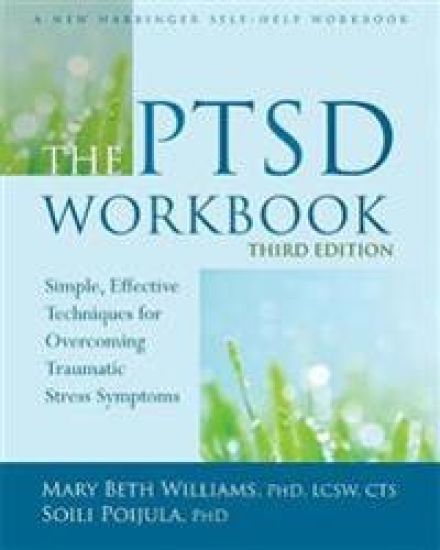
The PTSD Workbook, 3rd Edition

The PTSD Workbook, 3rd Edition

Mary Beth Williams; Soili Poijula

New Harbinger Publications
2016
pokkari
Post-traumatic stress disorder (PTSD) is an extremely debilitating condition that can occur after exposure to a terrifying event. But whether you're a veteran of war, a victim of domestic violence or sexual violence, or have been involved in a natural disaster, crime, car accident, or accident in the workplace, your symptoms may be getting in the way of you living your life.PTSD can often cause you to relive your traumatic experience in the form of flashbacks, memories, nightmares, and frightening thoughts. This is especially true when you are exposed to events or objects that remind you of your trauma. Left untreated, PTSD can lead to emotional numbness, insomnia, addiction, anxiety, depression, and even suicide. So, how can you start to heal and get your life back?In The PTSD Workbook, Third Edition, psychologists and trauma experts Mary Beth Williams and Soili Poijula outline techniques and interventions used by PTSD experts from around the world to conquer distressing trauma-related symptoms. In this fully revised and updated workbook, you'll learn how to move past the trauma you've experienced and manage symptoms such as insomnia, anxiety, and flashbacks.Based in cognitive behavioral therapy (CBT), this book is extremely accessible and easy-to-use, offering evidence-based therapy at a low cost. This new edition features chapters focusing on veterans with PTSD, the link between cortisol and adrenaline and its role in PTSD and overall mental health, and the mind-body component of PTSD. Clinicians will also find important updates reflecting the new DSM-V definition of PTSD.This book is designed to give you the emotional resilience you need to get your life back together after a traumatic event.
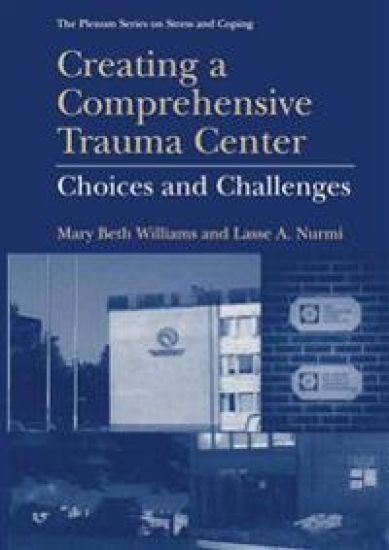
Creating a Comprehensive Trauma Center

Creating a Comprehensive Trauma Center

Mary Beth Williams; Lasse A. Nurmi

Springer-Verlag New York Inc.
2010
nidottu
Early Thoughts on Creating Comprehensive Trauma Centers This volume has been many years in writing. When Dr. Donald Meichenbaum first suggested it and I approached my coauthor Lasse Nurmi, it did not seem to be as formidable a task as it has become. Interviewing the centers in this book has taken years-to get responses, to summarize those responses, and to return the summaries for further comment. Many centers have been created in that time; others have suspended operation. This volume does not claim to present even a majority of those centers. However, the ones contained herein are representative of "what is out there. " The idea to create a comprehensive trauma center is not new. The initial section of this forward examines thoughts I proposed as part of my compre­ hensive examination for my doctorate. Many of the ideas proposed then (1989) seem to fit now. It is my dream to put them into practice someday in the future. THE COMPREHENSIVE EXAMINATION QUESTION In 1989, one question on the written comprehensive examination ques­ tions for my doctorate was, "If you were to create a comprehensive trauma center in your suburban area, making use of what you have learned in your [doctoral] experience, describe the organization of that center, the mission, structure, personnel, funding, objectives, and services it would offer. " Some of the conclusions reached then now seem applicable to the task at hand: design­ ing comprehensive trauma centers (CTCs) for the 21st century.
Life After Trauma, Second Edition

Life After Trauma, Second Edition

Dena Rosenbloom; Mary Beth Williams

Guilford Publications
2010
nidottu
Trauma can turn your world upside down--afterward, nothing may look safe or familiar. This compassionate workbook has already helped tens of thousands of trauma survivors start rebuilding their lives. Full of practical strategies for coping and self-care, the book guides you toward reclaiming a solid sense of safety, self-worth, trust, and control, as well as the capacity to be close to others. The focus is on finding the way forward in your life today, no matter what has happened in the past. The updated second edition has a new section on managing emotions through mindfulness and an appendix on easing the stress of health care visits. Dozens of step-by-step questionnaires and exercises are included; you can download and print additional copies of these tools for repeated use.
Trauma Treatment Techniques

Trauma Treatment Techniques

Jacqueline Garrick; Mary Beth Williams

Routledge Member of the Taylor and Francis Group
2005
nidottu
Examine alternative techniques for dealing with post-traumatic stress disorderTrauma Treatment Techniques: Innovative Trends examines alternative approaches to talk therapies that help relieve stress in trauma survivors. Experts in a range of practice areas present mental health providers with methods that augment or go beyond traditional techniques, including art therapy, virtual reality, humor, residential programs, emotional freedom techniques (EFT), traumatic incident reduction (TIR), and thought field therapy (TFT). This unique book serves as a primer on new and creative means of working with combat veterans, survivors of child abuse, victims of rape and other violent crimes, refugees, victims of terrorism, and disaster survivors. Since the late 19th century, mental and medical health professionals, social workers, clinicians, and counselors have attempted to help patients mitigate symptoms and reduce distress by employing a variety of treatment techniques, methods, strategies, and procedures. Trauma Treatment Techniques: Innovative Trends represents a significant addition to the available literature on post-traumatic stress disorder (PTSD) and acute distress, providing therapists with much-needed options in their efforts to help trauma sufferers recover, find new meaning, and reach for new hopes and happiness.Trauma Treatment Techniques: Innovative Trends examines: debriefing interventions in school settings instructions and safeguards for using emotional freedom techniques (EFT) when debriefing in disaster situations the use of creative art therapies to reach out to war refugees the use of virtual reality-based exposure therapy (VRE) to desensitize Vietnam veterans with PTSD from traumatic memories humor as a healing tool repressed memory physiology and meridian treatment points in the body a six-step methodology for diagnosing PTSD a 90-day residential program for treatment of PTSD PTSD motivation enhancement (ME) groups autism as a potential traumatic stressor and much moreTrauma Treatment Techniques: Innovative Trends is an invaluable resource of inventive techniques that offer hope for recovery to anyone who has suffered life’s worst injuries.
Trauma Treatment Techniques

Trauma Treatment Techniques

Jacqueline Garrick; Mary Beth Williams

Routledge Member of the Taylor and Francis Group
2005
sidottu
Examine alternative techniques for dealing with post-traumatic stress disorderTrauma Treatment Techniques: Innovative Trends examines alternative approaches to talk therapies that help relieve stress in trauma survivors. Experts in a range of practice areas present mental health providers with methods that augment or go beyond traditional techniques, including art therapy, virtual reality, humor, residential programs, emotional freedom techniques (EFT), traumatic incident reduction (TIR), and thought field therapy (TFT). This unique book serves as a primer on new and creative means of working with combat veterans, survivors of child abuse, victims of rape and other violent crimes, refugees, victims of terrorism, and disaster survivors. Since the late 19th century, mental and medical health professionals, social workers, clinicians, and counselors have attempted to help patients mitigate symptoms and reduce distress by employing a variety of treatment techniques, methods, strategies, and procedures. Trauma Treatment Techniques: Innovative Trends represents a significant addition to the available literature on post-traumatic stress disorder (PTSD) and acute distress, providing therapists with much-needed options in their efforts to help trauma sufferers recover, find new meaning, and reach for new hopes and happiness.Trauma Treatment Techniques: Innovative Trends examines: debriefing interventions in school settings instructions and safeguards for using emotional freedom techniques (EFT) when debriefing in disaster situations the use of creative art therapies to reach out to war refugees the use of virtual reality-based exposure therapy (VRE) to desensitize Vietnam veterans with PTSD from traumatic memories humor as a healing tool repressed memory physiology and meridian treatment points in the body a six-step methodology for diagnosing PTSD a 90-day residential program for treatment of PTSD PTSD motivation enhancement (ME) groups autism as a potential traumatic stressor and much moreTrauma Treatment Techniques: Innovative Trends is an invaluable resource of inventive techniques that offer hope for recovery to anyone who has suffered life’s worst injuries.
Simple and Complex Post-Traumatic Stress Disorder

Simple and Complex Post-Traumatic Stress Disorder

Mary Beth Williams; John F Sommer Jr.

Routledge Member of the Taylor and Francis Group
2002
sidottu
Discover the latest treatment strategies from the leading experts in the field of trauma!This unique book, by the authors of the classic Handbook of Post-Traumatic Therapy, provides the “how to” of clinical practice techniques in a variety of settings with a variety of clients. Simple and Complex Post-Traumatic Stress Disorder: Strategies for Comprehensive Treatment in Clinical Practice delivers state-of-the-art techniques and information to help traumatized individuals, groups, families, and communities. From critical incident debriefing to treating combat veterans with longstanding trauma, it covers the full spectrum of PTSD clients and effective treatments. This valuable book assembles some of the most highly respected experts in trauma studies to discuss the practical applications of their research and their experience treating clients with PTSD. Simple and Complex Post-Traumatic Stress Disorder addresses concerns about the efficacy of critical incident stress debriefing, examines the value of a variety of innovative treatment methods, and explores the differences between treating complex PTSD and the aftermath of a one-time traumatic event. Simple and Complex Post-Traumatic Stress Disorder discusses the issues, stages, and modalities of PTSD treatment, including: assessment and diagnosis psychopharmacological treatment cognitive behavioral treatment short-term treatment group treatments treatment strategies for traumatized children, families, hostages, police, and veterans media issuesSimple and Complex Post-Traumatic Stress Disorder is an indispensable resource for clinicians, researchers, law enforcement officials, and scholars in the field of trauma.
Simple and Complex Post-Traumatic Stress Disorder

Simple and Complex Post-Traumatic Stress Disorder

Mary Beth Williams; John F Sommer Jr.

Routledge Member of the Taylor and Francis Group
2002
nidottu
Discover the latest treatment strategies from the leading experts in the field of trauma!This unique book, by the authors of the classic Handbook of Post-Traumatic Therapy, provides the “how to” of clinical practice techniques in a variety of settings with a variety of clients. Simple and Complex Post-Traumatic Stress Disorder: Strategies for Comprehensive Treatment in Clinical Practice delivers state-of-the-art techniques and information to help traumatized individuals, groups, families, and communities. From critical incident debriefing to treating combat veterans with longstanding trauma, it covers the full spectrum of PTSD clients and effective treatments. This valuable book assembles some of the most highly respected experts in trauma studies to discuss the practical applications of their research and their experience treating clients with PTSD. Simple and Complex Post-Traumatic Stress Disorder addresses concerns about the efficacy of critical incident stress debriefing, examines the value of a variety of innovative treatment methods, and explores the differences between treating complex PTSD and the aftermath of a one-time traumatic event. Simple and Complex Post-Traumatic Stress Disorder discusses the issues, stages, and modalities of PTSD treatment, including: assessment and diagnosis psychopharmacological treatment cognitive behavioral treatment short-term treatment group treatments treatment strategies for traumatized children, families, hostages, police, and veterans media issuesSimple and Complex Post-Traumatic Stress Disorder is an indispensable resource for clinicians, researchers, law enforcement officials, and scholars in the field of trauma.
Creating a Comprehensive Trauma Center

Creating a Comprehensive Trauma Center

Mary Beth Williams; Lasse A. Nurmi

Kluwer Academic/Plenum Publishers
2001
sidottu
Early Thoughts on Creating Comprehensive Trauma Centers This volume has been many years in writing. When Dr. Donald Meichenbaum first suggested it and I approached my coauthor Lasse Nurmi, it did not seem to be as formidable a task as it has become. Interviewing the centers in this book has taken years-to get responses, to summarize those responses, and to return the summaries for further comment. Many centers have been created in that time; others have suspended operation. This volume does not claim to present even a majority of those centers. However, the ones contained herein are representative of "what is out there. " The idea to create a comprehensive trauma center is not new. The initial section of this forward examines thoughts I proposed as part of my compre­ hensive examination for my doctorate. Many of the ideas proposed then (1989) seem to fit now. It is my dream to put them into practice someday in the future. THE COMPREHENSIVE EXAMINATION QUESTION In 1989, one question on the written comprehensive examination ques­ tions for my doctorate was, "If you were to create a comprehensive trauma center in your suburban area, making use of what you have learned in your [doctoral] experience, describe the organization of that center, the mission, structure, personnel, funding, objectives, and services it would offer. " Some of the conclusions reached then now seem applicable to the task at hand: design­ ing comprehensive trauma centers (CTCs) for the 21st century.