Kirjojen hintavertailu. Mukana 12 326 040 kirjaa ja 12 kauppaa.

Kirjailija

Mary Douglas

Kirjat ja teokset yhdessä paikassa: 44 kirjaa, julkaisuja vuosilta 1983-2021, suosituimpien joukossa Jacob's Tears. Vertaile teosten hintoja ja tarkista saatavuus suomalaisista kirjakaupoista.

44 kirjaa

Kirjojen julkaisuhaarukka 1983-2021.

Natural Symbols

Natural Symbols

Professor Mary Douglas; Mary Douglas

Routledge
2015
sidottu
One of the most important works of modern anthropology. Written against the backdrop of the student uprisings of the late 1960s, the book took seriously the revolutionary fervour of the times, but instead of seeking to destroy the rituals and symbols that can govern and oppress, Mary Douglas saw instead that if transformation were needed, it could only be made possible through better understanding. Expressed with clarity and dynamism, the passionate analysis which follows remains one of the most insightful and rewarding studies of human behaviour ever written.
Constructive Drinking

Constructive Drinking

Mary Douglas

Routledge
2010
nidottu
First published in 1987, Constructive Drinking is a series of original case studies organized into three sections based on three major functions of drinking. The three constructive functions are: that drinking has a real social role in everyday life; that drinking can be used to construct an ideal world; and that drinking is a significant economic activity. The case studies deal with a variety of exotic drinks
Evans-Pritchard

Evans-Pritchard

Mary Douglas

Routledge
2010
nidottu
First published in 1980, this book provides an overview of E. E. Evans-Pritchard's approach to anthropology. His seminal works on the Azande and the Nuer had an immense impact on the field in Britain. He wrote these works in his thirties and forties, after which time he became chair of anthropology at Oxford. His pupils and colleagues from his days as the head of Institute of Social Anthropology went from Oxford to complete the institutional establishment of social anthropology. In this book Douglas links the development of her own theories to her training under Evans-Pritchard at the institute and to the close friendship that they forged in the years after.
Risk and Acceptability

Risk and Acceptability

Mary Douglas

Routledge
2010
nidottu
First published in 1985, Mary Douglas intended Risk and Acceptability as a review of the existing literature on the state of risk theory. Unsatisfied with the current studies of risk, which she found to be flawed by individualistic and psychologistic biases, she instead uses the book to argue risk analysis from an anthropological perspective. Douglas raises questions about rational choice, the provision of public good and the autonomy of the individual.
Rules and Meanings

Rules and Meanings

Mary Douglas

Routledge
2009
nidottu
First published in 1973, Rules and Meanings is an anthology of works that form part of Mary Douglas' struggle to devise an anthropological modernism conducive to her opposition to reputedly modernizing trends in contemporary society. The collection contains works by Wittgenstein, Schutz, Husserl, Hertz and other continentals. The underlying themes of the anthology are the construction of meaning, the force of hidden background assumptions, tacit conventions and the power of spatial organization to reinforce words. The work serves to complement the philosophers' work on everyday language with the anthropologists' theory of everyday knowledge.
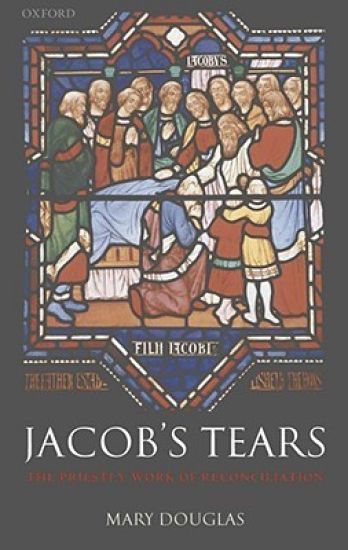
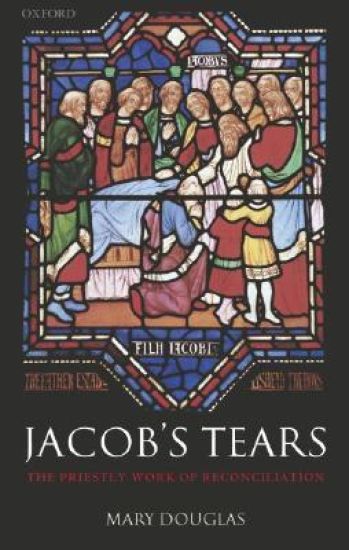
Jacob's Tears

Jacob's Tears

Mary Douglas

Oxford University Press
2006
nidottu
Who is Israel? Who were the priestly authors of the Pentateuch? This anthropological reading of the Bible, by a world-renowned scholar, starts by asking why the Book of Numbers lists the twelve tribes of Israel seven times. Mary Douglas argues that the editors, far from being a separate elite unconcerned with their congregation's troubles, cherished a political agenda, a religious protest against the government of Judah's exclusionary policies. The priestly theology depends on God's Covenant with all the descendants of Jacob, including the sons of Joseph. It would have been unpatriotic, even subversive, to speak against the wars with Samaria. This book suggest an explanation of the editors' disappearance from the history of Israel.
Jacob's Tears

Jacob's Tears

Mary Douglas

Oxford University Press
2004
sidottu
Who is Israel? Who were the priestly authors of the Pentateuch? This anthropological reading of the Bible, by a world-renowned scholar, starts by asking why the Book of Numbers lists the twelve tribes of Israel seven times. Mary Douglas argues that the editors, far from being a separate elite unconcerned with their congregation's troubles, cherished a political agenda, a religious protest against the government of Judah's exclusionary policies. The priestly theology depends on God's Covenant with all the descendants of Jacob, including the sons of Joseph. It would have been unpatriotic, even subversive, to speak against the wars with Samaria. This book suggest an explanation of the editors' disappearance from the history of Israel.
The Lele of the Kasai

The Lele of the Kasai

Mary Douglas

Routledge
2002
sidottu
This first volume is a compilation of numerous essays by Douglas on the Lele in the Belgian Congo covering a fifteen year period. There are early indications of Douglas's cultural imagination and written expression that were to make her works accessible and relevant to a western readership of non-anthropologists. The intellectural tools and examples she gained from Africanist ethnography continue to serve her explorations of European and American society.
Evans-Pritchard

Evans-Pritchard

Mary Douglas

Routledge
2002
sidottu
First published in 1980, this book provides an overview of E. E. Evans-Pritchard's approach to anthropology. His seminal works on the Azande and the Nuer had an immense impact on the field in Britain. He wrote these works in his thirties and forties, after which time he became chair of anthropology at Oxford. His pupils and colleagues from his days as the head of Institute of Social Anthropology went from Oxford to complete the institutional establishment of social anthropology. In this book Douglas links the development of her own theories to her training under Evans-Pritchard at the institute and to the close friendship that they forged in the years after.
Constructive Drinking

Constructive Drinking

Mary Douglas

Routledge
2002
sidottu
First published in 1987, Constructive Drinking is a series of original case studies organized into three sections based on three major functions of drinking. The three constructive functions are: that drinking has a real social role in everyday life; that drinking can be used to construct an ideal world; and that drinking is a significant economic activity. The case studies deal with a variety of exotic drinks
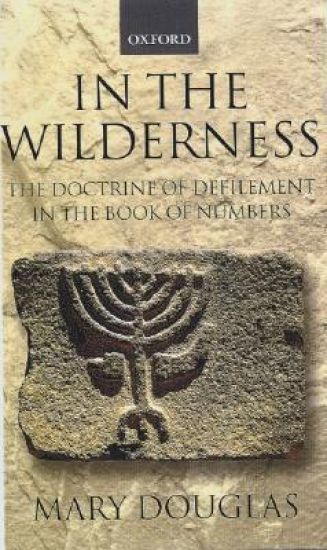
In the Wilderness

In the Wilderness

Mary Douglas

Oxford University Press
2001
nidottu
In the Wilderness is a classic work on the anthropology of the Book of Numbers. Up to now Bible scholars have tended to dismiss Numbers - Wellhausen called it the junk room of the Bible, and most contemporary commentaries feel called upon to say something about its apparent lack of coherence. In this book Mary Douglas argues that Numbers is composed of 12 alternating sections of law and narrative arranged in a ring, with each law and narrative section corresponding to its pair on the other side. Notes from a Hebrew scholar confirm the pattern by identifying objectively the beginnings and endings of law and narrative. On this showing Numbers turns out to be an extremely coherent example of a well-known antique rhetorical system. The meaning of the book comes out very differently according to whether it is read linearly or as written, synoptically. Professor Douglas shows that Numbers is not heavy or obscure but reads like a detective story. WITH REGARD TO LEVITICUS AS LITERATURE The books of Numbers and Leviticus stand at the centre of the Pentateuch and are revered as the basis of biblical Judaism. In her two books Mary Douglas argues that neither has been read in its own terms. Oxford University Press have brought together Professor Douglas's two ground-breaking works because the process of discovery is continuous, the work on Leviticus builds on the work for Numbers. The second book is the fruit of the first. They each make more sense together than apart.
Leviticus as Literature

Leviticus as Literature

Mary Douglas

Oxford University Press
2001
nidottu
This account of Leviticus presents the biblical work as a literary masterpiece. Seen in an anthropological perspective, Leviticus has a mystical structure which plots the book into three parts corresponding to the three parts of the desert tabernacle, which in turn corresponds to Mount Sinai.
The World of Goods

The World of Goods

Mary Douglas; Baron Isherwood

Routledge
2021
nidottu
It is well-understood that the consumption of goods plays an important, symbolic role in the way human beings communicate, create identity, and establish relationships. What is less well-known is that the pattern of their flow shapes society in fundamental ways. In this book the renowned anthropologist Mary Douglas and economist Baron Isherwood overturn arguments about consumption that rely on received economic and psychological explanations. They ask new questions about why people save, why they spend, what they buy, and why they sometimes-but not always-make fine distinctions about quality.Instead of regarding consumption as a private means of satisfying one’s preferences, they show how goods are a vital information system, used by human beings to fulfill their intentions towards one another. They also consider the implications of the social role of goods for a new vision for social policy, arguing that poverty is caused as much by the erosion of local communities and networks as it is by lack of possessions, and contrast small-scale with large-scale consumption in the household. A radical rethinking of consumerism, inequality and social capital, The World of Goods is a classic of economic anthropology whose insights remain compelling and urgent.This Routledge Classics edition includes a new foreword by Richard Wilk."Forget that commodities are good for eating, clothing, and shelter; forget their usefulness and try instead the idea that commodities are good for thinking." – Mary Douglas and Baron Isherwood
The World of Goods

The World of Goods

Mary Douglas; Baron Isherwood

Routledge
2021
sidottu
It is well-understood that the consumption of goods plays an important, symbolic role in the way human beings communicate, create identity, and establish relationships. What is less well-known is that the pattern of their flow shapes society in fundamental ways. In this book the renowned anthropologist Mary Douglas and economist Baron Isherwood overturn arguments about consumption that rely on received economic and psychological explanations. They ask new questions about why people save, why they spend, what they buy, and why they sometimes-but not always-make fine distinctions about quality.Instead of regarding consumption as a private means of satisfying one’s preferences, they show how goods are a vital information system, used by human beings to fulfill their intentions towards one another. They also consider the implications of the social role of goods for a new vision for social policy, arguing that poverty is caused as much by the erosion of local communities and networks as it is by lack of possessions, and contrast small-scale with large-scale consumption in the household. A radical rethinking of consumerism, inequality and social capital, The World of Goods is a classic of economic anthropology whose insights remain compelling and urgent.This Routledge Classics edition includes a new foreword by Richard Wilk."Forget that commodities are good for eating, clothing, and shelter; forget their usefulness and try instead the idea that commodities are good for thinking." – Mary Douglas and Baron Isherwood
Purity and Danger

Purity and Danger

Mary Douglas

Routledge
2015
sidottu
Is cleanliness next to godliness? What does such a concept really mean? Why does it recur as a universal theme across all societies? And what are the implications for the unclean? In Purity and Danger Mary Douglas identifies the concern for purity as a key theme at the heart of every society. In lively and lucid prose she explains its relevance for every reader by revealing its wide-ranging impact on our attitudes to society, values, cosmology and knowledge. This book has been hugely influential in many areas of debate – from religion to social theory. With a specially commissioned preface by the author which assesses the continuing significance of the work, this Routledge Classics edition will ensure that Purity and Danger continues to challenge, question and inspire for many years to come.
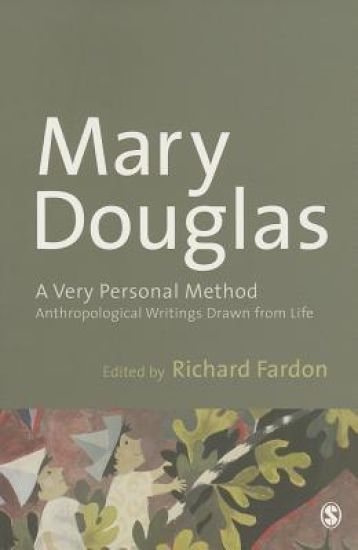
A Very Personal Method

A Very Personal Method

Mary Douglas

SAGE Publications Ltd
2013
sidottu
The range of Mary Douglas's interests had few parallels amongst the leading social anthropologists of the 20th century. Although inspired by the classics of the discipline of anthropology, her theories were idiosyncratic and her applications of them never predictable. By bringing together writings in different genres that she composed over the entirety of her career, this volume demonstrates her distinctive style of thought and expression. The topics she addressed ranged freely between family and friends, the demands of domestic routine, her belonging to the Roman Catholic Church, and cultural similarities and differences on a global scale. In her method and style, as much as in her explicit arguments, Mary Douglas constantly invited her readers to reflect on the inextricable intertwining of the personal and the theoretical in her thought. More than any previous collection of Mary Douglas's work, A Very Personal Method reveals a mind restlessly reworking her enduring preoccupations and finding echoes of them in the new concerns she continued to draw from life. Mary Douglas was one of the most widely read social anthropologists of the 20th Century. She is celebrated both as a literary stylist and an anthropological thinker who challenged common presuppositions and understandings of religion, economy and society. As a cornerstone of modernism in social anthropology, and a precursor of 21st Century interdisciplinarity, her work remains highly influential both within and outside the social sciences. Richard Fardon is Mary Douglas's Literary Executor and Head of the Doctoral School and Professor of West African Anthropology at SOAS, University of London, UK
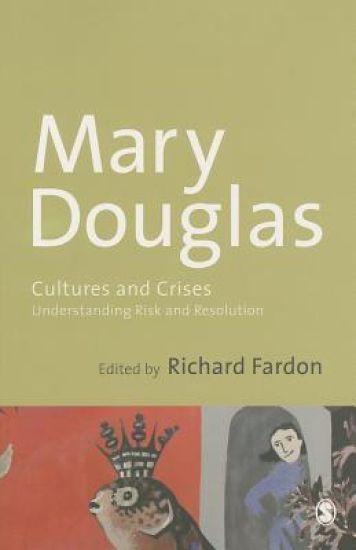
Cultures and Crises

Cultures and Crises

Mary Douglas; Richard Fardon

SAGE Publications Ltd
2013
nidottu
Written in the last two decades of her life, Cultures and Crises finds Mary Douglas developing analyses of critical conditions facing contemporary societies, sometimes in the company of distinguished co-authors across the whole gamut of social sciences. The essays focus on the collaborative development of 'cultural theory' from the 'grid and group' analysis of the 1970s through to its application and elaboration in her later thought. The material covers questions of culture and institutions, the challenges to culture posed by climate change and the nature of risk in culture. What emerges is the most complete picture of Mary Douglas's cultural theory that is currently available to us. The book will add to the legions of Douglas's readers across the disciplinary divisions of the social sciences. Mary Douglas was one of the most widely read social anthropologists of the 20th Century. She is celebrated both as a literary stylist and an anthropological thinker who challenged common presuppositions and understandings of religion, economy and society. As a cornerstone of modernism in social anthropology, and a precursor of 21st Century interdisciplinarity, her work remains highly influential both within and outside the social sciences. Richard Fardon is Mary Douglas's Literary Executor and Head of the Doctoral School and Professor of West African Anthropology at SOAS, University of London, UK.
Cultures and Crises

Cultures and Crises

Mary Douglas; Richard Fardon

SAGE Publications Ltd
2013
sidottu
Written in the last two decades of her life, Cultures and Crises finds Mary Douglas developing analyses of critical conditions facing contemporary societies, sometimes in the company of distinguished co-authors across the whole gamut of social sciences. The essays focus on the collaborative development of 'cultural theory' from the 'grid and group' analysis of the 1970s through to its application and elaboration in her later thought. The material covers questions of culture and institutions, the challenges to culture posed by climate change and the nature of risk in culture. What emerges is the most complete picture of Mary Douglas's cultural theory that is currently available to us. The book will add to the legions of Douglas's readers across the disciplinary divisions of the social sciences. Mary Douglas was one of the most widely read social anthropologists of the 20th Century. She is celebrated both as a literary stylist and an anthropological thinker who challenged common presuppositions and understandings of religion, economy and society. As a cornerstone of modernism in social anthropology, and a precursor of 21st Century interdisciplinarity, her work remains highly influential both within and outside the social sciences. Richard Fardon is Mary Douglas's Literary Executor and Head of the Doctoral School and Professor of West African Anthropology at SOAS, University of London, UK.
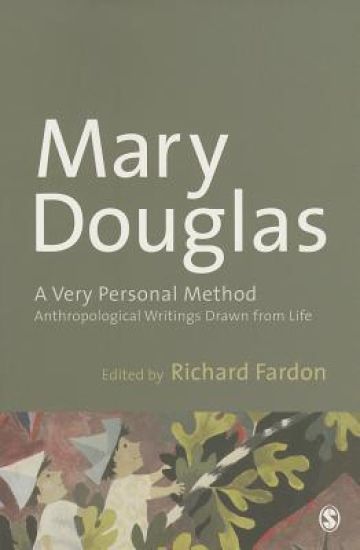
A Very Personal Method

A Very Personal Method

Mary Douglas

SAGE Publications Ltd
2013
nidottu
The range of Mary Douglas's interests had few parallels amongst the leading social anthropologists of the 20th century. Although inspired by the classics of the discipline of anthropology, her theories were idiosyncratic and her applications of them never predictable. By bringing together writings in different genres that she composed over the entirety of her career, this volume demonstrates her distinctive style of thought and expression. The topics she addressed ranged freely between family and friends, the demands of domestic routine, her belonging to the Roman Catholic Church, and cultural similarities and differences on a global scale. In her method and style, as much as in her explicit arguments, Mary Douglas constantly invited her readers to reflect on the inextricable intertwining of the personal and the theoretical in her thought. More than any previous collection of Mary Douglas's work, A Very Personal Method reveals a mind restlessly reworking her enduring preoccupations and finding echoes of them in the new concerns she continued to draw from life. Mary Douglas was one of the most widely read social anthropologists of the 20th Century. She is celebrated both as a literary stylist and an anthropological thinker who challenged common presuppositions and understandings of religion, economy and society. As a cornerstone of modernism in social anthropology, and a precursor of 21st Century interdisciplinarity, her work remains highly influential both within and outside the social sciences. Richard Fardon is Mary Douglas's Literary Executor and Head of the Doctoral School and Professor of West African Anthropology at SOAS, University of London, UK
In the Active Voice (Routledge Revivals)
First published in 1982, this collection of essays is a reproach to a form of the sociology of religion that treats people as the passive objects of impersonal social influences. In opposition to this, the author seeks to assert an active voice style of thinking about the relations between individuals and their cultural environment, whether in economics, history or literary criticism.This collection is assembled with the guiding principle that all the essays touch upon the borderland between economic values and personal judgements of quality. Several essays illustrate the theme from the place of economics in anthropology and the place of economic behaviour in sociological and cultural criticism. The essay on 'Cultural bias' suggests a systematic method of analysis for investigating social influences on judgement and choice.