

Kirjailija
Mary Evans
Kirjat ja teokset yhdessä paikassa: 32 kirjaa, julkaisuja vuosilta 1992-2026, suosituimpien joukossa Costume Throughout the Ages. Vertaile teosten hintoja ja tarkista saatavuus suomalaisista kirjakaupoista.
Mukana myös kirjoitusasut: Mary. Evans
32 kirjaa
Kirjojen julkaisuhaarukka 1992-2026.

Prayer is the Key to the Kingdom opens up the history of prayer. It focuses on what prayer is, on who God is, the names of God, and why we need to pray. It explains the importance of prayer, why you should pray, and how and when you should pray.It gives clear, concise, and helpful examples of the types and forms of prayer. The benefits of prayer are real. God does answer prayer in his time.God's answers are for our good, not always what we pray for.
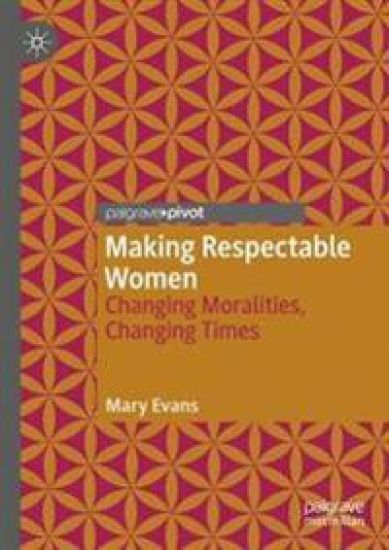
This book studies the ways in which the assessment of being or not being ‘respectable’ has been applied to women in the UK in the past one hundred and fifty years. Mary Evans shows how the term ‘respectable’ has changed and how, most importantly, the basis of the ways in which the respectability of women has been judged has shifted from a location in women’s personal, domestic and sexual behaviour to that of how women engage in contemporary forms of citizenship, not the least of which is paid work. This shift has important social and political implications that have seldom been explored: amongst these are the growing marginalisation of the validation of the traditional care work of women, the assumption that paid work is implicitly and inevitably empowering and the complex ways in which respectability and conformity to highly sexualised conventions about female appearance have been normalised. Making Respectable Women makes use of archive material to show how the changing definition of a moral and social concept can have an impact on both the behaviour and the choices of individuals and the operations of institutional power. It will be of interest to students and scholars across the humanities and social sciences.

Keto Bread: The Complete Low-Carb Cookbook for your Ketogenic Diet. Easy and Quick Gluten-Free Recipes for Weight Loss and Live a
Mary Evans
Independently Published
2019
nidottu
Have you been thinking about making a healthy life change by following the Keto Diet but are still on the fence because you don't see yourself giving up your love for bread?Well the good news is that you can have your cake and eat it too This book will start by giving you a simplified explanation of what the keto diet entails; what is allowed and what isn't. You are going to find: Tasty bread recipes that are not going to leave you feeling bloated and tiredSimple recipes that use every day ingredients that you can easily find at your local food storeBaking guidelines that will teach you everything you need to know about bakingBread ingredients' substitutes that will allow you to make your favorite bread recipes using healthy alternatives but still tasting good, if not better.Bread loaf recipesMuffin recipesPizza base recipesBread cracker recipesDon't wait any longer, start preparing your best Keto Cookies, Muffins, Buns, Bagels, Bread Loaves, Pizza Crusts, & Breadsticks, today Click on the "Buy Now" button and get a copy of Keto Bread, enjoy delicious food and live a healthier lifestyle
Detecting the Social
Mary Evans; Sarah Moore; Hazel Johnstone
Springer International Publishing AG
2018
nidottu
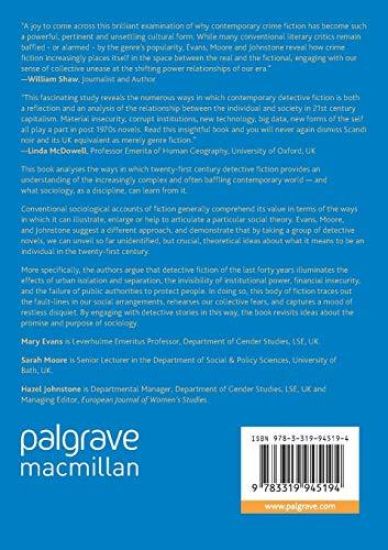
This book analyses the ways in which twenty-first century detective fiction provides an understanding of the increasingly complex and often baffling contemporary world — and what sociology, as a discipline, can learn from it. Conventional sociological accounts of fiction generally comprehend its value in terms of the ways in which it can illustrate, enlarge or help to articulate a particular social theory. Evans, Moore, and Johnstone suggest a different approach, and demonstrate that by taking a group of detective novels, we can unveil so far unidentified, but crucial, theoretical ideas about what it means to be an individual in the twenty-first century. More specifically, the authors argue that detective fiction of the last forty years illuminates the effects of urban isolation and separation, the invisibility of institutional power, financial insecurity, and the failure of public authorities to protect people. In doing so, this body of fiction traces out the fault-lines in our social arrangements, rehearses our collective fears, and captures a mood of restless disquiet. By engaging with detective stories in this way, the book revisits ideas about the promise and purpose of sociology.?

At only seven years old, Ava watches her mother drive away and never come back. Left on a family member's doorstep along with her two-year-old brother, Blake, Ava holds onto the faint hope that her mother will return someday.Yet, her hopes are shattered when social services get involved, putting the children in foster care. Navigating a revolving set of foster homes, Ava's dream of seeing her mother again grow slimmer every day. Her only solace is a journal in which she writes letters to her lost mother, but she still struggles with the possibility of following in her mother's hazardous footsteps.With the help of a kind elderly lady and the eventual birth of her own child, Ava slowly comes to terms with her tumultuous childhood. However, a long-awaited reunion years later uncovers old scars and a tragic secret that could unravel everything.

At only seven years old, Ava watches her mother drive away and never come back. Left on a family member's doorstep along with her two-year-old brother, Blake, Ava holds onto the faint hope that her mother will return someday.Yet, her hopes are shattered when social services get involved, putting the children in foster care. Navigating a revolving set of foster homes, Ava's dream of seeing her mother again grow slimmer every day. Her only solace is a journal in which she writes letters to her lost mother, but she still struggles with the possibility of following in her mother's hazardous footsteps.With the help of a kind elderly lady and the eventual birth of her own child, Ava slowly comes to terms with her tumultuous childhood. However, a long-awaited reunion years later uncovers old scars and a tragic secret that could unravel everything.
Jane Austen is often associated with conservatism and her novels are often seen as light entertainment depicting a vanished world and its manners. Mary Evan's study, first published in 1987, seeks to contradict the conventional wisdom regarding Austen's social and political leanings and argues that far from endorsing established and conservative views Jane Austen advances a radical critique of the morality of bourgeois capitalism and demonstrates a concern for the articulation of women's rights and views whilst simultaneously drawing attention to the vulnerability of women in the economic marketplace.Mary Evans adopts a multidisciplinary approach and her book will appeal to anyone who is interested in Jane Austen's writing as well as those concerned with the moral basis of contemporary politics.
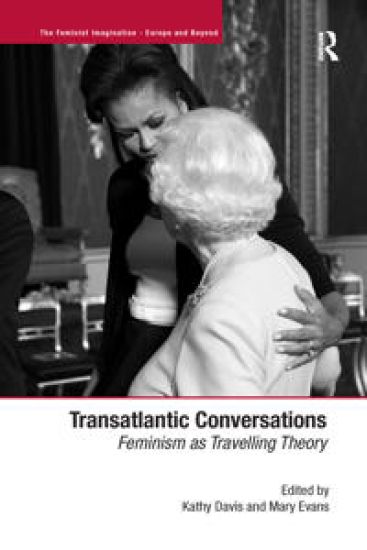
The second wave of feminism which challenged and changed many assumptions about the world in which we live was a product of various western cultures, with no single country possessing a monopoly on the writing of the texts that became the canonical statements of the 'new' feminism. Though many of the contributions to feminist scholarship that went on to become internationally significant hailed from Europe and the United States, these works were often formed within the context of local debates and framed within traditions of feminism and other political engagements specific to these nations. Transatlantic Conversations explores the differences yielded by such conditions and their consequences for the meaning of feminism. Examining the meaning and implications of the different ways in which various shared categories have been treated on both sides of the Atlantic, this volume both analyses differences within feminism and provides a framework for the wider discussion of what is sometimes assumed to be the homogeneity of The West. With leading scholars from either side of the Atlantic presenting brand new work, Transatlantic Conversations suggests directions for future research which will be of interest to scholars of feminism, gender studies, sociology, political science and international relations, geography and cultural studies, as well as anyone concerned with the ways in which the different political and intellectual traditions of Europe and the US have shaped current political and intellectual debates.
Despite centuries of campaigning, women still earn less and have less power than men. Equality remains a goal not yet reached. In this incisive account of why this is the case, Mary Evans argues that optimistic narratives of progress and emancipation have served to obscure long-term structural inequalities between women and men, structural inequalities which are not only about gender but also about general social inequality. In widening the lenses on the persistence of gender inequality, Evans shows how in contemporary debates about social inequality gender is often ignored, implicitly side-lining critical aspects of relations between women and men. This engaging short book attempts to join up some of the dots in the ways that we think about both social and gender inequality, and offers a new perspective on a problem that still demands society’s full attention.
Despite centuries of campaigning, women still earn less and have less power than men. Equality remains a goal not yet reached. In this incisive account of why this is the case, Mary Evans argues that optimistic narratives of progress and emancipation have served to obscure long-term structural inequalities between women and men, structural inequalities which are not only about gender but also about general social inequality. In widening the lenses on the persistence of gender inequality, Evans shows how in contemporary debates about social inequality gender is often ignored, implicitly side-lining critical aspects of relations between women and men. This engaging short book attempts to join up some of the dots in the ways that we think about both social and gender inequality, and offers a new perspective on a problem that still demands society’s full attention.

Tolstoy’s Anna Karenina is considered by many to be one of the greatest novels ever written. This study of its morally ambiguous protagonist, Anna, discusses Tolstoy’s troubled relation to the feminine in terms of the fantasies, hopes, and fears that she represents. In Reflecting on Anna Karenina, first published in 1989, Mary Evans presents an original, feminist reading of Anna’s life and times for both students and the general audience. She argues that Anna is the embodiment of all those female characteristics that so captivated Tolstoy, and which he felt so compelled to punish in his writing. Evans indicates how author and central character are locked in a contradiction which can only be resolved in the novel by Anna’s death, but which in real life must be overcome by women’s assertion of their moral and sexual autonomy.

Tolstoy’s Anna Karenina is considered by many to be one of the greatest novels ever written. This study of its morally ambiguous protagonist, Anna, discusses Tolstoy’s troubled relation to the feminine in terms of the fantasies, hopes, and fears that she represents. In Reflecting on Anna Karenina, first published in 1989, Mary Evans presents an original, feminist reading of Anna’s life and times for both students and the general audience. She argues that Anna is the embodiment of all those female characteristics that so captivated Tolstoy, and which he felt so compelled to punish in his writing. Evans indicates how author and central character are locked in a contradiction which can only be resolved in the novel by Anna’s death, but which in real life must be overcome by women’s assertion of their moral and sexual autonomy.

It is generally accepted that Britain was held together during the second world war by a spirit of national democratic `consensus'. But whose interests did the consensus serve? And how did it unravel in the years immediately after victory? This well observed and powerfully argued book overturns many of our assumptions about the national spirit of 1939-45. It shows that the current return to right-wing politics in Britain was prefigured by ideologies of change during and immediately after the war.
How to Make Historic American Costumes
Mary Evans; Elizabeth Brooks
Literary Licensing, LLC
2013
nidottu

Learn how to apply God's Word to your life as you explore seven compelling sessions and gain a new depth in your Bible knowledge.Exploring the depths of God's characterDoes what we call God make any difference to our relationship with Him?

From its growth in Europe in the nineteenth century, detective fiction has developed into one of the most popular genres of literature and popular culture more widely. In this monograph, Mary Evans examines detective fiction and its complex relationship to the modern and to modernity. She focuses on two key themes: the moral relationship of detection (and the detective) to a particular social world and the attempt to restore and even improve the social world that has been threatened and fractured by a crime, usually that of murder. It is a characteristic of much detective fiction that the detective, the pursuer, is a social outsider: this status creates a complex web of relationships between detective, institutional life and dominant and subversive moralities. Evans questions who and what the detective stands for and suggests that the answer challenges many of our assumptions about the relationship between various moralities in the modern world.
Jane Austen is often associated with conservatism and her novels are often seen as light entertainment depicting a vanished world and its manners. Mary Evan's study, first published in 1987, seeks to contradict the conventional wisdom regarding Austen's social and political leanings and argues that far from endorsing established and conservative views Jane Austen advances a radical critique of the morality of bourgeois capitalism and demonstrates a concern for the articulation of women's rights and views whilst simultaneously drawing attention to the vulnerability of women in the economic marketplace.Mary Evans adopts a multidisciplinary approach and her book will appeal to anyone who is interested in Jane Austen's writing as well as those concerned with the moral basis of contemporary politics.
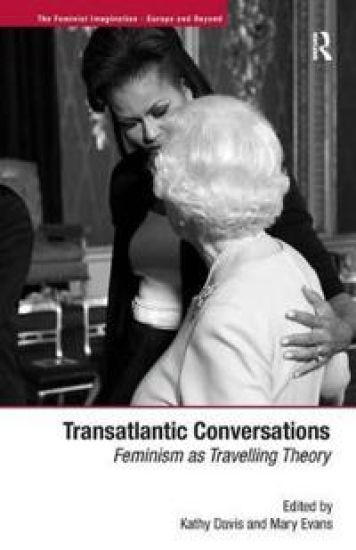
The second wave of feminism which challenged and changed many assumptions about the world in which we live was a product of various western cultures, with no single country possessing a monopoly on the writing of the texts that became the canonical statements of the 'new' feminism. Though many of the contributions to feminist scholarship that went on to become internationally significant hailed from Europe and the United States, these works were often formed within the context of local debates and framed within traditions of feminism and other political engagements specific to these nations. Transatlantic Conversations explores the differences yielded by such conditions and their consequences for the meaning of feminism. Examining the meaning and implications of the different ways in which various shared categories have been treated on both sides of the Atlantic, this volume both analyses differences within feminism and provides a framework for the wider discussion of what is sometimes assumed to be the homogeneity of The West. With leading scholars from either side of the Atlantic presenting brand new work, Transatlantic Conversations suggests directions for future research which will be of interest to scholars of feminism, gender studies, sociology, political science and international relations, geography and cultural studies, as well as anyone concerned with the ways in which the different political and intellectual traditions of Europe and the US have shaped current political and intellectual debates.
