Kirjojen hintavertailu. Mukana 12 595 353 kirjaa ja 12 kauppaa.

Kirjailija

Mary Graham

Kirjat ja teokset yhdessä paikassa: 14 kirjaa, julkaisuja vuosilta 1999-2025, suosituimpien joukossa The Tongva. Vertaile teosten hintoja ja tarkista saatavuus suomalaisista kirjakaupoista.

14 kirjaa

Kirjojen julkaisuhaarukka 1999-2025.

A New English Style

A New English Style

Mary Graham; Nicole Salvesen; David Nicholls

Hardie Grant Books (UK)
2025
sidottu
Step into the enchanting world of Nicole Salvesen and Mary Graham, two visionary designers known for their English country house style, who are celebrated for their ‘future heritage’ approach to interiors.In this, their debut book, Salvesen and Graham invite you to explore the art of creating classically beautiful and thoughtfully curated living spaces that transcend trends and stand the test of time. Featuring a treasure trove of stunning images, they share invaluable insights, guiding you on a journey to decorate your home in a way that is as stylish and inviting today as it will be in years to come.
Declaration of Peace for Indigenous Australians and Nature

Declaration of Peace for Indigenous Australians and Nature

Anne Poelina; Donna Bagnall; Mary Graham; Ross Timmulbar Williams; Tyson Yunkaporta; Chels Marshall; Shola Anthony Diop; Nadeem Samnakay; Michelle Maloney; Michael Davis

SPRINGER VERLAG, SINGAPORE
2025
nidottu
This groundbreaking book delves into the lived experiences and collective wisdom of Indigenous communities impacted by colonialism. Through collaborations with non-Indigenous colleagues, this book seeks to inform current legal practices and advocate for a transformative shift toward justice, equity, and the recognition of First Law and Earth-centered law.By presenting Indigenous stories as case studies and incorporating the collective wisdom gained through extensive discussions and exchanges with non-Indigenous colleagues, the authors highlight the ways in which Australian law falls short in upholding holistic principles and fails to align with First Law and Earth-centered law. The book invites readers to consider alternative legal futures that are rooted in respect, justice, and the well-being of both Indigenous peoples and the natural environment. Through its thought-provoking analysis, literature reviews, and insights from Indigenous leaders, this book servesas a powerful resource for legal practitioners, policymakers, scholars, and anyone passionate about social justice and environmental sustainability. The book aims to ignite meaningful dialogue and inspire concrete actions to address the historical injustices faced by Indigenous peoples while fostering a more inclusive and equitable legal framework for the generations to come.
Declaration of Peace for Indigenous Australians and Nature

Declaration of Peace for Indigenous Australians and Nature

Anne Poelina; Donna Bagnall; Mary Graham; Ross Timmulbar Williams; Tyson Yunkaporta; Chels Marshall; Shola Anthony Diop; Nadeem Samnakay; Michelle Maloney; Michael Davis

SPRINGER VERLAG, SINGAPORE
2024
sidottu
This groundbreaking book delves into the lived experiences and collective wisdom of Indigenous communities impacted by colonialism. Through collaborations with non-Indigenous colleagues, this book seeks to inform current legal practices and advocate for a transformative shift toward justice, equity, and the recognition of First Law and Earth-centered law.By presenting Indigenous stories as case studies and incorporating the collective wisdom gained through extensive discussions and exchanges with non-Indigenous colleagues, the authors highlight the ways in which Australian law falls short in upholding holistic principles and fails to align with First Law and Earth-centered law. The book invites readers to consider alternative legal futures that are rooted in respect, justice, and the well-being of both Indigenous peoples and the natural environment. Through its thought-provoking analysis, literature reviews, and insights from Indigenous leaders, this book servesas a powerful resource for legal practitioners, policymakers, scholars, and anyone passionate about social justice and environmental sustainability. The book aims to ignite meaningful dialogue and inspire concrete actions to address the historical injustices faced by Indigenous peoples while fostering a more inclusive and equitable legal framework for the generations to come.
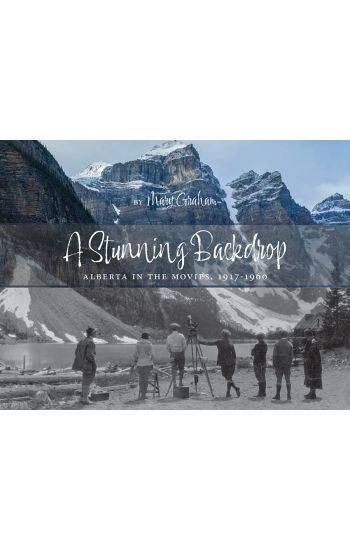
A Stunning Backdrop

A Stunning Backdrop

Mary Graham

UNIVERSITY OF CALGARY PRESS
2023
sidottu
Alberta's magnificent landscape has served as a popular location for filmmakers since the dawn of the movie industry. For film pioneers, Alberta embodied the myth of the Great Northwest, a primeval mountain wilderness and the last western frontier. In turn, Canadian entrepreneurs were eager for American studios to drape Alberta landscape across the backdrop of their movies, an advertisement without equal.A Stunning Backdrop is the untold story of six rollicking decades of filmmaking in Alberta. Mary Graham draws on twelve years of exhaustive research to reveal a film history like no other, illuminating the deep importance of the province to Hollywood. She explores the often friendly partnerships between American filmmakers and Indigenous communities, particularly the Stoney Nakoda, that provided economic opportunities and, in many cases, allowed them to retain religious and cultural practices banned by the Canadian government.Beautifully illustrated with archival photography and featuring century-old set stills alongside photographs of the locations as they appear today, by Jean Becq, Solomon Chiniquay, Jeff Wallace, George Webber, and Paul Zizka, A Stunning Backdrop is the fascinating, often surprising, always unconventional story of film in a province whose rugged, compelling, multifarious, terribly beautiful landscape continues to inspire filmmakers and audiences around the world.
A Stunning Backdrop

A Stunning Backdrop

Mary Graham

UNIVERSITY OF CALGARY PRESS
2022
nidottu
Alberta's magnificent landscape has served as a popular location for filmmakers since the dawn of the movie industry. For film pioneers, Alberta embodied the myth of the Great Northwest, a primeval mountain wilderness and the last western frontier. In turn, Canadian entrepreneurs were eager for American studios to drape Alberta landscape across the backdrop of their movies, an advertisement without equal.A Stunning Backdrop is the untold story of six rollicking decades of filmmaking in Alberta. Mary Graham draws on twelve years of exhaustive research to reveal a film history like no other, illuminating the deep importance of the province to Hollywood. She explores the often friendly partnerships between American filmmakers and Indigenous communities, particularly the Stony Nakoda, that provided economic opportunities and, in many cases, allowed them to retain religious and cultural practices banned by the Canadian government.Beautifully illustrated with archival photography and featuring century-old set stills alongside photographs of the locations as they appear today, by Jean Becq, Solomon Chiniquay, Jeff Wallace, George Webber, and Paul Zizka, A Stunning Backdrop is the fascinating, often surprising, always unconventional story of film in a province whose rugged, compelling, multifarious, terribly beautiful landscape continues to inspire filmmakers and audiences around the world.
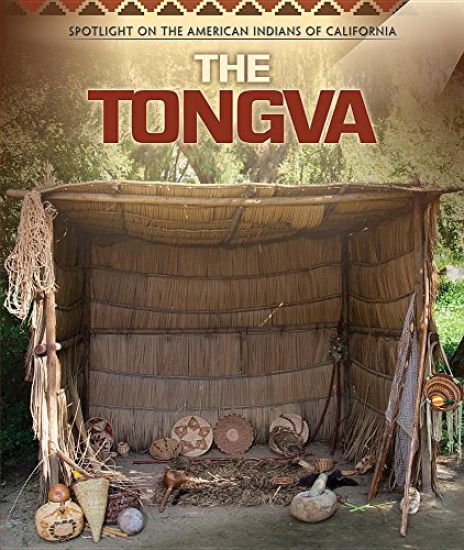
The Tongva

The Tongva

Mary Graham

PowerKids Press
2017
sidottu
The ancient Tongva people lived in the area that is now known as the city of Los Angeles. This book provides readers with a fascinating look into the culture and traditions of the Tongva. Primary sources make this a great resource for learning about the history of these American Indians of California. Students will learn about the religion and social structure of the Tongva, their interactions with Europeans, and the struggles they face today. Important topics from early elementary curricula of California are covered in rich detail alongside full-color images on each page.
Fanny Percy's Knight-Errant

Fanny Percy's Knight-Errant

Mary Graham

Hansebooks
2017
pokkari
Fanny Percy's Knight-Errant is an unchanged, high-quality reprint of the original edition of 1876. Hansebooks is editor of the literature on different topic areas such as research and science, travel and expeditions, cooking and nutrition, medicine, and other genres. As a publisher we focus on the preservation of historical literature. Many works of historical writers and scientists are available today as antiques only. Hansebooks newly publishes these books and contributes to the preservation of literature which has become rare and historical knowledge for the future.
Infinite Grace

Infinite Grace

Women of Faith; Barbara Johnson; Nicole Johnson; Marilyn Meberg; Sandi Patty; Jan Silvious; Luci Swindoll; Patsy Clairmont; Thelma Wells; Carol Kent; Mary Graham; Sheila Walsh

Thomas Nelson Publishers
2010
nidottu
From all of your favorite Women of Faith®!This lighthearted and inspirational collection of brand new devotions shares a message of grace with the warmth and wisdom fans have come to expect from Women of Faith®.Boundless Grace offers a love that has no limits, a spacious freedom for the woman who trusts in the Lord every day.Unfathomable Grace reaches deep into the heart, showing that wherever you go God is always there ahead of you.Immeasurable Grace is the overflowing, never-ending fullness of life and joy kept in the heart of God for his children.Eternal Grace shelters us through the storms of life and walks with us even through the valley of the shadow of death.Together, forty devotionals told in the authors’ diverse voices give a compelling view of why and how we can find infinite grace in Christ.Infinite Grace includes a special tribute section remembering Barbara Johnson. Sheila Walsh, Luci Swindoll, Mary Graham, Patsy Clairmont, Marilyn Meberg, Thelma Wells, Carol Kent, Sandi Patty, and others remind you that even if time is scarce in the busyness of life, God’s grace never is!
Full Disclosure

Full Disclosure

Archon Fung; Mary Graham; David Weil

Cambridge University Press
2008
pokkari
Governments employ public disclosure strategies to reduce risks, improve public and private goods and services, and reduce injustice. In the United States, these targeted transparency policies include financial securities disclosures, nutritional labels, school report cards, automobile rollover rankings, and sexual offender registries. They constitute a light-handed approach to governance that empowers citizens. However, these policies are frequently ineffective or counterproductive. Based on a comparative analysis of eighteen major policies, the authors suggest that transparency policies often produce information that is incomplete, incomprehensible, or irrelevant to the consumers, investors, workers, and community residents who could benefit from them. Sometimes transparency fails because those who are threatened by it form political coalitions to limit or distort information. To be successful, transparency policies must place the needs of ordinary citizens at centre stage and produce information that informs their everyday choices. This title is also available as Open Access on Cambridge Core.
Full Disclosure

Full Disclosure

Archon Fung; Mary Graham; David Weil

Cambridge University Press
2007
sidottu
Governments employ public disclosure strategies to reduce risks, improve public and private goods and services, and reduce injustice. In the United States, these targeted transparency policies include financial securities disclosures, nutritional labels, school report cards, automobile rollover rankings, and sexual offender registries. They constitute a light-handed approach to governance that empowers citizens. However, these policies are frequently ineffective or counterproductive. Based on a comparative analysis of eighteen major policies, the authors suggest that transparency policies often produce information that is incomplete, incomprehensible, or irrelevant to the consumers, investors, workers, and community residents who could benefit from them. Sometimes transparency fails because those who are threatened by it form political coalitions to limit or distort information. To be successful, transparency policies must place the needs of ordinary citizens at centre stage and produce information that informs their everyday choices. This title is also available as Open Access on Cambridge Core.
Democracy by Disclosure

Democracy by Disclosure

Mary Graham

Brookings Institution
2002
nidottu
In December 1999, the Institute of Medicine shocked the nation by reporting that as many as 98,000 Americans died each year from mistakes in hospitals-twice the number killed in auto accidents. Instead of strict rules and harsh penalties to reduce those risks, the Institute called for a system of standardized disclosure of medical errors. If it worked, it would create economic and political pressures for hospitals to improve their practices. Since the mid-1980s, Congress and state legislatures have approved scores of new disclosure laws to fight racial discrimination, reduce corruption, and improve services. The most ambitious systems aim to reduce risks in everyday life-risks from toxic pollution, contaminants in drinking water, nutrients in packaged foods, lead paint, workplace hazards, and SUV rollovers. Unlike traditional government warnings, they require corporations and other organizations to produce standardized factual information at regular intervals about risks they create. Legislated transparency has become a mainstream instrument of social policy. Mary Graham argues that these requirements represent a remarkable policy innovation. Enhanced by computers and the Internet, they are creating a new techno-populism-an optimistic conviction that information itself can improve the lives of ordinary citizens and encourage hospitals, manufacturers, food processors, banks, airlines, and other organizations to further public priorities. Drawing on detailed profiles of disclosure systems for toxic releases, nutritional labeling, and medical errors, Graham explains why the move toward greater transparency has flourished during a time of regulatory retrenchment and why corporations have often supported these massive raids on proprietary information. However, Democracy by Disclosure, sounds a cautionary note. Just as systems of financial disclosure have come under new scrutiny in the wake of Enron's collapse, systems of social disclosure deserve careful examination. Behind the seemingly simple idea of transparency, political battles rage over protecting trade secrets, minimizing regulatory burdens, and guarding national security. Like other forms of regulation, disclosure systems can be distorted by narrow scope, flawed metrics, minimal enforcement, or failure to adapt to changing markets and public priorities. Graham urges designers of future systems to heed lessons from early experience to avoid misleading the public.
The Morning After Earth Day

The Morning After Earth Day

Mary Graham

Brookings Institution
1999
nidottu
"As we approach the 30th anniversary of Earth Day (the first of its kind was April 1970), congressional debate about environmental protection often remains paralyzed and polarized. But across the country, environmental pragmatism is gaining ground. The Morning after Earth Day explores how policymakers, business executives, and citizen groups are fighting novel political battles and sometimes making peace with surprising compromises. After a generation of progress in reducing large sources of industrial and municipal pollution and in improving management of public lands, today's environmental conflicts are more complex. They involve controlling pollution caused by farmers, small businesses, drivers of aging cars, and homeowners, as well as minimizing ecological threats on private land. Remedies often lie in politically treacherous territory--persuading ordinary people to change their daily routines rather than ordering big business to adopt new technology or government officials to manage land differently. As Mary Graham shows, practical approaches are resolving immediate disputes and providing clues for future policy. But core dilemmas remain. They include how to reconcile environmental protection with respect for private property, how to balance federal and state authority, and how much to rely on behavioral versus technological change. Only by reclaiming the debate about these dilemmas from extremists and confronting them head-on will the nation build a solid foundation for the next generation of environmental policy. Copublished with the Governance Institute "