Kirjailija
Mary H. Allies
Kirjat ja teokset yhdessä paikassa: 7 kirjaa, julkaisuja vuosilta 2007-2016, suosituimpien joukossa Thomas William Allies. Vertaile teosten hintoja ja tarkista saatavuus suomalaisista kirjakaupoista.
7 kirjaa
Kirjojen julkaisuhaarukka 2007-2016.
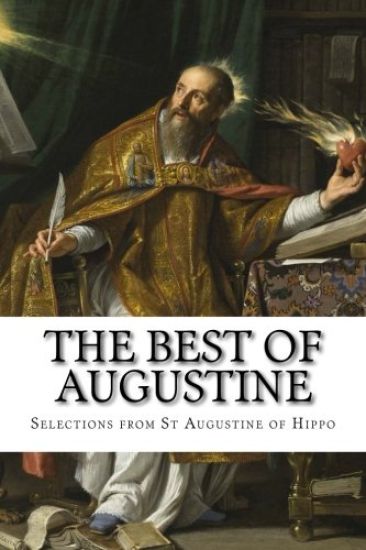
The Best of Augustine: Selections from the Writings of St Augustine of Hippo
Mary H. Allies
Createspace Independent Publishing Platform
2016
nidottu
Saint Augustine of Hippo (354-430) is considered to be the greatest of the Western Fathers of the Church. After a tumultuous, carnal, and worldly youth, albeit with great academic success, he converted to the Catholic Faith in his early thirties and quickly rose to be the most influential bishop and theologian of his age. All Christians today are deeply indebted to this great saint and to his voluminous writings on Sacred Scripture and theology. In fact almost every aspect of our modern world has been influenced by the thought of this monumental historical figure. If, indeed, in the words of Bernard of Chartres, "We are dwarfs standing on the shoulders of giants," Saint Augustine of Hippo was arguably the most towering of the giants. This 494 page book was originally published in 1886 as "Leaves from Saint Augustine" and contains ninety-nine of the best of Augustine's sermons and other writings. The editor has updated the language in the text for the benefit of the modern reader, while seeking to maintain the beauty and solemnity of language of this great saint. See other excellent classic works revised into modern English published by the editor by searching "Darrell Wright". Thanks for looking, and also for positive reviews.
Leaves From St. John Chrysostom
Mary H. Allies
Createspace Independent Publishing Platform
2013
nidottu
JOHN OF ANTIOCH was born about the year 347, of a noble family. His father, Secundus, held a high rank in the imperial army; he died early, and left a very young widow, in the bloom of age and beauty, and amply endowed with wealth. Many suitors sought to obtain the hand of St. Anthusa. She remained faithful to the memory of her husband. and devoted to the education of her only son. She brought him up in all the knowledge of the age and in strict piety, which she enforced by her example. St. Anthusa, amid all the perils of Antioch, guarded her son John with the same care which her Contemporary, St. Monica, bestowed in the small circle of an African town 0f her Augustine. She was happier in one thing. The heathen charms of Antioch exerted no such power over her son John as the like seductive beauty of Carthage exerted over the young Augustine. The prayers and the care of St. Monica and St. Anthusa were equally zealous. In the one case, after. the most terrible fall, lasting over a period of at least fourteen years, the African mother had the unspeakable joy of seeing her son's mind delivered from the most dangerous heresy of the day, and was allowed to die in the arms of the new-born Christian, who could share all her hopes of eternal life, which are recorded in the beautiful dialogue between mother and son preserved for us by that son, who was to be the greatest doctor of the Church. In the other case, the Antiochene parent to whom was applied that expression of the admiring heathen, 'See what mothers these Christians have, ' had the still rarer gift of rearing a son who never fell, who pursued from beginning to end a holy life, who was crowned with a confessorship exceeding the glory of many martyrs, and whose least merit is that he was the greatest preacher of the Eastern Church, and gave to the language of Plato, eight hundred years after him, in its decline, a glory equal to that which the Athenian gave to it in its prime. Let us consider one of these leaves from Saint John Chrysostom: "Thou art Simon the son of Jona: thou shalt be called Cephas. Since thou hast proclaimed My Father, He says, so will I name thy father to thee: which was almost saying, 'As thou art the son of Jona, so am I the Son of My Father'. For it was superfluous to say, 'Thou art the son of Jona'; but as He had spoken of the Son of God, in order to show that as Peter is the son of J ona so He is the Son of God, of the same substance as the Begetter, He added further: And I say to thee thou art Peter, and upon this rock I will build My Church-that is, on the faith of this confession. Then He shows him many men who are ready to believe, and He strengthens Peter's will and makes him pastor. And the gates of hell shall not prevail against it. ' If they shall not prevail against it, how much less against Me. So be not troubled, for thou art soon to hear that I am to be betrayed and crucified.' He goes on to speak of another honour: And I will give thee the keys of the kingdom of heaven. What does And I will give thee signify? As the Father gave thee to know Me, so do I also give it to thee. He did not say: 'I will invoke the Father, ' although the power shown forth was so great and the gift was so unutterably magnificent, but I will give thee. Tell me what hast Thou given? The keys of the kingdom of heaven, that whatsoever thou dost bind on earth shall be bound in heaven, and whatsoever thou dost loose on earth shall be loosed in heaven. How, then, was it not His to give to sit on His right and on His left Who said, I will give? Do you see how He leads Peter up to the most ineffable knowledge, how He reveals Himself, and shows Himself to be the Son of God, through that double promis
Three Catholic Reformers: of the Fifteen Century
Mary H. Allies
Createspace Independent Publishing Platform
2013
nidottu