Kirjojen hintavertailu. Mukana 12 390 323 kirjaa ja 12 kauppaa.

Kirjailija

Mary Jane Jacob

Kirjat ja teokset yhdessä paikassa: 6 kirjaa, julkaisuja vuosilta 1994-2021, suosituimpien joukossa The Studio Reader – On the Space of Artists. Vertaile teosten hintoja ja tarkista saatavuus suomalaisista kirjakaupoista.

6 kirjaa

Kirjojen julkaisuhaarukka 1994-2021.

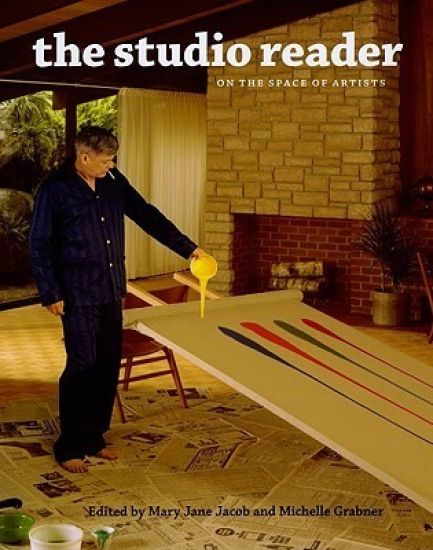
The Studio Reader – On the Space of Artists

The Studio Reader – On the Space of Artists

Mary Jane Jacob; Glenn Adamson; Svetlana Alpers; John Badlessari; Alice Bellony–rewold; Mary Bergstein; Walead Beshty; Andrea Bowers; Daniel Buren; Rochelle Feinstein; David J Getsy; Michelle Grabner; Rodney Graham; Amy Granat; Karl Haendel; Rachel Harrison; Caroline A Jones; Suzanne Lacy; Thomas Lawson; Lynn Lester Hershman; Shana Lutker; Annika Marie; Courtney Martin; Carrie Moyer; Bruce Nauman; Michael Peppiatt; David Reed; Lane Relyea; David Robbins; Judith Rodenbeck; Joe Scanlan; Brenda Schmahmann; Carolee Schneemann

University of Chicago Press
2010
nidottu
The image of a tortured genius working in near isolation has long dominated our conceptions of the artist's studio. Examples are abound: think Jackson Pollock dripping resin on a cicada carcass in his shed in the Hamptons. But times have changed; ever since Andy Warhol declared his art space a 'factory', artists have begun to envision themselves as the leaders of production teams, and their sense of what it means to be in the studio has altered just as dramatically as their practices. "The Studio Reader" pulls back the curtain from the art world to reveal the real activities behind artistic production. What does it mean to be in the studio? What is the space of the studio in the artist's practice? How do studios help artists envision their agency and, beyond that, their own lives? This forward-thinking anthology features an all-star array of contributors, ranging from Svetlana Alpers, Bruce Nauman, and Robert Storr to Daniel Buren, Carolee Schneemann, and Buzz Spector, each of whom locates the studio both spatially and conceptually - at the center of an art world that careens across institutions, markets, and disciplines. A companion for anyone engaged with the spectacular sites of art at its making, "The Studio Reader" reconsiders this crucial space as an actual way of being that illuminates our understanding of both artists and the world they inhabit.
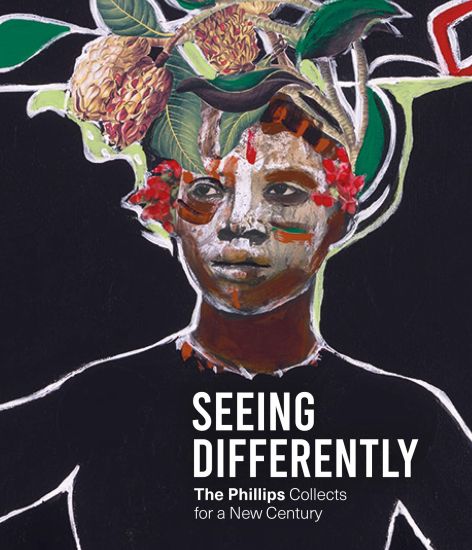
Seeing Differently: The Phillips Collects for a New Century

Seeing Differently: The Phillips Collects for a New Century

David C Driskell; Mary Jane Jacob; Dorothy Kosinski

D Giles Ltd
2021
sidottu
An expansive collection catalogue that offers a multiplicity of fresh perspectives on recent modern and contemporary art acquisitions in The Phillips Collection. Planned to coincide with The Phillips Collection's centennial and exhibition, this ground-breaking volume offers an unprecedented breadth of insights and inclusive narratives on the Phillips's growing art collection from a range of voices, including artists, critics, and scholars. Seeing Differently features works across wide-ranging media by renowned artists from the 19th to the 21st centuries, including Benny Andrews, Alexander Calder, Edgar Degas, Simone Leigh, and Renee Stout. An opening essay by Dorothy Kosinski, artist conversations, thematic essays, and 150 plates with 50 object responses by notable contributors, ensure that this will be a lasting art historical resource. AUTHORS: David C. Driskell is an artist, scholar, and professor emeritus at the University of Maryland. Mary Jane Jacob is professor and executive director of exhibitions at The School of the Art Institute of Chicago. Dorothy Kosinski is Vradenburg Director & CEO of The Phillips Collection. Elsa Smithgall is senior curator at The Phillips Collection. 278 colour illustrations
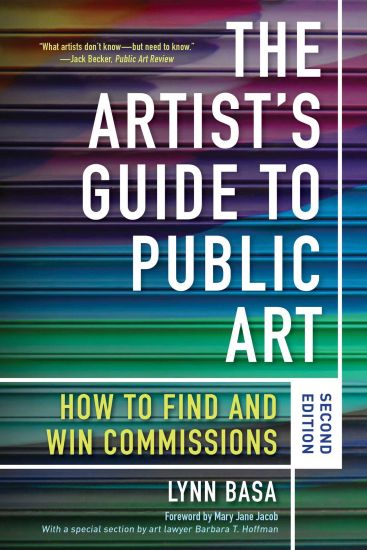
The Artist's Guide to Public Art

The Artist's Guide to Public Art

Lynn Basa; Mary Jane Jacob

Allworth Press,U.S.
2019
pokkari
A Comprehensive Guide to the Complex World of Public Art Learn how to find, apply for, compete for, and win a public art commission. First-hand interviews with experienced public artists and arts administrators provide in-the-trenches advice and insight, while a chapter on public art law, written by Barbara T. Hoffman, the country's leading public art law attorney, answers questions about this complex area. Packed with details on working with contracts, conflict, controversy, communities, committees, and more, The Artist's Guide to Public Art, Second Edition, shows artists how to cut through the red tape and win commissions that are rewarding both financially and artistically. This new edition discusses recent trends in the field, such as: how the political climate affects public art, the types of projects that receive funding, where that funding comes from, how the digital age impacts public art, how to compete with the increase of architecturally trained artists, and more. Written by an artist, for artists, this guide is packed with everything readers need to know: Finding commissions Submitting applications Negotiating contracts Budgeting for projects Navigating copyright law Working with fabricators And much more From start to finish, Lynn Basa covers all the steps of the process. With The Artist's Guide to Public Art, Second Edition, even readers without prior experience will be more than ready to confidently pursue their own public art projects.
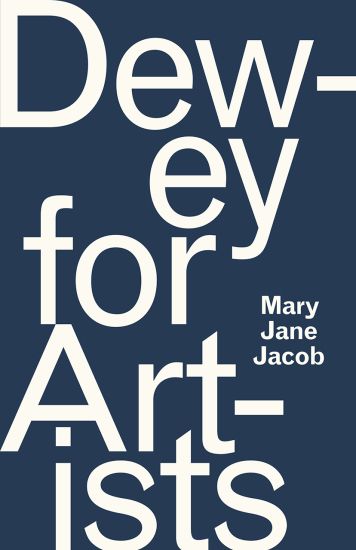
Dewey for Artists

Dewey for Artists

Mary Jane Jacob

University of Chicago Press
2018
nidottu
John Dewey is known as a pragmatic philosopher and progressive architect of American educational reform, but some of his most important contributions came in his thinking about art. Dewey argued that there is strong social value to be found in art, and it is artists who often most challenge our preconceived notions. Dewey for Artists shows us how Dewey advocated for an “art of democracy.” Identifying the audience as co-creator of a work of art by virtue of their experience, he made space for public participation. Moreover, he believed that societies only become—and remain—truly democratic if its citizens embrace democracy itself as a creative act, and in this he advocated for the social participation of artists. Throughout the book, Mary Jane Jacob draws on the experiences of contemporary artists who have modeled Dewey’s principles within their practices. We see how their work springs from deeply held values. We see, too, how carefully considered curatorial practice can address the manifold ways in which aesthetic experience happens and, thus, enable viewers to find greater meaning and purpose. And it is this potential of art for self and social realization, Jacob helps us understand, that further ensures Dewey’s legacy—and the culture we live in.
Dewey for Artists

Dewey for Artists

Mary Jane Jacob

University of Chicago Press
2018
sidottu
John Dewey is known as a pragmatic philosopher and progressive architect of American educational reform, but some of his most important contributions came in his thinking about art. Dewey argued that there is strong social value to be found in art, and it is artists who often most challenge our preconceived notions. Dewey for Artists shows us how Dewey advocated for an “art of democracy.” Identifying the audience as co-creator of a work of art by virtue of their experience, he made space for public participation. Moreover, he believed that societies only become—and remain—truly democratic if its citizens embrace democracy itself as a creative act, and in this he advocated for the social participation of artists. Throughout the book, Mary Jane Jacob draws on the experiences of contemporary artists who have modeled Dewey’s principles within their practices. We see how their work springs from deeply held values. We see, too, how carefully considered curatorial practice can address the manifold ways in which aesthetic experience happens and, thus, enable viewers to find greater meaning and purpose. And it is this potential of art for self and social realization, Jacob helps us understand, that further ensures Dewey’s legacy—and the culture we live in.