Kirjojen hintavertailu. Mukana 12 260 526 kirjaa ja 12 kauppaa.

Kirjailija

Mary-Jane Rubenstein

Kirjat ja teokset yhdessä paikassa: 13 kirjaa, julkaisuja vuosilta 2009-2024, suosituimpien joukossa Image. Vertaile teosten hintoja ja tarkista saatavuus suomalaisista kirjakaupoista.

13 kirjaa

Kirjojen julkaisuhaarukka 2009-2024.

Image

Image

Mark C. Taylor; Mary-Jane Rubenstein; Thomas A. Carlson

University of Chicago Press
2021
sidottu
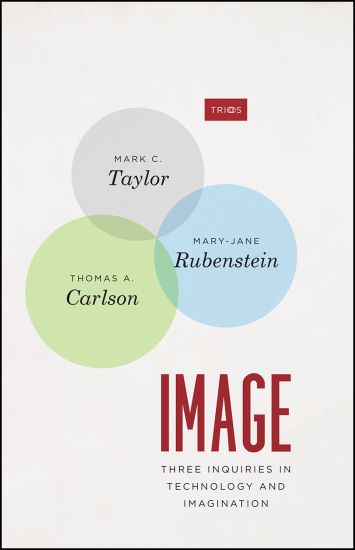
The three essays in Image, written by leading philosophers of religion, explore the modern power of the visual at the intersection of the human and the technological. Modern life is steeped in images, image-making, and attempts to control the world through vision. Mastery of images has been advanced by technologies that expand and reshape vision and enable us to create, store, transmit, and display images. The three essays in Image, written by leading philosophers of religion Mark C. Taylor, Mary-Jane Rubenstein, and Thomas A. Carlson, explore the power of the visual at the intersection of the human and the technological. Building on Heidegger’s notion that modern humanity aims to master the world by picturing or representing the real, they investigate the contemporary culture of the image in its philosophical, religious, economic, political, imperial, and military dimensions, challenging the abstraction, anonymity, and dangerous disconnection of contemporary images. Taylor traces a history of capitalism, focusing on its lack of humility, particularly in the face of mortality, and he considers art as a possible way to reconnect us to the earth. Through a genealogy of iconic views from space, Rubenstein exposes the delusions of conquest associated with extraterrestrial travel. Starting with the pressing issues of surveillance capitalism and facial recognition technology, Carlson extends Heidegger’s analysis through a meditation on the telematic elimination of the individual brought about by totalizing technologies. Together, these essays call for a consideration of how we can act responsibly toward the past in a way that preserves the earth for future generations. Attending to the fragility of material things and to our own mortality, they propose new practices of imagination grounded in love and humility.
Image

Image

Mark C. Taylor; Mary-Jane Rubenstein; Thomas A. Carlson

University of Chicago Press
2021
nidottu
The three essays in Image, written by leading philosophers of religion, explore the modern power of the visual at the intersection of the human and the technological. Modern life is steeped in images, image-making, and attempts to control the world through vision. Mastery of images has been advanced by technologies that expand and reshape vision and enable us to create, store, transmit, and display images. The three essays in Image, written by leading philosophers of religion Mark C. Taylor, Mary-Jane Rubenstein, and Thomas A. Carlson, explore the power of the visual at the intersection of the human and the technological. Building on Heidegger’s notion that modern humanity aims to master the world by picturing or representing the real, they investigate the contemporary culture of the image in its philosophical, religious, economic, political, imperial, and military dimensions, challenging the abstraction, anonymity, and dangerous disconnection of contemporary images. Taylor traces a history of capitalism, focusing on its lack of humility, particularly in the face of mortality, and he considers art as a possible way to reconnect us to the earth. Through a genealogy of iconic views from space, Rubenstein exposes the delusions of conquest associated with extraterrestrial travel. Starting with the pressing issues of surveillance capitalism and facial recognition technology, Carlson extends Heidegger’s analysis through a meditation on the telematic elimination of the individual brought about by totalizing technologies. Together, these essays call for a consideration of how we can act responsibly toward the past in a way that preserves the earth for future generations. Attending to the fragility of material things and to our own mortality, they propose new practices of imagination grounded in love and humility.
Astrotopia

Astrotopia

Mary-Jane Rubenstein

THE UNIVERSITY OF CHICAGO PRESS
2024
nidottu
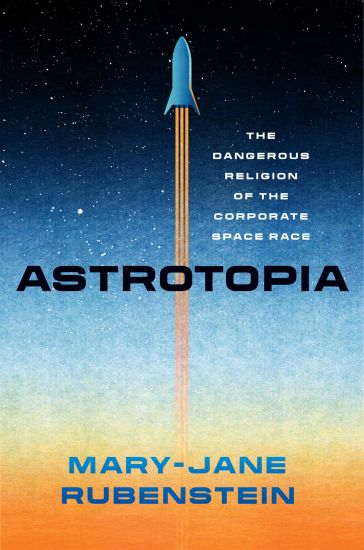
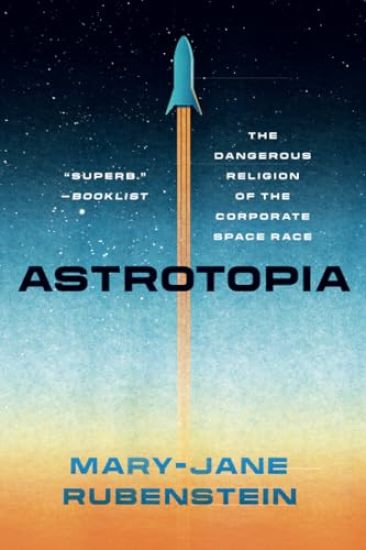
A revealing look at the parallel mythologies behind the colonization of Earth and space—and a bold vision for a more equitable, responsible future both on and beyond our planet. As environmental, political, and public health crises multiply on Earth, we are also at the dawn of a new space race in which governments team up with celebrity billionaires to exploit the cosmos for human gain. The best-known of these pioneers are selling different visions of the future: while Elon Musk and SpaceX seek to establish a human presence on Mars, Jeff Bezos and Blue Origin work toward moving millions of earthlings into rotating near-Earth habitats. Despite these distinctions, these two billionaires share a core utopian project: the salvation of humanity through the exploitation of space. In Astrotopia, philosopher of science and religion Mary-Jane Rubenstein pulls back the curtain on the not-so-new myths these space barons are peddling, like growth without limit, energy without guilt, and salvation in a brand-new world. As Rubenstein reveals, we have already seen the destructive effects of this frontier zealotry in the centuries-long history of European colonialism. Much like the imperial project on Earth, this renewed effort to conquer space is presented as a religious calling: in the face of a coming apocalypse, some very wealthy messiahs are offering an other-worldly escape to a chosen few. But Rubenstein does more than expose the values of capitalist technoscience as the product of bad mythologies. She offers a vision of exploring space without reproducing the atrocities of earthly colonialism, encouraging us to find and even make stories that put cosmic caretaking over profiteering.
Astrotopia

Astrotopia

Mary-Jane Rubenstein

THE UNIVERSITY OF CHICAGO PRESS
2022
sidottu
A revealing look at the parallel mythologies behind the colonization of Earth and space—and a bold vision for a more equitable, responsible future both on and beyond our planet. As environmental, political, and public health crises multiply on Earth, we are also at the dawn of a new space race in which governments team up with celebrity billionaires to exploit the cosmos for human gain. The best-known of these pioneers are selling different visions of the future: while Elon Musk and SpaceX seek to establish a human presence on Mars, Jeff Bezos and Blue Origin work toward moving millions of earthlings into rotating near-Earth habitats. Despite these distinctions, these two billionaires share a core utopian project: the salvation of humanity through the exploitation of space. In Astrotopia, philosopher of science and religion Mary-Jane Rubenstein pulls back the curtain on the not-so-new myths these space barons are peddling, like growth without limit, energy without guilt, and salvation in a brand-new world. As Rubenstein reveals, we have already seen the destructive effects of this frontier zealotry in the centuries-long history of European colonialism. Much like the imperial project on Earth, this renewed effort to conquer space is presented as a religious calling: in the face of a coming apocalypse, some very wealthy messiahs are offering an other-worldly escape to a chosen few. But Rubenstein does more than expose the values of capitalist technoscience as the product of bad mythologies. She offers a vision of exploring space without reproducing the atrocities of earthly colonialism, encouraging us to find and even make stories that put cosmic caretaking over profiteering.
Pantheologies

Pantheologies

Mary-Jane Rubenstein

Columbia University Press
2021
pokkari
Pantheism is the idea that God and the world are identical—that the creator, sustainer, destroyer, and transformer of all things is the universe itself. From a monotheistic perspective, this notion is irremediably heretical since it suggests divinity might be material, mutable, and multiple. Since the excommunication of Baruch Spinoza, Western thought has therefore demonized what it calls pantheism, accusing it of incoherence, absurdity, and—with striking regularity—monstrosity.In this book, Mary-Jane Rubenstein investigates this perennial repugnance through a conceptual genealogy of pantheisms. What makes pantheism “monstrous”—at once repellent and seductive—is that it scrambles the raced and gendered distinctions that Western philosophy and theology insist on drawing between activity and passivity, spirit and matter, animacy and inanimacy, and creator and created. By rejecting the fundamental difference between God and world, pantheism threatens all the other oppositions that stem from it: light versus darkness, male versus female, and humans versus every other organism. If the panic over pantheism has to do with a fear of crossed boundaries and demolished hierarchies, then the question becomes what a present-day pantheism might disrupt and what it might reconfigure. Cobbling together heterogeneous sources—medieval heresies, their pre- and anti-Socratic forebears, general relativity, quantum mechanics, nonlinear biologies, multiverse and indigenous cosmologies, ecofeminism, animal and vegetal studies, and new and old materialisms—Rubenstein assembles possible pluralist pantheisms. By mobilizing this monstrous mixture of unintentional God-worlds, Pantheologies gives an old heresy the chance to renew our thinking.
Pantheologies

Pantheologies

Mary-Jane Rubenstein

Columbia University Press
2018
sidottu
Pantheism is the idea that God and the world are identical—that the creator, sustainer, destroyer, and transformer of all things is the universe itself. From a monotheistic perspective, this notion is irremediably heretical since it suggests divinity might be material, mutable, and multiple. Since the excommunication of Baruch Spinoza, Western thought has therefore demonized what it calls pantheism, accusing it of incoherence, absurdity, and—with striking regularity—monstrosity.In this book, Mary-Jane Rubenstein investigates this perennial repugnance through a conceptual genealogy of pantheisms. What makes pantheism “monstrous”—at once repellent and seductive—is that it scrambles the raced and gendered distinctions that Western philosophy and theology insist on drawing between activity and passivity, spirit and matter, animacy and inanimacy, and creator and created. By rejecting the fundamental difference between God and world, pantheism threatens all the other oppositions that stem from it: light versus darkness, male versus female, and humans versus every other organism. If the panic over pantheism has to do with a fear of crossed boundaries and demolished hierarchies, then the question becomes what a present-day pantheism might disrupt and what it might reconfigure. Cobbling together heterogeneous sources—medieval heresies, their pre- and anti-Socratic forebears, general relativity, quantum mechanics, nonlinear biologies, multiverse and indigenous cosmologies, ecofeminism, animal and vegetal studies, and new and old materialisms—Rubenstein assembles possible pluralist pantheisms. By mobilizing this monstrous mixture of unintentional God-worlds, Pantheologies gives an old heresy the chance to renew our thinking.
Trauma and Transcendence

Trauma and Transcendence

Mary-Jane Rubenstein

Fordham University Press
2018
pokkari
Trauma theory has become a burgeoning site of research in recent decades, often demanding interdisciplinary reflections on trauma as a phenomenon that defies disciplinary ownership. While this research has always been challenged by the temporal, affective, and corporeal dimensions of trauma itself, trauma theory now faces theoretical and methodological obstacles given its growing interdisciplinarity. Trauma and Transcendence gathers scholars in philosophy, theology, psychoanalysis, and social theory to engage the limits and prospects of trauma's transcendence. This volume draws attention to the increasing challenge of deciding whether trauma's unassimilable quality can be wielded as a defense of traumatic experience against reductionism, or whether it succumbs to a form of obscurantism. Contributors: Eric Boynton, Peter Capretto, Tina Chanter, Vincenzo Di Nicola, Ronald Eyerman, Donna Orange, Shelly Rambo, Mary-Jane Rubenstein, Hilary Jerome Scarsella, Eric Severson, Marcia Mount Shoop, Robert D. Stolorow, George Yancy.
Trauma and Transcendence

Trauma and Transcendence

Mary-Jane Rubenstein

Fordham University Press
2018
sidottu
Trauma theory has become a burgeoning site of research in recent decades, often demanding interdisciplinary reflections on trauma as a phenomenon that defies disciplinary ownership. While this research has always been challenged by the temporal, affective, and corporeal dimensions of trauma itself, trauma theory now faces theoretical and methodological obstacles given its growing interdisciplinarity. Trauma and Transcendence gathers scholars in philosophy, theology, psychoanalysis, and social theory to engage the limits and prospects of trauma's transcendence. This volume draws attention to the increasing challenge of deciding whether trauma's unassimilable quality can be wielded as a defense of traumatic experience against reductionism, or whether it succumbs to a form of obscurantism. Contributors: Eric Boynton, Peter Capretto, Tina Chanter, Vincenzo Di Nicola, Ronald Eyerman, Donna Orange, Shelly Rambo, Mary-Jane Rubenstein, Hilary Jerome Scarsella, Eric Severson, Marcia Mount Shoop, Robert D. Stolorow, George Yancy.
Worlds Without End

Worlds Without End

Mary-Jane Rubenstein

Columbia University Press
2015
pokkari
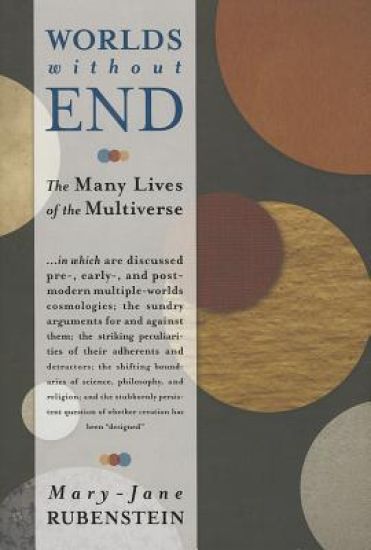
"Multiverse" cosmologies imagine our universe as just one of a vast number of others. While this idea has captivated philosophy, religion, and literature for millennia, it is now being considered as a scientific hypothesis-with different models emerging from cosmology, quantum mechanics, and string theory. Beginning with ancient Atomist and Stoic philosophies, Mary-Jane Rubenstein links contemporary models of the multiverse to their forerunners and explores the reasons for their recent appearance. One concerns the so-called fine-tuning of the universe: nature's constants are so delicately calibrated that it seems they have been set just right to allow life to emerge. For some thinkers, these "fine-tunings" are evidence of the existence of God; for others, however, and for most physicists, "God" is an insufficient scientific explanation. Hence the allure of the multiverse: if all possible worlds exist somewhere, then like monkeys hammering out Shakespeare, one universe is bound to be suitable for life. Of course, this hypothesis replaces God with an equally baffling article of faith: the existence of universes beyond, before, or after our own, eternally generated yet forever inaccessible to observation or experiment. In their very efforts to sidestep metaphysics, theoretical physicists propose multiverse scenarios that collide with it and even produce counter-theological narratives. Far from invalidating multiverse hypotheses, Rubenstein argues, this interdisciplinary collision actually secures their scientific viability. We may therefore be witnessing a radical reconfiguration of physics, philosophy, and religion in the modern turn to the multiverse.
Polydox Reflections

Polydox Reflections

Mary-Jane Rubenstein; Kathryn Tanner

John Wiley Sons Inc
2014
nidottu
Polydox Reflections stages a critical dialogue concerning the ethical and theological viability of "polydoxy." A wide range of thinkers explore this theological trend in light of their own sense of the task of modern theology. Provides sympathetic and skeptical responses to Polydoxy - a trend in contemporary theology that emphasizes the multiplicity of creation, religious traditions, and divinity itself.Introduces, expands, and refines the vibrant theological possibilities of polydoxy.Offers theological visions that are both ontologically rigorous and politically engaged.Includes essays by Virginia Burrus, Mark Jordan, Catherine Keller, Laurel Schneider and Graham Ward
Worlds Without End

Worlds Without End

Mary-Jane Rubenstein

Columbia University Press
2014
sidottu
"Multiverse" cosmologies imagine our universe as just one of a vast number of others. While this idea has captivated philosophy, religion, and literature for millennia, it is now being considered as a scientific hypothesis-with different models emerging from cosmology, quantum mechanics, and string theory. Beginning with ancient Atomist and Stoic philosophies, Mary-Jane Rubenstein links contemporary models of the multiverse to their forerunners and explores the reasons for their recent appearance. One concerns the so-called fine-tuning of the universe: nature's constants are so delicately calibrated that it seems they have been set just right to allow life to emerge. For some thinkers, these "fine-tunings" are evidence of the existence of God; for others, however, and for most physicists, "God" is an insufficient scientific explanation. Hence the allure of the multiverse: if all possible worlds exist somewhere, then like monkeys hammering out Shakespeare, one universe is bound to be suitable for life. Of course, this hypothesis replaces God with an equally baffling article of faith: the existence of universes beyond, before, or after our own, eternally generated yet forever inaccessible to observation or experiment. In their very efforts to sidestep metaphysics, theoretical physicists propose multiverse scenarios that collide with it and even produce counter-theological narratives. Far from invalidating multiverse hypotheses, Rubenstein argues, this interdisciplinary collision actually secures their scientific viability. We may therefore be witnessing a radical reconfiguration of physics, philosophy, and religion in the modern turn to the multiverse.
Strange Wonder

Strange Wonder

Mary-Jane Rubenstein

Columbia University Press
2010
pokkari
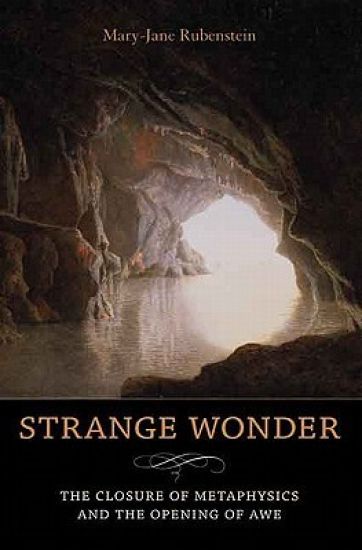
Strange Wonder confronts Western philosophy's ambivalent relationship to the Platonic "wonder" that reveals the strangeness of the everyday. On the one hand, this wonder is said to be the origin of all philosophy. On the other hand, it is associated with a kind of ignorance that ought to be extinguished as swiftly as possible. By endeavoring to resolve wonder's indeterminacy into certainty and calculability, philosophy paradoxically secures itself at the expense of its own condition of possibility. Strange Wonder locates a reopening of wonder's primordial uncertainty in the work of Martin Heidegger, for whom wonder is first experienced as the shock at the groundlessness of things and then as an astonishment that things nevertheless are. Mary-Jane Rubenstein traces this double movement through the thought of Emmanuel Levinas, Jean-Luc Nancy, and Jacques Derrida, ultimately thematizing wonder as the awesome, awful opening that exposes thinking to devastation as well as transformation. Rubenstein's study shows that wonder reveals the extraordinary in and through the ordinary, and is therefore crucial to the task of reimagining political, religious, and ethical terrain.
Strange Wonder

Strange Wonder

Mary-Jane Rubenstein

Columbia University Press
2009
sidottu
Strange Wonder confronts Western philosophy's ambivalent relationship to the Platonic "wonder" that reveals the strangeness of the everyday. On the one hand, this wonder is said to be the origin of all philosophy. On the other hand, it is associated with a kind of ignorance that ought to be extinguished as swiftly as possible. By endeavoring to resolve wonder's indeterminacy into certainty and calculability, philosophy paradoxically secures itself at the expense of its own condition of possibility. Strange Wonder locates a reopening of wonder's primordial uncertainty in the work of Martin Heidegger, for whom wonder is first experienced as the shock at the groundlessness of things and then as an astonishment that things nevertheless are. Mary-Jane Rubenstein traces this double movement through the thought of Emmanuel Levinas, Jean-Luc Nancy, and Jacques Derrida, ultimately thematizing wonder as the awesome, awful opening that exposes thinking to devastation as well as transformation. Rubenstein's study shows that wonder reveals the extraordinary in and through the ordinary, and is therefore crucial to the task of reimagining political, religious, and ethical terrain.