Kirjojen hintavertailu. Mukana 12 595 353 kirjaa ja 12 kauppaa.

Kirjailija

Mary Jo Maynes

Kirjat ja teokset yhdessä paikassa: 4 kirjaa, julkaisuja vuosilta 2008-2012, suosituimpien joukossa Telling Stories. Vertaile teosten hintoja ja tarkista saatavuus suomalaisista kirjakaupoista.

4 kirjaa

Kirjojen julkaisuhaarukka 2008-2012.

The Family

The Family

Mary Jo Maynes; Ann Waltner

Oxford University Press Inc
2012
sidottu
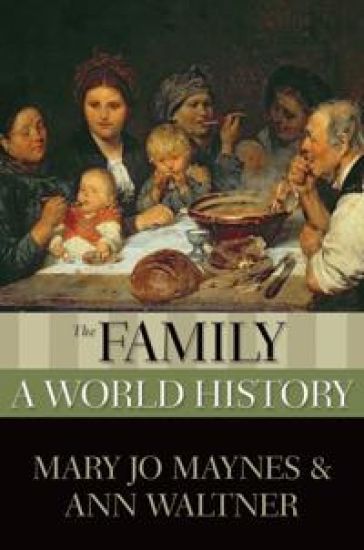
This book addresses the question of what world history looks like when the family is at the center of the story. People have always lived in families, but what that means has varied dramatically over time and across cultures. The family is not a "natural" phenomenon--it has a history. And family life is not limited to the realm of the private or the strictly personal; the family is a force of history. Gender and generational differences affect how individual family members relate to each other and how the family operates in changing historical times. For example, youth rebellion against repressive elders fed into choices about conversion to Christianity in colonial Kenya in the early twentieth century and also into the May Fourth rebellion against traditional rule in China in 1919.These are the sorts of examples that drive the narrative of The Family: A World History. Maynes and Waltner begin their story more than 10,000 years ago with various projects of domestication around the globe - different ways of inventing human settlement and explaining and attempting to control the natural world. The authors then examine how family systems and family practices help to account for the historical fate of different world regions in the era of growing world trade, colonization, and religious warfare and conversions between 1450 and 1750. They make connections between economic, political, and cultural modernity and the transformation of family and gender relationships between 1750 and 1920. Finally, they demonstrate that the struggle over family relations was central to fascist and colonial regimes, Cold War era ideological and economic confrontations, and post-World-War II antagonisms between 'developed' and 'underdeveloped' nations, and, more recently, between the global North and the global South. The narrative concludes with such contemporary realities as transcontinental family life, state programs of genocide, and innovative reproductive technologies. Taking a long and broad view of the family as a force of history brings to light processes of human development and patterns of social life that are missed by narrower investigations. This book on the family is thus also engaged in a larger conversation about what it means to be human, and how a very expansive temporal and geographic frame of history brings new insights into the human past and present. Maynes and Waltner draw on a wide range of historical sources including legal codes, census records, memoirs, art, and oral history.
The Family

The Family

Mary Jo Maynes; Ann Waltner

Oxford University Press Inc
2012
nidottu
This book addresses the question of what world history looks like when the family is at the center of the story. People have always lived in families, but what that means has varied dramatically over time and across cultures. The family is not a "natural" phenomenon--it has a history. And family life is not limited to the realm of the private or the strictly personal; the family is a force of history. Gender and generational differences affect how individual family members relate to each other and how the family operates in changing historical times. For example, youth rebellion against repressive elders fed into choices about conversion to Christianity in colonial Kenya in the early twentieth century and also into the May Fourth rebellion against traditional rule in China in 1919.These are the sorts of examples that drive the narrative of The Family: A World History. Maynes and Waltner begin their story more than 10,000 years ago with various projects of domestication around the globe - different ways of inventing human settlement and explaining and attempting to control the natural world. The authors then examine how family systems and family practices help to account for the historical fate of different world regions in the era of growing world trade, colonization, and religious warfare and conversions between 1450 and 1750. They make connections between economic, political, and cultural modernity and the transformation of family and gender relationships between 1750 and 1920. Finally, they demonstrate that the struggle over family relations was central to fascist and colonial regimes, Cold War era ideological and economic confrontations, and post-World-War II antagonisms between 'developed' and 'underdeveloped' nations, and, more recently, between the global North and the global South. The narrative concludes with such contemporary realities as transcontinental family life, state programs of genocide, and innovative reproductive technologies. Taking a long and broad view of the family as a force of history brings to light processes of human development and patterns of social life that are missed by narrower investigations. This book on the family is thus also engaged in a larger conversation about what it means to be human, and how a very expansive temporal and geographic frame of history brings new insights into the human past and present. Maynes and Waltner draw on a wide range of historical sources including legal codes, census records, memoirs, art, and oral history.
Telling Stories

Telling Stories

Mary Jo Maynes; Jennifer L. Pierce; Barbara Laslett

Cornell University Press
2008
pokkari
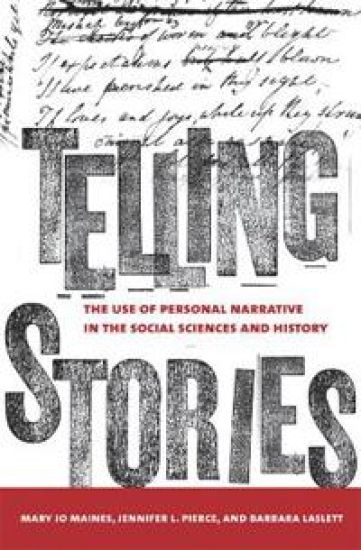
In Telling Stories, Mary Jo Maynes, Jennifer L. Pierce, and Barbara Laslett argue that personal narratives-autobiographies, oral histories, life history interviews, and memoirs-are an important research tool for understanding the relationship between people and their societies. Gathering examples from throughout the world and from premodern as well as contemporary cultures, they draw from labor history and class analysis, feminist sociology, race relations, and anthropology to demonstrate the value of personal narratives for scholars and students alike. Telling Stories explores why and how personal narratives should be used as evidence, and the methods and pitfalls of their use. The authors stress the importance of recognizing that stories that people tell about their lives are never simply individual. Rather, they are told in historically specific times and settings and call on rules, models, and social experiences that govern how story elements link together in the process of self-narration. Stories show how individuals' motivations, emotions, and imaginations have been shaped by their cumulative life experiences. In turn, Telling Stories demonstrates how the knowledge produced by personal narrative analysis is not simply contained in the stories told; the understanding that takes place between narrator and analyst and between analyst and audience enriches the results immeasurably. "This decade has witnessed the publication of several anthologies that focus on how to design and conduct oral history projects; introduce and illustrate new applications of oral history to geographical, historical, and social research; and discuss the application of new technologies to oral history methodology.... In this new, important corollary to these works, the authors emphasize the research opportunities available through analysis of personal narratives: 'Read carefully, these sources provide unique insights into the connections between individual life trajectories and collective forces and institutions beyond the individual.' Telling Stories belongs in every oral history collection. Summing Up: Essential." - Choice
Telling Stories

Telling Stories

Mary Jo Maynes; Jennifer L. Pierce; Barbara Laslett

Cornell University Press
2008
sidottu
In Telling Stories, Mary Jo Maynes, Jennifer L. Pierce, and Barbara Laslett argue that personal narratives-autobiographies, oral histories, life history interviews, and memoirs-are an important research tool for understanding the relationship between people and their societies. Gathering examples from throughout the world and from premodern as well as contemporary cultures, they draw from labor history and class analysis, feminist sociology, race relations, and anthropology to demonstrate the value of personal narratives for scholars and students alike. Telling Stories explores why and how personal narratives should be used as evidence, and the methods and pitfalls of their use. The authors stress the importance of recognizing that stories that people tell about their lives are never simply individual. Rather, they are told in historically specific times and settings and call on rules, models, and social experiences that govern how story elements link together in the process of self-narration. Stories show how individuals' motivations, emotions, and imaginations have been shaped by their cumulative life experiences. In turn, Telling Stories demonstrates how the knowledge produced by personal narrative analysis is not simply contained in the stories told; the understanding that takes place between narrator and analyst and between analyst and audience enriches the results immeasurably. "This decade has witnessed the publication of several anthologies that focus on how to design and conduct oral history projects; introduce and illustrate new applications of oral history to geographical, historical, and social research; and discuss the application of new technologies to oral history methodology.... In this new, important corollary to these works, the authors emphasize the research opportunities available through analysis of personal narratives: 'Read carefully, these sources provide unique insights into the connections between individual life trajectories and collective forces and institutions beyond the individual.' Telling Stories belongs in every oral history collection. Summing Up: Essential." - Choice