Kirjojen hintavertailu. Mukana 12 187 899 kirjaa ja 12 kauppaa.

Kirjailija

Mary Keyes

Kirjat ja teokset yhdessä paikassa: 6 kirjaa, julkaisuja vuosilta 2014-2020, suosituimpien joukossa Codifying Contract Law. Vertaile teosten hintoja ja tarkista saatavuus suomalaisista kirjakaupoista.

6 kirjaa

Kirjojen julkaisuhaarukka 2014-2020.

Changing Law

Changing Law

Mary Keyes

Routledge
2020
nidottu
Originally published in 2005. Law has a complex relationship to the phenomenon of change; it is an instrument, a cause and an inhibitor of change. Law has both effected and been affected by extraordinary changes, particularly in the late twentieth and early twenty-first centuries. This interdisciplinary collection addresses, from a range of perspectives, the theme of 'changing law'. The essays cover historical and contemporary issues of social, political and legal change, including human rights, security, law reform, changes in knowledge production in universities and specifically in the legal academy, and the legal oppression/protection of racial minorities. The chapters are grouped into three sections around shared focuses on states, institutions and justice, and collectively address common concerns of rights, regulation and reconciliation: key legal problematics of the early twenty-first century.
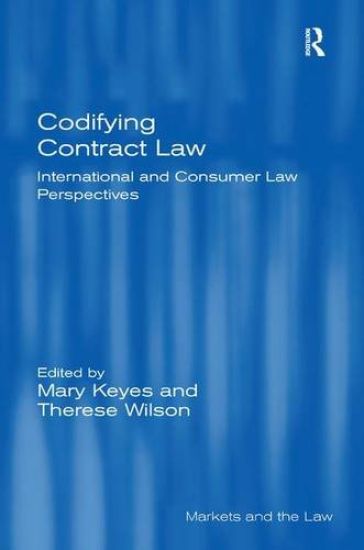
Codifying Contract Law

Codifying Contract Law

Mary Keyes; Therese Wilson

Routledge
2020
nidottu
Exploring the advantages and disadvantages of codifying contract law, this book considers the question from the perspectives of both civil and common law systems, referring in detail to issues of international and consumer law. With contributions from leading international scholars, the chapters present a range of opinions on the virtues of codification, encouraging further debate on this topic. The book commences with a discussion on the internationalization imperative for codification of contract law. It then turns to regional issues, exploring first codification attempts in the European Union and Japan, and then issues relevant to codification in the common law jurisdictions of Australia, New Zealand and the United States. The collection concludes with two chapters which consider the need to draw upon both private and comparative international law perspectives to inform any codification reforms. This book will be of interest to international and comparative contract law academics, as well as regulators and policy-makers.
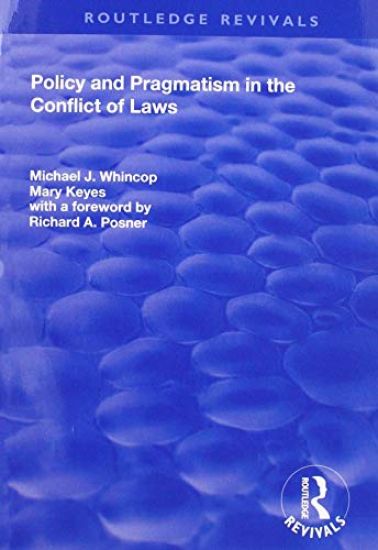
Policy and Pragmatism in the Conflict of Laws

Policy and Pragmatism in the Conflict of Laws

Michael J. Whincop; Mary Keyes; Richard Posner

Routledge
2019
nidottu
This title was first published in 2001. After languishing for decades in the domains of rigid doctrinalism and confusing theory, the conflict of laws is increasingly being recognized as an important area of law to a global community. To demonstrate its importance, Michael Whincop and Mary Keyes transcend the divide between the English pragmatic tradition and the circularity of American policy-based theory. They argue that the law governing multistage conflicts can minimize the social costs of litigation, increase the extent of co-ordination, facilitate private ordering and limit regulatory monopolies and cross-border spillovers. Pragmatic in outlook and economic in methodology, they pursue these themes across a broad range of doctrinal issues and offer valuable links to parallel analyses in domestic contexts.
Changing Law

Changing Law

Mary Keyes

CRC Press Inc
2019
sidottu
Originally published in 2005. Law has a complex relationship to the phenomenon of change; it is an instrument, a cause and an inhibitor of change. Law has both effected and been affected by extraordinary changes, particularly in the late twentieth and early twenty-first centuries. This interdisciplinary collection addresses, from a range of perspectives, the theme of 'changing law'. The essays cover historical and contemporary issues of social, political and legal change, including human rights, security, law reform, changes in knowledge production in universities and specifically in the legal academy, and the legal oppression/protection of racial minorities. The chapters are grouped into three sections around shared focuses on states, institutions and justice, and collectively address common concerns of rights, regulation and reconciliation: key legal problematics of the early twenty-first century.
Policy and Pragmatism in the Conflict of Laws

Policy and Pragmatism in the Conflict of Laws

Michael J. Whincop; Mary Keyes; Richard Posner

Routledge
2017
sidottu
This title was first published in 2001. After languishing for decades in the domains of rigid doctrinalism and confusing theory, the conflict of laws is increasingly being recognized as an important area of law to a global community. To demonstrate its importance, Michael Whincop and Mary Keyes transcend the divide between the English pragmatic tradition and the circularity of American policy-based theory. They argue that the law governing multistage conflicts can minimize the social costs of litigation, increase the extent of co-ordination, facilitate private ordering and limit regulatory monopolies and cross-border spillovers. Pragmatic in outlook and economic in methodology, they pursue these themes across a broad range of doctrinal issues and offer valuable links to parallel analyses in domestic contexts.
Codifying Contract Law

Codifying Contract Law

Mary Keyes; Therese Wilson

Routledge
2014
sidottu
Exploring the advantages and disadvantages of codifying contract law, this book considers the question from the perspectives of both civil and common law systems, referring in detail to issues of international and consumer law. With contributions from leading international scholars, the chapters present a range of opinions on the virtues of codification, encouraging further debate on this topic. The book commences with a discussion on the internationalization imperative for codification of contract law. It then turns to regional issues, exploring first codification attempts in the European Union and Japan, and then issues relevant to codification in the common law jurisdictions of Australia, New Zealand and the United States. The collection concludes with two chapters which consider the need to draw upon both private and comparative international law perspectives to inform any codification reforms. This book will be of interest to international and comparative contract law academics, as well as regulators and policy-makers.