Kirjojen hintavertailu. Mukana 12 595 353 kirjaa ja 12 kauppaa.

Kirjailija

Mary McAvoy

Kirjat ja teokset yhdessä paikassa: 4 kirjaa, julkaisuja vuosilta 2012-2019, suosituimpien joukossa Drama and Education. Vertaile teosten hintoja ja tarkista saatavuus suomalaisista kirjakaupoista.

4 kirjaa

Kirjojen julkaisuhaarukka 2012-2019.

Rehearsing Revolutions

Rehearsing Revolutions

Mary McAvoy

University of Iowa Press
2019
nidottu
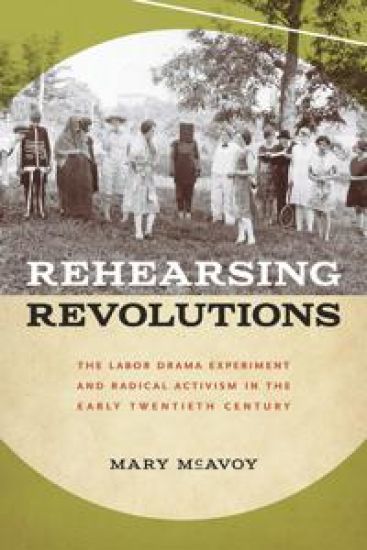
Between the world wars, several labor colleges sprouted up across the U.S. These schools, funded by unions, sought to provide members with adult education while also indoctrinating them into the cause. As Mary McAvoy reveals, a big part of that learning experience centered on the schools' drama programs. For the first time, Rehearsing Revolutions shows how these left-leaning drama programs prepared American workers for the “on-the-ground” activism emerging across the country. In fact, McAvoy argues, these amateur stages served as training grounds for radical social activism in early twentieth-century America.Using a wealth of previously unpublished material such as director's reports, course materials, playscripts, and reviews, McAvoy traces the programs' evolution from experimental teaching tool to radically politicized training that inspired overt—even militant—labor activism by the late 1930s. All the while, she keeps an eye on larger trends in public life, connecting interwar labor drama to post-war arts-based activism in response to McCarthyism, the Cold War, and the Civil Rights movement. Ultimately, McAvoy asks: What did labor drama do for the workers' colleges and why did they pursue it? She finds her answer through several different case studies in places like the Portland Labor College and the Highlander Folk School in Tennessee.
Drama and Education

Drama and Education

Manon van de Water; Mary McAvoy; Kristin Hunt

Routledge
2015
nidottu
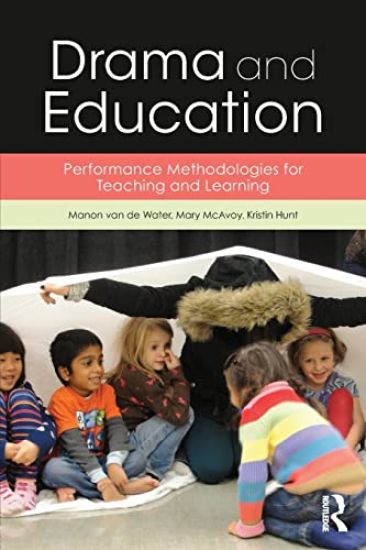
Drama and Education provides a practical, comprehensive guide to drama as a tool for teaching and learning. It is among the first practical drama and performance textbooks that address brain-based, neuroscientific research, making the argument that creativity is necessary in our lives, that embodied learning is natural and essential, and that contextual learning helps us find our place in society in relationship to other peoples and cultures. As well as a historical and theoretical overview of the field, it provides rationale and techniques for several specific methodologies: linear drama, process-oriented drama, drama for social justice, and performance art.Each approach is supplemented with sample lesson plans, activities, ideas for differentiation, and extensive bibliographies. The topics are discussed from five key angles:• Historical and theoretical foundations• Curricular applications• Practical toolkits for a range of classrooms and learning environments• Different strategies for lesson plans• Extension options for longer workshops.Alongside these core methods, the integration of other innovative forms—from performance art to Theatre of the Oppressed—into drama-based learning is explored, as well as the pragmatic concerns such as assessment, planning, and advocacy for arts learning and arts education partnerships. Drama and Education is the comprehensive textbook for teachers and students on Applied Theatre and Theatre and Education courses.
Drama and Education

Drama and Education

Manon van de Water; Mary McAvoy; Kristin Hunt

Routledge
2015
sidottu
Drama and Education provides a practical, comprehensive guide to drama as a tool for teaching and learning. It is among the first practical drama and performance textbooks that address brain-based, neuroscientific research, making the argument that creativity is necessary in our lives, that embodied learning is natural and essential, and that contextual learning helps us find our place in society in relationship to other peoples and cultures. As well as a historical and theoretical overview of the field, it provides rationale and techniques for several specific methodologies: linear drama, process-oriented drama, drama for social justice, and performance art.Each approach is supplemented with sample lesson plans, activities, ideas for differentiation, and extensive bibliographies. The topics are discussed from five key angles:• Historical and theoretical foundations• Curricular applications• Practical toolkits for a range of classrooms and learning environments• Different strategies for lesson plans• Extension options for longer workshops.Alongside these core methods, the integration of other innovative forms—from performance art to Theatre of the Oppressed—into drama-based learning is explored, as well as the pragmatic concerns such as assessment, planning, and advocacy for arts learning and arts education partnerships. Drama and Education is the comprehensive textbook for teachers and students on Applied Theatre and Theatre and Education courses.
The Setting of the Sun

The Setting of the Sun

Mary McAvoy

Syntax and Style
2012
nidottu
The Setting of the Sun takes place in a single day, as Anne (who is 95 years old) attends the wake, funeral and burial of her husband, her one true love, Tom. With tenderness, her daughter Maggie helps Anne with her confusion and sadness as her mind drifts between the past and present. Throughout the day, events elicit in Anne's mind memories of her childhood and her life with Tom in the mill city of Lawrence, Massachusetts, and she relives wonderful moments of her sisterly love with her best friend, Annie. Meanwhile, Maggie grieves for her father while realizing that her mother, too, will soon pass on. After a family gathering, Anne returns home to face life without Tom. Allusions to a poem Anne wrote to Tom years earlier are sprinkled throughout the story. At the end of the novel is the poem - titled "The Setting of the Sun" - in which Anne expresses with simple eloquence the essence of true love -- and love's power over death is realized. The Setting of the Sun will resonate with elders as well as those who are caring for them. Through Anne, The Setting of the Sun addresses with sensitivity and frankness what it feels like to be very old, and to be looking death straight in the eye.