Kirjojen hintavertailu. Mukana 12 595 353 kirjaa ja 12 kauppaa.

Kirjailija

Mary O'Dowd

Kirjat ja teokset yhdessä paikassa: 5 kirjaa, julkaisuja vuosilta 2003-2020, suosituimpien joukossa Marriage in Ireland, 1660–1925. Vertaile teosten hintoja ja tarkista saatavuus suomalaisista kirjakaupoista.

Mukana myös kirjoitusasut: Mary O’Dowd

5 kirjaa

Kirjojen julkaisuhaarukka 2003-2020.

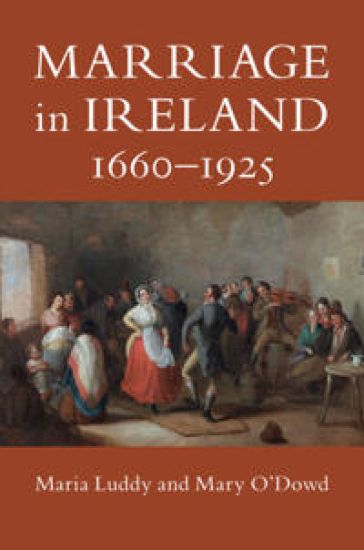
Marriage in Ireland, 1660–1925

Marriage in Ireland, 1660–1925

Maria Luddy; Mary O'Dowd

Cambridge University Press
2020
pokkari
What were the laws on marriage in Ireland, and did church and state differ in their interpretation? How did men and women meet and arrange to marry? How important was patriarchy and a husband's control over his wife? And what were the options available to Irish men and women who wished to leave an unhappy marriage? This first comprehensive history of marriage in Ireland across three centuries looks below the level of elite society for a multi-faceted exploration of how marriage was perceived, negotiated and controlled by the church and state, as well as by individual men and women within Irish society. Making extensive use of new and under-utilised primary sources, Maria Luddy and Mary O'Dowd explain the laws and customs around marriage in Ireland. Revising current understandings of marital law and relations, Marriage in Ireland, 1660–1925 represents a major new contribution to Irish historical studies.
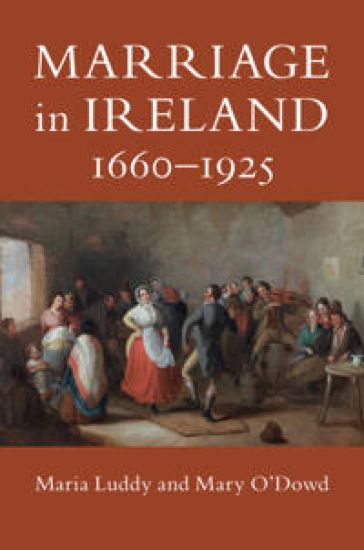
Marriage in Ireland, 1660–1925

Marriage in Ireland, 1660–1925

Maria Luddy; Mary O'Dowd

Cambridge University Press
2020
sidottu
What were the laws on marriage in Ireland, and did church and state differ in their interpretation? How did men and women meet and arrange to marry? How important was patriarchy and a husband's control over his wife? And what were the options available to Irish men and women who wished to leave an unhappy marriage? This first comprehensive history of marriage in Ireland across three centuries looks below the level of elite society for a multi-faceted exploration of how marriage was perceived, negotiated and controlled by the church and state, as well as by individual men and women within Irish society. Making extensive use of new and under-utilised primary sources, Maria Luddy and Mary O'Dowd explain the laws and customs around marriage in Ireland. Revising current understandings of marital law and relations, Marriage in Ireland, 1660–1925 represents a major new contribution to Irish historical studies.
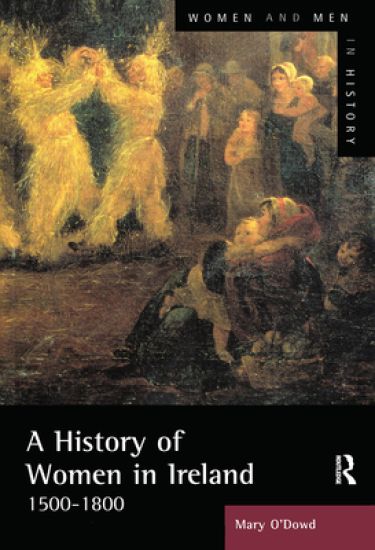
A History of Women in Ireland, 1500-1800
The first general survey of the history of women in early modern Ireland. Based on an impressive range of source material, it presents the results of original research into women’s lives and experiences in Ireland from 1500 to 1800. This was a time of considerable change in Ireland as English colonisation, religious reform and urbanisation transformed society on the island. Gaelic society based on dynastic lordships and Brehon Law gave way to an anglicised and centralised form of government and an English legal system.
Reading the Irish Woman

Reading the Irish Woman

Gerardine Meaney; Mary O’Dowd; Bernadette Whelan

Liverpool University Press
2013
sidottu
An Open Access edition of this book is available on the Liverpool University Press website and the OAPEN library.The theme of this book is cultural encounter and exchange in Irish women’s lives. Using three case studies: the Enlightenment, emigration and modernism, it analyses reading and popular and consumer culture as sites of negotiation of gender roles. It traces how the circulation of ideas, fantasies and aspirations which have shaped women’s lives in actuality and in imagination and argues that there were many different ways of being a woman. Attention to women’s cultural consumption and production shows that one individual may in one day identify with representations of heroines of romantic fiction, patriots, philanthropists, literary ladies, film stars, career women, popular singers, advertising models and foreign missionaries. The processes of cultural consumption, production and exchange provide evidence of women’s agency, aspirations and activities within and far beyond the domestic sphere.