Kirjojen hintavertailu. Mukana 12 390 323 kirjaa ja 12 kauppaa.

Kirjailija

Mary Sarah Bilder

Kirjat ja teokset yhdessä paikassa: 3 kirjaa, julkaisuja vuosilta 2008-2022, suosituimpien joukossa Female Genius. Vertaile teosten hintoja ja tarkista saatavuus suomalaisista kirjakaupoista.

3 kirjaa

Kirjojen julkaisuhaarukka 2008-2022.

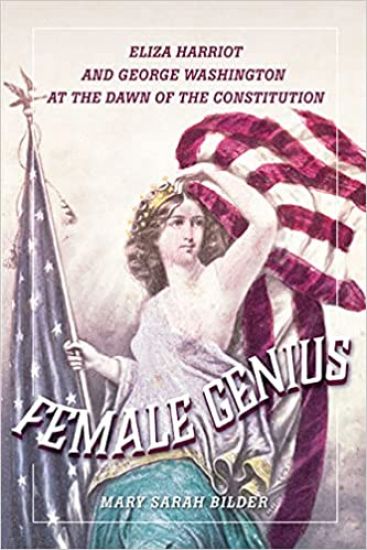
Female Genius

Female Genius

Mary Sarah Bilder

UNIVERSITY OF VIRGINIA PRESS
2022
sidottu
In this provocative new biography, Mary Sarah Bilder looks to the 1780s—the Age of the Constitution—to investigate the rise of a radical new idea in the English-speaking world: female genius. Bilder finds the perfect exemplar of this phenomenon in English-born Eliza Harriot Barons O’Connor. This pathbreaking female educator delivered a University of Pennsylvania lecture attended by George Washington as he and other Constitutional Convention delegates gathered in Philadelphia. As the first such public female lecturer, her courageous performance likely inspired the gender-neutral language of the Constitution. Female Genius reconstructs Eliza Harriot’s transatlantic life, from Lisbon to Charleston, paying particular attention to her lectures and to the academies she founded, inspiring countless young American women to consider a college education and a role in the political forum. Promoting the ideas made famous by Mary Wollstonecraft, Eliza Harriot brought the concept of female genius to the United States. Its advocates argued that women had equal capacity and deserved an equal education and political representation. Its detractors, who feared it undermined male political power, felt deeply threatened. By 1792 Eliza Harriot experienced struggles that reflected the larger backlash faced by women and people of color as new written constitutions provided the political and legal tools for exclusion based on sex, gender, and race.In recovering this pioneering life, the richly illustrated Female Genius makes clear that America’s framing moment did not belong solely to white men and offers an inspirational transatlantic history of women who believed in education as a political right.
Madison’s Hand

Madison’s Hand

Mary Sarah Bilder

Harvard University Press
2017
nidottu
Winner of the Bancroft PrizeWinner of the James Bradford Best Biography Prize, Society for Historians of the Early American RepublicFinalist, Literary Award for Nonfiction, Library of VirginiaFinalist, George Washington PrizeJames Madison’s Notes on the 1787 Constitutional Convention have acquired nearly unquestioned authority as the description of the U.S. Constitution’s creation. No document provides a more complete record of the deliberations in Philadelphia or depicts the Convention’s charismatic figures, crushing disappointments, and miraculous triumphs with such narrative force. But how reliable is this account?“[A] superb study of the Constitutional Convention as selectively reflected in Madison’s voluminous notes on it…Scholars have been aware that Madison made revisions in the Notes but have not intensively explored them. Bilder has looked closely indeed at the Notes and at his revisions, and the result is this lucid, subtle book. It will be impossible to view Madison’s role at the convention and read his Notes in the same uncomplicated way again…An accessible and brilliant rethinking of a crucial moment in American history.”—Robert K. Landers, Wall Street Journal
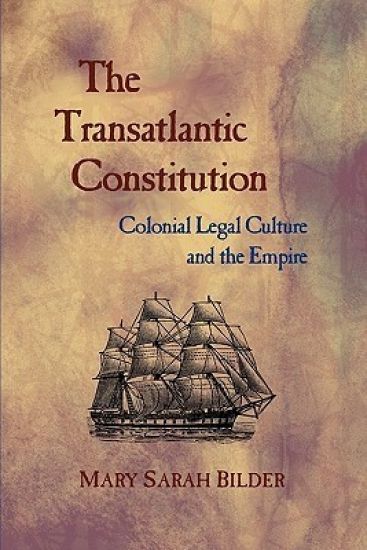
The Transatlantic Constitution

The Transatlantic Constitution

Mary Sarah Bilder

Harvard University Press
2008
nidottu
Departing from traditional approaches to colonial legal history, Mary Sarah Bilder argues that American law and legal culture developed within the framework of an evolving, unwritten transatlantic constitution that lawyers, legislators, and litigants on both sides of the Atlantic understood. The central tenet of this constitution—that colonial laws and customs could not be repugnant to the laws of England but could diverge for local circumstances—shaped the legal development of the colonial world.Focusing on practices rather than doctrines, Bilder describes how the pragmatic and flexible conversation about this constitution shaped colonial law: the development of the legal profession; the place of English law in the colonies; the existence of equity courts and legislative equitable relief; property rights for women and inheritance laws; commercial law and currency reform; and laws governing religious establishment. Using as a case study the corporate colony of Rhode Island, which had the largest number of appeals of any mainland colony to the English Privy Council, she reconstructs a largely unknown world of pre-Constitutional legal culture.