Kirjojen hintavertailu. Mukana 12 595 353 kirjaa ja 12 kauppaa.
Kirjailija
Mary Townsend
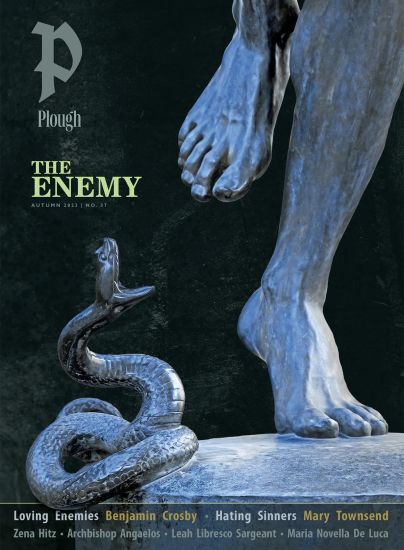
Kirjat ja teokset yhdessä paikassa: 6 kirjaa, julkaisuja vuosilta 2017-2023, suosituimpien joukossa Plough Quarterly No. 37 – The Enemy. Vertaile teosten hintoja ja tarkista saatavuus suomalaisista kirjakaupoista.
Benjamin Crosby; Archbishop Angaelos; Zena Hitz; Leah Libresco Sargeant; Nathan Beacom; Susannah Black Roberts; Mary Townsend; Sarah Clarkson; Antoine E. Davis; Aaron Edward Olson; Maria Novella De Luca; Rachel Cañon Naffziger; Stephen Edgar; Oddny Gumaer; Kathleen A. Mulhern
What should we do with enemies?Jesus challenges us to love our enemies. In today’s swirl of hatemongering, political polarization, and online nastiness, even Christians have skirted this command or given it up as impossible or foolish. What does it really mean to love our enemies? And how might our lives and our world change if we did? In this issue we apply these tough questions to real situations, and hear from people who have put this command into practice in some of the toughest circumstances.On this theme: - Can we afford to love our enemies in a cancel culture?- What sort of enemies did Jesus expect us to love? - The problem with "love the sinner, hate the sin"- Channeling outrage while working with children displaced by war- What Coptic Christians know about praying for their persecutors- Two incarcerated friends defy a racist prison culture.- What about mental illness, when your mind becomes your enemy? - Students find ways to debate tough issues constructively.- A Russian Christian speaks out against the war in Ukraine.Also in the issue:- Maria Novella De Luca photographs Algerian women demining the Sahara.- Dana Wiser remembers civil rights activist Staughton Lynd.- Zena Hitz asks what we’d do with our time if we weren’t so busy.- Kathleen A. Mulhern gives advice for keeping the faith afterhours.- Susannah Black Roberts celebrates the life and example of Tim Keller.- Nathan Beacom call for reestablishing Lyceums in working-class towns.- Maureen swinger recounts the exploits of Monsignor Hugh O’Flaherty.Plough Quarterly features stories, ideas, and culture for people eager to apply their faith to the challenges we face. Each issue includes in-depth articles, interviews, poetry, book reviews, and art.
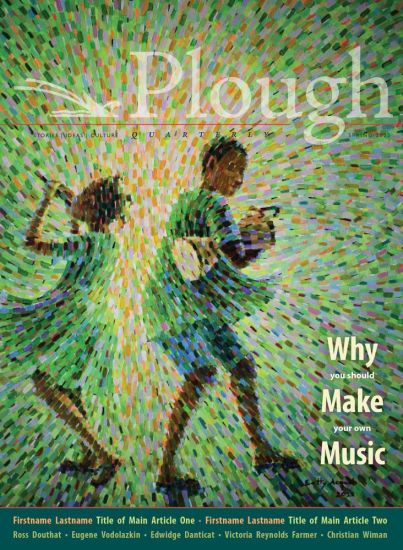
Christopher Tin; Stephen Michael Newby; Mary Townsend; Maureen Swinger; Joseph Julián González; Phil Christman; Eugene Vodolazkin; Esther Maria Magnis; Ben Crosby; Nathan Schram; Brittany Petruzzi; Norann Voll
Communal music has the power to shape a soul and a society.In many places today, a culture of singing and making music remains robust, despite pressure from the commercial music industry. Or it was until the Covid pandemic hit and we glimpsed what a world without communal music-making could be like. According to Plato, virtuous music is vital for building a virtuous community. Jewish and Christian traditions take this insight even further: good communal music shapes and builds up the people of God. So how can we choose good music and avoid the bad? The sheer ubiquity of music available for consumption – its presence as a near-constant soundtrack to our daily lives – poses a hazard. Digital music on tap is a temptation to chronic distraction of the soul, to a habit of superficiality and non-attention. Fortunately, the remedy is straightforward: spend less time consuming prepackaged tunes and more time making music. This will be doubly rewarding if done with others – singing with one’s family, singing in church, playing in a string quartet, starting a regular jam session. If personal media players tend to cut us off from the physical presence of others, sharing in good music together breaks the spell of isolation and disembodiment. It builds friendship and community.On this theme:- Maureen Swinger’s amateur choir sings Bach’s Saint Matthew Passion.- Stephen Michael Newby says Black spirituals aren’t just for Black people. - Mary Townsend finds Dolly Parton magnificent, but would Aristotle? - Phil Christman finds catharsis in the YouTube comments of eighties songs. - Ben Crosby says congregational singing should be unabashedly weird to visitors.- Joseph Julián González draws on ancient Nahua poets in his music.- Christopher Tin explains why he weaves so many historical influences into his music. - Seven musicians talk about making your own music in schools, churches, prisons, backyards, or children’s bedrooms: Nathan Schram, Esther Keiderling, Norann Voll, Chaka Watch Ngwenya, Eileen Maendel, Adora Wong, and Brittany Petruzzi.Also in the issue: Exclusive excerpts from forthcoming books by Eugene Vodolazkin and Esther Maria Magnis- Thoughts on music from Augustine, Gregory of Nyssa, Hildegard of Bingen, Martin Luther, and Eberhard Arnold- Catholics and Anabaptists unite to commemorate the Radical Reformation- New poems by Jacqueline Saphra- A profile of Argentinian singer Mercedes Sosa.- Reviews of Kate Clifford Larson’s Walk with Me, Rowan Williams’s Shakeshafte, and Sam Quinones’s The Least of UsPlough Quarterly features stories, ideas, and culture for people eager to apply their faith to the challenges we face. Each issue includes in-depth articles, interviews, poetry, book reviews, and art.
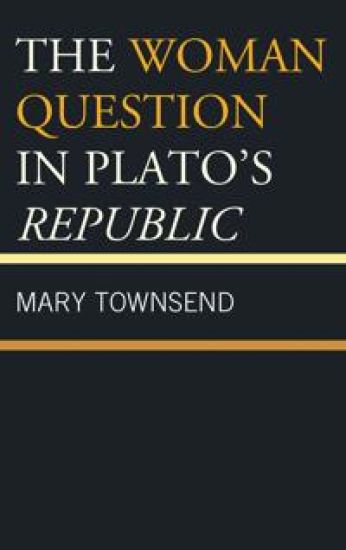
In this book, Mary Townsend proposes that, contrary to the current scholarship on Plato's Republic, Socrates does not in fact set out to prove the weakness of women. Rather, she argues that close attention to the drama of the Republic reveals that Plato dramatizes the reluctance of men to allow women into the public sphere and offers a deeply aporetic vision of women’s nature and political position—a vision full of concern not only for the human community, but for the desires of women themselves.