Kirjojen hintavertailu. Mukana 12 459 402 kirjaa ja 12 kauppaa.

Kirjailija

Mary Zeiss Stange

Kirjat ja teokset yhdessä paikassa: 6 kirjaa, julkaisuja vuosilta 1998-2024, suosituimpien joukossa Heart Shots. Vertaile teosten hintoja ja tarkista saatavuus suomalaisista kirjakaupoista.

6 kirjaa

Kirjojen julkaisuhaarukka 1998-2024.

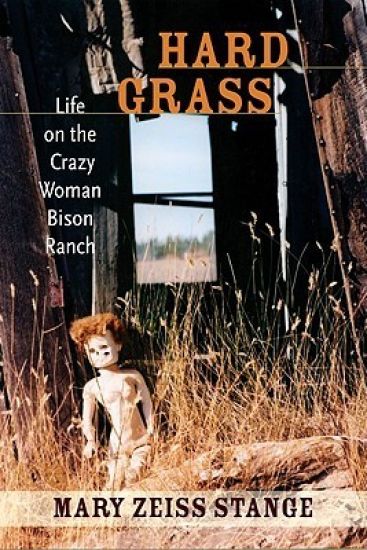
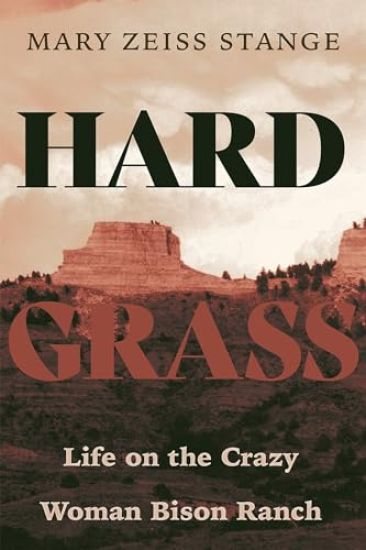
Hard Grass

Hard Grass

Mary Zeiss Stange

UNIVERSITY OF NEW MEXICO PRESS
2024
pokkari
Gold Medal Winner for Best Regional Non-Fiction, 2011 Independent Publisher Book AwardsMary Zeiss Stange's story of running a bison ranch with her husband in southeastern Montana--on the outskirts of nowhere and far-from-here--is a narrative of survival in a landscape and a society at once harsh and alluring. In this series of essays she illustrates the realities of ranch life at a time when the ""New West"" of subdivision, ""ranchettes,"" telecommuting, and tourism collides with the ""True West"" of too much, too little, too hard, and too harsh. This society is molded by the climate, and both run to extremes, simultaneously unforgiving, often brutal, yet capable of unalloyed charm and breathtaking beauty.Her stories explore the myths and realities of ranch life in modern America--the brandings, rodeos, and demolition derbies that are major events, and the social, environmental, and political factors at work in shaping the land and the people.Less memoir than deep history of people and place, these vivid, naturalistic tales examine the complex relationships that comprise life in the rural West today.
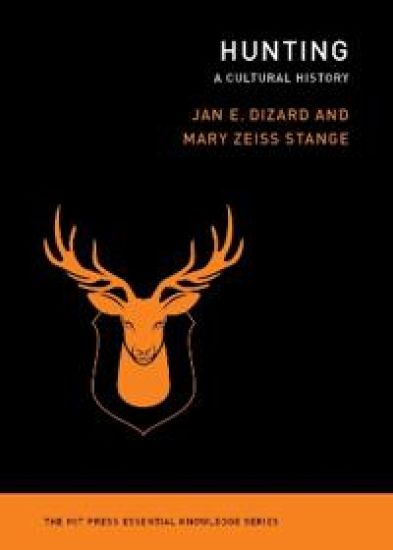
Hunting

Hunting

Jan Dizard; Mary Zeiss Stange

MIT PRESS LTD
2022
nidottu
The history of hunting, from Stone Age hunter-gatherers to today's sport hunters. Hunting has a long history, beginning with our hominid ancestors. The invention of the spear allowed early humans to graduate from scavenging to actual hunting. The famous cave paintings at Lascaux show a meticulous knowledge of animal behavior and anatomy that only a hunter would have. This volume in the MIT Press Essential Knowledge series traces the evolution of hunting, from Stone Age hunting and gathering to today's regulated sport hunting. Humans have been hunting since we became human--but did hunting make us human? The authors consider and question the "hunting hypothesis of human origins," noting that according to this theory, "hunting" meant hunting by men. They explore hunting in the Stone Age and how, beginning some ten thousand years ago, the spread of agriculture led to the emergence of empires and attempts by elites to monopolize hunting. They examine the democratization of hunting in the American colonies and how hunters decimated, but then, in the twentieth century, rallied to save game animals from extinction. They describe how some European and postcolonial societies have managed wildlife and hunting, consider the difficulties of living with abundant wildlife--even as many nongame species are disappearing--and trace the implications of the increasing participation of women in hunting for the future of hunting.
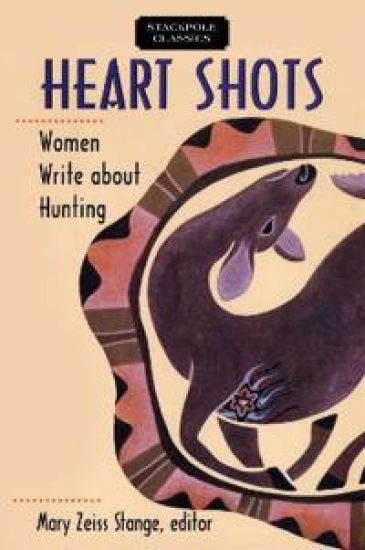
Heart Shots

Heart Shots

Mary Zeiss Stange

Stackpole Books
2018
nidottu
"A heart shot is what every big game hunter hopes for," Editor Mary Zeiss Stange explains in the introduction to Heart Shots, "that perfect shot placement, whether of bullet or arrow, which ensures a quick, humane kill. A heart shot is also what the best hunting writing has always aimed for--that certain image, or theme, or turn of phrase that strikes to the core of our flesh-and-blood humanity, piercing the tissue-thin membrane between life and death." Hunting and writing about it have not commonly been thought of as women's work, but today women are hunting and writing about it in unprecedented numbers. This collection of stories by 46 hunters who happen to be female shows us that in fact some women have always hunted, and some have written dazzling accounts of their experiences. What you'll find in k to nature and basics and to express in narrative, image, and metaphor the complex meaning of being predator, such impulses are ageless and genderless. There are differences in the way women go about hunting and telling its story. Some are subtle and some are startling. In this marvelous collection a full range of writers from hard-edged realists to contemplative naturalists express the complex thought and emotion that constitute hunting with intelligence and insight. These women are aware of the fact that they are doing something distinctly out of the ordinary. And this is a book distinctly out of the ordinary as well, to be enjoyed, pondered, and savored by women and men alike, all who appreciate a good story well told. [Stories and essays written by Mary Jobe Akeley, Kim Barnes, Nellie Bennett, Durga Bernhard, Courtney Borden, and many more.]
Hard Grass

Hard Grass

Mary Zeiss Stange

University of New Mexico Press
2010
sidottu
Mary Zeiss Stange's story of running a bison ranch with her husband in southeastern Montana--on the outskirts of nowhere and far-from-here--is a narrative of survival in a landscape and a society at once harsh and alluring. In this series of essays she illustrates the realities of ranch life at a time when the "New West" of subdivision, "ranchettes," telecommuting, and tourism collides with the "True West" of too much, too little, too hard, and too harsh. This society is molded by the climate, and both run to extremes, simultaneously unforgiving, often brutal, yet capable of unalloyed charm and breathtaking beauty. Her stories explore the myths and realities of ranch life in modern America--the brandings, rodeos, and demolition derbies that are major events, and the social, environmental, and political factors at work in shaping the land and the people. Less memoir than deep history of people and place, these vivid, naturalistic tales examine the complex relationships that comprise life in the rural West today.
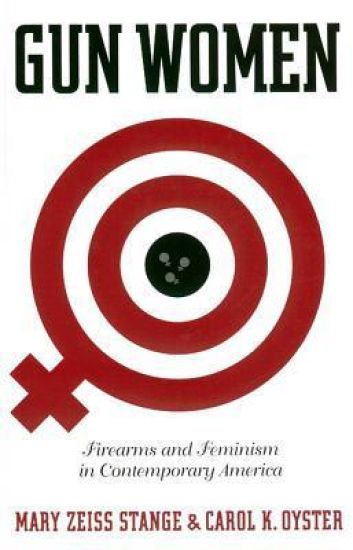
Gun Women

Gun Women

Mary Zeiss Stange; Carol K. Oyster

New York University Press
2000
sidottu
Women, we are told, should not own guns. Women, we are told, are more likely to be injured by their own guns than to fend off an attack themselves. This "fact" is rooted in a fundamental assumption of female weakness and vulnerability. Why should a woman not be every bit as capable as a man of using a firearm in self-defense? And yet the reality is that millions of American women--somewhere between 11,000,000 and 17,000,000--use guns confidently and competently every day. Women are hunting, using firearms in their work as policewomen and in the military, shooting for sport, and arming themselves for personal security in ever-increasing numbers. What motivates women to possess firearms? What is their relationship to their guns? And who exactly are these women? Crucially, can a woman be a gun-owner and a feminist too? Women's growing tendency to arm themselves has in recent years been political fodder for both the right and the left. Female gun owners are frequently painted as "trying to be like men" (the conservative perspective) or "capitulating to patriarchal ideas about power" (the liberal critique). Eschewing the polar extremes in the heated debate over gun ownership and gun control, and linking firearms and feminism in novel fashion, Mary Zeiss Stange and Carol K. Oyster here cut through the rhetoric to paint a precise and unflinching account of America's gun women.