Kirjailija
Marybeth Gasman
Kirjat ja teokset yhdessä paikassa: 22 kirjaa, julkaisuja vuosilta 2007-2025, suosituimpien joukossa Candid Advice for New Faculty Members. Vertaile teosten hintoja ja tarkista saatavuus suomalaisista kirjakaupoista.
22 kirjaa
Kirjojen julkaisuhaarukka 2007-2025.
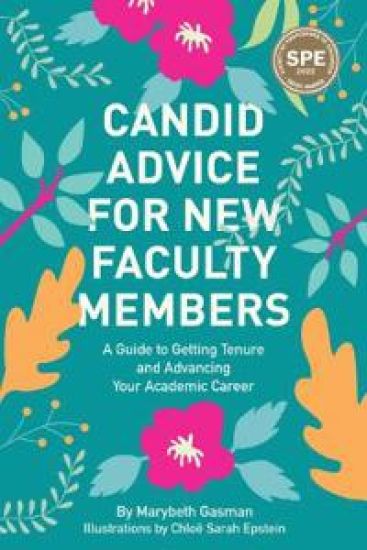
"If you want to achieve tenure, you should know a bit more about what it means and why it exists, and its benefits. All too often, even faculty don't understand why tenure is important." Thus begins the Preface of the first edition of Candid Advice for New Faculty Members, the most comprehensive "how to" guide for graduate students, post-docs, and junior faculty across a variety of academic disciplines. Now, in the Second Edition of this award-winning volume, Marybeth Gasman has added a variety of new topics, including teaching in a post-COVID environment, the use of Artificial Intelligence (AI) in writing and research, new views of DEI, navigating our new politic world, managing your social media and many other important and timely topics. Drawing upon her own extensive experiences and that of many colleagues, Gasman provides you with an incredibly valuable tool for attaining tenure and for the things that you should do to advance your academic career. She provides practical (and sometimes humorous) advice about a range of topics, including: negotiating job offers planning a research agenda improving your teaching skills managing service advising students applying for research grants achieving life/work balance managing academic politicsIn addition to this valuable career advice, Gasman provides a peek behind the academy's curtain by painting a vivid picture of the inner workings of the academy and all of its players. Candid Advice for New Faculty Members is required reading for every newly-minted faculty member, regardless of academic discipline. The wisdom provided in this volume will prove to be invaluable to your future career. Perfect for courses such as: Faculty and Academic Affairs, Seminar on Faculty Life, Doctoral seminars across various disciplines, College and University Teaching, Graduate Student Research Seminars, Professional Development Seminars
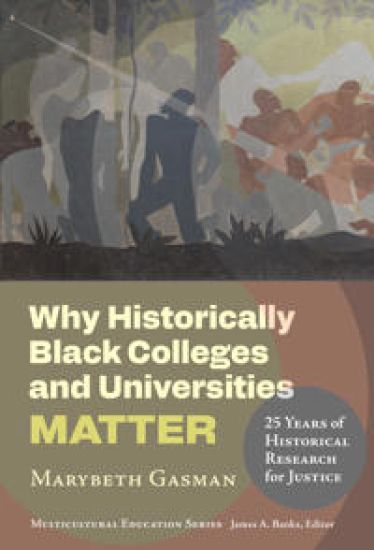
Why Historically Black Colleges and Universities Matter
Marybeth Gasman
TEACHERS' COLLEGE PRESS
2025
sidottu
With a personal and narrative style, preeminent educational historian Marybeth Gasman presents her research pertaining to HBCUs conducted over her 25-year career. In addition to conducting historical and large-scale qualitative studies related to HBCUs, Gasman has also served as a board of trustee member at three HBCUs—Paul Quinn College, St. Augustine University, and Morris Brown College. She has received wide recognition from HBCUs for her scholarly and justice-oriented work, including the Ozell Sutton Medallion for Justice from Philander Smith College and the Presidential Medallion from Wilberforce University. This volume brings together Gasman's most influential historical essays on the themes of leadership, philanthropy, art, curriculum, intellectual debate, Black agency, desegregation, and Critical Race Theory. Scholars and students alike will benefit from the way Gasman makes complex historical ideas accessible and engaging by employing a variety of historical methods that include oral history, archival research, legal research, text and image analysis, historiography, and prosopography. Readers will discover the multitude of ways that historical research can be approached and brought to life. Book Features: Concrete examples of how to use a variety of methodological approaches related to history. A clear and accessible presentation of history to help new scholars find their voices.Diverse topics related to HBCUs, featuring key luminaries across these venerable institutions.Cuts across disciplinary boundaries, including American history, education, art history, sociology, political science, and law.An introduction that explores the author's reasons for doing this research and an epilogue examining the methods used.
Why Historically Black Colleges and Universities Matter
Marybeth Gasman
TEACHERS' COLLEGE PRESS
2025
nidottu
With a personal and narrative style, preeminent educational historian Marybeth Gasman presents her research pertaining to HBCUs conducted over her 25-year career. In addition to conducting historical and large-scale qualitative studies related to HBCUs, Gasman has also served as a board of trustee member at three HBCUs—Paul Quinn College, St. Augustine University, and Morris Brown College. She has received wide recognition from HBCUs for her scholarly and justice-oriented work, including the Ozell Sutton Medallion for Justice from Philander Smith College and the Presidential Medallion from Wilberforce University. This volume brings together Gasman's most influential historical essays on the themes of leadership, philanthropy, art, curriculum, intellectual debate, Black agency, desegregation, and Critical Race Theory. Scholars and students alike will benefit from the way Gasman makes complex historical ideas accessible and engaging by employing a variety of historical methods that include oral history, archival research, legal research, text and image analysis, historiography, and prosopography. Readers will discover the multitude of ways that historical research can be approached and brought to life. Book Features: Concrete examples of how to use a variety of methodological approaches related to history. A clear and accessible presentation of history to help new scholars find their voices.Diverse topics related to HBCUs, featuring key luminaries across these venerable institutions.Cuts across disciplinary boundaries, including American history, education, art history, sociology, political science, and law.An introduction that explores the author's reasons for doing this research and an epilogue examining the methods used.
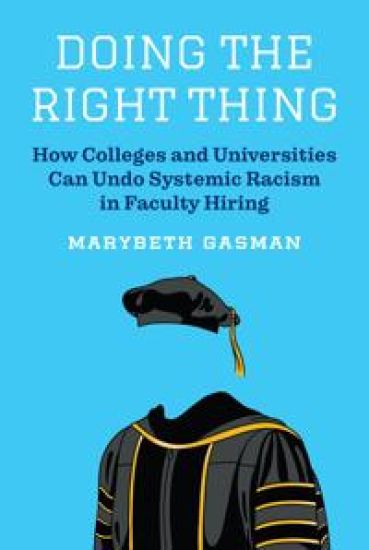
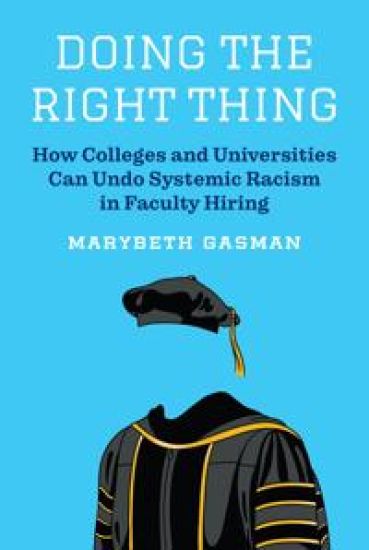
An honest confrontation of systemic racism in faculty hiring—and what to do about itWhile colleges and universities have been lauded for increasing student diversity, these same institutions have failed to achieve any comparable diversity among their faculty. In 2017, of the nation’s full-time, tenure-track and tenured faculty, only 3 percent each were Black men, Black women, Hispanic men, and Hispanic women. Only 6 percent were Asian/Pacific Islander men, 5 percent were Asian/Pacific Islander women, and 1 percent were American Indian/Alaska Native. Why are the numbers so abysmal? In Doing the Right Thing, Marybeth Gasman takes a hard, insightful look at the issues surrounding the recruitment and hiring of faculty of color. Relying on national data and interviews with provosts, deans, and department chairs from sixty major universities, Gasman documents the institutional forces stymieing faculty diversification, and she makes the case for how such deficiencies can and should be rectified.Even as institutions publicly champion inclusive excellence and the number of doctoral students of color increases, Gasman reveals the entrenched constraints contributing to the faculty status quo. Impediments to progress include the alleged trade-off between quality and diversity, the power of pedigree, the rigidity of academic pipelines, failures of administrative leadership, lack of accountability among administration and faculty, and the opacity and arbitrariness of the recruitment and hiring process. Gasman contends that leaders must acknowledge institutional failures of inclusion, pervasive systemic racism, and biases that restrict people of color from pursuing faculty careers.Recognizing that individuals from all backgrounds are essential to the creation and teaching of knowledge, Doing the Right Thing puts forth a concrete call for colleges and universities to take action and do better.
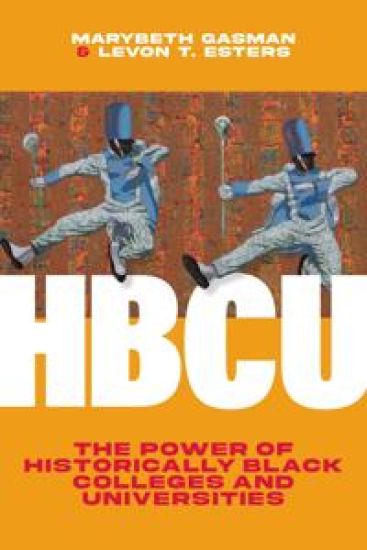
Showcases the role HBCUs play in empowering Black students, fostering economic development, building community, and mentoring leaders and activists.Historically Black Colleges and Universities (HBCUs) play a pivotal role in promoting social and economic mobility for African Americans and in mentoring the next generation of Black leaders. In HBCU, Marybeth Gasman and Levon T. Esters explore the remarkable impact and contributions of these significant institutions.Through inspiring personal stories and extensive research, Gasman and Esters showcase how HBCUs have mentored generations of leaders and scholars, fostering a collaborative culture of success and empowerment. These schools shape and propel Black students into leadership and intellectual roles where they have a major impact on medicine, literature, law, higher education, art, sports, and business. HBCUs also have a profound impact on local communities and economic development that extends far beyond the classroom. This book sheds light on the unique cultures and identities nurtured within HBCUs while emphasizing the importance of philanthropic support and alumni engagement in maintaining these important institutions. Despite their positive contributions to society, HBCUs face specific challenges like securing adequate funding and support, small endowments, and accreditation. Gasman and Esters sound a compelling call to action and outline practical steps for sustaining HBCUs' invaluable legacy.
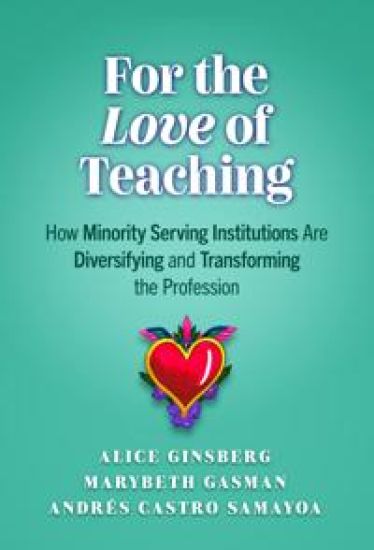
For the Love of Teaching
Alice Ginsberg; Marybeth Gasman; Andrés Castro Samayoa
TEACHERS' COLLEGE PRESS
2023
sidottu
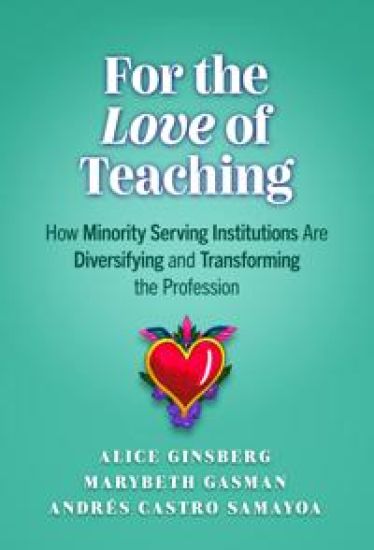
There remains a significant achievement gap for students of color across the K–12 spectrum. One area that needs increased and immediate attention is how we recruit, prepare, and retain teachers of color. This book asks: Why do teachers of color choose teaching? What are their expectations for the students they will teach? How do their past experiences shape their vision of teachers as role models, mentors, and advocates for children of all races and cultures? The authors detail how Minority Serving Institutions (MSIs)—nearly 800 colleges and universities across the nation that educate nearly 45% of all students of color—are preparing culturally proficient teachers using new methods centered on integrating culturally relevant pedagogy, creating a culture of belonging through faculty engagement and cohort models, enriching student teaching and clinical practice through residencies and school-university partnerships, and working closely with families and communities. Addressing timely and critical issues of educational equity, For the Love of Teaching is a call to action for all colleges and university to improve their teacher education programs.Book Features:Provides case studies of MSIs that are intentionally preparing culturally proficient teachers who are skilled and experienced with diverse groups of students.Offers lessons and approaches from four minority-serving colleges with programs that attract and serve non-White teacher candidates.Includes a broad overview of innovative practices in all aspects of learning to teach, making it relevant to almost any teacher education course.Focuses on serving the needs and maintaining the commitment of candidates of color, while also developing their academic skills and subject-specific content knowledge.
For the Love of Teaching
Alice Ginsberg; Marybeth Gasman; Andrés Castro Samayoa
TEACHERS' COLLEGE PRESS
2023
nidottu
There remains a significant achievement gap for students of color across the K–12 spectrum. One area that needs increased and immediate attention is how we recruit, prepare, and retain teachers of color. This book asks: Why do teachers of color choose teaching? What are their expectations for the students they will teach? How do their past experiences shape their vision of teachers as role models, mentors, and advocates for children of all races and cultures? The authors detail how Minority Serving Institutions (MSIs)—nearly 800 colleges and universities across the nation that educate nearly 45% of all students of color—are preparing culturally proficient teachers using new methods centered on integrating culturally relevant pedagogy, creating a culture of belonging through faculty engagement and cohort models, enriching student teaching and clinical practice through residencies and school-university partnerships, and working closely with families and communities. Addressing timely and critical issues of educational equity, For the Love of Teaching is a call to action for all colleges and university to improve their teacher education programs.Book Features:Provides case studies of MSIs that are intentionally preparing culturally proficient teachers who are skilled and experienced with diverse groups of students.Offers lessons and approaches from four minority-serving colleges with programs that attract and serve non-White teacher candidates.Includes a broad overview of innovative practices in all aspects of learning to teach, making it relevant to almost any teacher education course.Focuses on serving the needs and maintaining the commitment of candidates of color, while also developing their academic skills and subject-specific content knowledge.
An honest confrontation of systemic racism in faculty hiring—and what to do about itWhile colleges and universities have been lauded for increasing student diversity, these same institutions have failed to achieve any comparable diversity among their faculty. In 2017, of the nation’s full-time, tenure-track and tenured faculty, only 3 percent each were Black men, Black women, Hispanic men, and Hispanic women. Only 6 percent were Asian/Pacific Islander men, 5 percent were Asian/Pacific Islander women, and 1 percent were American Indian/Alaska Native. Why are the numbers so abysmal? In Doing the Right Thing, Marybeth Gasman takes a hard, insightful look at the issues surrounding the recruitment and hiring of faculty of color. Relying on national data and interviews with provosts, deans, and department chairs from sixty major universities, Gasman documents the institutional forces stymieing faculty diversification, and she makes the case for how such deficiencies can and should be rectified.Even as institutions publicly champion inclusive excellence and the number of doctoral students of color increases, Gasman reveals the entrenched constraints contributing to the faculty status quo. Impediments to progress include the alleged trade-off between quality and diversity, the power of pedigree, the rigidity of academic pipelines, failures of administrative leadership, lack of accountability among administration and faculty, and the opacity and arbitrariness of the recruitment and hiring process. Gasman contends that leaders must acknowledge institutional failures of inclusion, pervasive systemic racism, and biases that restrict people of color from pursuing faculty careers.Recognizing that individuals from all backgrounds are essential to the creation and teaching of knowledge, Doing the Right Thing puts forth a concrete call for colleges and universities to take action and do better.
“If you want to achieve tenure, you should know a bit more about what it means and why it exists, and its benefits. All too often, even faculty don’t understand why tenure is important.""Thus begins the Preface of Candid Advice for New Faculty Members, the newest and most comprehensive “how to” guide for graduate students, post-docs, and junior faculty across a variety of academic disciplines. Drawing upon her own extensive experiences and that of many colleagues, Marybeth Gasman provides you with an incredibly valuable tool for attaining tenure and for the things that you should do to advance your academic career. She provides practical (and sometimes humorous) advice about a range of topics, including: negotiating job offersplanning a research agendaimproving your teaching skillsmanaging serviceadvising studentsapplying for research grantsachieving life/work balancemanaging academic politicsIn addition to this valuable career advice, Gasman provides a peek behind the academy’s curtain by painting a vivid picture of the inner workings of the academy and all of its players. Candid Advice for New Faculty Members is required reading for every newly-minted faculty member. The wisdom provided in this volume will prove to be invaluable to your future career.
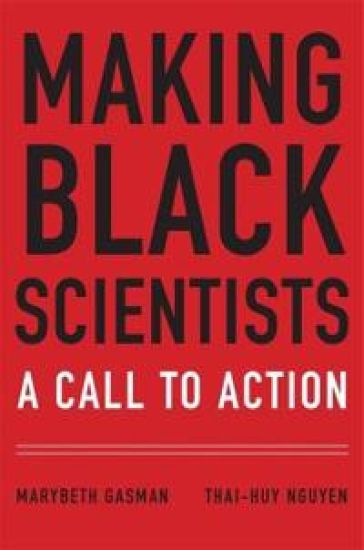
Americans have access to some of the best science education in the world, but too often black students are excluded from these opportunities. This essential book by leading voices in the field of education reform offers an inspiring vision of how America’s universities can guide a new generation of African Americans to success in science.Educators, research scientists, and college administrators have all called for a new commitment to diversity in the sciences, but most universities struggle to truly support black students in these fields. Historically black colleges and universities (HBCUs) are different, though. Marybeth Gasman, widely celebrated as an education-reform visionary, and Thai-Huy Nguyen show that many HBCUs have proven adept at helping their students achieve in the sciences. There is a lot we can learn from these exemplary schools.Gasman and Nguyen explore ten innovative schools that have increased the number of black students studying science and improved those students’ performance. Educators on these campuses have a keen sense of their students’ backgrounds and circumstances, familiarity that helps their science departments avoid the high rates of attrition that plague departments elsewhere. The most effective science programs at HBCUs emphasize teaching when considering whom to hire and promote, encourage students to collaborate rather than compete, and offer more opportunities for black students to find role models among both professors and peers.Making Black Scientists reveals the secrets to these institutions’ striking successes and shows how other colleges and universities can follow their lead. The result is a bold new agenda for institutions that want to better serve African American students.
The multifaceted story of the UNCF.Winner, Outstanding Publication Award, American Educational Research AssociationEtched into America's consciousness is the United Negro College Fund's phrase "A mind is a terrible thing to waste." This book tells the story of the organization's efforts on behalf of black colleges against the backdrop of the cold war and the civil rights movement.Founded during the post–World War II period as a successor to white philanthropic efforts, the UNCF nevertheless retained vestiges of outside control. In its early years, the organization was restrained in its critique of segregation and reluctant to lodge a challenge against institutional and cultural racism. Through cogent analysis of written and oral histories, archival documents, and the group's outreach and advertising campaigns, historian Marybeth Gasman examines the UNCF’s struggle to create an identity apart from white benefactors and to evolve into a vehicle for black empowerment.The first history of the UNCF, Envisioning Black Colleges draws attention to the significance of black colleges in higher education and the role they played in Americans’ struggle for equality.
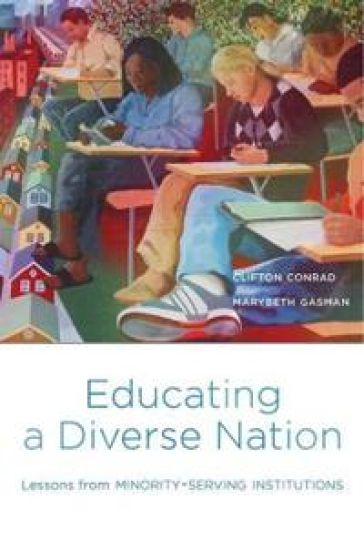
In an increasingly diverse United States, minority and low-income students of all ages struggle to fit into mainstream colleges and universities that cater predominantly to middle-income and affluent white students fresh out of high school. Anchored in a study conducted at twelve minority-serving institutions (MSIs), Educating a Diverse Nation turns a spotlight on the challenges facing nontraditional college students and highlights innovative programs and practices that are advancing students’ persistence and learning.Clifton Conrad and Marybeth Gasman offer an on-the-ground perspective of life at MSIs. Speaking for themselves, some students describe the stress of balancing tuition with the need to support families. Others express their concerns about not being adequately prepared for college-level work. And more than a few reveal doubts about the relevance of college for their future. The authors visited the four main types of MSIs—historically black colleges and universities, tribal colleges and universities, Hispanic-serving institutions, and Asian American and Native American Pacific Islander–serving institutions—to identify strategies for empowering nontraditional students to succeed in college despite these obstacles.Educating a Diverse Nation illuminates such initiatives as collaborative learning, culturally relevant educational programs, blurring the roles of faculty, staff, and students, peer-led team learning, and real-world problem solving. It shows how these innovations engage students and foster the knowledge, skills, and habits they need to become self-sustaining in college and beyond, as well as valuable contributors to society.
Dwight D. Eisenhower’s presidency of Columbia University (1948-1953) is among the least written about periods of his career. It is all but dismissed by historians as a mere interlude between his service as World War II’s most celebrated general and his two terms as president of the United States. His Columbia tenure was marked by extended absences from campus and ongoing political speculation regarding a run for the White House in 1952. Eisenhower in Command at Columbia disputes the conventional wisdom that Eisenhower’s Columbia presidency was unsuccessful. In fact, under his leadership, Columbia moved forward in several important areas. Eisenhower’s tenure at Columbia was, nevertheless, difficult at times. His lack of both academic experience and a full understanding of academic culture diminished his capacity to lead and damaged his credibility with faculty. While the book brings historical perspective to Eisenhower’s presidency of Columbia, its primary purpose is to analyze Eisenhower’s tenure in the context of higher education leadership. His experience at Columbia is relevant today because it demonstrates the importance of understanding institutional culture when leading a college or university. His selection as the university’s president reveals flaws in the process that still plague boards today in what is arguably their most important job —selecting an institution’s leader. This book will appeal to scholars in higher education, history, and university administration, among others.
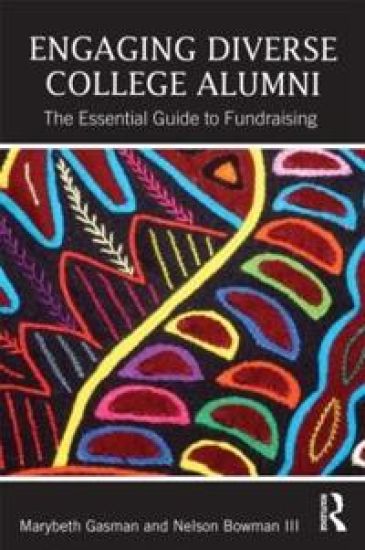
Winner of the 2014 CASE Warwick Award for Outstanding Research on Alumni Relations and Institutional AdvancementChanging demographics are having a substantial impact on college and university student populations. In order to continue garnering funds and supporting their higher education institutions, development offices and individual fundraisers need to learn more about alumni of color. To help move fundraising staff away from a "one size fits all" approach, Engaging Diverse College Alumni provides a comprehensive overview of philanthropy in diverse cultures. Unlike other works on fundraising within communities of color, this book focuses specifically on college and university alumni and offers concrete suggestions for engaging these populations, including best practices as well as approaches to avoid. This practical guide includes: A Comprehensive Overview of Diverse Cultures—use of secondary sources, interviews, and quantitative data to explore the history, motivations, and trends of Latino, African American, Native American, and Asian American and Pacific Islander communities. Practical Recommendations—data-based recommendations and examples integrated throughout the chapters, including "Strategies at a Glance" for quick reference. Best Practices and Innovative Approaches—interviews with advancement staff and alumni of color, an entire chapter outlining successful innovative fundraising programs, and a chapter on common pitfalls to avoid.Both newcomers and seasoned fundraising professionals will find this book to be a compelling and in-depth guide to engaging diverse college alumni.
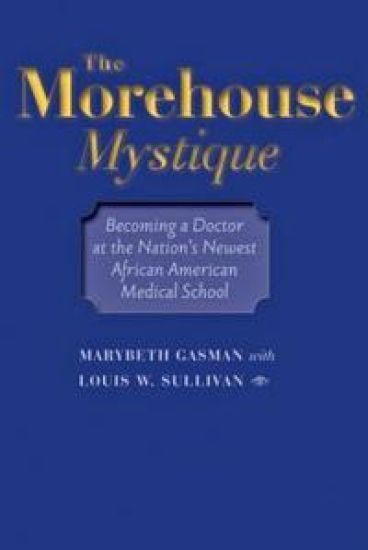
The Morehouse School of Medicine in Atlanta, Georgia, is one of only four predominantly Black medical schools in the United States. Among its illustrious alumni are surgeons general of the United States, medical school presidents, and numerous other highly regarded medical professionals. This book tells the engrossing history of this venerable institution. The school was founded just after the civil rights era, when major barriers prevented minorities from receiving adequate health care and Black students were underrepresented in predominantly White medical schools. The Morehouse School of Medicine was conceived to address both problems-it was a minority-serving institution educating doctors who would practice in underserved communities. The school's history involves political maneuvering, skilled leadership, dedication to training African American physicians, and a mission of primary care in disadvantaged communities. Highlighting such influential leaders as former Health and Human Services Secretary Louis W. Sullivan, "The Morehouse Mystique" situates the school in the context of the history of medical education for Blacks and race relations throughout the country. The book features excerpts from personal interviews with prominent African American doctors as well as with former presidents Jimmy Carter and George H. W. Bush, who reveal how local, state, and national politics shaped the development of Black medical schools in the United States. The story of the Morehouse School of Medicine reflects the turbulent time in which it was founded and the lofty goals and accomplishments of a diverse group of African American leaders. Their tireless efforts in creating this eminent Black institution changed the landscape of medical education and the racial and ethnic makeup of physicians and health care professions.
A Guide to Fundraising at Historically Black Colleges and Universities
Marybeth Gasman; Nelson Bowman III
Routledge
2011
nidottu
Winner of the 2012 CASE John Grenzebach Award for Outstanding Research in Philanthropy for Educational AdvancementA Guide to Fundraising at Historically Black Colleges and Universities is a comprehensive, research-based work that brings the best practices and expertise of seminal professionals to the larger Black college environment and beyond. Drawing on data-driven advice from interviews with successful Black college fundraisers and private sector leaders, this book gives practitioners a comprehensive approach for moving away from out-of-date approaches to improve their institutions.This practical guide includes: An All Campus Approach—Discussion goes beyond alumni fundraising strategies to address the blended role that faculty, administrators, and advancement professionals can play to achieve fundraising success. Practical Recommendations—End-of-chapter suggestions for quick reference, as well as recommendations integrated throughout. Best Practices and Examples—Data-based content to strengthen fundraisers’ understanding of institutional advancement and alleviate uncertainties. Examples of Innovative Approaches—An entire chapter outlining successful innovative fundraising and engagement programs at various institutions. Extensive Appendices—Useful resources related to grant procurement, endowments, alumni giving, enrollment and retention, financial aid, and other helpful HBCU information. Both newcomers and seasoned professionals in the HBCU fundraising arena will benefit from the compelling recommendations offered in A Guide to Fundraising at Historically Black Colleges and Universities.
A Guide to Fundraising at Historically Black Colleges and Universities
Marybeth Gasman; Nelson Bowman III
Routledge
2011
sidottu
Winner of the 2012 CASE John Grenzebach Award for Outstanding Research in Philanthropy for Educational AdvancementA Guide to Fundraising at Historically Black Colleges and Universities is a comprehensive, research-based work that brings the best practices and expertise of seminal professionals to the larger Black college environment and beyond. Drawing on data-driven advice from interviews with successful Black college fundraisers and private sector leaders, this book gives practitioners a comprehensive approach for moving away from out-of-date approaches to improve their institutions.This practical guide includes: An All Campus Approach—Discussion goes beyond alumni fundraising strategies to address the blended role that faculty, administrators, and advancement professionals can play to achieve fundraising success. Practical Recommendations—End-of-chapter suggestions for quick reference, as well as recommendations integrated throughout. Best Practices and Examples—Data-based content to strengthen fundraisers’ understanding of institutional advancement and alleviate uncertainties. Examples of Innovative Approaches—An entire chapter outlining successful innovative fundraising and engagement programs at various institutions. Extensive Appendices—Useful resources related to grant procurement, endowments, alumni giving, enrollment and retention, financial aid, and other helpful HBCU information. Both newcomers and seasoned professionals in the HBCU fundraising arena will benefit from the compelling recommendations offered in A Guide to Fundraising at Historically Black Colleges and Universities.
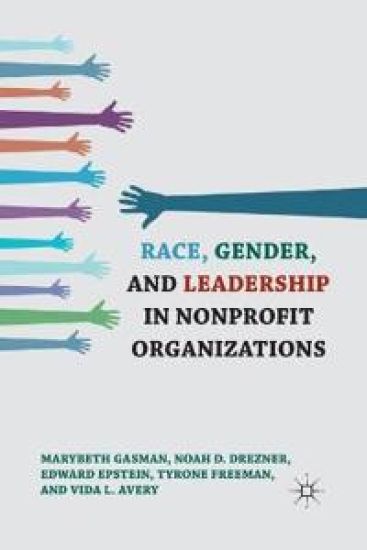
Race, Gender, and Leadership in Nonprofit Organizations
Marybeth Gasman; N. Drezner; E. Epstein; T. Freeman; V. Avery
Palgrave Macmillan
2011
nidottu
This volume centers on the lives and experiences of female and African American leaders of foundations and nonprofits. Contributors to the volume examine race and gender as constructs and provide a theoretical background for understanding their effect on the psycho-social development of the individuals.