Kirjojen hintavertailu. Mukana 12 657 676 kirjaa ja 12 kauppaa.

Kirjailija

Massimiliano Morini

Kirjat ja teokset yhdessä paikassa: 10 kirjaa, julkaisuja vuosilta 2006-2025, suosituimpien joukossa Human Translators in The Machine Age. Vertaile teosten hintoja ja tarkista saatavuus suomalaisista kirjakaupoista.

10 kirjaa

Kirjojen julkaisuhaarukka 2006-2025.

Human Translators in The Machine Age

Human Translators in The Machine Age

Massimiliano Morini

TAYLOR FRANCIS LTD
2025
sidottu
What is the place of human translation in the golden age of artificial intelligence? Human translators in the Machine Age looks at the millennia of history that have shaped the discipline and its practitioners and asks what it is that makes translators central in human civilization, and fundamentally different from linguistically competent machines. Contrary to the age-old emphasis on source adherence and the sacredness of text, it presents translation as a continuous process of semantic and pragmatic drift, and translators as agents of linguistic and cultural change. In doing so it questions all traditional and contemporary dichotomies (faithful/unfaithful, domesticating/foreignizing) and exposes the textual bias which lies at the root of all Western ideas on translation. Oral in origin, rich and irreducible in its processes and outcomes, deeply and inevitably personal in output, human translation remains central in the machine age precisely because it is the most common human way of receiving, accounting for and modifying all forms of knowledge and experience. This concise volume offers both a compelling history of translation and a fresh examination of the translator's role in an AI-dominated world. It engages critically with contemporary translation theory while innovatively exploring the intersection of written and spoken discourse. Essential reading for translators, students, scholars, and anyone interested in linguistic theory.

Theatre Translation

Theatre Translation

Massimiliano Morini

BLOOMSBURY PUBLISHING PLC
2023
nidottu
Translation for the theatre is often considered to hold a marginal status between literary translation and adaptation for the stage. As a result, this book argues that studies of this complex activity tend to take either a textual or performative approach. After exploring the history of translation theory through these lenses, Massimiliano Morini proposes a more totalizing view of ‘theatre translation’ as the sum of operations required to transform one theatre act into another, and analyses three complex Western case histories in light of this all-encompassing definition. Combining theory with practice, Morini investigates how traditional ideas on translation – from Plautus and Cicero to the early 20th century – have been applied in the theatrical domain. He then compares and contrasts the inherently textual viewpoint of post-humanistic translators with the more performative approaches of contemporary theatrical practitioners, and chronicles the rise of performative views in the third millennium. Positioning itself at the intersection of past and present, as well as translation studies and theatre semiotics, Theatre Translation provides a full diachronic survey of an age-old activity and a burgeoning academic field.
Theatre Translation

Theatre Translation

Massimiliano Morini

Bloomsbury Academic
2022
sidottu
Translation for the theatre is often considered to hold a marginal status between literary translation and adaptation for the stage. As a result, this book argues that studies of this complex activity tend to take either a textual or performative approach. After exploring the history of translation theory through these lenses, Massimiliano Morini proposes a more totalizing view of ‘theatre translation’ as the sum of operations required to transform one theatre act into another, and analyses three complex Western case histories in light of this all-encompassing definition. Combining theory with practice, Morini investigates how traditional ideas on translation – from Plautus and Cicero to the early 20th century – have been applied in the theatrical domain. He then compares and contrasts the inherently textual viewpoint of post-humanistic translators with the more performative approaches of contemporary theatrical practitioners, and chronicles the rise of performative views in the third millennium. Positioning itself at the intersection of past and present, as well as translation studies and theatre semiotics, Theatre Translation provides a full diachronic survey of an age-old activity and a burgeoning academic field.
Tudor Translation in Theory and Practice

Tudor Translation in Theory and Practice

Massimiliano Morini

Routledge
2021
nidottu
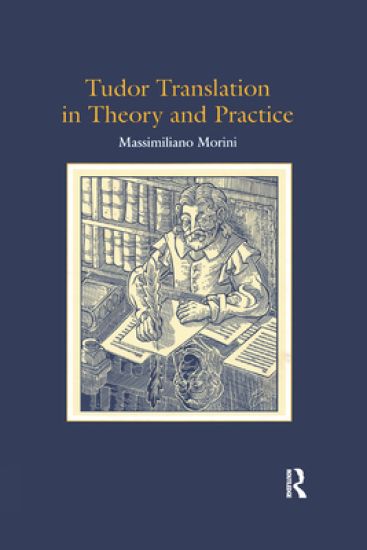
Filling a gap in the study of early modern literature, Massimiliano Morini here exhaustively examines the aims, strategies, practice and theoretical ideas of the sixteenth-century translator. Morini analyzes early modern English translations of works by French and Italian essayists and poets, including Montaigne, Castiglione, Ariosto and Tasso, and of works by classical writers such as Virgil and Petrarch. In the process, he demonstrates how connected translation is with other cultural and literary issues: women as writers, literary relations between Italy and England, the nature of the author, and changes in the English language. Since English Tudor writers, unlike their Italian contemporaries, did not write theoretical treatises, the author works empirically to extrapolate the theory that informs the practice of Tudor translation - he deduces several cogent theoretical principles from the metaphors and figures of speech used by translators to describe translation. Employing a good blend of theory and practice, the author presents the Tudor period as a crucial transitional moment in the history of translation, from the medieval tradition (which in secular literature often entailed radical departure from the original) to the more subtle modern tradition (which prizes the invisibility of the translator and fluency of the translated text). Morini points out that this is also a period during which ideas about language and about the position of England on the political and cultural map of Europe undergo dramatic change, and he convincingly argues that the practice of translation changes as new humanistic methods are adapted to the needs of a country that is expanding its empire.
A Day in the News

A Day in the News

Massimiliano Morini

Peter Lang AG, Internationaler Verlag der Wissenschaften
2018
sidottu
A Day in the News is the linguistic description of a single day in the life of the British press – Wednesday, 19 August 2015. Employing a variety of tools and methods – from multimodality to pragmatics, from close reading to computational stylistics – Morini looks at nine different «journalistic worlds» and their respective «Newsspeaks». The results are often revealing: by providing its readers with an accurate idea of the universe projected by each paper, this study revises many received ideas on the clear-cut boundaries separating «popular» from «highbrow» journalism. In the process, A Day in the News also sums up more than three decades of work on the language of newspapers, and provides a general analytical method for journalism in the digital age. The three chapters of the book focus, respectively, on the multimodal features of newspapers and their e-editions; on the quantitative prominence accorded to certain wordings and topics in each newspaper; and on the ideological/evaluative slant with which news items are presented and commented. Throughout, the focus is not on some outmoded notion of journalistic style, but on the degrees of proximity or distance presupposed by different formats, layouts and linguistic registers.
Jane Austen's Narrative Techniques

Jane Austen's Narrative Techniques

Massimiliano Morini

Routledge
2016
nidottu
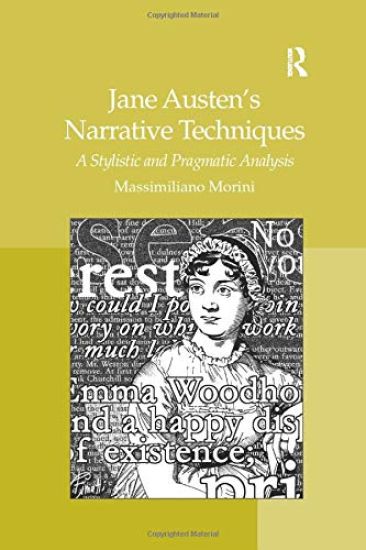
Combining linguistic theory with analytical concepts and literary interpretation and appreciation, Jane Austen's Narrative Techniques traces the creation and development of Austen's narrative techniques. Massimiliano Morini employs the tools developed by post-war linguistics and above all pragmatics, the study of the ways in which speakers communicate meaning, since Austen's 'wordings' can only be interpreted within the fictional context of character-character, narrator-character, narrator-reader interaction. Examining a wide range of Austen texts, from her unpublished works through masterpieces like Mansfield Park and Emma, Morini discusses familiar Austen themes, using linguistic means to shed fresh light on the question of point of view in Austen and on Austen's much-admired brilliance in creating lively and plausible dialogue. Accessibly written and informed by the latest work in linguistic and literary studies, Jane Austen's Narrative Techniques offers Austen specialists a new avenue for understanding her narrative techniques and serves as a case study for scholars and students of pragmatics and applied linguistics.
The Pragmatic Translator

The Pragmatic Translator

Massimiliano Morini

Bloomsbury Academic
2014
nidottu
This book is concerned with translation theory. It proposes an all-round view of translation in the terms of modern pragmatics, as articulated in three pragmatic functions (performative, interpersonal and locative) which describe how translated texts function in the world, involve readers and are rooted in their spatio-temporal contexts. It presents a full and up to date view of translation that takes into account thirty years of research in the field of Descriptive Translation Studies. Unlike DTS, the theory provides an account of products and processes. This publication exhibits the need for and usefulness of such a theory, and will be essential reading for scholars involved in translation and interpreting studies.
The Pragmatic Translator

The Pragmatic Translator

Massimiliano Morini

Bloomsbury Academic USA
2012
sidottu
This book is concerned with translation theory. It proposes an all-round view of translation in the terms of modern pragmatics, as articulated in three pragmatic functions (performative, interpersonal and locative) which describe how translated texts function in the world, involve readers and are rooted in their spatio-temporal contexts. It presents a full and up to date view of translation that takes into account thirty years of research in the field of Descriptive Translation Studies. Unlike DTS, the theory provides an account of products and processes. This publication exhibits the need for and usefulness of such a theory, and will be essential reading for scholars involved in translation and interpreting studies.
Jane Austen's Narrative Techniques

Jane Austen's Narrative Techniques

Massimiliano Morini

Ashgate Publishing Limited
2009
sidottu
Combining linguistic theory with analytical concepts and literary interpretation and appreciation, Jane Austen's Narrative Techniques traces the creation and development of Austen's narrative techniques. Massimiliano Morini employs the tools developed by post-war linguistics and above all pragmatics, the study of the ways in which speakers communicate meaning, since Austen's 'wordings' can only be interpreted within the fictional context of character-character, narrator-character, narrator-reader interaction. Examining a wide range of Austen texts, from her unpublished works through masterpieces like Mansfield Park and Emma, Morini discusses familiar Austen themes, using linguistic means to shed fresh light on the question of point of view in Austen and on Austen's much-admired brilliance in creating lively and plausible dialogue. Accessibly written and informed by the latest work in linguistic and literary studies, Jane Austen's Narrative Techniques offers Austen specialists a new avenue for understanding her narrative techniques and serves as a case study for scholars and students of pragmatics and applied linguistics.
Tudor Translation in Theory and Practice

Tudor Translation in Theory and Practice

Massimiliano Morini

Ashgate Publishing Limited
2006
sidottu
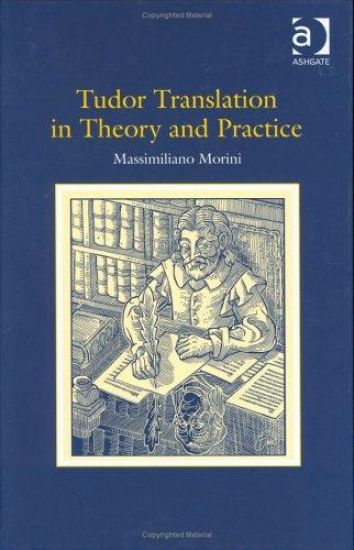
Filling a gap in the study of early modern literature, Massimiliano Morini here exhaustively examines the aims, strategies, practice and theoretical ideas of the sixteenth-century translator. Morini analyzes early modern English translations of works by French and Italian essayists and poets, including Montaigne, Castiglione, Ariosto and Tasso, and of works by classical writers such as Virgil and Petrarch. In the process, he demonstrates how connected translation is with other cultural and literary issues: women as writers, literary relations between Italy and England, the nature of the author, and changes in the English language. Since English Tudor writers, unlike their Italian contemporaries, did not write theoretical treatises, the author works empirically to extrapolate the theory that informs the practice of Tudor translation - he deduces several cogent theoretical principles from the metaphors and figures of speech used by translators to describe translation. Employing a good blend of theory and practice, the author presents the Tudor period as a crucial transitional moment in the history of translation, from the medieval tradition (which in secular literature often entailed radical departure from the original) to the more subtle modern tradition (which prizes the invisibility of the translator and fluency of the translated text). Morini points out that this is also a period during which ideas about language and about the position of England on the political and cultural map of Europe undergo dramatic change, and he convincingly argues that the practice of translation changes as new humanistic methods are adapted to the needs of a country that is expanding its empire.