Kirjojen hintavertailu. Mukana 12 595 353 kirjaa ja 12 kauppaa.

Kirjailija

Massimo Ciavolella

Kirjat ja teokset yhdessä paikassa: 3 kirjaa, julkaisuja vuosilta 2008-2020, suosituimpien joukossa My Muse Will Have a Story to Paint. Vertaile teosten hintoja ja tarkista saatavuus suomalaisista kirjakaupoista.

3 kirjaa

Kirjojen julkaisuhaarukka 2008-2020.

Acculturation and Its Discontents

Acculturation and Its Discontents

David N. Myers; Massimo Ciavolella; Peter Reill; Geoffrey Symcox

University of Toronto Press
2020
pokkari
Exploring the fascinating cross-cultural influences between Jews and Christians in Italy from the Renaissance to the twentieth century, Acculturation and Its Discontents assembles essays by leading historians, literary scholars, and musicologists to present a well-rounded history of Italian Jewry. The contributors offer rich portraits of the many vibrant forms of cultural and artistic expression that Italian Jews contributed to, but this volume also pays close attention to the ways in which Italian Jews - both freely and under pressure - creatively adapted to the social, cultural, and legal norms of the surrounding society. Tracing both the triumphs and tragedies of Jewish communities within Italy over a broad span of time, Acculturation and Its Discontents challenges conventional assumptions about assimilation and state intervention and, in the process, charts the complex process of cultural exchange that left such a distinctive imprint not only on Italian Jewry, but also on Italian society itself. This collection of rigorous and thought-provoking essays makes a major contribution to both the history of Italian culture and the cultural influence and significance of European Jews.
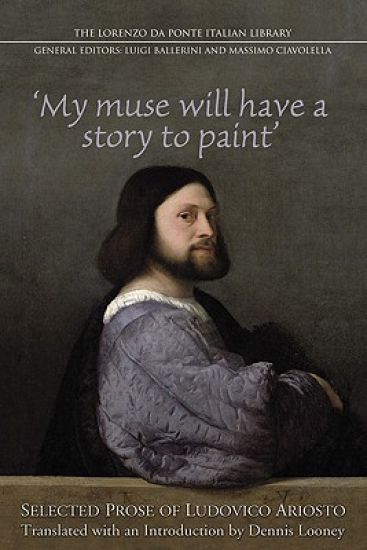
My Muse Will Have a Story to Paint

My Muse Will Have a Story to Paint

Massimo Ciavolella; Dennis Looney

University of Toronto Press
2010
sidottu
Ludovico Ariosto, best known for his 1516 epic poem Orlando furioso, was one of the great writers of the Italian Renaissance. In this collection, Dennis Looney assembles a diverse compendium of Ariosto's prose, including his 214 Letters and a satirical piece, Herbal Doctor. Ariosto's correspondence paints a detailed portrait of the world he lived and wrote in. While some letters illuminate his day-to-day life, including his work as a provincial commissioner for the ruling Este family of Ferrara, others shed light on the composition and production of his poems and plays, allowing a glimpse of the man in his creative workshop. Herbal Doctor, a parody of humanism in general and neoplatonic philosophy in particular, may mark a defense of Ariosto's decision to turn away from the philological world of his contemporaries in order to pursue a different kind of learning. Looney's elegant, careful translation provides us with the first extensive selection of Ariosto's prose works in English, and enriches our understanding of one of Italy's most important Renaissance writers.
Acculturation and Its Discontents

Acculturation and Its Discontents

David N. Myers; Massimo Ciavolella; Peter Reill; Geoffrey Symcox

University of Toronto Press
2008
sidottu
Exploring the fascinating cross-cultural influences between Jews and Christians in Italy from the Renaissance to the twentieth century, Acculturation and Its Discontents assembles essays by leading historians, literary scholars, and musicologists to present a well-rounded history of Italian Jewry. The contributors offer rich portraits of the many vibrant forms of cultural and artistic expression that Italian Jews contributed to, but this volume also pays close attention to the ways in which Italian Jews - both freely and under pressure - creatively adapted to the social, cultural, and legal norms of the surrounding society. Tracing both the triumphs and tragedies of Jewish communities within Italy over a broad span of time, Acculturation and Its Discontents challenges conventional assumptions about assimilation and state intervention and, in the process, charts the complex process of cultural exchange that left such a distinctive imprint not only on Italian Jewry, but also on Italian society itself. This collection of rigorous and thought-provoking essays makes a major contribution to both the history of Italian culture and the cultural influence and significance of European Jews.