Kirjojen hintavertailu. Mukana 12 595 353 kirjaa ja 12 kauppaa.

Kirjailija

Massimo Faggioli

Kirjat ja teokset yhdessä paikassa: 10 kirjaa, julkaisuja vuosilta 2012-2025, suosituimpien joukossa The Liminal Papacy of Pope Francis. Vertaile teosten hintoja ja tarkista saatavuus suomalaisista kirjakaupoista.

10 kirjaa

Kirjojen julkaisuhaarukka 2012-2025.

The Legacy and Limits of Vatican II in an Age of Crisis

The Legacy and Limits of Vatican II in an Age of Crisis

Massimo Faggioli; Edward P. Hahnenberg; Kristin M Colberg; Catherine Clifford

Liturgical Press
2025
pokkari
A renewed approach to the critical study of the event and documents of Vatican II, necessary for responding to the challenges facing today’s church. Packed with new insights from some of today’s most highly regarded voices on the Second Vatican Council, The Legacy and Limits of Vatican II in an Age of Crisis enacts the living tradition of the church by proposing a richer history to be told sixty years from its celebration, and a broader theology to inspire our work today. Vatican II did not anticipate our contemporary challenges, nor do its documents provide specific guidelines or step-by-step instructions for addressing them. But that does not make the council irrelevant. As a touchstone of the church’s magisterial tradition, the Second Vatican Council remains foundational for the life and mission of the Catholic Church today. However, like any monument of the tradition, the council requires ongoing investigation, critical analysis, and constant reconsideration from a diversity of contemporary perspectives if it is going to contribute to the living tradition of the church. Through historical and theological lenses, the contributors aim to rediscover forgotten voices and overlooked moments of Vatican II that may have something even more important to say today. Each chapter promises to surprise, enlighten, inspire, and teach in fresh and unexpected ways. The contributors offer readers striking insights on the council’s teaching related to the sexual abuse crisis, antiracism, politics, the Synod on Synodality, and much more. By reexamining the teaching of Vatican II from the perspective of our present ecclesial crisis, readers will have a better understanding of how its legacy and limits affect the ongoing reform of the church in a much-changed theological, ecclesial, and social landscape. Contributors: Matteo Caponi Catherine E. Clifford Kristin M. Colberg Agnès Desmazières Massimo Faggioli Theresa Gardner Edward P. Hahnenberg Timothy Hanchin Tuan A. Hoang Mary Kate Holman Jaisy A. Joseph Florian Klug William Kuncken Josephine Laffin Martin Madar Evgeniia Muzychenko William I. Orbih Bernard G. Prusak Daniel A. Rober
Global Catholicism: Between Disruption and Encounter

Global Catholicism: Between Disruption and Encounter

Bryan T. Froehle; Massimo Faggioli

BRILL
2024
nidottu
Global Catholicism: Between Disruption and Encounter opens the Studies in Global Catholicism series with an examination of a worldwide religious institution that up to now has been more globally extensive than truly globalized. It explores the world historical and theological meaning of de-Europeanization with church data by world region. Readers get an in-depth look at the institutional and theological capacity and limits of the cosmopolitan reality of today's Catholic Church. Its integrated perspective, grounded in cultural and political history together with an ecclesiology of post-Vatican II Catholicism, offers a new way to approach today's emerging post-colonial, inter-cultural Global Catholicism as centuries-old trajectories are disrupted and pressing new realities demand original responses.
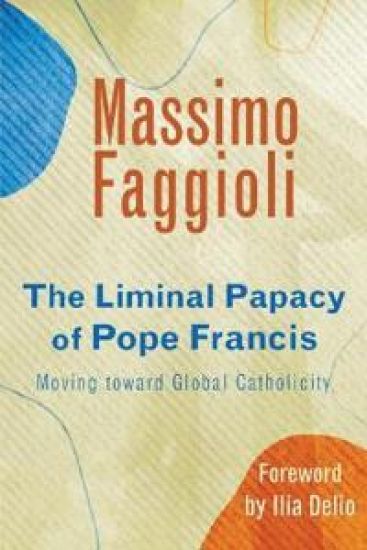
The Liminal Papacy of Pope Francis

The Liminal Papacy of Pope Francis

Massimo Faggioli; Ilia Delio

Orbis Books (USA)
2020
pokkari
An expert on the papacy and Vatican II, Massimo Faggioli draws from world history, politics, papal biographies, and the documents of Vatican II for this incisive analysis of Francis's developing pontificate. He notes that Francis's is a liminal papacy, one that gives attention to the poor, to the peripheries, and to relations between the Vatican and other religions, with an emphasis on synodality and on the Church as the people of God. He also contrasts Francis with his immediate predecessor Benedict XVI and John Paul II, and shows his similarities with the spirit of John XXIII, the architect of Vatican II.
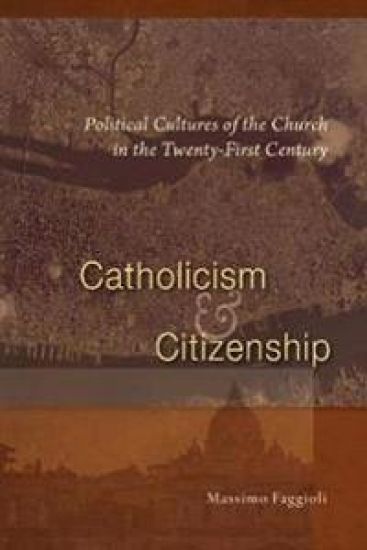
Catholicism and Citizenship

Catholicism and Citizenship

Massimo Faggioli

Liturgical Press
2017
pokkari
The beginning of the twenty-first century has provided abundant evidence of the necessity to reexamine the relationship between Catholicism and the modern, global world. This book tries to proceed on this path with a focus on the meaning, legacy, and reception in today’s world of the ecclesiology of Vatican II, starting with Gaudium et Spes: “This council exhorts Christians, as citizens of two cities, to strive to discharge their earthly duties conscientiously and in response to the Gospel spirit.” Catholicism and Citizenship is a call for a rediscovery of the moral and political imagination of Vatican II for the Church and the world of our time.
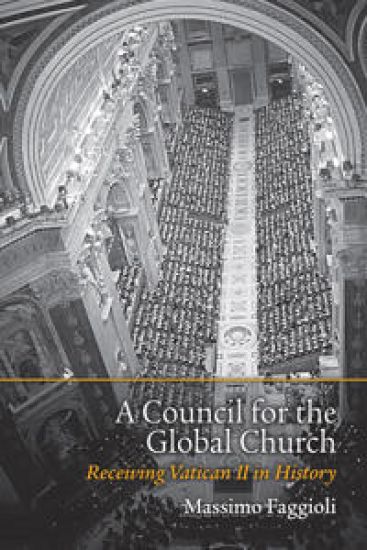
A Council for the Global Church

A Council for the Global Church

Massimo Faggioli

Fortress Press,U.S.
2015
pokkari
The year 2015 marks the fiftieth anniversary of the close of the Second Vatican Council. This volume provides an analysis of Vatican II, the most decisive and far-reaching event in the modern Catholic Church. Explicating pivotal elements of the Council, its decision-making process and the deep consequences of its final decisions, Massimo Faggioli contributes an accessible presentation of the significance of Vatican II for the church and its life in the modern world beyond the boundaries of the Roman Catholic Church. As the Council, since its conclusion, has been subjected to various interpretations-a matter of not little controversy-the volume explores the contours of subsequent interpretation and variations in approach, especially those that have marked the eras of John Paul II and Benedict XVI. Despite these controversies, however, the Council lives on, the author argues, in theology, especially the ad intra and ad extra dimensions of reform in the liturgy, the church and the modern world, and religious freedom, continuing to have global impact on Catholics and non-Catholics.
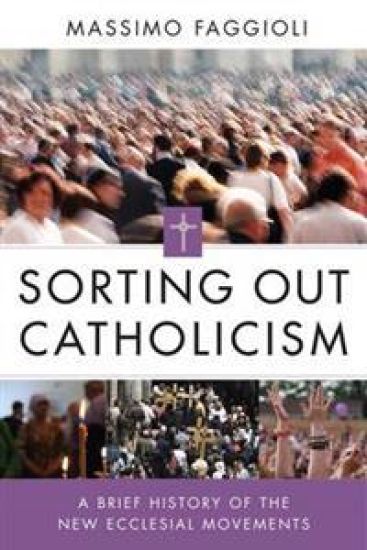
Sorting Out Catholicism

Sorting Out Catholicism

Massimo Faggioli

Liturgical Press
2014
pokkari
Focolare, Community of Sant’Egidio, Neocatechumenal Way, Legionaries of Christ, Communion and Liberation, Opus Dei. These are but a few of the most recognizable names in the broader context of the so-called ecclesial movements. Their history goes back to the period following the First Vatican Council, crosses Vatican II, and develops throughout the twentieth century. It is a history that prepares the movements’ rise in the last three decades, from John Paul II to Francis. These movements are a complex phenomenon that shapes the Church now more than before, and they play a key role for the future of Catholicism as a global community, in transition from a Europe-centered tradition to a world Church.
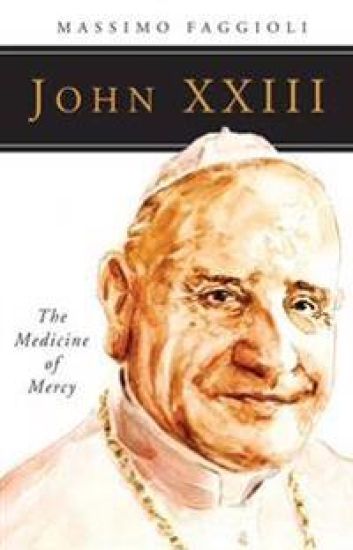
John XXIII

John XXIII

Massimo Faggioli

Liturgical Press
2014
pokkari
People of God is a brand new series of inspiring biographies for the general reader. Each volume offers a compelling and honest narrative of the life of an important twentieth or twenty-first century Catholic. Some living and some now deceased, each of these women and men have known challenges and weaknesses familiar to most of us, but responded to them in ways that call us to our own forms of heroism. Each offers a credible and concrete witness of faith, hope, and love to people of our own day. The canonization of Pope John XXIII and the fiftieth anniversary of Vatican II call for a fresh look at this remarkable man. Now highly regarded Vatican II historian Massimo Faggioli offers a rich and insightful portrait. His sources include the complete edition of the private diaries of the future John XXIII, published recently in ten volumes, much of which is unavailable in English. Faggioli’s use of this treasure of personal notes of the future pope means this biography offers a more complete and nuanced understanding of Angelo Roncalli than is available anywhere else in English at this time. The result is both unforgettable and inspiring.
True Reform

True Reform

Massimo Faggioli

Liturgical Press
2012
pokkari
For Massimo Faggioli, the debate about the meaning of Vatican II too often misses the profound significance of that council's first and perhaps most consequential document, Sacrosanctum Concilium. The result is a misunderstanding of both the council as a whole and the liturgical reform that followed from it.In True Reform, Faggioli takes Sacrosanctum Concilium as a hermeneutical key to the council. He offers a thorough reflection on the relationship between the liturgical constitution and the whole achievement of Vatican II and argues that the interconnections between the two must emerge if we want to understand the impact of the council on global Catholicism.
Vatican II

Vatican II

Massimo Faggioli

Paulist Press International,U.S.
2012
nidottu
The death of John Paul II and the election of Benedict XVI constituted undoubtedly two important elements in the broad theological and ecclesiastical landscape of the debate about Vatican II in the last few years. This change of pontificate has also nourished the journalistic and political dispute about Vatican II, its history and its legacy, and not only the historiographical and theological debate. Brief accounts of the history of Vatican II have reached the public at large but the research on Vatican II is already proceeding forward and beyond the state of knowledge about the council reached at the end of the nineties. Even if some observers seem to be satisfied with the present knowledge, for twenty-first century church historians and theologians interested in understanding contemporary Catholicism in the light of Vatican II, the intellectual undertaking is still evolving. The book gives a comprehensive presentation of the theological and historiographical debate about Vatican II. The attempt to go beyond “the clash of interpretations”—Vatican II as a rupture in the history of Catholicism on one side and the need to read Vatican II in continuity with the tradition on the other—is necessary indeed because the ongoing debate about Vatican II is largely misrepresented by the use of “clashing interpretations” as a tool for understanding the role of the council in present-day Catholicism. †