Kirjailija
Massimo Livi-Bacci
Kirjat ja teokset yhdessä paikassa: 21 kirjaa, julkaisuja vuosilta 1991-2025, suosituimpien joukossa Our Shrinking Planet. Vertaile teosten hintoja ja tarkista saatavuus suomalaisista kirjakaupoista.
Mukana myös kirjoitusasut: Massimo Livi Bacci
21 kirjaa
Kirjojen julkaisuhaarukka 1991-2025.
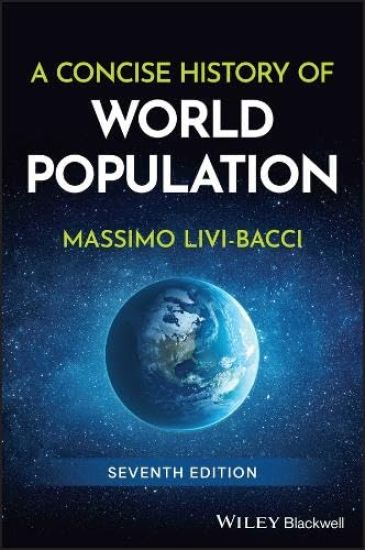
Explores the forces that have shaped global population growth over millennia Understanding the mechanisms that govern the size and trajectory of the human population is essential to navigating today's most pressing global challenges. A Concise History of World Population, offers a sweeping overview of the key demographic patterns that have defined human history and influenced the world's population structure. Drawing on disciplines as diverse as ecology, history, economics, and epidemiology, this new edition provides students and scholars with an interdisciplinary guide to the major forces—both natural and human-made—that have determined demographic growth, stagnation, or decline across civilizations. Acclaimed demographer Massimo Livi-Bacci addresses enduring questions about the balance between people, resources, and environment through careful analysis of catastrophic disruptions, technological revolutions, and slowly evolving reproductive behaviors. Reader-friendly chapters provide the intellectual tools needed to understand the shifting dynamics of global population—paying special attention to emerging demographic trends and the sustainability challenges they pose in the twenty-first century. The result is not just a concise history, but a rich framework for thinking critically about the demographic future. An essential resource for anyone seeking to understand how population and society co-evolve—and the delicate equilibrium they must maintain—A Concise History of World Population: Offers a clear and accessible narrative of global population history from pre-agricultural societies to the presentHighlights demographic mechanisms often overlooked in traditional population studiesIncludes in-depth analysis of catastrophic events and their demographic impact, including pandemics and climate shocksAddresses sustainability and future population trends in the context of limited global resourcesEngages with long-term patterns and short-term fluctuations in population-resource equilibrium Employing an interdisciplinary approach that integrates history, anthropology, ecology, economics, and political science, A Concise History of World Population, Seventh Edition, is perfect for advanced undergraduate and graduate courses such as Population Studies, Demographic History, Global History, and Political Demography within degree programs in Sociology, Political Science, History, and Development Studies.
The ongoing decline of Europe’s population, the explosion of Africa’s, major changes in migratory flows, significant variations in fertility levels across different countries and ethnic groups and the dizzying growth of large metropolises have all appeared over the last hundred years. They alter and sometimes disrupt relations between societies, states and regions of the world and influence political choices, with variable and often unpredictable force and speed. Past and current crises, such as the difficulties faced by governments seeking to control immigration and to manage tensions between religious and ethnic communities, now appear as the inevitable consequence of these demographic changes. Geodemography – an innovative perspective that brings together geography, demography and politics – can help us to understand these trends. Geodemography is the study of how population dynamics influence societies, states, regions and affect the relations between them, over time and throughout the world. Using a broad repertoire of exemplary cases drawn from recent world history, this book demonstrates that geodemography is an invaluable tool for gaining a deeper appreciation of the changing relations between societies and states and the great challenges we face today. Written by one of the world’s leading demographers, this book will be of great interest to students and scholars in geography, demography, politics and sociology and to anyone concerned with the social and political implications of population changeThe ongoing decline of Europe’s population, the explosion of Africa’s, major changes in migratory flows, significant variations in fertility levels across different countries and ethnic groups and the dizzying growth of large metropolises have all appeared over the last hundred years. They alter and sometimes disrupt relations between societies, states and regions of the world and influence political choices, with variable and often unpredictable force and speed. Past and current crises, such as the difficulties faced by governments seeking to control immigration and to manage tensions between religious and ethnic communities, now appear as the inevitable consequence of these demographic changes. Geodemography – an innovative perspective that brings together geography, demography and politics – can help us to understand these trends. Geodemography is the study of how population dynamics influence societies, states, regions and affect the relations between them, over time and throughout the world. Using a broad repertoire of exemplary cases drawn from recent world history, this book demonstrates that geodemography is an invaluable tool for gaining a deeper appreciation of the changing relations between societies and states and the great challenges we face today. Written by one of the world’s leading demographers, this book will be of great interest to students and scholars in geography, demography, politics and sociology and to anyone concerned with the social and political implications of population change. The ongoing decline of Europe’s population, the explosion of Africa’s, major changes in migratory flows, significant variations in fertility levels across different countries and ethnic groups and the dizzying growth of large metropolises have all appeared over the last hundred years. They alter and sometimes disrupt relations between societies, states and regions of the world and influence political choices, with variable and often unpredictable force and speed. Past and current crises, such as the difficulties faced by governments seeking to control immigration and to manage tensions between religious and ethnic communities, now appear as the inevitable consequence of these demographic changes. Geodemography – an innovative perspective that brings together geography, demography and politics – can help us to understand these trends. Geodemography is the study of how population dynamics influence societies, states, regions and affect the relations between them, over time and throughout the world. Using a broad repertoire of exemplary cases drawn from recent world history, this book demonstrates that geodemography is an invaluable tool for gaining a deeper appreciation of the changing relations between societies and states and the great challenges we face today. Written by one of the world’s leading demographers, this book will be of great interest to students and scholars in geography, demography, politics and sociology and to anyone concerned with the social and political implications of population change.
Human history has always been marked by the mobility of people and populations, from the earliest movement of human beings out of Africa to the flows of migrants and refugees today. While mobility is intrinsic to human nature, migration is not always voluntary: it can be the result of free choice, but it can also be forced, in different ways and to varying degrees. In this book, Massimo Livi-Bacci examines migrations past and present with reference to the degree of free choice behind them. The degree can be minimal, as when migration is compelled by war, natural disaster or the actions of a tyrant, but in other cases the decision to migrate can be fully voluntary and deliberate, as when individuals and groups weigh up their options and decide whether to move. Between these two poles there is a continuum of different situations, with gradually increasing or decreasing degrees of freedom and choice. Livi-Bacci explores these variations by focusing on fifteen stories of migration from Antiquity to the present day, ranging from the Greek colonization of the Eastern Mediterranean in the Ancient world to the great migration of millions of people from Europe to the Americas in the nineteenth and twentieth centuries. Taken together, these stories of human movement shed fresh light on the millennia-long history of migration and its motivations, causes and consequences.
In the space of another generation, the population of the earth will rise by 2.5 billion. Yet the real problem we face is not so much the increase in numbers as the fact that growth will be highly uneven. Whereas rich countries will see aging populations with little growth, populations in poor countries will double or even triple, having a much higher percentage of young people. Against this backdrop, demographer Massimo Livi Bacci examines the implications of this disproportionate demographic development for domestic social stability, international migration flows, the balance of power among nations and the natural environment. Covering 10,000 years of human history from the Stone Age to the present, Livi Bacci shows how the space available for every inhabitant of the planet has decreased by a factor of a thousand. The notion of limits to the world's capacity - which once seemed a remote matter - is now among the most pressing issues we face, and the need to create effective global mechanisms for sustainable development is now more urgent than ever. An indispensable book for anyone concerned with the moral and political implications of our ever more crowded planet.
The latest edition of this classic text has been updated to reflect current trends and implications for future demographic developments. The areas of Africa, international migration and population and environment have been strengthened and statistical information has been updated throughout. A new edition of this classic history of demography text, which has been updated to strengthen the major subject areas of Africa, international migration and population and the environmentIncludes the latest statistical information, including the 2015 UN population projections revision and developments in China's population policyInformation is presented in a clear and simple form, with academic material presented accessibly for the undergraduate audience whilst still maintaining the interest of higher level students and scholarsThe text covers issues that are crucial to the future of every species by encouraging humanity's search for ways to prevent future demographic catastrophes brought about by environmental or human agencyAnalyses the changing patterns of world population growth, including the effects of migration, war, disease, technology and culture
This book treats aspects of the social and demographic history of Portugal in the last century, giving particular attention to the transition from a situation of very high fertility to the moderate pattern prevailing in recent times. Originally published in 1971. The Princeton Legacy Library uses the latest print-on-demand technology to again make available previously out-of-print books from the distinguished backlist of Princeton University Press. These editions preserve the original texts of these important books while presenting them in durable paperback and hardcover editions. The goal of the Princeton Legacy Library is to vastly increase access to the rich scholarly heritage found in the thousands of books published by Princeton University Press since its founding in 1905.
A History of Italian Fertility During the Last Two Centuries
Massimo Livi Bacci
Princeton University Press
2016
sidottu
Profound changes have occurred in the demography and sociology of Italian fertility since Napoleonic times. Using the statistical system instituted in 1861 with national unification, Massimo Livi-Bacci provides a systematic and detailed analysis of fertility trends in Italy in the nineteenth and twentieth centuries. He brings to light the main features of the secular decline: its rapid occurrence in the northern and central areas; the widening urban-rural gap; the shaping of social and economic differences; and the late, slow downward trend in the South. Multivariate statistical analysis enables the author to measure the changing relationship between fertility and social or economic phenomena. Historical evidence illustrates the effect on fertility of mass emigration and Fascist policy as well as of social changes such as those in agrarian structure, mobility, and communications. An altered attitude toward procreation is evident in some parts of Italy in the early nineteenth century. The decline becomes apparent in certain northern and central regions in the 1870s and 1880s and it appears at the aggregate national level in the 1890s. Originally published in 1977. The Princeton Legacy Library uses the latest print-on-demand technology to again make available previously out-of-print books from the distinguished backlist of Princeton University Press. These editions preserve the original texts of these important books while presenting them in durable paperback and hardcover editions. The goal of the Princeton Legacy Library is to vastly increase access to the rich scholarly heritage found in the thousands of books published by Princeton University Press since its founding in 1905.
This book treats aspects of the social and demographic history of Portugal in the last century, giving particular attention to the transition from a situation of very high fertility to the moderate pattern prevailing in recent times. Originally published in 1971. The Princeton Legacy Library uses the latest print-on-demand technology to again make available previously out-of-print books from the distinguished backlist of Princeton University Press. These editions preserve the original texts of these important books while presenting them in durable paperback and hardcover editions. The goal of the Princeton Legacy Library is to vastly increase access to the rich scholarly heritage found in the thousands of books published by Princeton University Press since its founding in 1905.
A History of Italian Fertility During the Last Two Centuries
Massimo Livi Bacci
Princeton University Press
2015
pokkari
Profound changes have occurred in the demography and sociology of Italian fertility since Napoleonic times. Using the statistical system instituted in 1861 with national unification, Massimo Livi-Bacci provides a systematic and detailed analysis of fertility trends in Italy in the nineteenth and twentieth centuries. He brings to light the main features of the secular decline: its rapid occurrence in the northern and central areas; the widening urban-rural gap; the shaping of social and economic differences; and the late, slow downward trend in the South. Multivariate statistical analysis enables the author to measure the changing relationship between fertility and social or economic phenomena. Historical evidence illustrates the effect on fertility of mass emigration and Fascist policy as well as of social changes such as those in agrarian structure, mobility, and communications. An altered attitude toward procreation is evident in some parts of Italy in the early nineteenth century. The decline becomes apparent in certain northern and central regions in the 1870s and 1880s and it appears at the aggregate national level in the 1890s. Originally published in 1977. The Princeton Legacy Library uses the latest print-on-demand technology to again make available previously out-of-print books from the distinguished backlist of Princeton University Press. These editions preserve the original texts of these important books while presenting them in durable paperback and hardcover editions. The goal of the Princeton Legacy Library is to vastly increase access to the rich scholarly heritage found in the thousands of books published by Princeton University Press since its founding in 1905.
Translated by Carl Ipsen. This short book provides a succinct and masterly overview of the history of migration, from the earliest movements of human beings out of Africa into Asia and Europe to the present day, exploring along the way those factors that contribute to the successes and failures of migratory groups. Separate chapters deal with the migration flows between Europe and the rest of the world in the 19th and 20th centuries and with the turbulent and complex migratory history of the Americas. Livi Bacci shows that, over the centuries, migration has been a fundamental human prerogative and has been an essential element in economic development and the achievement of improved standards of living. The impact of state policies has been mixed, however, as states have each established their own rules of entry and departure - rules that today accentuate the differences between the interests of the sending countries, the receiving countries, and the migrants themselves. Lacking international agreement on migration rules owing to the refusal of states to surrender any of their sovereignty in this regard, the positive role that migration has always played in social development is at risk. This concise history of migration by one of the world's leading demographers will be an indispensable text for students and for anyone interested in understanding how the movement of people has shaped the modern world.
The search for gold and for the mythical El Dorado gripped the imagination of the conquistadors from the beginning of the sixteenth century. Crossing over the Andes, they explored the unknown eastern forests and jungles, launching expeditions that were often disastrous and always disappointing. As the range of exploration expanded, El Dorado retreated, always just beyond the horizon. The last goal of these explorations was the land of the Mojos, a land located in the upper Amazon basin and which lies many months of the year submerged under water. It is a mysterious land and, as legend had it, inhabited by a people rich in gold and precious stones. Yet all the Spaniards found – as narrated in these compelling pages – was a limitless swamp, sparsely inhabited by a small number of people and so ill suited to usual system of productive forced labor. It was the Jesuits instead who established here a network of missions second in size and population only to that or Paraguay and so went in search of souls rather than gold.
The arrival of Europeans in the Americas brought with it a demographic catastrophe of vast proportions for the native populations. What were the causes? The surviving documentation is extraordinarily rich: conquistadors, religious figures, administrators, officials, and merchants kept records, carried out inquiries, and issued edicts. The native world, for its part, has also left eloquent traces of events as well as direct testimony of its harsh subjugation at the hands of the Europeans. Drawing on these sources, Livi-Bacci shows how not only the 'imported' diseases but also a series of economic and social factors played a role in the disastrous decline of the native populations. He argues that the catastrophe was not the inevitable outcome of contact with Europeans but was a function of both the methods of the conquest and the characteristics of the subjugated societies. This gripping narrative recounts one of the greatest tragedies of human history, one whose protagonists include figures like Columbus, Montezuma, Atahuallpa, Pizarro, Corts and Tupac Amaru.
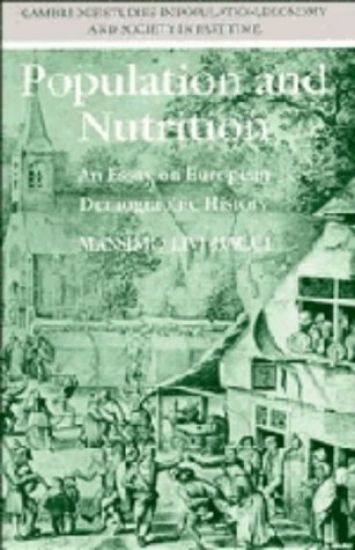
This book describes the history of the inter-relationships in Europe between population, land, resources, and disease.
In this essay, the mechanisms of biological, social and cultural nature linking subsistence, mortality and population are discussed.