Kirjojen hintavertailu. Mukana 12 184 482 kirjaa ja 12 kauppaa.

Kirjailija

Massimo Pigliucci

Kirjat ja teokset yhdessä paikassa: 33 kirjaa, julkaisuja vuosilta 2001-2026, suosituimpien joukossa La La Filosofía Práctica de Los Pensadores Clásicos: Aristipo, Epicuro, Aristóteles, Epícteto, Hiparquía, Platón, Sócrates, Protágoras, Carnéades, Pir. Vertaile teosten hintoja ja tarkista saatavuus suomalaisista kirjakaupoista.

33 kirjaa

Kirjojen julkaisuhaarukka 2001-2026.

Stoalaisuuden käsikirja

Stoalaisuuden käsikirja

Massimo Pigliucci

Basam Books
2020
nidottu
Kuka minä olen?Miten minun pitäisi toimia?Kuinka minun tulisi elää elämäni?Sen sijaan, että ihminen kysyy itseltään “Miten voisin tulla onnelliseksi?”, tulisi hänen antiikin stoalaisten mukaan oikeastaan kysyä: “Kuinka osaisin elää hyvää elämää?”Tämä helppotajuinen menestysteos esittelee stoalaisten filosofien oppeja ja neuvoo, kuinka kuka tahansa voi niiden avulla lisätä elämänsä merkityksellisyyttä. Stoalaisten ajatukset opettavat ihmistä tunnistamaan omat tunteensa ja pohtimaan niiden syitä - sekä kanavoimaan tunteensa hyödyllisesti.Stoalaisuuden käsikirjan käytännölliset vinkit ja harjoitukset osoittavat, kuinka antiikin stoalaisten kestävät opit voivat auttaa nykyajan ihmistäkin elämään hyvää, keskittynyttä ja läsnäolevaa elämää. Jokainen voi poimia stoalaisuudesta jotakin omaan elämäänsä.Italialaissyntyisellä Massimo Pigliuccilla on tohtorin tutkinnot sekä evoluutiobiologiasta että filosofiasta. Hän työskentelee filosofian professorina New Yorkin City Collegessa. Pigliucci on julkaissut toistakymmentä kirjaa ja kirjoittaa säännöllisesti muun muassa New York Timesiin, Washington Postiin ja Wall Street Journaliin. Teoksen suomentaja Antti Immonen on koulutukseltaan filosofi, joka on kääntänyt kymmeniä eri alojen teoksia, muun muassa lukuisia filosofian klassikoita.
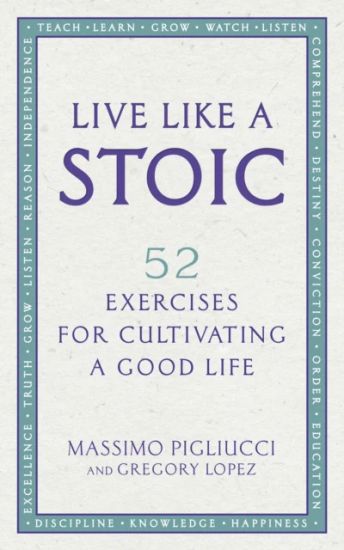
Live Like A Stoic

Live Like A Stoic

Massimo Pigliucci; Gregory Lopez

Rider Co
2019
pokkari
The answers to our daily worries and anxieties – big or small – lie at the heart of Stoic philosophy. Live Like a Stoic is the essential guide to help us live the good life. It offers a year-long programme of 52 weekly exercises aimed at mastering an array of real-life troubles. Full of practical lessons and sections for journaling, it provides all the tools needed to overcome any life obstacles we might face. Massimo Pigliucci and Gregory Lopez have created a unique, personalised Stoic curriculum for a lifetime of practice, showing how relevant this ancient philosophy is to modern life.
A Handbook for New Stoics: How to Thrive in a World Out of Your Control - 52 Week-By-Week Lessons
Stress often comes from situations that are beyond our control--such as preparing for a meeting, waiting for test results, or arguing with a loved one. But we can control our response to these everyday tensions--through the wisdom and practice of Stoicism. Stoicism is an ancient pragmatic philosophy that teaches us to step back, gain perspective, and act with intention. In A Handbook for New Stoics, renowned philosopher Massimo Pigliucci and seasoned practitioner Gregory Lopez provide 52 week-by-week lessons to help us apply timeless Stoic teachings to modern life. Whether you're already familiar with Seneca and Marcus Aurelius, or you're entirely new to Stoicism, this handbook will help you embrace challenges, thrive under pressure, and discover the good life
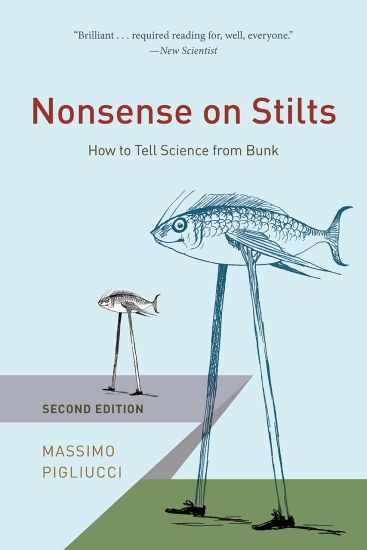
Nonsense on Stilts

Nonsense on Stilts

Massimo Pigliucci

University of Chicago Press
2018
pokkari
Recent polls suggest that fewer than 40 percent of Americans believe in Darwin's theory of evolution, despite it being one of science's best-established findings. Parents still refuse to vaccinate their children for fear it causes autism, though this link has been consistently disproved. And about 40 percent of Americans believe that the threat of global warming is exaggerated, including many political leaders. In this era of fake news and alternative facts, there is more bunk than ever. But why do people believe in it? And what causes them to embrace such pseudoscientific beliefs and practices? In this fully revised second edition, noted skeptic Massimo Pigliucci sets out to separate the fact from the fantasy in an entertaining exploration of the nature of science, the borderlands of fringe science, and--borrowing a famous phrase from philosopher Jeremy Bentham--the nonsense on stilts. Presenting case studies on a number of controversial topics, Pigliucci cuts through the ambiguity surrounding science to look more closely at how science is conducted, how it is disseminated, how it is interpreted, and what it means to our society. The result is in many ways a "taxonomy of bunk" that explores the intersection of science and culture at large. No one--neither the public intellectuals in the culture wars between defenders and detractors of science nor the believers of pseudoscience themselves--is spared Pigliucci's incisive analysis in this timely reminder of the need to maintain a line between expertise and assumption. Broad in scope and implication, Nonsense on Stilts is a captivating guide for the intelligent citizen who wishes to make up her own mind while navigating the perilous debates that will shape the future of our planet.
How to Be a Stoic: Using Ancient Philosophy to Live a Modern Life
A philosopher asks how ancient Stoicism can help us flourish today Whenever we worry about what to eat, how to love, or simply how to be happy, we are worrying about how to lead a good life. No goal is more elusive. In How to Be a Stoic, philosopher Massimo Pigliucci offers Stoicism, the ancient philosophy that inspired the great emperor Marcus Aurelius, as the best way to attain it. Stoicism is a pragmatic philosophy that focuses our attention on what is possible and gives us perspective on what is unimportant. By understanding Stoicism, we can learn to answer crucial questions: Should we get married or divorced? How should we handle our money in a world nearly destroyed by a financial crisis? How can we survive great personal tragedy? Whoever we are, Stoicism has something for us--and How to Be a Stoic is the essential guide.
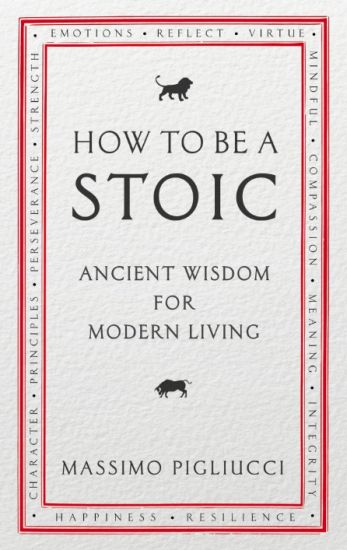
How To Be A Stoic

How To Be A Stoic

Massimo Pigliucci

Ebury Publishing
2017
pokkari
Stoicism teaches us to acknowledge our emotions, reflect on what causes them and redirect them for our own good. The author shows how stoicism teaches us the importance of a person's character, integrity and compassion. With tips and exercises, meditations and mindfulness, he also explains how relevant it is to every part of our modern lives.
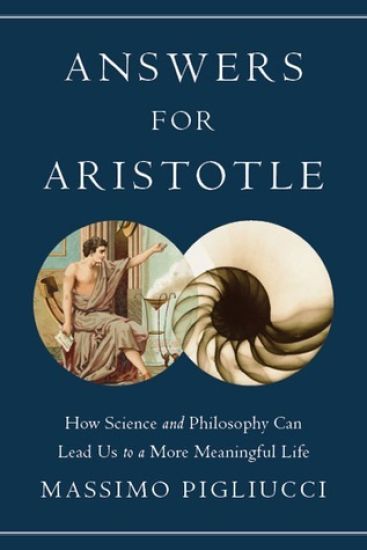
Answers for Aristotle

Answers for Aristotle

Massimo Pigliucci

Basic Books
2012
sidottu
How should we live? According to philosopher and biologist Massimo Pigliucci, the greatest guidance to this essential question lies in combining the wisdom of 24 centuries of philosophy with the latest research from 21st century science. In Answers for Aristotle , Pigliucci argues that the combination of science and philosophy first pioneered by Aristotle offers us the best possible tool for understanding the world and ourselves. As Aristotle knew, each mode of thought has the power to clarify the other: science provides facts, and philosophy helps us reflect on the values with which to assess them. But over the centuries, the two have become uncoupled, leaving us with questions,about morality, love, friendship, justice, and politics,that neither field could fully answer on its own. Pigliucci argues that only by rejoining each other can modern science and philosophy reach their full potential, while we harness them to help us reach ours. Pigliucci discusses such essential issues as how to tell right from wrong, the nature of love and friendship, and whether we can really ever know ourselves,all in service of helping us find our path to the best possible life. Combining the two most powerful intellectual traditions in history, Answers for Aristotle is a remarkable guide to discovering what really matters and why.
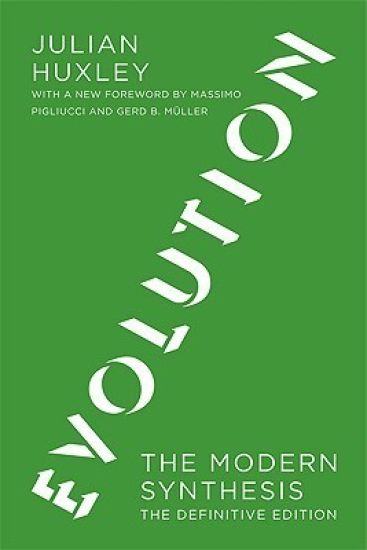
Evolution

Evolution

Julian Huxley; Massimo Pigliucci; Gerd B. Müller

MIT Press
2009
pokkari
The definitive edition of one of the most important scientific books of the twentieth century, setting out the conceptual structure underlying evolutionary biology.This classic work by Julian Huxley, first published in 1942, captured and synthesized all that was then known about evolutionary biology and gave a name to the Modern Synthesis, the conceptual structure underlying the field for most of the twentieth century. Many considered Huxley's book a popularization of the ideas then emerging in evolutionary biology, but in fact Evolution: The Modern Synthesis is a work of serious scholarship that is also accessible to the general educated public. It is a book in the intellectual tradition of Charles Darwin and Thomas Henry Huxley-Julian Huxley's grandfather, known for his energetic championing of Darwin's ideas. A contemporary reviewer called Evolution: The Modern Synthesis "the outstanding evolutionary treatise of the decade, perhaps the century." This definitive edition brings one of the most important and successful scientific books of the twentieth century back into print. It includes the entire text of the 1942 edition, Huxley's introduction to the 1963 second edition (which demonstrates his continuing command of the field), and the introduction to the 1974 third edition, written by nine experts (many of them Huxley's associates) from different areas of evolutionary biology.
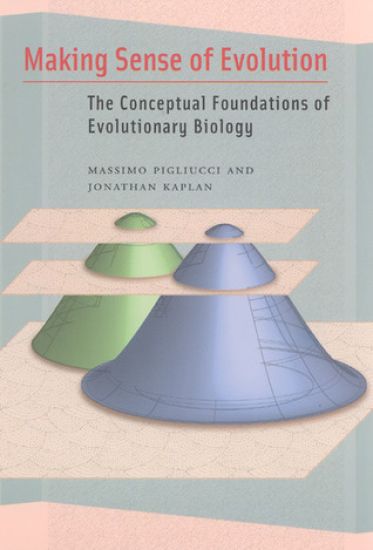
Making Sense of Evolution

Making Sense of Evolution

Massimo Pigliucci; Jonathan Kaplan

University of Chicago Press
2006
sidottu
Making Sense of Evolution explores contemporary evolutionary biology, focusing on the elements of theories—selection, adaptation, and species—that are complex and open to multiple possible interpretations, many of which are incompatible with one another and with other accepted practices in the discipline. Particular experimental methods, for example, may demand one understanding of “selection,” while the application of the same concept to another area of evolutionary biology could necessitate a very different definition. Spotlighting these conceptual difficulties and presenting alternate theoretical interpretations that alleviate this incompatibility, Massimo Pigliucci and Jonathan Kaplan intertwine scientific and philosophical analysis to produce a coherent picture of evolutionary biology. Innovative and controversial, Making Sense of Evolution encourages further development of the Modern Synthesis and outlines what might be necessary for the continued refinement of this evolving field.
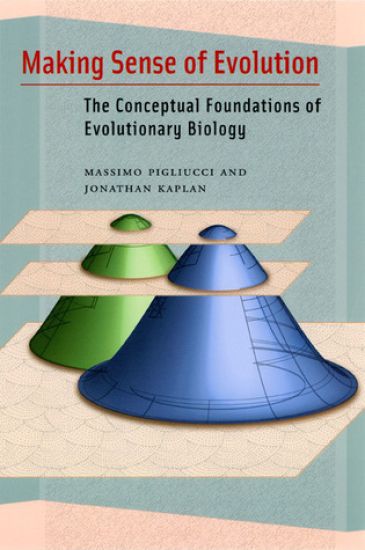
Making Sense of Evolution

Making Sense of Evolution

Massimo Pigliucci; Jonathan Kaplan

University of Chicago Press
2006
nidottu
Making Sense of Evolution explores contemporary evolutionary biology, focusing on the elements of theories—selection, adaptation, and species—that are complex and open to multiple possible interpretations, many of which are incompatible with one another and with other accepted practices in the discipline. Particular experimental methods, for example, may demand one understanding of “selection,” while the application of the same concept to another area of evolutionary biology could necessitate a very different definition. Spotlighting these conceptual difficulties and presenting alternate theoretical interpretations that alleviate this incompatibility, Massimo Pigliucci and Jonathan Kaplan intertwine scientific and philosophical analysis to produce a coherent picture of evolutionary biology. Innovative and controversial, Making Sense of Evolution encourages further development of the Modern Synthesis and outlines what might be necessary for the continued refinement of this evolving field.
Phenotypic Plasticity

Phenotypic Plasticity

Massimo Pigliucci

Johns Hopkins University Press
2001
sidottu
For more than two decades the concept of phenotypic plasticity has allowed researchers to go beyond the nature-nurture dichotomy to gain deeper insights into how organisms are shaped by the interaction of genetic and ecological factors. Phenotypic Plasticity: Beyond Nature and Nurture is the first work to synthesize the burgeoning area of plasticity studies, providing a conceptual overview as well as a technical treatment of its major components. Phenotypic plasticity integrates the insights of ecological genetics, developmental biology, and evolutionary theory. Plasticity research asks foundational questions about how living organisms are capable of variation in their genetic makeup and in their responses to environmental factors. For instance, how do novel adaptive phenotypes originate? How do organisms detect and respond to stressful environments? What is the balance between genetic or natural constraints (such as gravity) and natural selection? The author begins by defining phenotypic plasticity and detailing its history, including important experiments and methods of statistical and graphical analysis. He then provides extended examples of the molecular basis of plasticity, the plasticity of development, the ecology of plastic responses, and the role of costs and constraints in the evolution of plasticity. A brief epilogue looks at how plasticity studies shed light on the nature/nurture debate in the popular media. Phenotypic Plasticity: Beyond Nature and Nurture thoroughly reviews more than two decades of research, and thus will be of interest to both students and professionals in evolutionary biology, ecology, and genetics.