Kirjojen hintavertailu. Mukana 12 390 323 kirjaa ja 12 kauppaa.

Kirjailija

Masudul Alam Choudhury

Kirjat ja teokset yhdessä paikassa: 37 kirjaa, julkaisuja vuosilta 1989-2025, suosituimpien joukossa The Unicity Precept and the Socio-Scientific Order. Vertaile teosten hintoja ja tarkista saatavuus suomalaisista kirjakaupoista.

37 kirjaa

Kirjojen julkaisuhaarukka 1989-2025.

Islamic Epistemics and Socioeconomics

Islamic Epistemics and Socioeconomics

Masudul Alam Choudhury

Springer Nature Switzerland AG
2025
sidottu
This book presents selected essays on the epistemological foundation of the Islamic world-system, in the light of the exegesis of the Qur’an, to develop existing understandings of Islamic economics. A selection of key contributions by one of the world's leading figures working at the nexus of Islamic social sciences, Islamic philosophy, and Islamic economics, the book integrates applied foundations of Islamic economics and Islamic philosophy, presenting a critical outlook on the existing state of Islamic economics and Islamic finance, within a broader framework of socio-scientific enquiry, philosophical perspectives on Islam, and philosophy of science. The author confronts the absence of epistemic groundwork upon which any fresh social and scientific enquiry is developing in Islamic economics, casting the discussion within an explanatory framework of ‘the unity of knowledge’ as bestowed by Islamic monotheistic law, which substantively characterizes the generalization and details of ‘everything’. The present work unravels this objective methodology and its application with reference to a limited number of issues and problems in global economics. Complex and multidisciplinary in its treatment, this book presents the key arguments on mathematical, philosophical, and socio-scientific modes of inquiry in deriving, developing, and empirically applying the Qur’anic methodology of the “unity of knowledge” to economic problems. It is relevant to scholars and advanced students in social scientific studies of Islam, Islamic theology and philosophy, and Islamic economics and finance.
Handbook of Islamic Philosophy of Science

Handbook of Islamic Philosophy of Science

Masudul Alam Choudhury

SPRINGER VERLAG, SINGAPORE
2024
sidottu
This handbook provides a comprehensive overview of Islamic ethical issues within a wide spectrum of philosophy of science topics, examining the development of the model of moral inclusiveness in economics, science and society from ontological, epistemological and analytical perspectives. This paradigm takes the view that ethics is systemically endogenous, and can be studied by the most rigorous scientific analysis pertaining to diverse issues and problems of ethicality in socio-scientific inquiry. This handbook takes a sweeping transdisciplinary approach that is deeply phenomenological, to the nature and logic of scientific inquiry of, and in, the Qur’an. Such an approach invokes the episteme of the unity of knowledge in the socio-scientific systemic sense. The volumes' respective sections focus on the nature, logic, and role that ethics plays in formulating new vistas of alternative epistemic futures in Islamic economics, finance, and the social sciences. The ideas presented are situated within the broader context of the post-modernist, post-pandemic, and the post-Covid-19 epoch, while being aimed at conceptualising a distinctive new outlook of transdisciplinary intellection in Islamic philosophy. The content is rigorously conceptual, qualitative, quantitative, and applied. Covering a diversity of subject areas from philosophy of science, to economics and in socio-scientific context within the realm of Islamic philosophy, this forms a key text for scholars in these respective arenas, led by pioneering scholarship in Islamic studies.
Knowledge and the University

Knowledge and the University

Masudul Alam Choudhury

SPRINGER VERLAG, SINGAPORE
2022
nidottu
This book looks at a substantively new model of educational philosophy and its application within the field of tertiary education, in relation to socio-economic development in Southeast Asian members of the Organization of Islamic Conferences (OIC). Focusing on and drawing from the cross-regional South East Asian Cooperation (SEACO), a network promoting regional economic cooperation, the author presents a thoughtful evocation of a new orientation to educational philosophy and policy within the development context in the time of, and relating to, COVID-19. The generalized worldview of Islamic educational and socio-economic development model is laid down in relation to the philosophy of education and an ethical-scientific structure of development in terms of the theory of knowledge (epistemology, episteme). The foundation of scientific thought and a comparative Islamic worldview in understanding the unified reality of ‘everything’ is presented. The objectivity of socio-scientific learning at all levels of educational development is further explained within the context of SEACO and its think tank vis-à-vis a reconstructive perspective in which the Islamic episteme of the unity of knowledge and its substantive methodology is addressed and unpacked. The book is relevant to policymakers and scholarly researchers in Islamic philosophy and development and higher education in Southeast Asia and in the Muslim world and more broadly for the world of learning.
Islamic Economics and COVID-19

Islamic Economics and COVID-19

Masudul Alam Choudhury

TAYLOR FRANCIS LTD
2022
nidottu
This book is a timely exploration of an unprecedented, cataclysmic pandemic episode. It examines certain critical aspects of socio-scientific theory across a variety of diverse themes, and through an epistemic lens. The book investigates the general theory of pandemic episodes and their adverse long-term effects on human and environmental wellbeing. It includes an in-depth study of COVID-19 but also looks to the future to contemplate potential pandemics to come. The existing approach to the study of pandemics is critically examined in terms of the prevalent isolated and thus mutated way of viewing human and mechanical relations in the name of specialization and modernity. The book presents a novel model of science-economy-society moral inclusiveness that forms a distinctive theoretical approach to the issue of normalizing all forms of pandemic challenges. It is methodologically different from existing economic theory, including the critical study of microeconomic foundations of macroeconomics. Human and environmental existence along with its multidisciplinary outlook of unity of knowledge between modernity, traditionalism, and socio-cultural values is emphasized in the treatment and cure of pandemic episodes. The book is a unique reference work, offering fresh wisdom within the moral methodological worldview.
Tawhid and Shari'ah

Tawhid and Shari'ah

Masudul Alam Choudhury

Springer Nature Switzerland AG
2021
nidottu
This book invokes the Tawhidi ontological foundation of the Qur’anic law and worldview, and is also a study of ta’wil, the esoteric meaning of Qur’anic verses. It presents a comparative analysis between the Tawhidi methodology and the contemporary subject of Shari’ah. Masudul Alam Choudhury brings about a serious criticism of the traditional understanding of Shari’ah as Islamic law contrary to the holistic socio-scientific worldview of the unity of knowledge arising from Tawhid as the law. A bold repudiation of the Islamic traditional understanding and the school of theocracy, Choudhury’s critique is in full consonance with the Qur’an and Sunnah. It is critical of the sectarian (madhab) conception of relational independence of facts. Thus the non-creative outlook of Shari’ah contrasts with universality and uniqueness of Tawhid as the analytically established law explaining the monotheistic organic unity of being and becoming in ‘everything’. This wide and strict methodological development of the Tawhidi worldview is articulated in this work. The only way that Tawhid and Shari'ah can converge as law is in terms of developing the Tawhidi methodology, purpose and objective of the universal and unique law in consonance with the ontology of Tawhid. Such a convergence in the primal ontological sense of Tawhid is termed as maqasid as-shari'ah al-Tawhid.
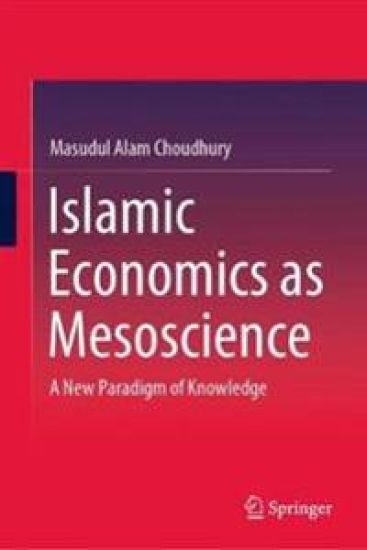
Islamic Economics as Mesoscience

Islamic Economics as Mesoscience

Masudul Alam Choudhury

SPRINGER VERLAG, SINGAPORE
2021
nidottu
This book presents the building blocks of Islamic economics as meso-science, offering an in-depth study of the Qur’anic worldview of the monotheistic unity of knowledge, which is the universal and unique message of Tawhid in the Qur’an. This primal ontological premise is formalised in an analytical approach that introduces and unpacks the philosophical concepts of ontology, epistemology, and phenomenology in relation to the Tawhidi methodological worldview. The analysis of Qur’anic logical consistency is then cast in a phenomenological perspective by applying the complete model of the unity of knowledge of the Qur’an in a specific study of the Tawhidi methodological approach to Islamic financial-economic theory. In doing so, it tackles the problems of meso-economics given its socio-scientific holism in world affairs. It hones in on the results of the symbiotic modulation of evolutionary learning processes in the world system of the unity of knowledge and its material embedding across knowledge, and knowledge-induced space and time dimensions. The author poses that Shari’ah is only partial in its scope, and excludes an analytical methodological worldview. Shari’ah is thus cast in the midst of a meso-socio-scientific absence of any appertaining methodology. The book is a landmark work in the conceptual and applied understanding of Tawhid as the methodological worldview of the monotheistic unity of knowledge in the meso-socio-scientific realm of ‘everything’, particularised to Islamic economics. Adopting an inter-disciplinary view integrating various fields, it challenges pervasive Western academic and institutional thinking in terms of economics. It will be of interest to students and researchers in Islamic economics, religious theory, Islamic philosophy, development studies, and finance.
Knowledge and the University

Knowledge and the University

Masudul Alam Choudhury

SPRINGER VERLAG, SINGAPORE
2021
sidottu
This book looks at a substantively new model of educational philosophy and its application within the field of tertiary education, in relation to socio-economic development in Southeast Asian members of the Organization of Islamic Conferences (OIC). Focusing on and drawing from the cross-regional South East Asian Cooperation (SEACO), a network promoting regional economic cooperation, the author presents a thoughtful evocation of a new orientation to educational philosophy and policy within the development context in the time of, and relating to, COVID-19. The generalized worldview of Islamic educational and socio-economic development model is laid down in relation to the philosophy of education and an ethical-scientific structure of development in terms of the theory of knowledge (epistemology, episteme). The foundation of scientific thought and a comparative Islamic worldview in understanding the unified reality of ‘everything’ is presented. The objectivity of socio-scientific learning at all levels of educational development is further explained within the context of SEACO and its think tank vis-à-vis a reconstructive perspective in which the Islamic episteme of the unity of knowledge and its substantive methodology is addressed and unpacked. The book is relevant to policymakers and scholarly researchers in Islamic philosophy and development and higher education in Southeast Asia and in the Muslim world and more broadly for the world of learning.
Islamic Economics and COVID-19

Islamic Economics and COVID-19

Masudul Alam Choudhury

Routledge
2021
sidottu
This book is a timely exploration of an unprecedented, cataclysmic pandemic episode. It examines certain critical aspects of socio-scientific theory across a variety of diverse themes, and through an epistemic lens. The book investigates the general theory of pandemic episodes and their adverse long-term effects on human and environmental wellbeing. It includes an in-depth study of COVID-19 but also looks to the future to contemplate potential pandemics to come. The existing approach to the study of pandemics is critically examined in terms of the prevalent isolated and thus mutated way of viewing human and mechanical relations in the name of specialization and modernity. The book presents a novel model of science-economy-society moral inclusiveness that forms a distinctive theoretical approach to the issue of normalizing all forms of pandemic challenges. It is methodologically different from existing economic theory, including the critical study of microeconomic foundations of macroeconomics. Human and environmental existence along with its multidisciplinary outlook of unity of knowledge between modernity, traditionalism, and socio-cultural values is emphasized in the treatment and cure of pandemic episodes. The book is a unique reference work, offering fresh wisdom within the moral methodological worldview.
Tawhid and Shari'ah

Tawhid and Shari'ah

Masudul Alam Choudhury

Springer Nature Switzerland AG
2020
sidottu
This book invokes the Tawhidi ontological foundation of the Qur’anic law and worldview, and is also a study of ta’wil, the esoteric meaning of Qur’anic verses. It presents a comparative analysis between the Tawhidi methodology and the contemporary subject of Shari’ah. Masudul Alam Choudhury brings about a serious criticism of the traditional understanding of Shari’ah as Islamic law contrary to the holistic socio-scientific worldview of the unity of knowledge arising from Tawhid as the law. A bold repudiation of the Islamic traditional understanding and the school of theocracy, Choudhury’s critique is in full consonance with the Qur’an and Sunnah. It is critical of the sectarian (madhab) conception of relational independence of facts. Thus the non-creative outlook of Shari’ah contrasts with universality and uniqueness of Tawhid as the analytically established law explaining the monotheistic organic unity of being and becoming in ‘everything’. This wide and strict methodological development of the Tawhidi worldview is articulated in this work. The only way that Tawhid and Shari'ah can converge as law is in terms of developing the Tawhidi methodology, purpose and objective of the universal and unique law in consonance with the ontology of Tawhid. Such a convergence in the primal ontological sense of Tawhid is termed as maqasid as-shari'ah al-Tawhid.
Islamic Economics as Mesoscience

Islamic Economics as Mesoscience

Masudul Alam Choudhury

Springer Verlag, Singapore
2020
sidottu
This book presents the building blocks of Islamic economics as meso-science, offering an in-depth study of the Qur’anic worldview of the monotheistic unity of knowledge, which is the universal and unique message of Tawhid in the Qur’an. This primal ontological premise is formalised in an analytical approach that introduces and unpacks the philosophical concepts of ontology, epistemology, and phenomenology in relation to the Tawhidi methodological worldview. The analysis of Qur’anic logical consistency is then cast in a phenomenological perspective by applying the complete model of the unity of knowledge of the Qur’an in a specific study of the Tawhidi methodological approach to Islamic financial-economic theory. In doing so, it tackles the problems of meso-economics given its socio-scientific holism in world affairs. It hones in on the results of the symbiotic modulation of evolutionary learning processes in the world system of the unity of knowledge and its material embedding across knowledge, and knowledge-induced space and time dimensions. The author poses that Shari’ah is only partial in its scope, and excludes an analytical methodological worldview. Shari’ah is thus cast in the midst of a meso-socio-scientific absence of any appertaining methodology. The book is a landmark work in the conceptual and applied understanding of Tawhid as the methodological worldview of the monotheistic unity of knowledge in the meso-socio-scientific realm of ‘everything’, particularised to Islamic economics. Adopting an inter-disciplinary view integrating various fields, it challenges pervasive Western academic and institutional thinking in terms of economics. It will be of interest to students and researchers in Islamic economics, religious theory, Islamic philosophy, development studies, and finance.
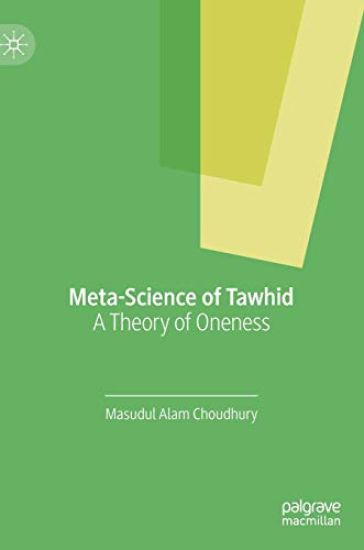
Meta-Science of Tawhid

Meta-Science of Tawhid

Masudul Alam Choudhury

Springer Nature Switzerland AG
2020
nidottu
This book explores the methodological foundation of Islamic thought premised on the cardinal principle of Tawhid, meaning the Oneness of God as the universal law. The consequential methodological worldview arising from the monotheistic unity of knowledge is explained as the theory of consilience, meaning unity of knowledge as the primal ontological reality leading to its epistemological and phenomenological essentials of reasoning and thereby configuring reality. Masudul Alam Choudhury presents a non-mathematical exposition of the theory and applications of Meta-Science of Tawhid, and brings out the essential monotheistic methodological worldview of science.
Heterodox Islamic Economics

Heterodox Islamic Economics

Masudul Alam Choudhury; Ishaq Bhatti

Routledge
2020
nidottu
The fields of morality and ethics have been left out significantly from socio-scientific study in general and in economics and finance in particular. Yet this book argues that in this age of post-modernist analytical inquiry, the study of morality and ethics is an epistemological requirement. This book illustrates the delimiting nature of mainstream economic reasoning in treating morality and ethics and highlights the potential contribution of analytical monotheism, as typified by the Islamic concept of Tahwid.The principal purpose of this book is to undertake an introductory exploration of the critical area of comparative economic thought in order to place the nature and emergence of ethico-economic theory in its proper context. It is ultimately argued that such a post-orthodoxy revolutionary methodological worldview can be presented by Islamic political economy, Islamic economics and finance.
God-Conscious Organization and the Islamic Social Economy
Can there be God-conscious organizational behaviour in the real world of today’s capitalist corporations and the alternatives? In this overview of God-consciousness as a moral-awareness model of preference formation, functions, structures, and programs of organization within the purview of institutions and society, the authors explain and compare the major ethical issues of organizational behaviour and structure in Islamic economic theory and application. By analysing the nature of inclusive organizations and institutions, and the ethical preferences in Islamic choice framework, the authors from Saudi Arabia, Australia, Malaysia, Bangladesh, Canada, Indonesia and the UK, can highlight individual aspects to show whether capitalist organizational behaviour is sustainable. They describe how The Tawhidi epistemological framework governing conscious moral decision-making by institutions and organization, are used to establish the meaning and potential application of the concept of sustainability, and whether organizational moral objectives achieve their goals of life-fulfilment development, Poverty alleviation and the equitable distribution of wealth and resources.
Islamic Financial Economy and Islamic Banking

Islamic Financial Economy and Islamic Banking

Masudul Alam Choudhury

Routledge
2019
nidottu
Islamic Financial Economy and Islamic Banking, is a thorough, deeply conceptual, analytical and applied work in the area of epistemological foundation of Islamic world-system.The book presents a new frontier of original contribution to the theme of generalized-system model of shari’ah. The model, derived from the Qur’an and Sunnah (Prophetic guidance) incorporates a wide analytical coverage of the purpose and objective of the Islamic worldview (maqasid as-shari’ah) in Islamic economics and finance in particular.The author covers issues that contrast with the existing understanding of Islamic economics and finance, including some specific goals defining the field and how they compare in today’s unstable world of financial volatility. A new heterodox thinking in economic theory is outlined. The potential as to how such issues can be addressed by the Tawhidi epistemology in formulating the generalized-system model of the purpose and objective of shari’ah lead the way in this book.Its presentation and analysis, methods and approach, overarch the fields of philosophy of science, rigorous analysis, mathematical and other presentations of the understanding given, and all taken up in the light of the exegesis of the Qur’an and coverage of the Sunnah. The result is a substantive one in the field of scholarship and application; and in analytically proving the universality and uniqueness of the epistemic worldview for the academic and practitioner world at large. The totality of the multiverse diversity of issues and problems reviewed comprise the study of the world-system by the Tawhidi methodological approach. Yet this methodology and its empirical configuration are universally applicable to all users without any need for unnecessary religious overtone.
Meta-Science of Tawhid

Meta-Science of Tawhid

Masudul Alam Choudhury

Springer Nature Switzerland AG
2019
sidottu
This book explores the methodological foundation of Islamic thought premised on the cardinal principle of Tawhid, meaning the Oneness of God as the universal law. The consequential methodological worldview arising from the monotheistic unity of knowledge is explained as the theory of consilience, meaning unity of knowledge as the primal ontological reality leading to its epistemological and phenomenological essentials of reasoning and thereby configuring reality. Masudul Alam Choudhury presents a non-mathematical exposition of the theory and applications of Meta-Science of Tawhid, and brings out the essential monotheistic methodological worldview of science.
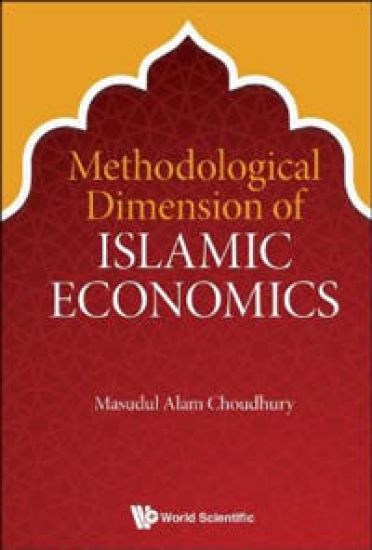
Methodological Dimension Of Islamic Economics

Methodological Dimension Of Islamic Economics

Masudul Alam Choudhury

World Scientific Publishing Co Pte Ltd
2019
sidottu
The theme of circular causation has nascent origin in the field of sociology of economics with vast development applications and with epistemological issues on modeling in the framework of the phenomenon of pervasive interconnectedness. Thus the sociological theme of epistemic unity of knowledge grounds the theory and application of the theory and models of circular causation to the vast realm of socioeconomic development issues.The theory and application of circular causation has methodological similarities with Gunnar Myrdal's theory of social causation and Joseph Schumpeter's and Hayek's learning models of evolutionary phenomena. One can re-engineer many important works by sociological economists in and by the methodology of circular causation. Among these other important works are capabilities and functioning by Amartya Sen; John Rawls' evolutionary good society aspiring for social justice; adaptation of Ilya Prigogine's theory of being and becoming to social, economic and development phenomenon; and George Soros' theory of reflexivity in history and financial markets. The proponent of this book has pioneered the area of theory and application of circular causation extensively.
Absolute Reality in the Qur'an

Absolute Reality in the Qur'an

Masudul Alam Choudhury

Palgrave Macmillan
2018
nidottu
This book studies the absolute reality of the Qur’an, which is signified by the struggle of truth against falsehood in the framework of monotheistic unity of knowledge and the unified world-system induced by the consilience of knowledge. In such a framework the absolute reality reveals itself not by religious dogmatism. Rather, the methodology precisely comprises its distinctive parts. These are namely the ‘primal ontology’ as the foundational explained axiom of monotheistic unity; the ‘secondary ontologies’ as explanatory replications of the law of unity in the particulars of the world-system; ‘epistemology’ as the operational model; and ‘phenomenology’ as the structural nature of events induced by the monotheistic law, that is by knowledge emanating from the law. The imminent methodology remains the unique explanatory reference of all events that take place, advance, and change in continuity across continuums of knowledge, space, and time.
Absolute Reality in the Qur'an

Absolute Reality in the Qur'an

Masudul Alam Choudhury

Palgrave Macmillan
2016
sidottu
This book studies the absolute reality of the Qur’an, which is signified by the struggle of truth against falsehood in the framework of monotheistic unity of knowledge and the unified world-system induced by the consilience of knowledge. In such a framework the absolute reality reveals itself not by religious dogmatism. Rather, the methodology precisely comprises its distinctive parts. These are namely the ‘primal ontology’ as the foundational explained axiom of monotheistic unity; the ‘secondary ontologies’ as explanatory replications of the law of unity in the particulars of the world-system; ‘epistemology’ as the operational model; and ‘phenomenology’ as the structural nature of events induced by the monotheistic law, that is by knowledge emanating from the law. The imminent methodology remains the unique explanatory reference of all events that take place, advance, and change in continuity across continuums of knowledge, space, and time.
God-Conscious Organization and the Islamic Social Economy
Can there be God-conscious organizational behaviour in the real world of today’s capitalist corporations and the alternatives? In this overview of God-consciousness as a moral-awareness model of preference formation, functions, structures, and programs of organization within the purview of institutions and society, the authors explain and compare the major ethical issues of organizational behaviour and structure in Islamic economic theory and application. By analysing the nature of inclusive organizations and institutions, and the ethical preferences in Islamic choice framework, the authors from Saudi Arabia, Australia, Malaysia, Bangladesh, Canada, Indonesia and the UK, can highlight individual aspects to show whether capitalist organizational behaviour is sustainable. They describe how The Tawhidi epistemological framework governing conscious moral decision-making by institutions and organization, are used to establish the meaning and potential application of the concept of sustainability, and whether organizational moral objectives achieve their goals of life-fulfilment development, Poverty alleviation and the equitable distribution of wealth and resources.