Kirjailija
Mathew Guest
Kirjat ja teokset yhdessä paikassa: 11 kirjaa, julkaisuja vuosilta 2007-2022, suosituimpien joukossa A Sociology of Mystic Practices. Vertaile teosten hintoja ja tarkista saatavuus suomalaisista kirjakaupoista.
11 kirjaa
Kirjojen julkaisuhaarukka 2007-2022.
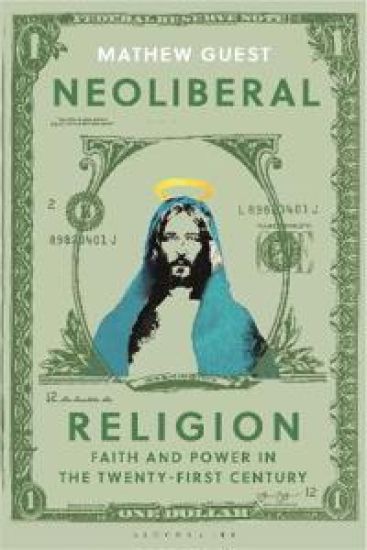
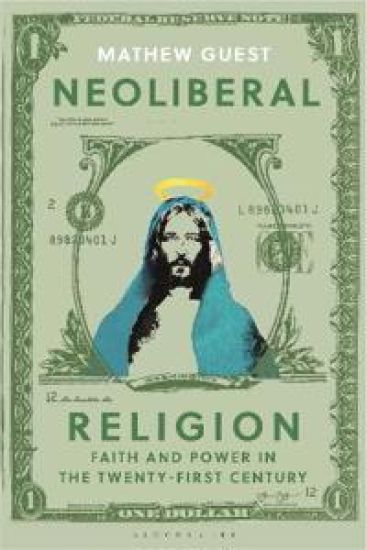
This book explores neoliberalism as an account of contemporary society and considers what this means for our understanding of religion.Neoliberalism is a perspective grounded in free market economics and distinguished by a celebration of competition and consumer choice. It has had a profound influence in societies across the world, and has extended its reach into all areas of human experience. And yet neoliberalism is not just about enterprise and opportunity. It also comes with authoritarian leadership, gross inequality and the manipulation of information. How should we make sense of these changes, and what do they mean for the status of religion in the 21st century? Has religion been transformed into a market commodity or consumer product? Does the embrace of business methods make religious movements more culturally relevant, or can they be used to reinforce inequalities of gender or ethnicity? How might neoliberal contexts demand we think differently about matters of religious identity and power?This book provides an accessible discussion about religion in the 21st century. Mathew Guest asks what distinguishes neoliberal religion and explores the sociological and ethical questions that arise from considering its wider significance.
Islam on Campus
Alison Scott-Baumann; Mathew Guest; Shuruq Naguib; Sariya Cheruvallil-Contractor; Aisha Phoenix
Oxford University Press
2021
nidottu
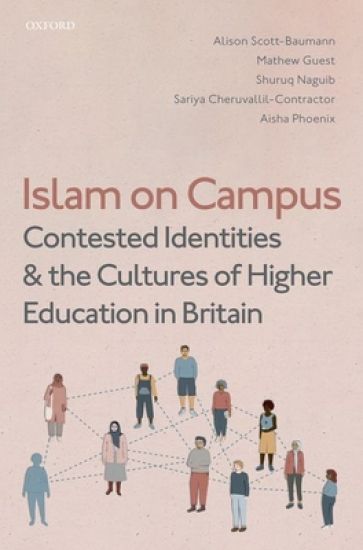
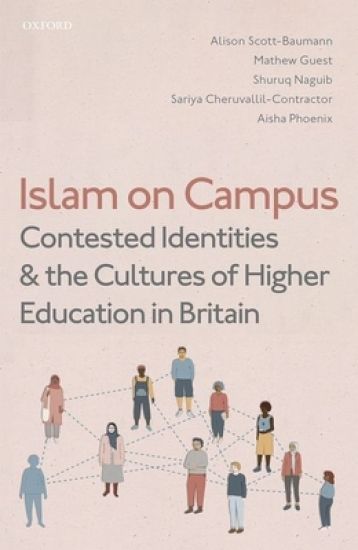
Islam on Campus explores how Islam is represented, perceived and lived within higher education in Britain. It is a book about the changing nature of university life, and the place of religion within it. Even while many universities maintain ambiguous or affirming orientations to religious institutions for reasons to do with history and ethos, much western scholarship has presumed higher education to be a strongly secularizing force. This framing has resulted in religion often being marginalized or ignored as a cultural irrelevance by the university sector. However, recent times have seen higher education increasingly drawn into political discourses that problematize religion in general, and Islam in particular, as an object of risk. Using the largest data set yet collected in the UK, this book explores university life and the ways in which ideas about Islam and Muslim identities are produced, experienced, perceived, appropriated, and objectified. It asks what role universities and Muslim higher education institutions play in the production, reinforcement, and contestation of emerging narratives about religious difference. This is a culturally nuanced treatment of universities as sites of knowledge production, and contexts for the negotiation of perspectives on culture and religion among an emerging generation. It demonstrates the urgent need to release Islam from its official role as the othered, the feared. When universities achieve this we will be able to help students of all affiliations and of none to be citizens of the campus in preparation for being citizens of the world.
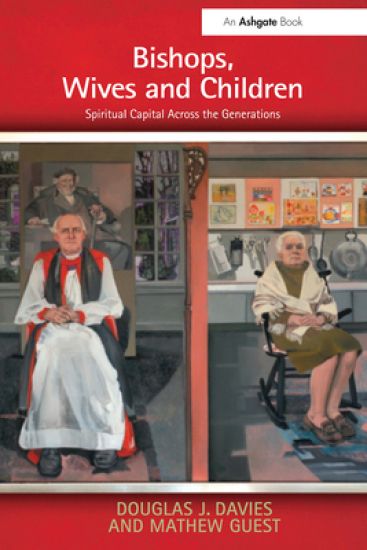
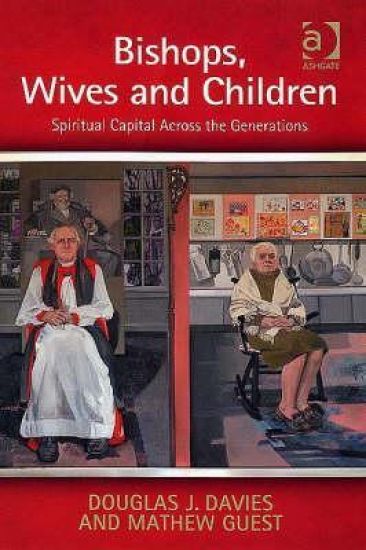
Christianity as a cultural force, whether rising or falling, has seldom been analysed through the actual processes by which tradition is transmitted, modified, embraced or rejected. This book achieves that end through a study of bishops of the Church of England, their wives and their children, to show how values fostered in the vicarage and palace shape family, work and civic life in a supposedly secular age. Davies and Guest integrate, for the first time, sociological concepts of spiritual capital with anthropological ideas of gift-theory and, alongside theological themes, use these to illuminate how the religious professional functions in mediating tradition and fostering change. Motifs of distant prelates, managerially-minded fathers in God and rebellious clergy children are reconsidered in a critical light as new empirical evidence offers unique insights into how the clergy family functions as an axis of social power in an age incredulous to ecclesiastical hierarchy. Bishops, Wives and Children marks an important advance in the analysis of the spirituality of Catholic, Evangelical and Liberal leaders and their social significance within a distinctive Christian tradition and all it represents in wider British society.
Islam on Campus
Alison Scott-Baumann; Mathew Guest; Shuruq Naguib; Sariya Cheruvallil-Contractor; Aisha Phoenix
Oxford University Press
2020
sidottu
Islam on Campus explores how Islam is represented, perceived, and lived within higher education in Britain. It considers the changing nature of university life, and the place of religion within it. Even while many universities maintain ambiguous or affirming orientations to religious institutions for reasons to do with history and ethos, much western scholarship has presumed higher education to be a strongly secularising force. This framing has resulted in religion often being marginalised or ignored as a cultural irrelevance by the university sector. However, recent times have seen higher education increasingly drawn into political discourses that problematize religion in general, and Islam in particular, as an object of risk. Using the largest data set yet collected in the UK, Islam on Campus explores university life and the ways in which ideas about Islam and Muslim identities are produced, experienced, perceived, appropriated, and objectified. The volume considers the role universities and Muslim higher education institutions play in the production, reinforcement, and contestation of emerging narratives about religious difference. This is a culturally nuanced treatment of universities as sites of knowledge production, and contexts for the negotiation of perspectives on culture and religion among an emerging generation. This collaborative study demonstrates the urgent need to release Islam from its official role as the othered, or the feared. When universities achieve this we will be able to help students of all affiliations and of none to be citizens of the campus in preparation for being citizens of the world.
This book investigates the process of spiritual borrowing between the emergent church (EC) and the Christian mystical tradition. From its inception, the EC has displayed interest in mystic practices, but the exact nature of this interest or how these practices are appropriated and reinterpreted in the EC context has not been researched. My research shows that the emergent church is appropriating Christian mystic practices by investing these practices with their own theological content. The practices themselves are changed to fit in their new context, showing that EC belief shapes EC behavior. My study adds a new case study perspective to the sociological examination of the process of spiritual borrowing, especially through close inspection of how a spiritual practice changes to fit a new theological context. Additionally, my book contributes to the study of the complex relationship between belief and behavior. ""Dann Wigner's book draws on his exciting research into ECM groups in the Southwestern USA, focusing on how they engage in mystical practices derived from long-standing Christian traditions. Using ethnographic methods, Wigner explores how ECM members embody and make sense of these practices, furnishing an illuminating discussion of one of the most intriguing and unpredictable movements in contemporary Christianity."" --Mathew Guest, Durham University, UK ""This book is a welcome contribution to the scholarship on the Emerging Church Movement. It provides compelling snapshots of how Emerging Christianity is expressed on the ground, exploring how Emerging Christians engage with mystical traditions. Its insights about 'spiritual borrowing' raise questions for future research in the field."" --Gladys Ganiel, Queen's University Belfast ""The Christian life is best understood as a series of practices which come from, and form, faith. While the faith does not change, the shape of the practices does. Dann Wigner has explored and understands the shape faithful practices are taking in an ever-changing and emerging church, and for this we must be grateful."" --William Brosend, School of Theology, The University of the South, Sewanee, TN Dann Wigner is an adjunct professor at Middle Tennessee State University, Wayland Baptist University, and the University of the South. He teaches religious studies classes at the university level and has offered workshops, seminars, and one-on-one direction in Christian contemplation for several years. He also has an extensive background in theological librarianship, and he is currently Instruction and Information Literacy Librarian at the University of the South. This is his first book.
Christianity and the University Experience
Mathew Guest; Kristin Aune; Sonya Sharma; Rob Warner
Bloomsbury Academic
2013
nidottu
What impact does the experience of university have on Christian students? Are universities a force for secularisation? Is student faith enduring, or a passing phase? Universities are often associated with a sceptical attitude towards religion. Many assume that academic study leads students away from any existing religious convictions, heightening the appeal of a rationalist secularism increasingly dominant in wider society. And yet Christianity remains highly visible on university campuses and continues to be a prominent identity marker in the lives of many students. Analysing over 4,000 responses to a national survey of students and nearly 100 interviews with students and those working with them, this book examines Christianity in universities across England. It explores the beliefs, values and practices of Christian students. It reveals how the university experience influences their Christian identities, and the influence Christian students have upon university life. Christianity and the University Experience makes fascinating reading for anyone interested in the survival and evolution of religion in the contemporary world. It offers fresh insights relevant to those working with Christian students, including churches, chaplaincies and student organisations, as well as policy-makers and university managers interested in the significance of religion for education, social responsibility and social cohesion.
Christianity and the University Experience
Mathew Guest; Kristin Aune; Sonya Sharma; Rob Warner
Bloomsbury Academic
2013
sidottu
What impact does the experience of university have on Christian students? Are universities a force for secularisation? Is student faith enduring, or a passing phase? Universities are often associated with a sceptical attitude towards religion. Many assume that academic study leads students away from any existing religious convictions, heightening the appeal of a rationalist secularism increasingly dominant in wider society. And yet Christianity remains highly visible on university campuses and continues to be a prominent identity marker in the lives of many students. Analysing over 4,000 responses to a national survey of students and nearly 100 interviews with students and those working with them, this book examines Christianity in universities across England. It explores the beliefs, values and practices of Christian students. It reveals how the university experience influences their Christian identities, and the influence Christian students have upon university life. Christianity and the University Experience makes fascinating reading for anyone interested in the survival and evolution of religion in the contemporary world. It offers fresh insights relevant to those working with Christian students, including churches, chaplaincies and student organisations, as well as policy-makers and university managers interested in the significance of religion for education, social responsibility and social cohesion.
Building on an ethnographic study of St. Michael-le-Belfrey Church in York, a recognized leader in charismatic renewal, mission, and evangelical innovation since the 1960s, this book explores how a persistent tradition of cultural engagement may generate growth, while at the same time bringing about significant changes in the structure and function of the evangelical congregation, and in the social construction of Christian identity itself. This is the first sociological study of St. Michael-le-Belfrey and the first to take seriously the question of how blazing the trail in terms of mission, worship, and fellowship influences the way in which congregations exist as Christian communities within the contemporary British context.
Christianity as a cultural force, whether rising or falling, has seldom been analysed through the actual processes by which tradition is transmitted, modified, embraced or rejected. This book achieves that end through a study of bishops of the Church of England, their wives and their children, to show how values fostered in the vicarage and palace shape family, work and civic life in a supposedly secular age. Davies and Guest integrate, for the first time, sociological concepts of spiritual capital with anthropological ideas of gift-theory and, alongside theological themes, use these to illuminate how the religious professional functions in mediating tradition and fostering change. Motifs of distant prelates, managerially-minded fathers in God and rebellious clergy children are reconsidered in a critical light as new empirical evidence offers unique insights into how the clergy family functions as an axis of social power in an age incredulous to ecclesiastical hierarchy. Bishops, Wives and Children marks an important advance in the analysis of the spirituality of Catholic, Evangelical and Liberal leaders and their social significance within a distinctive Christian tradition and all it represents in wider British society.