Kirjojen hintavertailu. Mukana 12 595 353 kirjaa ja 12 kauppaa.

Kirjailija

Mathias Guenther

Kirjat ja teokset yhdessä paikassa: 7 kirjaa, julkaisuja vuosilta 1999-2025, suosituimpien joukossa Tricksters and Trancers. Vertaile teosten hintoja ja tarkista saatavuus suomalaisista kirjakaupoista.

7 kirjaa

Kirjojen julkaisuhaarukka 1999-2025.

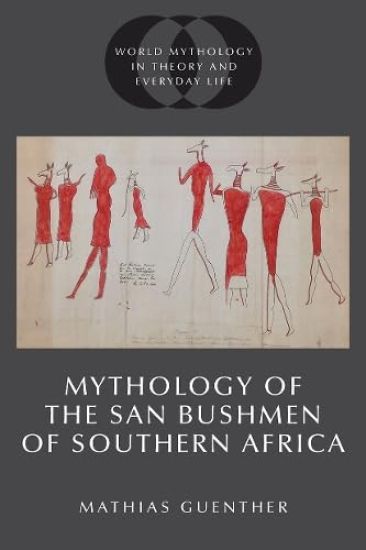
Mythology of the San Bushmen of Southern Africa

Mythology of the San Bushmen of Southern Africa

Mathias Guenther

OXFORD UNIVERSITY PRESS INC
2025
nidottu
Amongst the oldest continuing cultures on Earth, San Bushmen are indigenous peoples that make up the first nations of Southern Africa. San culture is rich in myth and lore, actively and expansively transmitted by storytellers. Mythology of the San Bushmen of Southern Africa gives an in-depth account of this fascinating mythology and its connections to the religion, social organization, and ecological adaptations of this erstwhile hunting-gathering people. Drawing on a rich trove of archival research, ethnographic fieldwork, and oral traditions of the San, Mathias Guenther reveals the ongoing connections and interactions between actual, experienced reality and virtual, imagined myth time in the mythology and cosmology of San Bushmen. Their myth time was an age of inchoateness and of becoming inhabited by morally flawed human-animal hybrid beings, a state of ambiguity that finds its fullest embodiment in the trickster figure. In addition to this being's persona as prankster-protagonist, the San Bushman trickster is also a god. While not unique in mythologies around the world, the configuration of this secular-sacred trickster-god figure is distinctive among the San, along with other conflations--of human with animal and woman/wife with antelope/meat. San Bushmen of Southern Africa is a significant contribution to hunter-gatherer studies and places San mythology firmly in the context of world mythology.
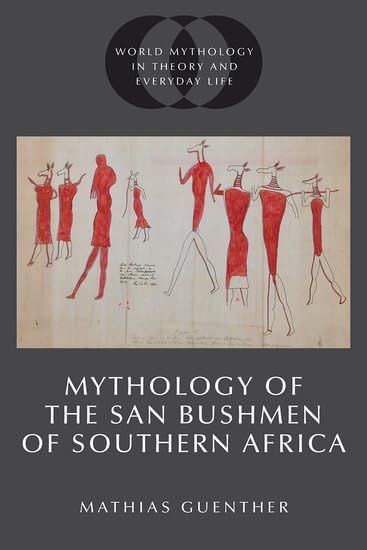
Mythology of the San Bushmen of Southern Africa

Mythology of the San Bushmen of Southern Africa

Mathias Guenther

OXFORD UNIVERSITY PRESS INC
2025
sidottu
Amongst the oldest continuing cultures on Earth, San Bushmen are indigenous peoples that make up the first nations of Southern Africa. San culture is rich in myth and lore, actively and expansively transmitted by storytellers. Mythology of the San Bushmen of Southern Africa gives an in-depth account of this fascinating mythology and its connections to the religion, social organization, and ecological adaptations of this erstwhile hunting-gathering people. Drawing on a rich trove of archival research, ethnographic fieldwork, and oral traditions of the San, Mathias Guenther reveals the ongoing connections and interactions between actual, experienced reality and virtual, imagined myth time in the mythology and cosmology of San Bushmen. Their myth time was an age of inchoateness and of becoming inhabited by morally flawed human-animal hybrid beings, a state of ambiguity that finds its fullest embodiment in the trickster figure. In addition to this being's persona as prankster-protagonist, the San Bushman trickster is also a god. While not unique in mythologies around the world, the configuration of this secular-sacred trickster-god figure is distinctive among the San, along with other conflations--of human with animal and woman/wife with antelope/meat. San Bushmen of Southern Africa is a significant contribution to hunter-gatherer studies and places San mythology firmly in the context of world mythology.
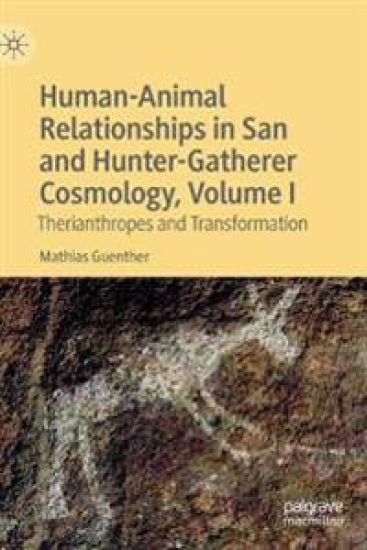
Human-Animal Relationships in San and Hunter-Gatherer Cosmology, Volume I
Exploring a hitherto unexamined aspect of San cosmology, Mathias Guenther’s two volumes on human-animal relations in San cosmology link “new Animism” with Khoisan Studies, providing valuable insights for Khoisan Studies and San culture, but also for anthropological theory, relational ontology, folklorists, historians, literary critics and art historians. In Volume I, therianthropes and transformations, two manifestations of ontological mutability that are conceptually and phenomenologically linked, are contextualized in broader San myth. Guenther explores the pervasiveness of human-animal hybridity and transformation in San expressive culture (myth, stories and storytelling, ludic dancing and art, ancestral rock art and contemporary easel art), ritual (trance dance curing, female and male rites of passage) and hunting. Transformation is shown to be experienced by humans, particularly via rituals and dancing that evoke animal identity mergers, but also by hunters who may engage with their prey animals in terms of sympathy and inter-subjectivity, particularly through the use of “hunting medicines.”
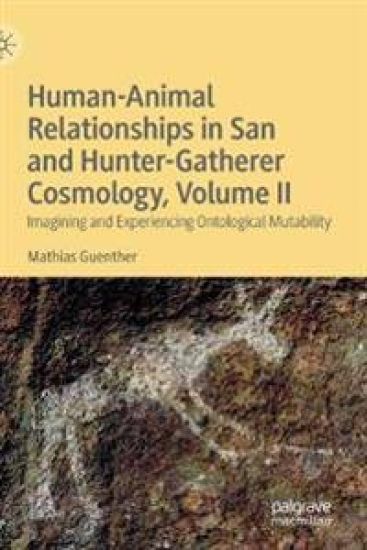
Human-Animal Relationships in San and Hunter-Gatherer Cosmology, Volume II
Exploring a hitherto unexamined aspect of San cosmology, Mathias Guenther’s two volumes on human-animal relations in San cosmology link “new Animism” with Khoisan Studies, providing valuable insights for Khoisan Studies and San culture, but also for anthropological theory, relational ontology, folklorists, historians, literary critics and art historians. Building from the examinations of San myth and contemporary culture in Volume I, Volume II considers the experiential implications of a cosmology in which ontological mutability—ambiguity and inconstancy—hold sway. As he considers how people experience ontological mutability and deal with profound identity issues mentally and affectively, Guenther explores three primary areas: general receptiveness to ontological ambiguity; the impact of the experience of transformation (both virtual/vicarious and actual/direct); and the intersection of the mythic, spirit world with reality. Through a comparative consideration of animistic cosmology amongst the San, Bantu-speakers and the Inuit of Canada’s eastern Arctic, alongside a discussion of animistic currents in Western humanities and ethology, Guenther clearly paints the relative strengths and weaknesses of New Animism discourse, particularly in relation to San ontology and cosmology, but with overarching relevance.
Human-Animal Relationships in San and Hunter-Gatherer Cosmology, Volume I
Exploring a hitherto unexamined aspect of San cosmology, Mathias Guenther’s two volumes on human-animal relations in San cosmology link “new Animism” with Khoisan Studies, providing valuable insights for Khoisan Studies and San culture, but also for anthropological theory, relational ontology, folklorists, historians, literary critics and art historians. In Volume I, therianthropes and transformations, two manifestations of ontological mutability that are conceptually and phenomenologically linked, are contextualized in broader San myth. Guenther explores the pervasiveness of human-animal hybridity and transformation in San expressive culture (myth, stories and storytelling, ludic dancing and art, ancestral rock art and contemporary easel art), ritual (trance dance curing, female and male rites of passage) and hunting. Transformation is shown to be experienced by humans, particularly via rituals and dancing that evoke animal identity mergers, but also by hunters who may engage with their prey animals in terms of sympathy and inter-subjectivity, particularly through the use of “hunting medicines.”
Human-Animal Relationships in San and Hunter-Gatherer Cosmology, Volume II
Exploring a hitherto unexamined aspect of San cosmology, Mathias Guenther’s two volumes on human-animal relations in San cosmology link “new Animism” with Khoisan Studies, providing valuable insights for Khoisan Studies and San culture, but also for anthropological theory, relational ontology, folklorists, historians, literary critics and art historians. Building from the examinations of San myth and contemporary culture in Volume I, Volume II considers the experiential implications of a cosmology in which ontological mutability—ambiguity and inconstancy—hold sway. As he considers how people experience ontological mutability and deal with profound identity issues mentally and affectively, Guenther explores three primary areas: general receptiveness to ontological ambiguity; the impact of the experience of transformation (both virtual/vicarious and actual/direct); and the intersection of the mythic, spirit world with reality. Through a comparative consideration of animistic cosmology amongst the San, Bantu-speakers and the Inuit of Canada’s eastern Arctic, alongside a discussion of animistic currents in Western humanities and ethology, Guenther clearly paints the relative strengths and weaknesses of New Animism discourse, particularly in relation to San ontology and cosmology, but with overarching relevance.
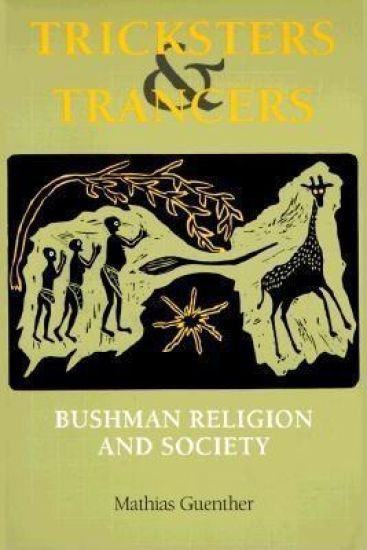
Tricksters and Trancers

Tricksters and Trancers

Mathias Guenther

Indiana University Press
1999
pokkari
" . . . a first-rate piece of scholarship . . . an invaluable summary and commentary on the multilingual literature on [Bushman] people." —Choice The trickster and trance dancer are the guides through Bushman (or San) religion, a world of ambiguity and contradiction, and of enchantment. The two figures, who in Bushman belief are symbolically equivalent and mystically linked, embody these antistructural traits.