Kirjojen hintavertailu. Mukana 12 657 676 kirjaa ja 12 kauppaa.

Kirjailija

Matsuo Basho

Kirjat ja teokset yhdessä paikassa: 37 kirjaa, julkaisuja vuosilta 1985-2026, suosituimpien joukossa Haikumagasinet 6-7. Vertaile teosten hintoja ja tarkista saatavuus suomalaisista kirjakaupoista.

Mukana myös kirjoitusasut: Matsuo Bashö, Matsuo Bashô, Matsuo Bashō

37 kirjaa

Kirjojen julkaisuhaarukka 1985-2026.

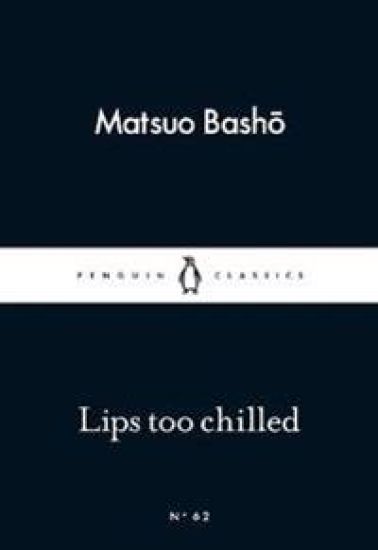
Lips too Chilled

Lips too Chilled

Matsuo Basho

Penguin Classics
2015
nidottu
'Nothing more lonely -' A selection of Basho's most magical haiku Introducing Little Black Classics: 80 books for Penguin's 80th birthday. Little Black Classics celebrate the huge range and diversity of Penguin Classics, with books from around the world and across many centuries. They take us from a balloon ride over Victorian London to a garden of blossom in Japan, from Tierra del Fuego to 16th century California and the Russian steppe. Here are stories lyrical and savage; poems epic and intimate; essays satirical and inspirational; and ideas that have shaped the lives of millions Basho (1644-1694). Basho's On Love and Barley and The Narrow Road to the Deep North and Other Travel Sketches are available in Penguin Classics.

Basho: The Complete Haiku

Basho: The Complete Haiku

Matsuo Basho; Jane Reichhold

Kodansha America, Inc
2013
sidottu
Basho stands today as Japans most renowned writer, and one of the most revered. Wherever Japanese literature, poetry or Zen are studied, his oeuvre carries weight. Every new student of haiku quickly learns that Basho was the greatest of the Old Japanese Masters. Yet despite his stature, Bashos complete haiku have not been collected into a single volume. Until now. To render the writers full body of work into English, Jane Reichhold, an American haiku poet and translator, dedicated over ten years of work. In Basho: The Complete Haiku, she accomplishes the feat with distinction.
Moon Woke Me Up Nine Times

Moon Woke Me Up Nine Times

Matsuo Basho

Random House USA Inc
2013
pokkari
Vivid new translations of Basho's popular haiku, in a selected format ideal for newcomers as well as fans long familiar with the Japanese master. Basho, the famously bohemian traveler through seventeenth-century Japan, is a poet attuned to the natural world as well as humble human doings; "Piles of quilts/ snow on distant mountains/ I watch both," he writes. His work captures both the profound loneliness of one observing mind and the broad-ranging joy he finds in our connections to the larger community. David Young, acclaimed translator and Knopf poet, writes in his introduction to this selection, "This poet's consciousness affiliates itself with crickets, islands, monkeys, snowfalls, moonscapes, flowers, trees, and ceremonies...Waking and sleeping, alone and in company, he moves through the world, delighting in its details." Young's translations are bright, alert, musically perfect, and rich in tenderness toward their maker.
Basho's Journey

Basho's Journey

Matsuo Basho

State University of New York Press
2005
sidottu
Offers the most comprehensive collection of Basho's prose available, beautifully translated into English. In Basho's Journey, David Landis Barnhill provides the definitive translation of Matsuo Basho's literary prose, as well as a companion piece to his previous translation, Basho's Haiku. One of the world's greatest nature writers, Basho (1644–1694) is well known for his subtle sensitivity to the natural world, and his writings have influenced contemporary American environmental writers such as Gretel Ehrlich, John Elder, and Gary Snyder. This volume concentrates on Basho's travel journal, literary diary (Saga Diary), and haibun. The premiere form of literary prose in medieval Japan, the travel journal described the uncertainty and occasional humor of traveling, appreciations of nature, and encounters with areas rich in cultural history. Haiku poetry often accompanied the prose. The literary diary also had a long history, with a format similar to the travel journal but with a focus on the place where the poet was living. Basho was the first master of haibun, short poetic prose sketches that usually included haiku. As he did in Basho's Haiku, Barnhill arranges the work chronologically in order to show Basho's development as a writer. These accessible translations capture the spirit of the original Japanese prose, permitting the nature images to hint at the deeper meaning in the work. Barnhill's introduction presents an overview of Basho's prose and discusses the significance of nature in this literary form, while also noting Basho's significance to contemporary American literature and environmental thought. Excellent notes clearly annotate the translations.
Basho's Journey

Basho's Journey

Matsuo Basho

State University of New York Press
2005
pokkari
A collection of Basho's prose works include all of his longer prose pieces--the travel journals and "Saga Diary"--along with eighty short essays in haibun, prose in the spirit of haiku.
The Narrow Road to the Deep North and Other Travel Sketches
'It was with aweThat I beheldFresh leaves, green leaves,Bright in the sun'When the Japanese haiku master Basho composed The Narrow Road to the Deep North, he was an ardent student of Zen Buddhism, setting off on a series of travels designed to strip away the trappings of the material world and bring spiritual enlightenment. He writes of the seasons changing, the smell of the rain, the brightness of the moon and the beauty of the waterfall, through which he sensed the mysteries of the universe. These writings not only chronicle Basho's travels, but they also capture his vision of eternity in the transient world around him.Translated with an Introduction by Nobuyuki Yuasa
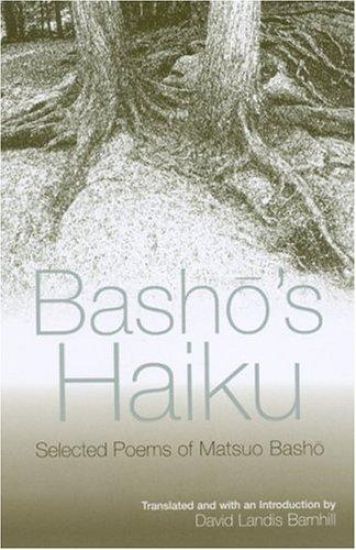
Basho's Haiku

Basho's Haiku

Matsuo Basho

State University of New York Press
2004
pokkari
A wonderful new translation of the poetry of Basho—Zen monk, poet of nature, and master of the haiku form.2005 CHOICE Outstanding Academic Title Basho's Haiku offers the most comprehensive translation yet of the poetry of Japanese writer Matsuo Basho (1644–1694), who is credited with perfecting and popularizing the haiku form of poetry. One of the most widely read Japanese writers, both within his own country and worldwide, Basho is especially beloved by those who appreciate nature and those who practice Zen Buddhism. Born into the samurai class, Basho rejected that world after the death of his master and became a wandering poet and teacher. During his travels across Japan, he became a lay Zen monk and studied history and classical poetry. His poems contained a mystical quality and expressed universal themes through simple images from the natural world.David Landis Barnhill's brilliant book strives for literal translations of Basho's work, arranged chronologically in order to show Basho's development as a writer. Avoiding wordy and explanatory translations, Barnhill captures the brevity and vitality of the original Japanese, letting the images suggest the depth of meaning involved. Barnhill also presents an overview of haiku poetry and analyzes the significance of nature in this literary form, while suggesting the importance of Basho to contemporary American literature and environmental thought.
Basho's Haiku

Basho's Haiku

Matsuo Basho

State University of New York Press
2004
sidottu
A wonderful new translation of the poetry of Basho—Zen monk, poet of nature, and master of the haiku form.2005 CHOICE Outstanding Academic Title Basho's Haiku offers the most comprehensive translation yet of the poetry of Japanese writer Matsuo Basho (1644–1694), who is credited with perfecting and popularizing the haiku form of poetry. One of the most widely read Japanese writers, both within his own country and worldwide, Basho is especially beloved by those who appreciate nature and those who practice Zen Buddhism. Born into the samurai class, Basho rejected that world after the death of his master and became a wandering poet and teacher. During his travels across Japan, he became a lay Zen monk and studied history and classical poetry. His poems contained a mystical quality and expressed universal themes through simple images from the natural world.David Landis Barnhill's brilliant book strives for literal translations of Basho's work, arranged chronologically in order to show Basho's development as a writer. Avoiding wordy and explanatory translations, Barnhill captures the brevity and vitality of the original Japanese, letting the images suggest the depth of meaning involved. Barnhill also presents an overview of haiku poetry and analyzes the significance of nature in this literary form, while suggesting the importance of Basho to contemporary American literature and environmental thought.
A Zen Wave

A Zen Wave

Matsuo Basho; Robert Aitken; W. S. Merwin

Counterpoint
2003
nidottu
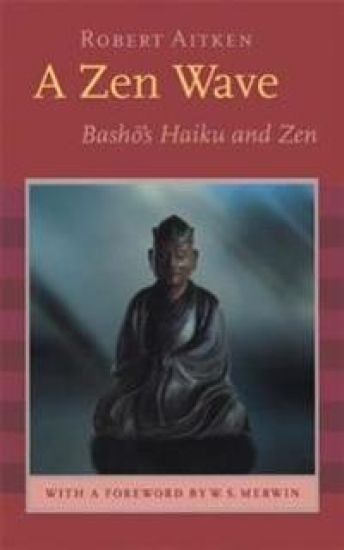
Zen Buddhism distinguishes itself by brilliant flashes of insight and its terseness of expression. The haiku verse form is a superb means of studying Zen modes of thought and expression, for its seventeen syllables impose a rigorous limitation that confines the poet to vital experience. Here haiku by Basho are translated by Robert Aitken, with commentary that provides a new and far deeper understanding of Basho's work than ever before.In presenting themes from the haiku and from Zen literature that open the doors both to the poems and to Zen itself, Aitken has produced the first book about the relationship between Zen and haiku. His readers are certain to find it invaluable for the remarkable revelations it offers.
Narrow Road to the Interior

Narrow Road to the Interior

Matsuo Basho

Shambhala Publications Inc
2000
pokkari
Here is the most complete single-volume collection of the writings of one of the great luminaries of Asian literature. Basho (1644-1694)--who elevated the haiku to an art form of utter simplicity and intense spiritual beauty--is best known in the West as the author of Narrow Road to the Interior, a travel diary of linked prose and haiku that recounts his journey through the far northern provinces of Japan. This volume includes a masterful translation of this celebrated work along with three other less well-known but important works by Basho: Travelogue of Weather-Beaten Bones, The Knapsack Notebook, and Sarashina Travelogue. There is also a selection of over two hundred fifty of Basho's finest haiku. In addition, the translator has provided an introduction detailing Basho's life and work and an essay on the art of haiku.
Basho's Narrow Road

Basho's Narrow Road

Matsuo Basho

Stone Bridge Press
1998
pokkari
Matsuo Basho (1644-94) is considered Japan's greatest haiku poet. Narrow Road to the Interior (Oku no Hosomichi) is his masterpiece. Ostensibly a chronological account of the poet's five-month journey in 1689 into the deep country north and west of the old capital, Edo, the work is in fact artful and carefully sculpted, rich in literary and Zen allusion and filled with great insights and vital rhythms. In Basho's Narrow Road: Spring and Autumn Passages, poet and translator Hiroaki Sato presents the complete work in English and examines the threads of history, geography, philosophy, and literature that are woven into Basho's exposition. He details in particular the extent to which Basho relied on the community of writers with whom he traveled and joined in linked verse (renga) poetry sessions, an example of which, A Farewell Gift to Sora, is included in this volume. In explaining how and why Basho made the literary choices he did, Sato shows how the poet was able to transform his passing observations into words that resonate across time and culture.
On Love and Barley

On Love and Barley

Matsuo Basho

University of Hawai'i Press
1986
sidottu
In a thoughtful and perceptive introduction, Stryk sets the stage for an appreciation of what Basho's poetry has to offer, sketching his life, his times, his spirit. For most of his life Basho was a recluse. He lived on the outskirts of Edo (Tokyo) in a hut shaded by an exotic banana tree (the Basho). When he traveled, he relied entirely on the hospitality of temples and fellow poets. His poems were strongly influenced by the Zen sect of Buddhism and its ideals of lightness, detachment, and appreciation of the commonplace. Basho aspired to and achieved unity of life and art, his poems become inseparable from nature.
On Love and Barley

On Love and Barley

Matsuo Basho

Penguin Classics
1985
pokkari
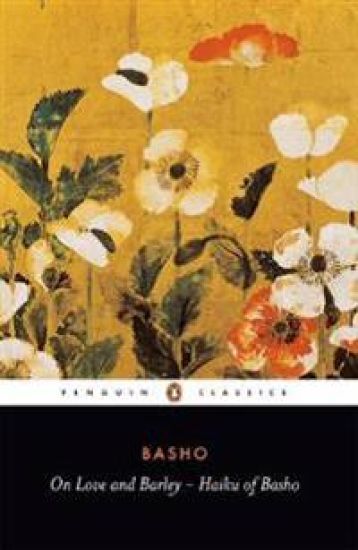
Basho, one of the greatest of Japanese poets and the master of haiku, was also a Buddhist monk and a life-long traveller. His poems combine 'karumi', or lightness of touch, with the Zen ideal of oneness with creation. Each poem evokes the natural world - the cherry blossom, the leaping frog, the summer moon or the winter snow - suggesting the smallness of human life in comparison to the vastness and drama of nature. Basho himself enjoyed solitude and a life free from possessions, and his haiku are the work of an observant eye and a meditative mind, uncluttered by materialism and alive to the beauty of the world around him.