Kirjojen hintavertailu. Mukana 12 564 546 kirjaa ja 12 kauppaa.

Kirjailija

Matt K. Matsuda

Kirjat ja teokset yhdessä paikassa: 9 kirjaa, julkaisuja vuosilta 1996-2025, suosituimpien joukossa Genealogies, Genomes, and Histories in the Pacific. Vertaile teosten hintoja ja tarkista saatavuus suomalaisista kirjakaupoista.

9 kirjaa

Kirjojen julkaisuhaarukka 1996-2025.

Genealogies, Genomes, and Histories in the Pacific

Genealogies, Genomes, and Histories in the Pacific

Matt K. Matsuda

Springer International Publishing AG
2025
nidottu
This book explores a panorama of historical studies, focused on the historical tensions between genealogical knowledge and well-known Pacific Islander engagements with genomic research in a postwar era of simultaneous decolonization and Big Science. These include connected examinations of ancient voyaging reconstruction and migration routes, “warrior genes,” a noted life-form patent case, questions of genetic engineering and biopiracy, the repatriation of ancestral remains, legacies of nuclear testing, and conflicts with the Human Genome Diversity Project in Oceania. It also considers the persistence of eugenics and race thinking within blood quanta and dispossession histories and how other histories are being written. Many of these subjects have been elaborated in detailed, specialist studies, but there is to date no single-volume overview of these multiple engagements that situates them all within a narrative framework of postwar racism and anti-racism, the technological promises ofgenetic science, and the cultural and political struggles and assertions of Indigenous islanders, whose voices structure and shape the arguments. It combines traditional archival and scholarly work with contemporary Islander commentary and research, and ranges from poetry to politics and molecular biology.
Genealogies, Genomes, and Histories in the Pacific

Genealogies, Genomes, and Histories in the Pacific

Matt K. Matsuda

Springer International Publishing AG
2023
sidottu
This book explores a panorama of historical studies, focused on the historical tensions between genealogical knowledge and well-known Pacific Islander engagements with genomic research in a postwar era of simultaneous decolonization and Big Science. These include connected examinations of ancient voyaging reconstruction and migration routes, “warrior genes,” a noted life-form patent case, questions of genetic engineering and biopiracy, the repatriation of ancestral remains, legacies of nuclear testing, and conflicts with the Human Genome Diversity Project in Oceania. It also considers the persistence of eugenics and race thinking within blood quanta and dispossession histories and how other histories are being written. Many of these subjects have been elaborated in detailed, specialist studies, but there is to date no single-volume overview of these multiple engagements that situates them all within a narrative framework of postwar racism and anti-racism, the technological promises ofgenetic science, and the cultural and political struggles and assertions of Indigenous islanders, whose voices structure and shape the arguments. It combines traditional archival and scholarly work with contemporary Islander commentary and research, and ranges from poetry to politics and molecular biology.
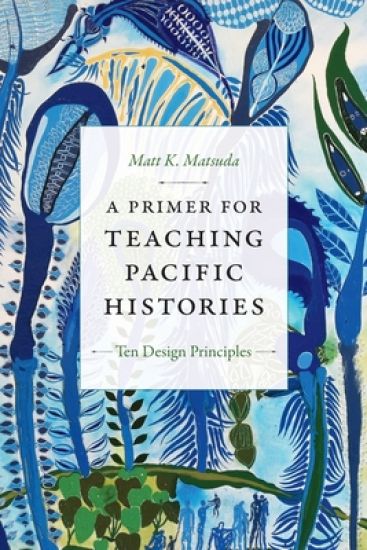
A Primer for Teaching Pacific Histories

A Primer for Teaching Pacific Histories

Matt K. Matsuda

Duke University Press
2020
sidottu
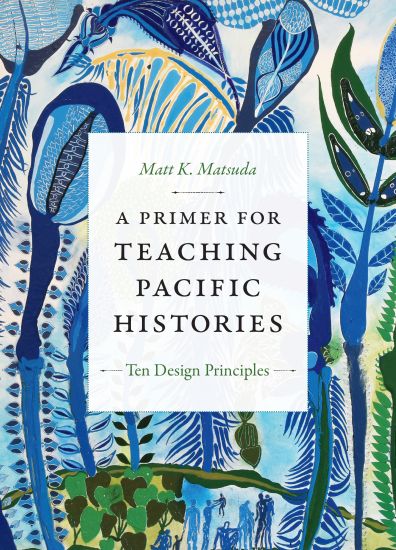
A Primer for Teaching Pacific Histories is a guide for college and high school teachers who are teaching Pacific histories for the first time or for experienced teachers who want to reinvigorate their courses. It can also serve those who are training future teachers to prepare their own syllabi, as well as teachers who want to incorporate Pacific histories into their world history courses. Matt K. Matsuda offers design principles for creating syllabi that will help students navigate a wide range of topics, from settler colonialism, national liberation, and warfare to tourism, popular culture, and identity. He also discusses practical pedagogical techniques and tips, project-based assignments, digital resources, and how Pacific approaches to teaching history differ from customary Western practices. Placing the Pacific Islands at the center of analysis, Matsuda draws readers into the process of strategically designing courses that will challenge students to think critically about the interconnected histories of East Asia, Southeast Asia, Australia, the Pacific Islands, and the Americas within a global framework.
A Primer for Teaching Pacific Histories

A Primer for Teaching Pacific Histories

Matt K. Matsuda

Duke University Press
2020
pokkari
A Primer for Teaching Pacific Histories is a guide for college and high school teachers who are teaching Pacific histories for the first time or for experienced teachers who want to reinvigorate their courses. It can also serve those who are training future teachers to prepare their own syllabi, as well as teachers who want to incorporate Pacific histories into their world history courses. Matt K. Matsuda offers design principles for creating syllabi that will help students navigate a wide range of topics, from settler colonialism, national liberation, and warfare to tourism, popular culture, and identity. He also discusses practical pedagogical techniques and tips, project-based assignments, digital resources, and how Pacific approaches to teaching history differ from customary Western practices. Placing the Pacific Islands at the center of analysis, Matsuda draws readers into the process of strategically designing courses that will challenge students to think critically about the interconnected histories of East Asia, Southeast Asia, Australia, the Pacific Islands, and the Americas within a global framework.
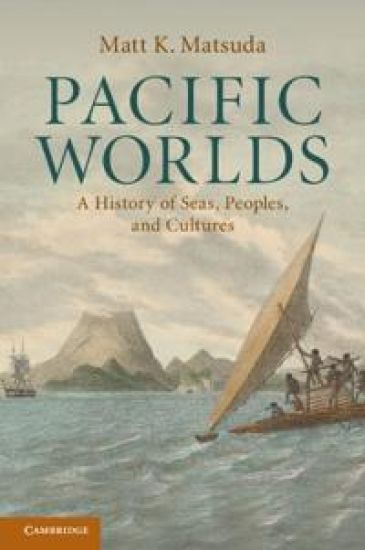
Pacific Worlds

Pacific Worlds

Matt K. Matsuda

Cambridge University Press
2012
pokkari
Asia, the Pacific Islands and the coasts of the Americas have long been studied separately. This essential single-volume history of the Pacific traces the global interactions and remarkable peoples that have connected these regions with each other and with Europe and the Indian Ocean, for millennia. From ancient canoe navigators, monumental civilisations, pirates and seaborne empires, to the rise of nuclear testing and global warming, Matt Matsuda ranges across the frontiers of colonial history, anthropology and Pacific Rim economics and politics, piecing together a history of the region. The book identifies and draws together the defining threads and extraordinary personal narratives which have contributed to this history, showing how localised contacts and contests have often blossomed into global struggles over colonialism, tourism and the rise of Asian economies. Drawing on Asian, Oceanian, European, American, ancient and modern narratives, the author assembles a fascinating Pacific region from a truly global perspective.
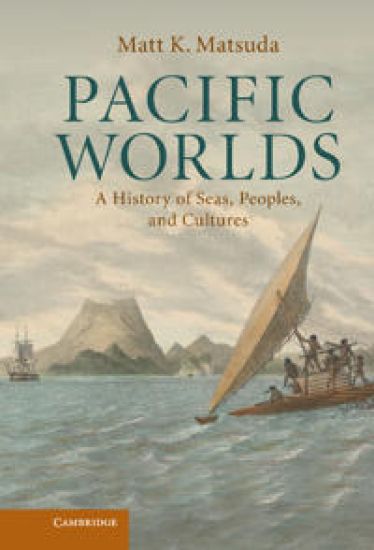
Pacific Worlds

Pacific Worlds

Matt K. Matsuda

Cambridge University Press
2012
sidottu
Asia, the Pacific Islands and the coasts of the Americas have long been studied separately. This essential single-volume history of the Pacific traces the global interactions and remarkable peoples that have connected these regions with each other and with Europe and the Indian Ocean, for millennia. From ancient canoe navigators, monumental civilisations, pirates and seaborne empires, to the rise of nuclear testing and global warming, Matt Matsuda ranges across the frontiers of colonial history, anthropology and Pacific Rim economics and politics, piecing together a history of the region. The book identifies and draws together the defining threads and extraordinary personal narratives which have contributed to this history, showing how localised contacts and contests have often blossomed into global struggles over colonialism, tourism and the rise of Asian economies. Drawing on Asian, Oceanian, European, American, ancient and modern narratives, the author assembles a fascinating Pacific region from a truly global perspective.
Empire of Love

Empire of Love

Matt K. Matsuda

Oxford University Press Inc
2005
nidottu
Unlike Britain, whose empire has been studied from numerous perspectives, the French empire has received comparatively little attention, particularly with reference to how France and its colonies perceived the French outposts in the Pacific. Spanning Paris, Tahiti, New Caledonia, Indochina, Japan, Panama, and other island groups, Matt Matsuda argues that, far more significant than the French administrative or political presence in the Pacific, was the French Pacific-especially the waters of the Pacific itself--in the scientific, literary, and artistic imaginations of both colonizers and colonized. Initially, the book follows the traces of French naval officer and writer Pierre Loti and his powerful patron Juliette Adam as they "romance" a popular overseas empire that for both reflects back upon their highly emotional ideas of the nation. In Panama, romantic Jesuit ruins, isthmian peoples, and a French canal project illuminate Saint Simonian communities of love plotting to conquer the Pacific transit with a passionate Gallic nationalism. In the Pacific islands of Wallis and Futuna, church fathers confront the sacred and profane alliances of a martyr's love that will create the first saint in the South Seas. Tahiti situates the reader where violent warfare and erotic loves for Tahitian "natives" are implicated in battles and alliances between the Queen and french Naval officers struggling for control of the Society Islands. In the penal colony of New Caledonia settler communities face local Kanak resistance to the affective politics of an imperial administration involving itself in making love-matches and households to serve the needs of colonialism. A chapter on Indochina examines how love of country, possession of the "native," and colonial marriage are consistent figures in the French articulation of the Southeast Asian colony, and how these same figures are reiterated by Vietnamese both in colonial collaboration and armed resistance. The concluding discussions engage Japanese and French debates on the nature of political, economic, civic, and sentimental life east and west, and the possibilities of love in modern states as they mutually struggle to define what is common to all of the above studies: conflicting engagements with love for and against the empire in the Pacific. Through a wealth of primary sources, Matsuda describes the empire through the eyes of Tahitian monarchs, Kanak warriors, French politicos, prisoners, and Central American laborers, among others. He argues that French imperialism in the Pacific, both real and imagined, was registered most forcefully in the language of desire and love-for lost islands, for untouched people, for promised wealth and riches, and for carnal pleasure. Empire of Love promises to be an imaginative and ground-breaking work in imperial history, as well as in the growing field of Pacific Studies.
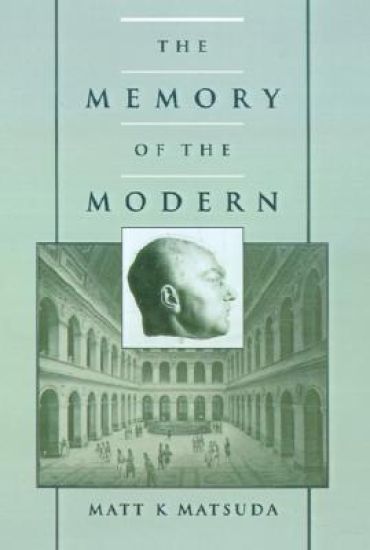
The Memory of the Modern

The Memory of the Modern

Matt K. Matsuda

Oxford University Press Inc
1996
nidottu
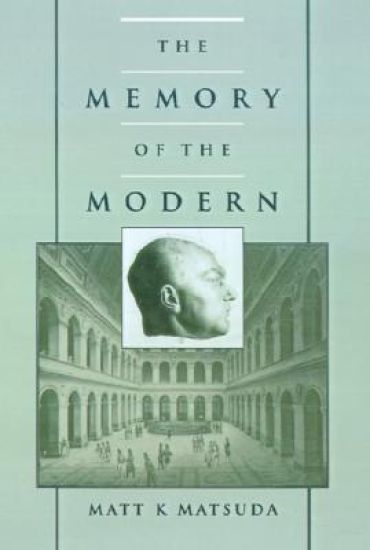
A multidisciplinary work, Memory of the Modern examines stock markets, tango dancers, vagabond murderers, neurology, monument destruction, and colonial policies to document how individuals and institutions shaped memory in the late nineteenth and early twentieth centuries. Wonderfully written, the book studies these diverse "memory-sites" to show how memory and history are fought over, shaped, and put to personal and ideological use.
The Memory of the Modern

The Memory of the Modern

Matt K. Matsuda

Oxford University Press Inc
1996
sidottu
A multidisciplinary work, Memory of the Modern examines stock markets, tango dancers, vagabond murderers, neurology, monument destruction, and colonial policies to document how individuals and institutions shaped memory in the late nineteenth and early twentieth centuries. Wonderfully written, the book studies these diverse "memory-sites" to show how memory and history are fought over, shaped, and put to personal and ideological use.