Kirjojen hintavertailu. Mukana 12 595 353 kirjaa ja 12 kauppaa.
Kirjailija
Matteo Colombo
Kirjat ja teokset yhdessä paikassa: 16 kirjaa, julkaisuja vuosilta 2018-2025, suosituimpien joukossa New York City - Atemberaubende Ansichten (Tischkalender 2026 DIN A5 quer), CALVENDO Monatskalender. Vertaile teosten hintoja ja tarkista saatavuus suomalaisista kirjakaupoista.
This textbook presents applicative examples of the main methods of structural analysis of statically indeterminate frame structures. It begins with a brief description of the kinematic analysis for plane frames. The Force Method, the Displacement Method and the Mixed method are applied for the solutions of statically indeterminate plane structures. The book first deals with the solution of simple reference cases where the most common structural situations, such as inclined rods, extensional and rotational springs, thermal variations, symmetry and anti-symmetry (just to mention some of them) are treated singularly. It then reports the complete solution of complex plane frames where the most common structural situations, individually analyzed in the previous chapter, are combined.Given the diverse and wide range of examples covered, the volume represents an ideal learning resource for students of Civil and Building Engineering and Architecture, and a valuable reference guide for structural engineering professionals.
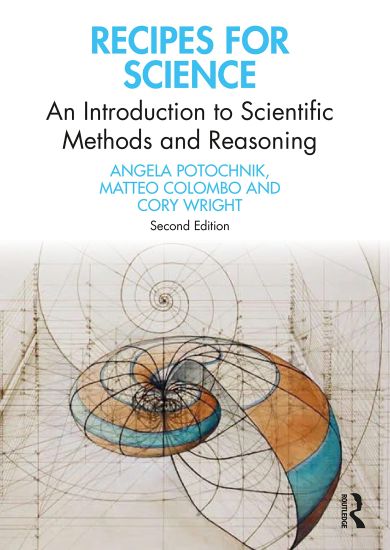
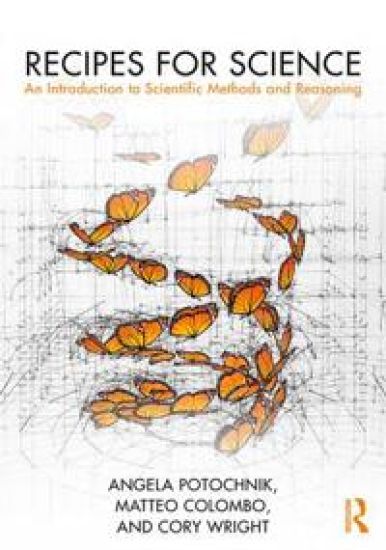
Scientific literacy is an essential aspect of any undergraduate education. Recipes for Science responds to this need by providing an accessible introduction to the nature of science and scientific methods appropriate for any beginning college student. The book is adaptable to a wide variety of different courses, such as introductions to scientific reasoning, methods courses in scientific disciplines, science education, and philosophy of science.Special features of Recipes for Science include contemporary and historical case studies from many fields of physical, life, and social sciences; visual aids to clarify and illustrate ideas; text boxes to explore related topics; plenty of exercises to support student recall and application of concepts; suggestions for further readings at the end of each chapter; a glossary with helpful definitions of key terms; and a companion website with course syllabi, internet resources, PowerPoint presentations, lecture notes, additional exercises, and original short videos on key topics.Key Updates to the Second Edition13 short chapters of uniform length that make it easier to adapt to a college semesterCase studies and examples featuring new research and important historical research across many fields of scienceAdded discussion of timely topics, including large research collaborations, trust and distrust of science, machine learning and other technology-driven advances, diversity in science, and connections to indigenous knowledgeStreamlined and simplified discussion of some topics, such as experimentation and statistical hypothesis-testingExercises that are clearly aligned with learning goals and sorted into types: Recall, Apply, and ThinkAdditional online exercises and a series of original videos on key topicsExercise solutions available on an instructor-only section of the website
Scientific literacy is an essential aspect of any undergraduate education. Recipes for Science responds to this need by providing an accessible introduction to the nature of science and scientific methods appropriate for any beginning college student. The book is adaptable to a wide variety of different courses, such as introductions to scientific reasoning, methods courses in scientific disciplines, science education, and philosophy of science.Special features of Recipes for Science include contemporary and historical case studies from many fields of physical, life, and social sciences; visual aids to clarify and illustrate ideas; text boxes to explore related topics; plenty of exercises to support student recall and application of concepts; suggestions for further readings at the end of each chapter; a glossary with helpful definitions of key terms; and a companion website with course syllabi, internet resources, PowerPoint presentations, lecture notes, additional exercises, and original short videos on key topics.Key Updates to the Second Edition13 short chapters of uniform length that make it easier to adapt to a college semesterCase studies and examples featuring new research and important historical research across many fields of scienceAdded discussion of timely topics, including large research collaborations, trust and distrust of science, machine learning and other technology-driven advances, diversity in science, and connections to indigenous knowledgeStreamlined and simplified discussion of some topics, such as experimentation and statistical hypothesis-testingExercises that are clearly aligned with learning goals and sorted into types: Recall, Apply, and ThinkAdditional online exercises and a series of original videos on key topicsExercise solutions available on an instructor-only section of the website
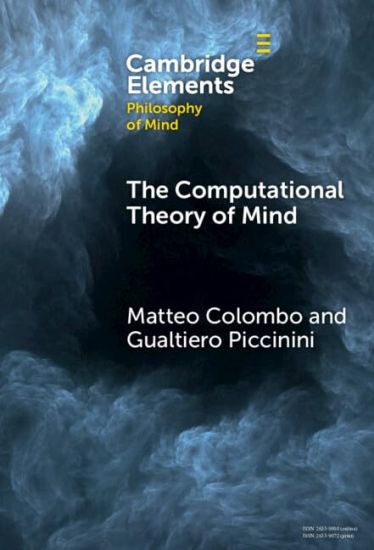
The Computational Theory of Mind says that the mind is a computing system. It has a long history going back to the idea that thought is a kind of computation. Its modern incarnation relies on analogies with contemporary computing technology and the use of computational models. It comes in many versions, some more plausible than others. This Element supports the theory primarily by its contribution to solving the mind-body problem, its ability to explain mental phenomena, and the success of computational modelling and artificial intelligence. To be turned into an adequate theory, it needs to be made compatible with the tractability of cognition, the situatedness and dynamical aspects of the mind, the way the brain works, intentionality, and consciousness.
The Computational Theory of Mind says that the mind is a computing system. It has a long history going back to the idea that thought is a kind of computation. Its modern incarnation relies on analogies with contemporary computing technology and the use of computational models. It comes in many versions, some more plausible than others. This Element supports the theory primarily by its contribution to solving the mind-body problem, its ability to explain mental phenomena, and the success of computational modelling and artificial intelligence. To be turned into an adequate theory, it needs to be made compatible with the tractability of cognition, the situatedness and dynamical aspects of the mind, the way the brain works, intentionality, and consciousness.
This textbook presents applicative examples of the main methods of structural analysis of statically indeterminate frame structures. It begins with a brief description of the kinematic analysis for plane frames. The Force Method, the Displacement Method and the Mixed method are applied for the solutions of statically indeterminate plane structures. The book first deals with the solution of simple reference cases where the most common structural situations, such as inclined rods, extensional and rotational springs, thermal variations, symmetry and anti-symmetry (just to mention some of them) are treated singularly. It then reports the complete solution of complex plane frames where the most common structural situations, individually analyzed in the previous chapter, are combined.Given the diverse and wide range of examples covered, the volume represents an ideal learning resource for students of Civil and Building Engineering and Architecture, and a valuable reference guide for structural engineering professionals.
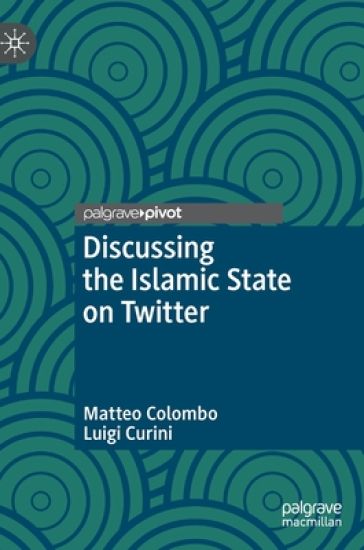
This book explores how ordinary Arab-speaking social media users have reacted to propaganda from the Islamic State, rather than how IS propaganda has targeted ordinary users, thus providing a change in perspective in the literature. The authors provide a comprehensive account of the evolution of the Arabic discourse on IS, encompassing all phases of the Caliphate’s political evolution, from the apogee of the Islamic State in October 2014 to the loss of its unofficial capital of Raqqa in September 2017. Taking into account key events, the book also considers the most recurrent topics for IS and its opponents who engage in the Twitter conversation. The analysis is based on around 29 million tweets written in the Arabic language, representing a random sample of around one-third of all Arabic tweets referring to IS over the 2014-2017 timeframe.
Today, scientific literacy is an essential aspect of any undergraduate education. Recipes for Science responds to this need by providing an accessible introduction to the nature of science and scientific methods, reasoning, and concepts that is appropriate for any beginning college student. It is designed to be adaptable to a wide variety of different kinds of courses, such as introductions to scientific reasoning or critical thinking, philosophy of science, and science education. In any of these different uses, the book helps students better navigate our scientific, 21st-century world.Key Features Contemporary and historical examples of science from many fields of physical, life, and social sciences.Visual aids to clarify and illustrate ideas.Text boxes to explore related topics.Plenty of exercises to ensure full student engagement and mastery of the information.Annotated 'Further Reading' sections at the end of each chapter.Final glossary with helpful definitions of key terms.A companion website with author-developed and crowdsourced materials, including syllabi for courses using this textbook, bibliography of additional resources and online materials, sharable PowerPoint presentations and lecture notes, and additional exercises and extended projects.
Today, scientific literacy is an essential aspect of any undergraduate education. Recipes for Science responds to this need by providing an accessible introduction to the nature of science and scientific methods, reasoning, and concepts that is appropriate for any beginning college student. It is designed to be adaptable to a wide variety of different kinds of courses, such as introductions to scientific reasoning or critical thinking, philosophy of science, and science education. In any of these different uses, the book helps students better navigate our scientific, 21st-century world. Key Features Contemporary and historical examples of science from many fields of physical, life, and social sciences. Visual aids to clarify and illustrate ideas. Text boxes to explore related topics. Plenty of exercises to ensure full student engagement and mastery of the information. Annotated 'Further Reading' sections at the end of each chapter. Final glossary with helpful definitions of key terms. A companion website with author-developed and crowdsourced materials, including syllabi for courses using this textbook, bibliography of additional resources and online materials, sharable PowerPoint presentations and lecture notes, and additional exercises and extended projects.