Kirjojen hintavertailu. Mukana 12 390 323 kirjaa ja 12 kauppaa.
Kirjailija
Matthew B Schwartz
Kirjat ja teokset yhdessä paikassa: 13 kirjaa, julkaisuja vuosilta 1993-2019, suosituimpien joukossa The Seven Habits of the Good Life. Vertaile teosten hintoja ja tarkista saatavuus suomalaisista kirjakaupoista.
Using a readable question-and-answer format, Jews in America: The First 500 Years presents the activities of Jews in America since the beginnings of European settlement. It tells something of the story of how Jews came to the "golden land" and what they have done here--men and women, scientists and athletes, soldiers and merchants, settlers and scholars. It is indeed a remarkable story.
Using a readable question-and-answer format, Jews in America: The First 500 Years presents the activities of Jews in America since the beginnings of European settlement. It tells something of the story of how Jews came to the "golden land" and what they have done here--men and women, scientists and athletes, soldiers and merchants, settlers and scholars. It is indeed a remarkable story.
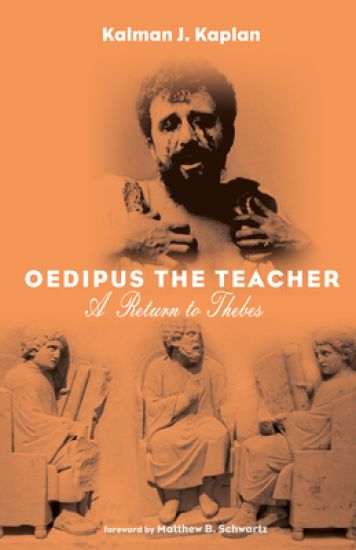
In Oedipus in Jerusalem, the biblical prophet Nathan meets blind Oedipus wandering alone outside of Thebes, becoming convinced that Oedipus has been entrapped by misleading information. He brings him to trial at the Jerusalem Sanhedrin, where Oedipus is acquitted of intentional patricide and incest, but won't accept his acquittal. Oedipus Redeemed describes attempts by Nathan and Sophocles to help Oedipus accept his acquittal, and his self-induced blindness, in the process reuniting him with his daughter Ismene. Oedipus returns to the Sanhedrin, where he agrees to try to emotionally accept the acquittal he has received In this third play, Oedipus the Teacher, Oedipus returns to Thebes with Ismene to teach the lessons he has learned in Jerusalem with the help of a Greek assistant, Kallias, recruited by Sophocles. Oedipus contrasts the destructive results of Greek riddles with parables emergent in biblical narratives. Kallias falls in love with Ismene and becomes rivalrous toward Oedipus, reflecting a distorted Greek view of relations between fathers (older men) and sons (younger men). Several biblical stories are offered as antidotes. Oedipus comes to live with Ismene and Kallias and becomes a doting grandfather. The play ends with the announcement that Oedipus's course is chosen to be taught all over Greece. Oedipus states that he is finally happy.
In Oedipus in Jerusalem, the biblical prophet Nathan meets blind Oedipus wandering alone outside of Thebes, becoming convinced that Oedipus has been entrapped by misleading information. He brings him to trial at the Jerusalem Sanhedrin, where Oedipus is acquitted of intentional patricide and incest, but won't accept his acquittal. Oedipus Redeemed describes attempts by Nathan and Sophocles to help Oedipus accept his acquittal, and his self-induced blindness, in the process reuniting him with his daughter Ismene. Oedipus returns to the Sanhedrin, where he agrees to try to emotionally accept the acquittal he has received In this third play, Oedipus the Teacher, Oedipus returns to Thebes with Ismene to teach the lessons he has learned in Jerusalem with the help of a Greek assistant, Kallias, recruited by Sophocles. Oedipus contrasts the destructive results of Greek riddles with parables emergent in biblical narratives. Kallias falls in love with Ismene and becomes rivalrous toward Oedipus, reflecting a distorted Greek view of relations between fathers (older men) and sons (younger men). Several biblical stories are offered as antidotes. Oedipus comes to live with Ismene and Kallias and becomes a doting grandfather. The play ends with the announcement that Oedipus's course is chosen to be taught all over Greece. Oedipus states that he is finally happy. ""It is a tour de force. I wonder if any other active person could write such a work, exhibiting the command of the gamut of Jewish and Hellenistic teachings. Kaplan considers both Greek and Jewish traditions, cloaked in a dramatic context, but focuses mainly on Judaism's profound ideas. Moreover, as he has done in major previous contributions, Kaplan explores the nature and meaning of the Judaic weltanschauung for therapy and the person's wellbeing."" --Daniel Algom, Professor of Psychology, Tel-Aviv University Kalman J. Kaplan is a Professor in the Department of Psychiatry at the University of Illinois College of Medicine. He has received grants from the John Templeton Foundation and the Fulbright Foundation to develop a ""Biblical Approach to Mental Health."" He has published sixteen books and a hundred articles. Among his books are TILT: Teaching Individuals to Live Together; Right to Die versus Sacredness of Life; The Fruit of Her Hands; A Psychology of Hope; and Living Biblically and Biblical Psychotherapy.
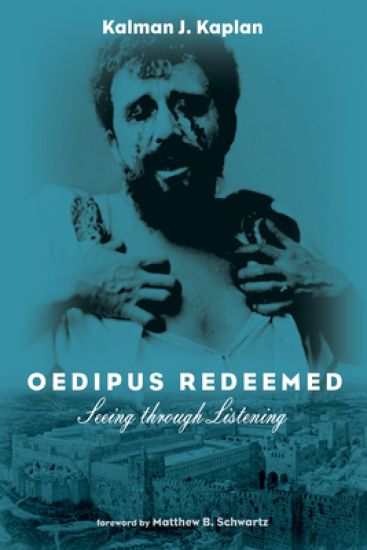
An initial play, Oedipus in Jerusalem, related the narrative of Nathan, the biblical prophet, encountering the blinded Oedipus wandering alone outside of Thebes. Nathan brings him to Jerusalem to be tried at the Jewish Sanhedrin. The Greek playwright Sophocles is the prosecutor, and Nathan serves as the defense attorney. Oedipus is acquitted, but he refuses to accept his acquittal, shouting, ""I am guilty I am guilty of patricide and incest.""Oedipus Redeemed focuses on Nathan and Sophocles combining forces to present Oedipus with two dialogues of historical/biblical characters within the play. The first contrasts the suicide of the Greek Zeno the Stoic after a minor mishap with the life affirmation expressed by the biblical Job after monumental losses. This is designed to uncover the possibility that Oedipus is experiencing shame rather than guilt (after all, he did not commit suicide until after he blinded himself). Nathan and Sophocles focus on the secondary psychological benefit Oedipus has received from insisting on his guilt, and on his coming to terms with the fact that he had blinded himself needlessly if he was innocent. The second dialogue between the biblical prophetess Judith and the blind Greek seer Teiresias focuses on the biblical story of Samson being betrayed by ""following his eyes."" Insight is contrasted with sight. Oedipus's surviving daughter Ismene reunites with Oedipus, telling him she loves and needs him. The play ends with Oedipus's return to the Sanhedrin, tentatively and tearfully accepting his acquittal. ""In this play, Kalman Kaplan, masterfully dramatizes how two great traditions that appear irreconcilably opposed can come together and find a resolution. Kaplan achieves this by brilliantly matching similar narratives delivered by analogous figures from the two opposing camps. While the play is set in the Ancient World where the Greek tradition of Fate opposes the Hebrew God, the dramatic dialogues provide a much needed model for conflict resolution in the divided world of today."" --Thomas H. Jobe, University of Illinois at Chicago Kalman J. Kaplan is a professor in the Department of Psychiatry at the University of Illinois at Chicago College of Medicine. Kaplan has published sixteen books and many articles, and was awarded a grant from the John Templeton Foundation and a Fellowship from the International Fulbright Exchange Program in Israel to develop a program in Biblical Psychology and Psychotherapy. Among Kaplan's books are The Fruit of Her Hands, A Psychology of Hope, Living Biblically, Biblical Psychotherapy, and the first play in this sequence, Oedipus in Jerusalem.
An initial play, Oedipus in Jerusalem, related the narrative of Nathan, the biblical prophet, encountering the blinded Oedipus wandering alone outside of Thebes. Nathan brings him to Jerusalem to be tried at the Jewish Sanhedrin. The Greek playwright Sophocles is the prosecutor, and Nathan serves as the defense attorney. Oedipus is acquitted, but he refuses to accept his acquittal, shouting, ""I am guilty I am guilty of patricide and incest.""Oedipus Redeemed focuses on Nathan and Sophocles combining forces to present Oedipus with two dialogues of historical/biblical characters within the play. The first contrasts the suicide of the Greek Zeno the Stoic after a minor mishap with the life affirmation expressed by the biblical Job after monumental losses. This is designed to uncover the possibility that Oedipus is experiencing shame rather than guilt (after all, he did not commit suicide until after he blinded himself). Nathan and Sophocles focus on the secondary psychological benefit Oedipus has received from insisting on his guilt, and on his coming to terms with the fact that he had blinded himself needlessly if he was innocent. The second dialogue between the biblical prophetess Judith and the blind Greek seer Teiresias focuses on the biblical story of Samson being betrayed by ""following his eyes."" Insight is contrasted with sight. Oedipus's surviving daughter Ismene reunites with Oedipus, telling him she loves and needs him. The play ends with Oedipus's return to the Sanhedrin, tentatively and tearfully accepting his acquittal. ""In this play, Kalman Kaplan, masterfully dramatizes how two great traditions that appear irreconcilably opposed can come together and find a resolution. Kaplan achieves this by brilliantly matching similar narratives delivered by analogous figures from the two opposing camps. While the play is set in the Ancient World where the Greek tradition of Fate opposes the Hebrew God, the dramatic dialogues provide a much needed model for conflict resolution in the divided world of today."" --Thomas H. Jobe, University of Illinois at Chicago Kalman J. Kaplan is a professor in the Department of Psychiatry at the University of Illinois at Chicago College of Medicine. Kaplan has published sixteen books and many articles, and was awarded a grant from the John Templeton Foundation and a Fellowship from the International Fulbright Exchange Program in Israel to develop a program in Biblical Psychology and Psychotherapy. Among Kaplan's books are The Fruit of Her Hands, A Psychology of Hope, Living Biblically, Biblical Psychotherapy, and the first play in this sequence, Oedipus in Jerusalem.
In this selection of letters, notable Romans write about themselves and their times, as well as about personal and public matters. Seneca provides indignant remarks about the behavior of women in Nero's Rome. From his monastic cell in Bethlehem, St. Jerome berates St. Augustine for gossip he may have spread. Some letters give a different perspective to history, while other talk of harvests, marriages, and day-to-day events. For historical continuity, Hooper and Schwartz include a running commentary and brief biographical sketches on the writers. Matthew B. Schwartz teaches Ancient Literature and Bible at Wayne State and Lawrence Technological Universities. He has published a number of books, including The Fruit of Her Hands: A Psychology of Biblical Woman (2007), Biblical Stories for Psychotherapy and Counseling (2004), and most recently, Politics in the Hebrew Bible (2013). He has also written many articles and reviews and has served on the editorial boards of Menorah Review and the Journal of Psychology and Judaism. Finley Hooper (1922-1993), was formerly Professor Emeritus of history at Wayne State University. He served as Visiting Assistant Professor of History at University of Michigan, where he also earned his PhD. His other books include Greek Realities: Life and Thought in Ancient Greece (1978) and Roman Realities (1978).
We live in an age when it is not uncommon for politicians to invoke religious doctrine to explain their beliefs and positions on everything from domestic to foreign policy. And yet, many of us would be hard pressed to pinpoint the exact source of these political beliefs in the religious texts that are said to have spawned them. In Politics in the Hebrew Bible: God, Man, and Government, Kalman J. Kaplan and Matthew B. Schwartz offer a genre-straddling examination of the political themes in the Jewish Bible. By studying the political implications of 42 biblical stories (organized into the categories Social Order, Government and Leadership, Domestic Relations, Societal Relations, Morale and Mission, and Foreign Policy), the authors seek to discern a cohesive political viewpoint embodied by the Jewish Bible. Throughout the text, the views put forth in the Jewish Bible are compared to those put forth by Greco-Roman philosophers in order to argue that the Bible offers a worldview that fosters a “high degree of creative individualism within a supportive non-chaotic and well-functioning society”. Kaplan and Schwartz are generous with their explanations of Greco-Roman philosophical concepts in the introductory chapters and with giving background information about the biblical stories engaged in the text.
This book offers a new approach by combining the disciplines of history, psychology, and religion to explain the suicidal element in both Western culture and the individual, and how to treat it. Ancient Greek society displays in its literature and the lives of its people an obsessive interest in suicide and death. Kaplan and Schwartz have explored the psychodynamic roots of this problem--in particular, the tragic confusion of the Greek heroic impulse and its commitment to unsatisfactory choices that are destructively rigid and harsh. The ancient Hebraic writings speak little of suicide and approach reality and freedom in vastly different terms: God is an involved parent, caring for his children. Therefore, heroism, in the Greek sense, is not needed nor is the individual compelled to choose between impossible alternatives. In each of the first three sections, the authors discuss the issues of suicide from a comparative framework, whether in thought or myth, then the suicide-inducing effects of the Graeco-Roman world, and finally, the suicide-preventing effects of the Hebrew world. The final section draws on this material to present a suicide prevention therapy. Historical in scope, the book offers a new psychological model linking culture to the suicidal personality and suggests an antidote, especially with regard to the treatment of the suicidal individual.
In The Seven Habits of the Good Life, the authors highlight seven biblical gifts_self-esteem, wisdom, righteousness, love, healthy appetite, prudence, and purpose_and present each one as an alternative to one of the seven deadly sins. Each gift gives readers a chance to enrich their lives by integrating concern for themselves with a healthy concern for others rather than punishing themselves for bad behavior. Incorporating clinical case studies, the voices of real people, and biblical stories, this book shows how the wisdom of the scriptures can provide us concrete ways of redefining difficult situations and approaching life in a way that strives for fullness, harmony, and balance.
This work shows the importance of the feminine in God's plan for the world and for history. The Biblical woman is portrayed as one who can seek the greatest good for herself and others, whatever the circumstances, and that she does not have to choose between self and relationship, unlike classical Greek and Western woman. It demonstrates the Biblical woman's sense of purpose through stories of love and devotion and rejecting and finding one's mission.
In The Seven Habits of the Good Life, the authors highlight seven biblical gifts—self-esteem, wisdom, righteousness, love, healthy appetite, prudence, and purpose—and present each one as an alternative to one of the seven deadly sins. Each gift gives readers a chance to enrich their lives by integrating concern for themselves with a healthy concern for others rather than punishing themselves for bad behavior. Incorporating clinical case studies, the voices of real people, and biblical stories, this book shows how the wisdom of the scriptures can provide us concrete ways of redefining difficult situations and approaching life in a way that strives for fullness, harmony, and balance.
This book offers a new approach by combining the disciplines of history, psychology, and religion to explain the suicidal element in both Western culture and the individual, and how to treat it. Ancient Greek society displays in its literature and the lives of its people an obsessive interest in suicide and death. Kaplan and Schwartz have explored the psychodynamic roots of this problem--in particular, the tragic confusion of the Greek heroic impulse and its commitment to unsatisfactory choices that are destructively rigid and harsh. The ancient Hebraic writings speak little of suicide and approach reality and freedom in vastly different terms: God is an involved parent, caring for his children. Therefore, heroism, in the Greek sense, is not needed nor is the individual compelled to choose between impossible alternatives.In each of the first three sections, the authors discuss the issues of suicide from a comparative framework, whether in thought or myth, then the suicide-inducing effects of the Graeco-Roman world, and finally, the suicide-preventing effects of the Hebrew world. The final section draws on this material to present a suicide prevention therapy. Historical in scope, the book offers a new psychological model linking culture to the suicidal personality and suggests an antidote, especially with regard to the treatment of the suicidal individual.