Kirjojen hintavertailu. Mukana 12 595 353 kirjaa ja 12 kauppaa.
Kirjailija
Matthew Barrett
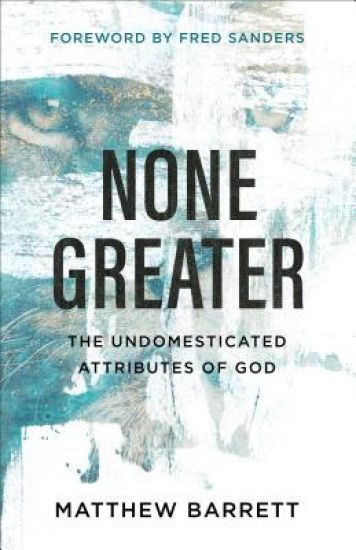
Kirjat ja teokset yhdessä paikassa: 21 kirjaa, julkaisuja vuosilta 2011-2024, suosituimpien joukossa None Greater. Vertaile teosten hintoja ja tarkista saatavuus suomalaisista kirjakaupoista.
"Matthew Barrett leads us to marvel at both how much and how little we know of God."--Tim Challies, blogger at challies.com; author of Visual Theology For too long, Christians have domesticated God, bringing him down to our level as if he is a God who can be tamed. But he is a God who is high and lifted up, the Creator rather than the creature, someone than whom none greater can be conceived. If God is the most perfect, supreme being, infinite and incomprehensible, then certain perfect-making attributes must be true of him. Perfections like aseity, simplicity, immutability, impassibility, and eternity shield God from being crippled by creaturely limitations. At the same time, this all-powerful, all-knowing, and all-wise God accommodates himself, exhibiting perfect holiness, mercy, and love as he makes known who he is and how he will save us. The attributes of God show us exactly why God is worthy of worship: there is none like him. Join Matthew Barrett as he rediscovers these divine perfections and finds himself surprised by the God he thought he knew. "Matthew Barrett's excellent book lays out in clear, accessible terms what the biblical, historic, ecumenical doctrine of God is, why it matters, and why its abandonment by great swathes of the Protestant world is something that needs correction."--Carl R. Trueman, professor, Grove City College; author of Grace Alone "Perhaps not since R. C. Sproul has there been a treatment of such deep theology with such careful devotion and accessibility. Read this book. And stagger."--Jared Wilson, director of content strategy, Midwestern Baptist Theological Seminary; managing editor, For the Church; author of The Gospel-Driven Church "The knowledge of God is the soil in which Christian piety flourishes. I am grateful for the publication of None Greater and pray it will be a source of growth in godliness among those captivated by its vision of God's supremacy."--Scott Swain, president and James Woodrow Hassell Professor of Systematic Theology, Reformed Theological Seminary-Orlando; author of Reformed Catholicity

Durante demasiado tiempo, los cristianos hemos domesticado a Dios, poni ndolo a nuestro nivel como si fuera un Dios que se puede domesticar. Pero es un Dios elevado y sublime, el Creador m s que la criatura, alguien a quien no se puede concebir mayor. Si Dios es el ser m s perfecto y supremo, infinito e incomprensible, entonces ciertos atributos que lo hacen perfecto deben ser verdaderos en l. Perfecciones como la aseidad, la simplicidad, la inmutabilidad, la impasibilidad y la eternidad protegen a Dios de las limitaciones de las criaturas. Al mismo tiempo, este Dios todopoderoso, omnisciente y omnisapiente se conforma a s mismo, mostrando una santidad, misericordia y amor perfectos al dar a conocerqui n es y c mo nos salvar .Los atributos de Dios nos muestran exactamente por qu Dios es digno de adoraci n: No hay nadie como l. Acompa a a Matthew Barrett en su redescubrimiento de estas perfecciones divinas y sorpr ndete del Dios que pensabas que conoc as.
"Toda la Escritura es inspirada por Dios" (2 Timoteo 3:16). De las ep stolas de Pablo, se puede afirmar con confianza la inspiraci n divina de la Escritura. Sin embargo, volviendo a Jes s y los Evangelios, es dif cil encontrar un enfoque tan expl cito.Matthew Barrett argumenta que Jes s y los ap stoles tienen una doctrina de las Escrituras tan convincente como Pablo o Pedro, pero solo se descubrir si el Evangelio se lee dentro de su propio horizonte can nico y contexto de pacto. La naturaleza de la Escritura presupuesta por Jes s y los escritores de los Evangelios se manifiesta poderosamente cuando sus palabras se leen dentro del patr n de cumplimiento de promesas del Antiguo Testamento. Nada demuestra m s el origen divino, la intenci n del autor divino y la confiabilidad de las Escrituras que el evangelio de Jesucristo. En la venidadel Hijo de Dios, el Verbo se ha hecho carne, anunciando tanto a jud os como a gentiles que las promesas del pacto que Jehova hizo mediante la Leyy los Profetas se han cumplido en la persona y obra de Cristo. 'Matthew Barrett... despliega una visi n interesante y estimulante que sin duda ser recogida y desarrollada por muchos pastores y te logos. Jes smismo une el antiguo y el nuevo pacto. l cumple las Escrituras, pero lo hace de manera efectiva s lo siendo obediente a ellas. La din mica arrojanueva luz no solo sobre Cristo sino tambi n sobre las Escrituras mismas' (D. A. Carson).
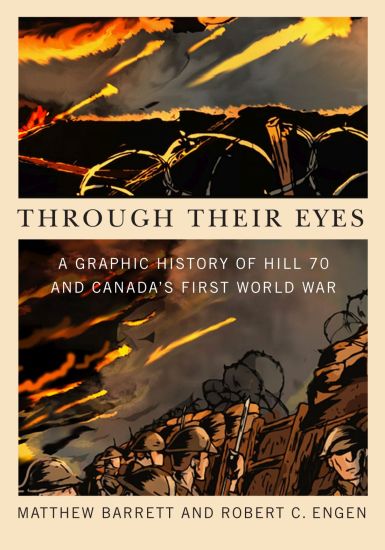
By the summer of 1917, Canadian troops had captured Vimy Ridge, but Allied offensives had stalled across many fronts of the Great War. To help break the stalemate of trench warfare, the Canadian Corps commander, Lieutenant-General Arthur Currie, was tasked with capturing Hill 70, a German stronghold near the French town of Lens.After securing the hill on 15 August, Canadian soldiers endured days of shelling, machine-gun fire, and poison gas as they repelled relentless enemy counterattacks. Through Their Eyes depicts this remarkable but costly victory in a unique way. With full-colour graphic artwork and detailed illustration, Matthew Barrett and Robert Engen picture the battle from different perspectives – Currie’s strategic view at high command, a junior officer’s experience at the platoon level, and the vantage points of many lesser-known Canadian soldiers who made the ultimate sacrifice. This innovative graphic history invites readers to reimagine the First World War through the eyes of those who lived it and to think more deeply about how we visualize and remember the past.Combining outstanding original art and thought-provoking commentary, Through Their Eyes uncovers the fascinating stories behind this battle while creatively expanding the ways that history is shared and represented.
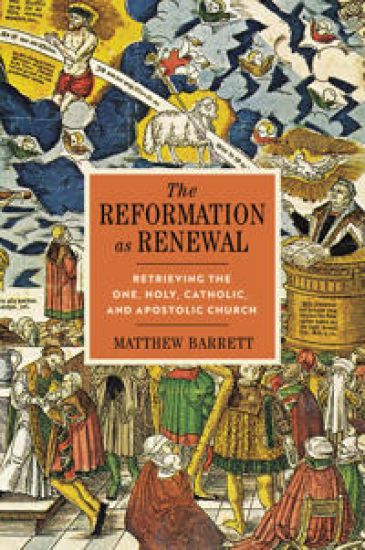
A holistic, eye-opening history of one of the most significant turning points in Christianity, The Reformation as Renewal demonstrates that the Reformation was at its core a renewal of evangelical catholicity.In the sixteenth century Rome charged the Reformers with novelty, as if they were heretics departing from the catholic (universal) church. But the Reformers believed they were more catholic than Rome. Distinguishing themselves from Radicals, the Reformers were convinced they were retrieving the faith of the church fathers and the best of the medieval Scholastics. The Reformers saw themselves as faithful stewards of the one, holy, catholic, and apostolic church preserved across history, and they insisted on a restoration of true worship in their own day.By listening to the Reformers' own voices, The Reformation as Renewal helps readers explore:The Reformation's roots in patristic and medieval thought and its response to late medieval innovations.Key philosophical and theological differences between Scholasticism in the High Middle Ages and deviations in the Late Middle Ages.The many ways sixteenth and seventeenth century Protestant Scholastics critically appropriated Thomas Aquinas.The Reformation's response to the charge of novelty by an appeal to the Augustinian tradition.Common caricatures that charge the Reformation with schism or assume the Reformation was the gateway to secularism.The spread of Reformation catholicity across Europe, as seen in first and second-generation leaders from Luther and Melanchthon in Wittenberg to Zwingli and Bullinger in Zurich to Bucer and Calvin in Strasbourg and Geneva to Tyndale, Cranmer, and Jewel in England, and many others.The theology of the Reformers, with special attention on their writings defending the catholicity of the Reformation. This balanced, insightful, and accessible treatment of the Reformation will help readers see this watershed moment in the history of Christianity with fresh eyes and appreciate the unity they have with the church across time. Readers will discover that the Reformation was not a new invention, but the renewal of something very old.
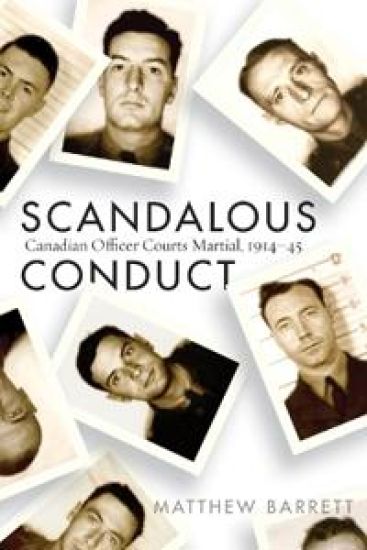
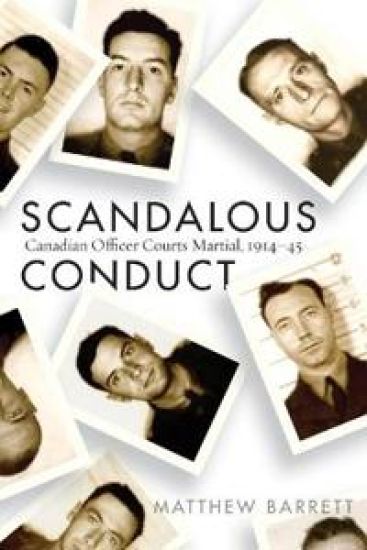
Drunken disorderliness. Cowardice in battle. Writing bad cheques. Vulgarity. Sexual indecency. Adultery. Following courts martial for such disgraceful deeds, hundreds of Canadian officers lost their commissions during the First and Second World Wars. Scandalous Conduct investigates the forgotten experiences of these dismissed ex-officers to offer a new critical perspective on constructed notions of honour and dishonour. Matthew Barrett explores how changing definitions of scandalous behaviour shaped the quintessential honour crime known as "conduct unbecoming an officer and a gentleman." As symbolized by the loss of commissioned rank, dishonour represented a direct challenge to the discredited officer's prestige, livelihood, and sense of manhood. Drawing on fascinating court cases that have never before been studied, Scandalous Conduct convincingly demonstrates a surprising conclusion. The scope of officer misconduct revealed that the ideal of military honour was not nearly as stable as leaders preferred to believe; instead it depended on changing social circumstances and disciplinary requirements.
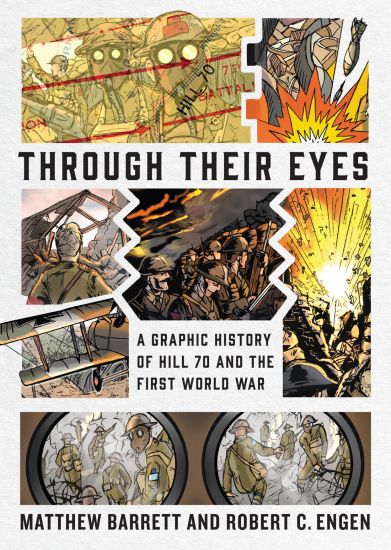
By the summer of 1917, Canadian troops had captured Vimy Ridge, but Allied offensives had stalled across many fronts of the Great War. To help break the stalemate of trench warfare, the Canadian Corps commander, Lieutenant-General Arthur Currie, was tasked with capturing Hill 70, a German stronghold near the French town of Lens.After securing the hill on 15 August, Canadian soldiers endured days of shelling, machine-gun fire, and poison gas as they repelled relentless enemy counterattacks. Through Their Eyes depicts this remarkable but costly victory in a unique way. With full-colour graphic artwork and detailed illustration, Matthew Barrett and Robert Engen picture the battle from different perspectives – Currie’s strategic view at high command, a junior officer’s experience at the platoon level, and the vantage points of many lesser-known Canadian soldiers who made the ultimate sacrifice. This innovative graphic history invites readers to reimagine the First World War through the eyes of those who lived it and to think more deeply about how we visualize and remember the past.Combining outstanding original art and thought-provoking commentary, Through Their Eyes uncovers the fascinating stories behind this battle while creatively expanding the ways that history is shared and represented.
Drunken disorderliness. Cowardice in battle. Writing bad cheques. Vulgarity. Sexual indecency. Adultery. Following courts martial for such disgraceful deeds, hundreds of Canadian officers lost their commissions during the First and Second World Wars. Scandalous Conduct investigates the forgotten experiences of these dismissed ex-officers to offer a new critical perspective on constructed notions of honour and dishonour. Matthew Barrett explores how changing definitions of scandalous behaviour shaped the quintessential honour crime known as "conduct unbecoming an officer and a gentleman." As symbolized by the loss of commissioned rank, dishonour represented a direct challenge to the discredited officer's prestige, livelihood, and sense of manhood. Drawing on fascinating court cases that have never before been studied, Scandalous Conduct convincingly demonstrates a surprising conclusion. The scope of officer misconduct revealed that the ideal of military honour was not nearly as stable as leaders preferred to believe; instead it depended on changing social circumstances and disciplinary requirements.
What if the Trinity we've been taught is not the Trinity of the Bible? In this groundbreaking book, Matthew Barrett reveals a shocking discovery: we have manipulated the Trinity, recreating the Father, Son, and Holy Spirit in our own image.With clarity and creativity, Barrett mines the Scriptures as well as the creeds and confessions of the faith to help you rediscover the beauty, simplicity, and majesty of our Triune God. You will be surprised to learn that what you believe about the Trinity has untold consequences for salvation and the Christian life. To truly know God, you must meet the One who is simply Trinity.
How should we address the social ills in our culture? How should we respond to the social and economic inequalities around us? James W. Alexander (1804-1859) thought deeply about these problems and wrote extensively about how these issues might be addressed from a Christian perspective. The son of Princeton Seminary's first faculty member, Alexander rose to prominence in the nineteenth century as a Christian leader in Virginia, New Jersey, and New York City. While he authored numerous books and articles, Alexander's contribution to evangelical thought has largely been overlooked. Alexander was deeply concerned about the economic, political, and social structures of antebellum American society, and he left behind a great deal of material that addressed these issues. In an age when social reformers traversed America with an abundance of novel ideas and utopian schemes, Alexander believed that the Christian gospel and the influence of Christian truth was the best means approach for bringing about lasting good in the world around us. Alexander's thoughts on government, economics, education, and race continue to be relevant for our own day. While the complexion of our social ills may have changed, the solution to needs of our culture have largely remained the same.
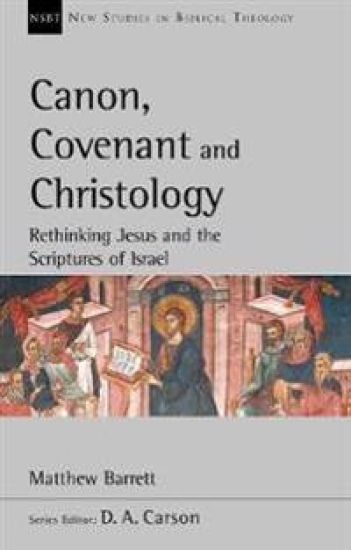
"All Scripture is breathed out by God" (2 Timothy 3:16). From Paul's epistles the divine inspiration of Scripture may be confidently affirmed. However, on turning to Jesus and the Gospels, it is difficult to find such an explicit approach.In this New Studies in Biblical Theology volume, Matthew Barrett argues that Jesus and the apostles have just as convictional a doctrine of Scripture as Paul or Peter, but it will only be discovered if the Gospels are read within their own canonical horizon and covenantal context. The nature of Scripture presupposed by Jesus and the Gospel writers may not be addressed directly, but it manifests itself powerfully when their words are read within the Old Testament's promise-fulfilment pattern.Nothing demonstrates Scripture's divine origin, divine authorial intent and trustworthiness more than the gospel of Jesus Christ. In the advent of the Son of God, the Word has become flesh, announcing to Jew and Gentile alike that the covenant promises Yahweh made through the Law and the Prophets have been fulfilled in the person and work of Christ.Addressing key issues in biblical theology, the works comprising New Studies in Biblical Theology are creative attempts to help Christians better understand their Bibles. The NSBT series is edited by D. A. Carson, aiming to simultaneously instruct and to edify, to interact with current scholarship and to point the way ahead.
‘All Scripture is breathed out by God …’ (2 Timothy 3:16). From Paul’s epistles the divine inspiration of Scripture may be confidently affirmed, as well as its corollary attributes. However, on turning to Jesus and the Gospels, it is hard to find an explicit approach like Paul’s. Matthew Barrett argues that Jesus and the apostles have just as convictional a doctrine of Scripture as Paul or Peter, but it will only be discovered if the Gospels are read within their own canonical horizon and covenantal context. The nature of Scripture presupposed by Jesus and the Gospel writers may not be addressed directly, but it manifests itself powerfully when their words are read within the Old Testament’s promise–fulfilment pattern. Nothing demonstrates Scripture’s divine origin, divine authorial intent and trustworthiness more than the gospel of Jesus Christ. In the advent of the Son of God, the Word has become flesh, announcing to Jew and Gentile alike that the covenant promises Yahweh made through the Law and the Prophets have been fulfilled in the person and work of Christ.
This newest contribution to the 40 Questions series continues the tradition of excellent research presented in clear, user-friendly writing. 40 Questions About Salvation makes sense of one of Christianity's most disputed doctrines, covering the most common and difficult questions about election, the order of salvation, and perseverance of the saints. This volume will help pastors, college and seminary students, and all Christians who want to grow in their understanding of what the Bible teaches about salvation. Each chapter is succinct and readable, with a bibliography of additional resources for those who wish to study further.
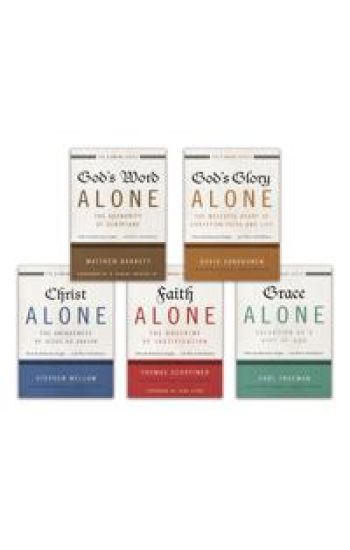
Discover the truths of the Reformation in this special pack, which includes all five books in the Five Solas Series: Christ Alone (Stephen Wellum), Faith Alone (Thomas Schreiner), God's Glory Alone (David VanDrunen, God's Word Alone (Mathew Barrett), Grace Alone (Carl Trueman).Historians and theologians alike have long recognized that at the heart of the sixteenth-century Protestant Reformation were five declarations (or “solas”) that distinguished the movement from other expressions of the Christian faith.Five hundred years later, we live in a different time with fresh challenges to our faith. Yet these rallying cries of the Reformation continue to speak to us, addressing a wide range of contemporary issues. The Five Solas series will help you understand the historical and biblical context of the five solas and how to live out the relevance of Reformation theology today.
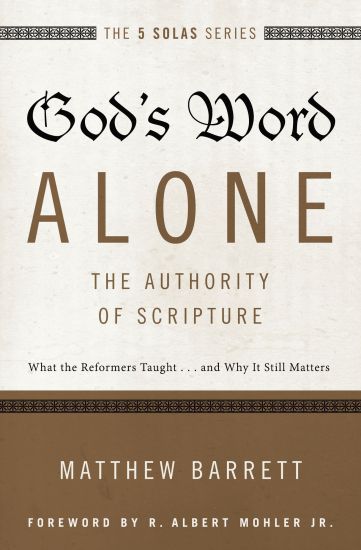
Scholar and pastor Matthew Barrett retraces the historical and biblical roots of the doctrine that Scripture alone is the final and decisive authority for God's people. God's Word Alone is a decisive defense of the Bible as the inspired and inerrant Word of God.Revitalizing one of the five great declarations of the Reformation—sola Scriptura—Barrett:Analyzes what the idea of sola Scriptura is and what it entails, clarifying why the doctrine is truth and why it's so essential to Christianity.Surveys the development of this theme in the Reformation and traces the crisis that followed resulting in a shift away from the authority of Scripture.Shows that we need to recover a robust doctrine of Scripture's authority in the face of today's challenges and why a solid doctrinal foundation built on God's Word is the best hope for the future of the church.This book is an exploration of the past in order to better understand our present and the importance of reviving this indispensable doctrine for the Christian faith and church today.—THE FIVE SOLAS—Historians and theologians have long recognized that at the heart of the sixteenth-century Protestant Reformation were five declarations, often referred to as the "solas." These five statements summarize much of what the Reformation was about, and they distinguish Protestantism from other expressions of the Christian faith: that they place ultimate and final authority in the Scriptures, acknowledge the work of Christ alone as sufficient for redemption, recognize that salvation is by grace alone through faith alone, and seek to do all things for God’s glory.The Five Solas Series is more than a simple rehashing of these statements, but instead expounds upon the biblical reasoning behind them, leading to a more profound theological vision of our lives and callings as Christians and churches.
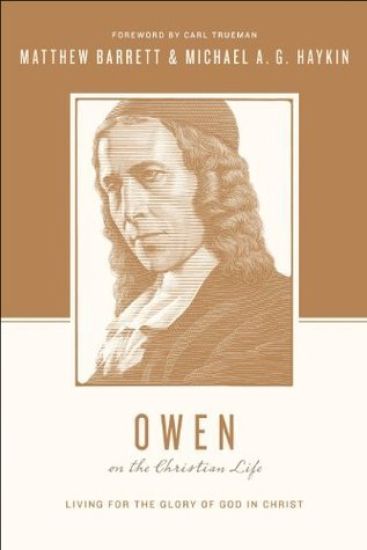
John Owen is widely regarded as one of the most influential English Puritans. As a pastor, he longed to see the glory of Christ take root in people’s lives. As a writer, he continues to encourage us toward discipline and communion with God. His high view of God and deep theological convictions flowed naturally into practical application and a zeal for personal holiness. In Owen on the Christian Life, Barrett and Haykin guide us through the seventeenth-century theologian’s life and doctrine, giving us a glimpse into the majestic vision that served as the foundation for his approach to the Christian life—the glory of God in Christ. Part of the Theologians on the Christian Life series.