

Kirjailija
Matthew Carmona
Kirjat ja teokset yhdessä paikassa: 19 kirjaa, julkaisuja vuosilta 1997-2027, suosituimpien joukossa Urban Beauty. Vertaile teosten hintoja ja tarkista saatavuus suomalaisista kirjakaupoista.
19 kirjaa
Kirjojen julkaisuhaarukka 1997-2027.
Public Places Urban Spaces provides a comprehensive overview of the principles, theory and practices of urban design for those new to the subject and for those requiring a clear and systematic guide. In this new edition the book has been extensively revised and restructured. Carmona advances the idea of urban design as a continuous process of shaping places, fashioned in turn by shifting global, local and power contexts. At the heart of the book are eight key dimensions of urban design theory and practice—temporal, perceptual, morphological, visual, social, functional—and two new process dimensions—design governance and place production.This extensively updated and revised third edition is more international in its scope and coverage, incorporating new thinking on technological impact, climate change adaptation, strategies for urban decline, cultural and social diversity, place value, healthy cities and more, all illustrated with nearly 1,000 carefully chosen images. Public Places Urban Spaces is a classic urban design text, and everyone in the field should own a copy.
Public Places Urban Spaces provides a comprehensive overview of the principles, theory and practices of urban design for those new to the subject and for those requiring a clear and systematic guide. In this new edition the book has been extensively revised and restructured. Carmona advances the idea of urban design as a continuous process of shaping places, fashioned in turn by shifting global, local and power contexts. At the heart of the book are eight key dimensions of urban design theory and practice—temporal, perceptual, morphological, visual, social, functional—and two new process dimensions—design governance and place production.This extensively updated and revised third edition is more international in its scope and coverage, incorporating new thinking on technological impact, climate change adaptation, strategies for urban decline, cultural and social diversity, place value, healthy cities and more, all illustrated with nearly 1,000 carefully chosen images. Public Places Urban Spaces is a classic urban design text, and everyone in the field should own a copy.
Design Governance focuses on how we design the built environment where most of us live, work, and play and the role of government in that process. To do so, it draws on the experience of the Commission for Architecture and the Built Environment (CABE), a decade-long, globally unique experiment in the governance of design. This book theorises design governance as an arm and aspiration of the state; tells the story of CABE, warts and all, and what came before and after; unpacks CABE’s ‘informal’ toolbox: its methods and processes of design governance; and reflects on the effectiveness and legitimacy of design as a tool of modern-day government. The result is a new set of concepts through which to understand the governance of design as a distinct and important sub-field of urban design.
Design Governance focuses on how we design the built environment where most of us live, work, and play and the role of government in that process. To do so, it draws on the experience of the Commission for Architecture and the Built Environment (CABE), a decade-long, globally unique experiment in the governance of design. This book theorises design governance as an arm and aspiration of the state; tells the story of CABE, warts and all, and what came before and after; unpacks CABE’s ‘informal’ toolbox: its methods and processes of design governance; and reflects on the effectiveness and legitimacy of design as a tool of modern-day government. The result is a new set of concepts through which to understand the governance of design as a distinct and important sub-field of urban design.
This book directly addresses the major planning debate of our time - the delivery and quality of new housing development. As pressure for new housing development in England increases, a widespread desire to improve the design of the resulting residential environments becomes evermore apparent with increasing condemnation of the standard products of the volume housebuilders.In recent years central government has come to accept the need to deliver higher quality living environments, and the important role of the planning system in helping to raise design standards. Housing Design Quality focuses on this role and in particular on how the various policy instruments available to public authorities can be used in a positive manner to deliver higher quality residential developments.
Essential reading for students and practitioners of urban design, this collection of essays introduces the 6 dimensions of urban design through a range of the most important classic and contemporary key texts. Urban design as a form of place making has become an increasingly significant area of academic endeavour, of public policy and professional practice. Compiled by the authors of the best selling Public Places Urban Spaces, this indispensable guide includes all the crucial definitions and various understandings of the subject, as well as a practical look at how to implement urban design that readers will need to refer to time and time again. Uniquely, the selections of essays that include the works of Gehl, Jacobs, and Cullen, are presented substantially in their original form, and the truly accessible dip-in-and-out format will enable readers to form a deeper, practical understanding of urban design.
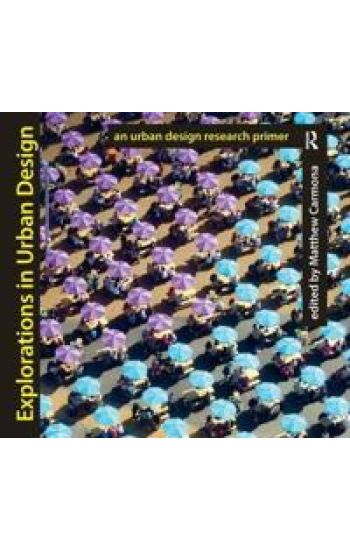
Whilst recognising that distinctly different traditions exist within the study and practice of urban design, this book advances an interdisciplinary and innovative approach, which is of direct importance to understanding the urban forms, conditions, practices and processes. It enthuses and inspires users who are grappling with urban design research problems, but who need inspiration to move from idea to methodological approach. Through the work of 32 urban researchers from the arts, sciences and social sciences, it demonstrates a wide range of problems and approaches and shows how the diverse range of complementary approaches can come together to provide a holistic understanding to the design of cities. While each of the contributors presents a particular approach to researching the field, sometimes focusing centrally on particular research methodologies, others cutting across methods, or focusing on theory, all include discussion of actual research projects to illustrate their application to 'real world' problems. This book will be valuable to everyone from the informed undergraduate student about to embark on their first dissertation, to PhD students and seasoned researchers immersed in methodological and conceptual complexity and wishing to compare available and appropriate methodological paths.

Whilst recognising that distinctly different traditions exist within the study and practice of urban design, this book advances an interdisciplinary and innovative approach, which is of direct importance to understanding the urban forms, conditions, practices and processes. It enthuses and inspires users who are grappling with urban design research problems, but who need inspiration to move from idea to methodological approach. Through the work of 32 urban researchers from the arts, sciences and social sciences, it demonstrates a wide range of problems and approaches and shows how the diverse range of complementary approaches can come together to provide a holistic understanding to the design of cities. While each of the contributors presents a particular approach to researching the field, sometimes focusing centrally on particular research methodologies, others cutting across methods, or focusing on theory, all include discussion of actual research projects to illustrate their application to 'real world' problems. This book will be valuable to everyone from the informed undergraduate student about to embark on their first dissertation, to PhD students and seasoned researchers immersed in methodological and conceptual complexity and wishing to compare available and appropriate methodological paths.
In recent years it has become common-place to hear claims that public space in cities across the globe has become the exclusive preserve of the wealthy and privileged, at the expense of the needs of wider society. Whether it is the privatization of public space through commerical developments like shopping malls and business parks, the gentrification of existing spaces by campaigns against perceived anti-social behaviour or the increasing domination of public areas by private transport in the form of the car, the urban public space is seen as under threat.But are things really that bad? Has the market really become the sole factor that influences the treatment of public space? Have the financial and personal interests of the few really come to dominate those of the many?To answer these questions Matthew Carmona and Filipa Wunderlich have carried out a detailed investigation of the modern public spaces of London, that most global of cities. They have developed a new typology of public spaces applicable to all cities, a typology that demonstrates that to properly assess contemporary urban places means challenging the over-simplification of current critiques. Global cities are made up of many overlapping public spaces, good and bad; this book shows how to analyze this complexity, and to understand it.
In recent years it has become common-place to hear claims that public space in cities across the globe has become the exclusive preserve of the wealthy and privileged, at the expense of the needs of wider society. Whether it is the privatization of public space through commerical developments like shopping malls and business parks, the gentrification of existing spaces by campaigns against perceived anti-social behaviour or the increasing domination of public areas by private transport in the form of the car, the urban public space is seen as under threat.But are things really that bad? Has the market really become the sole factor that influences the treatment of public space? Have the financial and personal interests of the few really come to dominate those of the many?To answer these questions Matthew Carmona and Filipa Wunderlich have carried out a detailed investigation of the modern public spaces of London, that most global of cities. They have developed a new typology of public spaces applicable to all cities, a typology that demonstrates that to properly assess contemporary urban places means challenging the over-simplification of current critiques. Global cities are made up of many overlapping public spaces, good and bad; this book shows how to analyze this complexity, and to understand it.
This book examines the design policies in current development plans. With design quality of growing importance to the public, consumers, developers and their clients, and high on the Secretary of State's agenda, this book makes an important practical contribution to improving design control. With the increasing importance attached to district-wide development plan policies since 1991, local planning authorities and community groups have an important opportunity to improve their control over the built environment. This research text explains how clear, comprehensive and effective policies can be researched, written and implemented.
Essential reading for students and practitioners of urban design, this collection of essays introduces the 6 dimensions of urban design through a range of the most important classic and contemporary key texts. Urban design as a form of place making has become an increasingly significant area of academic endeavour, of public policy and professional practice. Compiled by the authors of the best selling Public Places Urban Spaces, this indispensable guide includes all the crucial definitions and various understandings of the subject, as well as a practical look at how to implement urban design that readers will need to refer to time and time again. Uniquely, the selections of essays that include the works of Gehl, Jacobs, and Cullen, are presented substantially in their original form, and the truly accessible dip-in-and-out format will enable readers to form a deeper, practical understanding of urban design.
This book deals with one of the current major debates in planning: how to measure the quality and effectiveness of the output of the planning process. It deals with issues of defining quality, public sector management, the use of indicators and the planning process. Although case study material is drawn from UK practice this topic is universal and the authors include discussions of international practice and experience.
This book deals with one of the current major debates in planning: how to measure the quality and effectiveness of the output of the planning process. It deals with issues of defining quality, public sector management, the use of indicators and the planning process. Although case study material is drawn from UK practice this topic is universal and the authors include discussions of international practice and experience.
This book directly addresses the major planning debate of our time - the delivery and quality of new housing development. As pressure for new housing development in England increases, a widespread desire to improve the design of the resulting residential environments becomes evermore apparent with increasing condemnation of the standard products of the volume housebuilders.In recent years central government has come to accept the need to deliver higher quality living environments, and the important role of the planning system in helping to raise design standards. Housing Design Quality focuses on this role and in particular on how the various policy instruments available to public authorities can be used in a positive manner to deliver higher quality residential developments.
This book examines the design policies in current development plans. With design quality of growing importance to the public, consumers, developers and their clients, and high on the Secretary of State's agenda, this book makes an important practical contribution to improving design control. With the increasing importance attached to district-wide development plan policies since 1991, local planning authorities and community groups have an important opportunity to improve their control over the built environment. This research text explains how clear, comprehensive and effective policies can be researched, written and implemented.