Kirjojen hintavertailu. Mukana 12 390 323 kirjaa ja 12 kauppaa.

Kirjailija

Matthew Croasmun

Kirjat ja teokset yhdessä paikassa: 11 kirjaa, julkaisuja vuosilta 2017-2025, suosituimpien joukossa Life Worth Living - Wofür es sich zu leben lohnt. Vertaile teosten hintoja ja tarkista saatavuus suomalaisista kirjakaupoista.

11 kirjaa

Kirjojen julkaisuhaarukka 2017-2025.

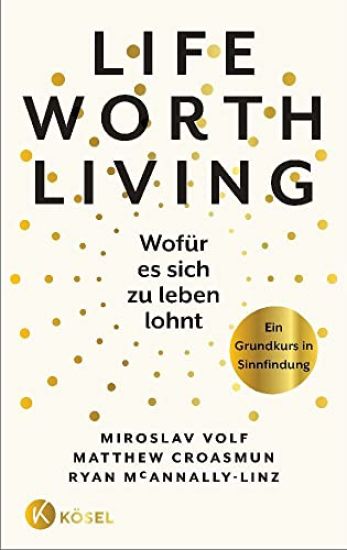
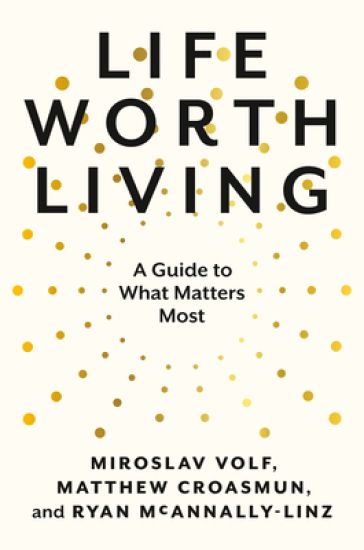
Life Worth Living

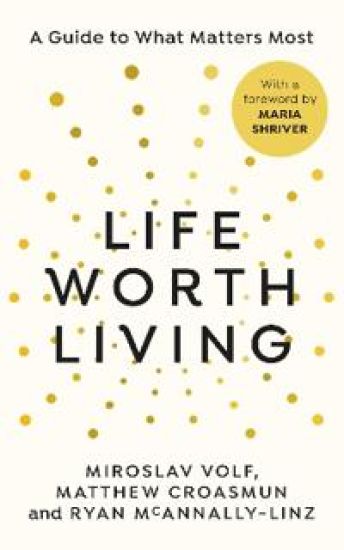
Life Worth Living

Miroslav Volf; Matthew Croasmun; Ryan McAnnally-Linz

Ebury Publishing
2023
sidottu
What kind of life would be truly worth wanting? What kind of world would be truly worth seeking? How should we live?We are facing a crisis of meaning. Swept up in the obstacles of the day-to-day, the deeper questions of our fundamental purpose linger just beneath the surface of our personal lives and our collective culture. What we need is to seek the truth.In Life Worth Living, leading Yale theologians Volf, Croasmun and McAnnally-Linz offer a deep dive beneath the levels of habit, strategy and introspection to the bedrock question of what kind of life is truly worth living. Inspired by the leading Yale course of the same name, this perspective-shifting book will guide you through life's biggest questions. Drawing on the world's greatest religious and philosophical traditions, this is your path to understanding the true meaning of life.
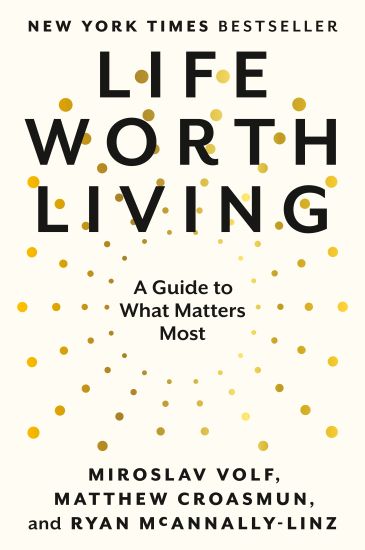
Life Worth Living: A Guide to What Matters Most

Life Worth Living: A Guide to What Matters Most

Miroslav Volf; Matthew Croasmun; Ryan McAnnally-Linz

Open Field
2023
sidottu
INSTANT NEW YORK TIMES BESTSELLER Financial Times' "Best books of 2023 -- Health & Wellness" "Life Worth Living is transcendent. A collection of wisdom punctuated by questions of great consequence, this is the only book you need to find your way from where you are to where you are called to be." --Kelly Corrigan, NYT bestselling author, host of Kelly Corrigan Wonders and PBS's Tell Me More Based on the Yale class, a guide to defining and then creating a flourishing life, and answering one of life's most pressing questions: how are we to live? AN OPEN FIELD PUBLICATION FROM MARIA SHRIVER What makes a good life? The question is inherent to the human condition, asked by people across generations, professions, and social classes, and addressed by all schools of philosophy and religions. This search for meaning, as Yale faculty Miroslav Volf, Matthew Croasmun, and Ryan McAnnally-Linz argue, is at the crux of a crisis that is facing Western culture, a crisis that, they propose, can be ameliorated by searching, in one's own life, for the underlying truth. In Life Worth Living, named after its authors' highly sought-after undergraduate course, Volf, Croasmun, and McAnnally-Linz chart out this question, providing readers with jumping-off points, road maps, and habits of reflection for figuring out where their lives hold meaning and where things need to change. Drawing from the major world religions and from impressively truthful and courageous secular figures, Life Worth Living is a guide to life's most pressing question, the one asked of all of us: How are we to live?
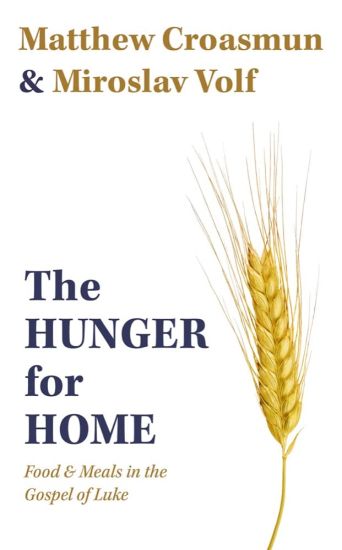
The Hunger for Home

The Hunger for Home

Matthew Croasmun; Miroslav Volf

Baylor University Press
2022
sidottu
What do the fields, rivers, and streams that provide food have to do with the God who created them? How do we become at home in this world where so many hunger for food, for companionship, or for the presence of God?"Scripture is also a feast." As an invitation to feast at the table of God's word, The Hunger for Home explores the deepest human longings for home through the simple ingredients of bread, water, wine, and stories. Matthew Croasmun and Miroslav Volf read the meals of the Gospel of Luke as stories of God eating with God's people. By making a common home with us in this way, God turns all our meals into invitations to eat in God's home—a home with a seat open for all who are willing. No longer is bread simply fuel for getting through the day, but also a call to be present to the agricultural workers, grocers, chefs, friends, and strangers with whom food connects us: everyone God is calling to the banquet. As Croasmun and Volf show, Luke gives us an image of creation at home by bringing God into the home, as it was always meant to be.
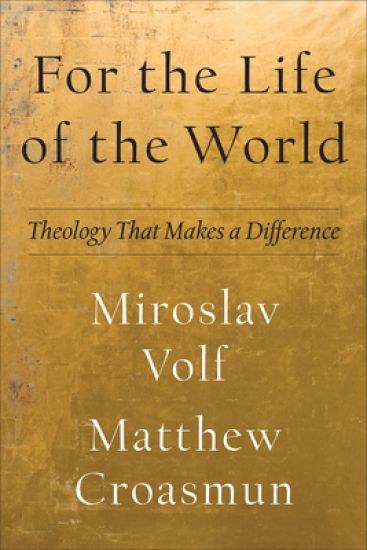
For the Life of the World – Theology That Makes a Difference

For the Life of the World – Theology That Makes a Difference

Miroslav Volf; Matthew Croasmun

Brazos Press, Div of Baker Publishing Group
2021
nidottu
Christianity Today 2020 Book Award (Award of Merit, Theology/Ethics)Outreach 2020 Recommended Resource of the Year (Theology and Biblical Studies)The question of what makes life worth living is more vital now than ever. In today's pluralistic, postsecular world, universal values are dismissed as mere matters of private opinion, and the question of what constitutes flourishing life--for ourselves, our neighbors, and the planet as a whole--is neglected in our universities, our churches, and our culture at large. Although we increasingly have technology to do almost anything, we have little sense of what is truly worth accomplishing.In this provocative new contribution to public theology, world-renowned theologian Miroslav Volf (named "America's New Public Intellectual" by Scot McKnight on his Jesus Creed blog) and Matthew Croasmun explain that the intellectual tools needed to rescue us from our present malaise and meet our new cultural challenge are the tools of theology. A renewal of theology is crucial to help us articulate compelling visions of the good life, find our way through the maze of contested questions of value, and answer the fundamental question of what makes life worth living.
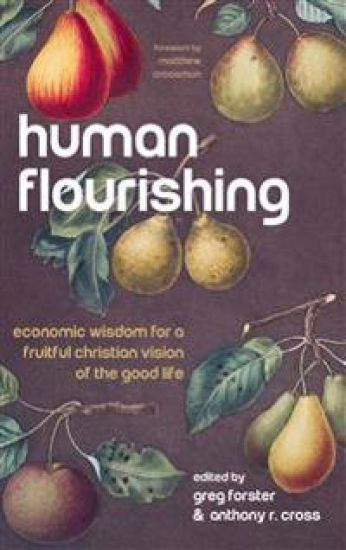
Human Flourishing

Human Flourishing

Matthew Croasmun

Pickwick Publications
2020
sidottu
Beyond an internal transformation or mere ""moment of salvation,"" how does Christian faith envision the good life? This question demands not only a Christian view of how individuals should live, but of how social institutions are best arranged for human flourishing. In the advanced modern world, our common public life is mainly lived out in the domains of work and commerce, so a Christian view of economic life is essential to a modern Christian view of human flourishing. In this volume, established evangelical scholars in theology, biblical studies, and history explore their disciplines in connection with economic wisdom to yield insights about what it means to live wholly, fruitfully, and well. Faithful and provocative, these essays uncover fresh ground on topics ranging from poverty to work ethic to capitalism/socialism to slavery to non-profit entities to the medieval indulgence industry.
Human Flourishing

Human Flourishing

Matthew Croasmun

Pickwick Publications
2020
pokkari
Beyond an internal transformation or mere ""moment of salvation,"" how does Christian faith envision the good life? This question demands not only a Christian view of how individuals should live, but of how social institutions are best arranged for human flourishing. In the advanced modern world, our common public life is mainly lived out in the domains of work and commerce, so a Christian view of economic life is essential to a modern Christian view of human flourishing. In this volume, established evangelical scholars in theology, biblical studies, and history explore their disciplines in connection with economic wisdom to yield insights about what it means to live wholly, fruitfully, and well. Faithful and provocative, these essays uncover fresh ground on topics ranging from poverty to work ethic to capitalism/socialism to slavery to non-profit entities to the medieval indulgence industry.
The Emergence of Sin

The Emergence of Sin

Matthew Croasmun

Oxford University Press Inc
2020
nidottu
We can have a sense that when we try to do right by one another, we aren't merely striving against ourselves. The feeling is that we are struggling against something--someone-else. As if there's a force-a person- that wishes us ill. In his letter to the Romans, the apostle Paul describes just such a person: Sin, a cosmic tyrant who constrains our moral freedom, confuses our moral judgment, and condemns us to slavery and to death. Commentators have long argued about whether Paul literally means to say Sin is a person or is simply indulging in literary personification, but regardless of Paul's intentions, for modern readers it would seem clear enough: there is no such thing as a cosmic tyrant. Surely it is more reasonable to suppose "Sin" is merely a colorful way of describing individual misdeeds or, at most, a way of evoking the intractability of our social ills. In The Emergence of Sin, Matthew Croasmun suggests we take another look. The vision of Sin he offers is at once scientific and theological, social and individual, corporeal and mythological. He argues both that the cosmic power Sin is nothing more than an emergent feature of a vast human network of transgression and that this power is nevertheless real, personal, and one whom we had better be ready to resist. Ultimately, what is on offer here is an account of the world re-mythologized at the hands of chemists, evolutionary biologists, sociologists, and entomologists. In this world, Paul's text is not a relic of a forgotten mythical past, but a field manual for modern living.
The Emergence of Sin

The Emergence of Sin

Matthew Croasmun

Oxford University Press Inc
2017
sidottu
Where does evil come from? And how did it become so powerful? We can have a sense that when we try to do right by one another, we aren't merely striving against ourselves. The feeling is that we are struggling against something--someone--else. As if there's a force--a person--that wishes us ill. In his letter to the Romans, the apostle Paul describes just such a person: Sin, a cosmic tyrant who constrains our moral freedom, confuses our moral judgment, and condemns us to slavery and to death. Commentators have long argued about whether Paul literally means to say Sin is a person or is simply indulging in literary personification, but regardless of Paul's intentions, for modern readers it would seem clear enough: there is no such thing as a cosmic tyrant. Surely it is more reasonable to suppose "Sin" is merely a colorful way of describing individual misdeeds or, at most, a way of evoking the intractability of our social ills. In The Emergence of Sin, Matthew Croasmun suggests we take another look. The vision of Sin he offers is at once scientific and theological, social and individual, corporeal and mythological. He argues both that the cosmic power Sin is nothing more than an emergent feature of a vast human network of transgression and that this power is nevertheless real, personal, and one whom we had better be ready to resist. Ultimately, what is on offer here is an account of the world re-mythologized at the hands of chemists, evolutionary biologists, sociologists, and entomologists. In this world, Paul's text is not a relic of a forgotten mythical past, but a field manual for modern living.