Kirjailija
Matthew Dillon
Kirjat ja teokset yhdessä paikassa: 23 kirjaa, julkaisuja vuosilta 1997-2026, suosituimpien joukossa Ancient Greece. Vertaile teosten hintoja ja tarkista saatavuus suomalaisista kirjakaupoista.
23 kirjaa
Kirjojen julkaisuhaarukka 1997-2026.
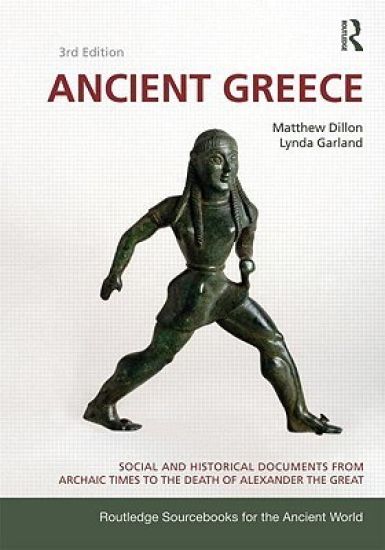
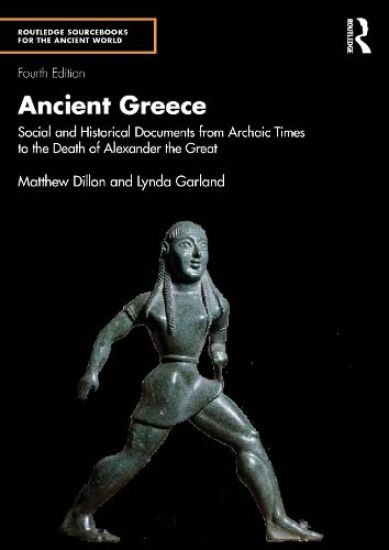
In this new edition of Ancient Greece, Dillon and Garland provide translated sources from the Greek world, from the earliest inscriptions and the first lines of Greek literature to the death of Alexander the Great, covering all the main historical periods and social phenomena of archaic and classical Greece. The material is taken from a variety of sources: historians, inscriptions, graffiti, law codes, epitaphs, decrees, drama, and poetry. It includes the major literary authors, as well as a wide selection of non-Athenian writers. While focusing on the main cities of ancient Greece – Athens and Sparta – the sourcebook also draws on a wide range of material concerning the Greeks in Egypt, Italy, Sicily, Asia Minor and the Black Sea. Ancient Greece covers not only the chronological, political history of the ancient Greek world, but also explores the full spectrum of Greek life through topics such as sexuality and gender, social class, ethnicity, labour, and religion. This new edition has been updated to include recently discovered inscriptions and documents found since the previous edition, with an updated introduction and bibliography to take account of the last decade of scholarship. The volume also includes new and additional maps, as well as images to highlight the importance of considering non-textual sources. Ancient Greece: Social and Historical Documents from Archaic Times to the Death of Alexander the Great, fourth edition remains a comprehensive introduction for students to the sources for the ancient Greek world. While primarily aimed at undergraduates, it is also suitable for use in schools, and is accessible for students with no background in historical or classical studies.
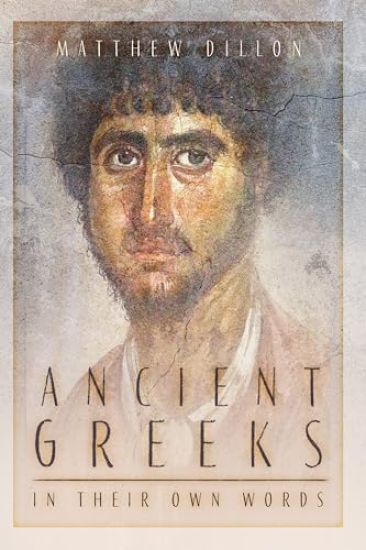
In Ancient Greeks in their own Words, historian Matthew Dillon reveals the nature of everyday life in the classical world. Using a series of telling extracts from Greek literature to provide a picture of their customs, concerns and underlying values, he allows the people to speak for themselves, both in the formal language of public office and in the colloquial speech of the household and the street.Their words reveal activities and opinions which are sometimes remarkably similar to those of the modern day, but which are otherwise so different that they are difficult for us to understand.Through everything from poetry, hymns and war-songs to official documents, inscriptions, laws, histories, funerary monuments, war memorials and graffiti, this book records not only the lives of famous Greeks like Sophocles and Aristotle, but also those of ordinary individuals. In Ancient Greeks in their own Words, glimpse the public and private facets of their everyday life, and gain an insight into the mentality of the ancient Greeks.
By the end of the fifth century BC, Asklepios was established and flourishing as the main healing deity of the Greeks. However, just a few centuries earlier, he featured in the Iliad as a mortal doctor, not a god. The Greeks had to wait until the classical period before they could seek individual, divine assistance for illnesses and pain, and Asklepios examines the way in which the god fulfilled this role. Asklepios had very little interaction with other gods and heroes; he is largely devoid of myth: he came too late to be incorporated into the great epics, or to take on the attributes and conquests of local hero divinities such as Herakles – his focus was on the world of mortals. His was the most ‘personal’ of all Greek cults, and he was the one and only god who routinely had an individual relationship with his worshippers. In no other cult was an epiphany of the god sought as a regular and intrinsic but most importantly essential part of the god’s worship.In this volume, Matthew Dillon explores the literary, epigraphic and iconographic evidence for Asklepios, providing a comprehensive analysis of this material, and explicates the ritual of the cult. But, more importantly, he reconstructs how his worshippers viewed their relationship with this god, examining the nature of the healing experience, what benefits worshippers believed they gained from involvement in his cult, and what was the nature of the healing process they claimed to experience at his hands. This is the definitive work on Asklepios, accessible to both scholars and undergraduate students of Greek religion.
Religion & Classical Warfare: The Roman Empire
Matthew Dillon; Christopher Matthew
PEN SWORD BOOKS LTD
2022
sidottu
Religion was integral to the conduct of war in the ancient world and the Romans were certainly no exception. No campaign was undertaken, no battle risked, without first making sacrifice to propitiate the appropriate gods (such as Mars, god of War) or consulting oracles and omens to divine their plans. Yet the link between war and religion is an area that has been regularly overlooked by modern scholars examining the conflicts of these times. This volume addresses that omission by drawing together the work of experts from across the globe. The chapters have been carefully structured by the editors so that this wide array of scholarship combines to give a coherent, comprehensive study of the role of religion in the wars of the Roman Empire. Aspects considered in depth include: the Imperial cults and legionary loyalty; the army and religious/regional disputes; Trajan and religion; Constantine and Christianity; omens and portents; funerary cults and practices; the cult of Mithras; the Imperial sacramentum; religion & Imperial military medicine.
This textbook provides comprehensive coverage of the political, military, and social history of ancient Rome from the earliest days of the Republic to its collapse and the subsequent foundations of the empire established by Augustus prior to his death in AD 14.Interspersed through the discussion of the political history of the period are crucial chapters on all aspects of Roman culture, including women, religion, slavery and manumission, overseas conquests and their impact, and life in the city of Rome, giving students a full understanding of republican society, culture, and politics. With over 130 maps, illustrations, and photographs, The Ancient Romans is lavishly illustrated, with a particular emphasis on coins as a valuable historical resource. It also closely references the authors’ sourcebook, Ancient Rome: Social and Historical Documents from the Early Republic to the Death of Augustus, second edition, allowing students to engage with the documentary evidence and written sources in a deep and meaningful way.The Ancient Romans: History and Society from the Early Republic to the Death of Augustus is an indispensable resource for undergraduate students of the Roman Republic and its society and culture, as well as offering a comprehensive and compelling introduction for the interested reader.
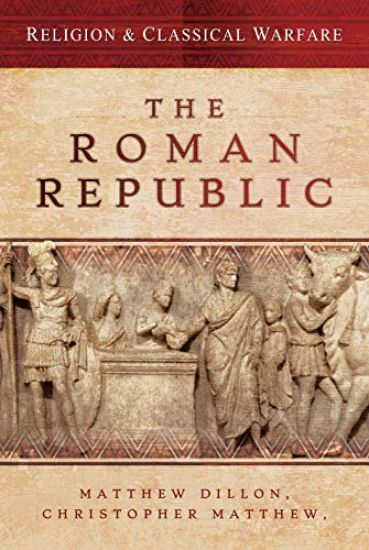
Religion & Classical Warfare: The Roman Republic
Matthew Dillon; Christopher Matthew
Pen Sword Military
2020
sidottu
Religion was integral to the conduct of war in the ancient world and the Romans were certainly no exception. No campaign was undertaken, no battle risked, without first making sacrifice to propitiate the appropriate gods (such as Mars, god of War) or consulting oracles and omens to divine their plans. Yet the link between war and religion is an area that has been regularly overlooked by modern scholars examining the conflicts of these times. This volume addresses that omission by drawing together the work of experts from across the globe. The chapters have been carefully structured by the editors so that this wide array of scholarship combines to give a coherent, comprehensive study of the role of religion in the wars of the Roman Republic. Aspects considered in depth will include: declarations of war; evocatio and taking gods away from enemies; dedications and ceremonies; the cult of the legionary eagle; the role of women in Republican warfare; omens and divination; live burials of people in times of military crisis; and the rituals of the Roman triumph.
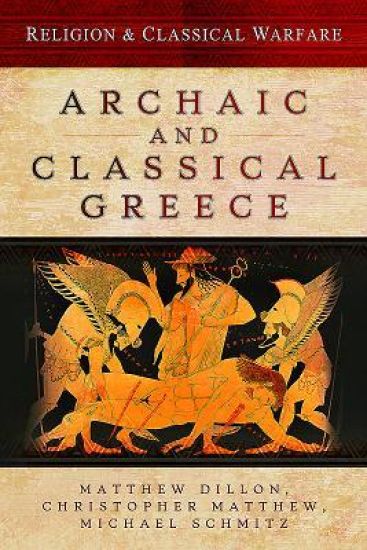
Religion and Classical Warfare: Archaic and Classical Greece
Matthew Dillon
Pen Sword Military
2020
sidottu
Religion was integral to the conduct of war in the ancient world and the Greeks were certainly no exception. No campaign was undertaken, no battle risked, without first making sacrifice to propitiate the appropriate gods (such as Ares, god of War) or consulting oracles and omens to divine their plans. Yet the link between war and religion is an area that has been regularly overlooked by modern scholars examining the conflicts of these times. This volume addresses that omission by drawing together the work of experts from across the globe. The chapters have been carefully structured by the editors so that this wide array of scholarship combines to give a coherent, comprehensive study of the role of religion in the wars of the Archaic and Classical Greek world. Aspects considered in depth will include: Greek writers on religion and war; declarations of war; fate and predestination, the sphagia and pre-battle sacrifices; omens, oracles and portents, trophies and dedications to cult centres; militarized deities; sacred truces and festivals; oaths and vows; religion & Greek military medicine.
Addressing the role which divination played in ancient Greek society, this volume deals with various forms of prophecy and how each was utilised and for what purpose. Chapters bring together key types of divining, such as from birds, celestial phenomena, the entrails of sacrificed animals and dreams. Oracular centres delivered prophetic pronouncements to enquirers, but in addition, there were written collections of oracles in circulation. Many books were available on how to interpret dreams, the birds and entrails, and divination as a religious phenomenon attracted the attention of many writers. Expert diviners were at the heart of Greek prophecy, whether these were Apollo’s priestesses delivering prose or verse answers to questions put to them by consultants, diviners known as manteis, who interpreted entrails and omens, the chresmologoi, who sang the many oracles circulating orally or in writing, or dream interpreters. Divination was utilised not only to foretell the future but also to ensure that the individual or state employing divination acted in accordance with that divinely prescribed future; it was employed by all and had a crucial role to play in what courses of action both states and individuals undertook. Specific attention is paid in this volume not only to the ancient written evidence, but to that of inscriptions and papyri, with emphasis placed on the iconography of Greek divination.
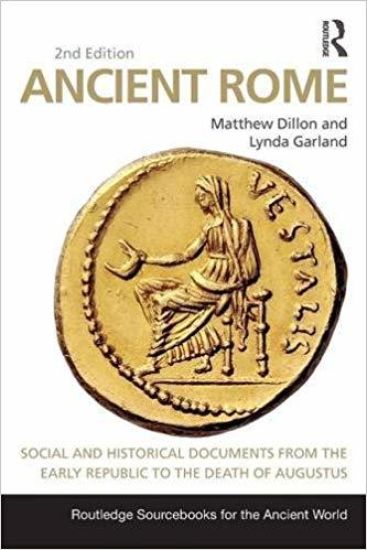
In this second edition, Ancient Rome presents an extensive range of material, from the early Republic to the death of Augustus, with two new chapters on the Second Triumvirate and The Age of Augustus. Dillon and Garland have also included more extensive late Republican and Augustan sources on social developments, as well as further information on the Gold Age of Roman literature.Providing comprehensive coverage of all important documents pertaining to the Roman Republic and the Augustan age, Ancient Rome includes: source material on political and military developments in the Roman Republic and Augustan age (509 BC – AD 14) detailed chapters on social phenomena, such as Roman religion, slavery and freedmen, women and the family, and the public face of Rome clear, precise translations of documents taken not only from historical sources but also from inscriptions, laws and decrees, epitaphs, graffiti, public speeches, poetry, private letters and drama concise up-to-date bibliographies and commentaries for each document and chapter a definitive collection of source material on the Roman Republic and early empire.Students of ancient Rome and classical studies will find this new edition invaluable at all levels of study.
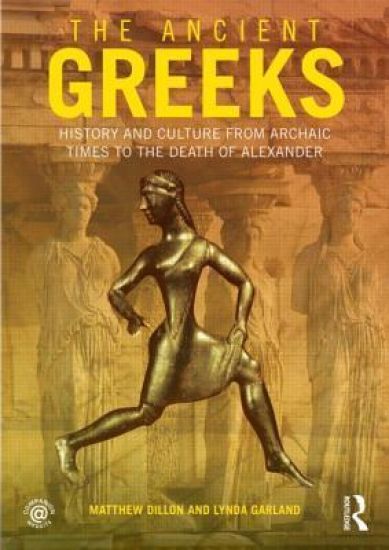
The Ancient Greeks: History and Culture from Archaic Times to the Death of Alexander offers students a comprehensive introduction to the history and culture of the ancient Greek world for the period c.800-323 BC. It provides critical background to the key historical developments of the time: the Persian Wars, the rise of Athens and its empire in the 5th century and the subsequent Peloponnesian War, and the emergence of Macedon as a world power under Philip and Alexander. A chapter dedicated to Sparta provides students with crucial understanding of this important but enigmatic kingdom. However, The Ancient Greeks moves beyond political history to include social sections on women, religion and slaves, offering extensive coverage of the social and religious environment. The book is lavishly illustrated, with over 150 maps, illustrations and photographs, and includes a chronological table and glossary of key terms. With close referencing to Ancient Greece: Social and Historical Documents from Archaic Times to the Death of Alexander (third edition) and accompanied by a companion website, this volume provides invaluable support for students of ancient Greek history and civilization, and offers a comprehensive introduction for the interested reader.
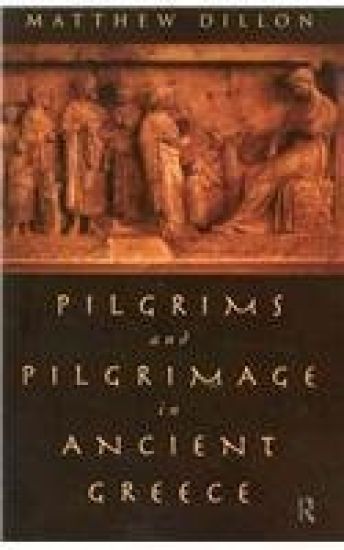
This volume explores the religious motivations for pilgrimage and reveals the main preoccupations of worshippers in Ancient Greece.Dillon examines the main sanctuaries of Delphi, Epidauros and Olympia, as well as the less well-known oracle of Didyma in Asia Minor and the festivals at the Isthmus of Corinth. He discusses the modes of travel to the sites, means of communication between pilgrims and the religious and ritual practices at the sanctuaries themselves.A unique insight into pilgrimage in Ancient Greece is presented, focusing on the diverse aspects of pilgrimage; the role of women and children, the religious festivals of particular ethnic groups and the colourful celebrations involving music, athletics and equestrian events. Pilgrims and Pilgrimage in Ancient Greece is an accessible and fascinating volume, which reveals how the concept of pilgrimage contributes to Greek religion as a whole.
In this revised edition, Matthew Dillon and Lynda Garland have expanded the chronological range of Ancient Greece to include the Greek world of the fourth century. The sourcebook now ranges from the first lines of Greek literature to the death of Alexander the Great, covering all of the main historical periods and social phenomena of ancient Greece. The material is taken from a variety of sources: historians, inscriptions, graffiti, law codes, epitaphs, decrees, drama and poetry. It includes the major literary authors, but also covers a wide selection of writers, including many non-Athenian authors. Whilst focusing on the main cities of ancient Greece - Athens and Sparta- the sourcebook also draws on a wide range of material concerning the Greeks in Egypt, Italy, Sicily, Asia Minor and the Black Sea.Ancient Greece covers not only the chronological, political history of ancient Greece, but also explores the full spectrum of Greek life through topics such as gender, social class, race and labour. This revised edition includes: Two completely new chapters - "The Rise of Macedon" and "Alexander 'the Great', 336-323" BC New material in the chapters on The City-State, Religion in the Greek World, Tyrants and Tyranny, The Peloponnesian War and its Aftermath, Labour: Slaves, Serfs and Citizens, and Women, Sexuality and the FamilyIt is structured so that: Thematically arranged chapters arranged allow students to build up gradually knowledge of the ancient Greek world Introductory essays to each chapter give necessary background to understand topic areas Linking commentaries help students understand the source extracts and what they reveal about the ancient GreeksAncient Greece: Social and Historical Documents from Archaic Times to the Death of Alexander the Great. Third Edition, will continue to be a definitive collection of source material on the society and culture of the Greeks.