Kirjojen hintavertailu. Mukana 12 595 353 kirjaa ja 12 kauppaa.

Kirjailija

Matthew Elliott

Kirjat ja teokset yhdessä paikassa: 9 kirjaa, julkaisuja vuosilta 2005-2026, suosituimpien joukossa Ten Years On. Vertaile teosten hintoja ja tarkista saatavuus suomalaisista kirjakaupoista.

9 kirjaa

Kirjojen julkaisuhaarukka 2005-2026.

Ten Years On

Ten Years On

Matthew Elliott

Biteback Publishing
2026
sidottu
The 2016 Brexit referendum caused a political earthquake, with aftershocks that are still being felt a decade after the vote. For many, including many who voted to leave, the result came as a shock. But for one man it was not; it was what he had been working to achieve for twenty years. You may not have heard of Matthew Elliott, but you should have. Born and brought up in Leeds, he is one of Britain’s most successful political campaigners – a reserved and thoughtful strategist who in his twenties launched a movement to force national and local government to confront wasteful public spending and cut taxes. In 2014, he staved off an attempt to change our voting system, before steering the Vote Leave campaign to victory two years later as its chief executive. In an extraordinary memoir of his time in politics, Matthew reveals what it’s like working side-by-side with Boris Johnson and Dominic Cummings, their dealings with Nigel Farage and the tricks of the trade that campaigners use to shape the news. Here, ten years on from the EU referendum, is the definitive story of Brexit: the build-up from the 1990s, what really went on during the campaign, its bitter aftermath, how the early post-Brexit opportunities were squandered and the moves now to take Britain back into the EU by stealth.
Prosperity Through Growth

Prosperity Through Growth

Dr Arthur B. Laffer; Matthew Elliott; Michael Hintze; Douglas McWilliams

Biteback Publishing
2025
sidottu
Prosperity Through Growth is a primer for reviving the UK economy, co-authored by some of our finest economic minds: celebrated US economist Dr Arthur B. Laffer, inventor of the Laffer curve; policy campaigner Matthew Elliott; businessman Michael Hintze; and founder of the Centre for Economics and Business Research Douglas McWilliams. It begins by setting out the principles of ideal economic policy - the 'North Star' of prosperity through growth - and applies them to the UK's current position. The thinking takes account of the age of autocracy and AI, in which political decisions in democracies are constrained and talented and entrepreneurial people are increasingly mobile, making economic incentives even more important. The final section draws on interviews with more than thirty economic decision-makers from the worlds of business, politics and the civil service, including five Prime Ministers and nine Chancellors. The interviews give insights into the economic and political causes of low growth and provide a strategy for implementing a pro-growth agenda. Specially commissioned research shows how the UK is forecast to slide down the league table of GDP per capita over the next twenty-five years. The book argues that such a slide is not inevitable and outlines a fully costed and modelled '24/7 Growth Plan' to show how the decline can be averted.
Tribute

Tribute

Matthew Elliott

Tidalwave Productions
2017
pokkari
Frank Capra is an icon of American popular culture. But he is so much more than simply the director of It's a Wonderful Life, the most beloved Christmas movie of all time. TidalWave's comic book biography traces the course of Capra's life from penniless immigrant to Hollywood royalty, and examines his unique and invaluable contribution to America's war effort.
The Great European Rip-off

The Great European Rip-off

David Craig; Matthew Elliott

Random House Books
2009
pokkari
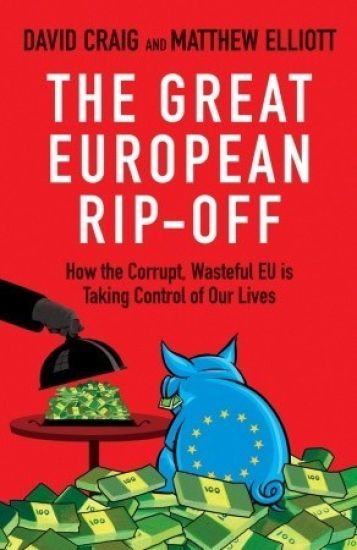
In this EU referendum year, it's time for people across Europe to look at what really goes on in Brussels in our name. It has been estimated that the EU costs us around £1,000 billion a year - an incredible £2000 for every man, woman and child in Europe. So what do we get for our money? Politicians and administrators selflessly working to bring us efficient government? Well-targeted regulations that promote economic prosperity? A safe and free society? A well-protected environment? Help for people in poorer countries? Or is our money being squandered by a self-serving euro-elite of unaccountable politicians and incompetent bureaucrats, or else devoured in a feeding frenzy of fraud and corruption where a few lucky insiders become unimaginably rich at our expense? And is the tsunami of regulation pouring out of Brussels in reality strangling industry, destroying jobs, restricting personal freedom, desecrating the environment and further impoverishing the developing world?Using their extensive network of insider sources, David Craig and Matthew Elliott smash through the secrecy and disinformation that are the Brussels hallmark to reveal what our European rulers are really getting up to. The result is a horrifying story of bureaucracy, hypocrisy and kleptocracy - and how we are all suffering as a result.
Faithful feelings

Faithful feelings

Matthew Elliott

Inter-Varsity Press
2005
nidottu
Everything we do, say and think is, in some sense, emotional. We describe ourselves and our experiences in terms of how we feel. In the New Testament, Jesus and Paul displayed a wide range of emotions in their lives and teaching. Thomas Aquinas, John Calvin, Jonathan Edwards and others have recognized the vital importance of emotion in Christian experience. However, in recent times, many preachers and theologians have pushed emotion to the sidelines. The relationship between reason and emotion can be confused or obscure in much of our thinking. We need to look afresh at the causes, nature and role of felt experience in Christian living. In this significant new study, Matthew Elliott asks 'What is an emotion?', and applies recent studies of emotion to the New Testament. While he discusses the vocabulary of emotion - love, joy, hope, jealousy, fear, sorrow, anger - his primary concern is with emotion itself, how it was perceived by the New Testament writers in their cultural context, and what role they thought it should play in the lives of Christian believers. He argues that our feelings play an essential role in Christian faith, theology and ethics.