Kirjojen hintavertailu. Mukana 12 595 353 kirjaa ja 12 kauppaa.

Kirjailija

Matthew Ford

Kirjat ja teokset yhdessä paikassa: 8 kirjaa, julkaisuja vuosilta 2017-2025, suosituimpien joukossa War in the Smartphone Age: Conflict, Connectivity and the Crises at Our Fingertips. Vertaile teosten hintoja ja tarkista saatavuus suomalaisista kirjakaupoista.

8 kirjaa

Kirjojen julkaisuhaarukka 2017-2025.

War in the Smartphone Age: Conflict, Connectivity and the Crises at Our Fingertips
Thanks to smartphones, war is everywhere, all the time. Anyone can view, analyse and comment on photos, videos or other warzone media, far from the frontlines. Where did this technology come from? And what does it mean for the future of war? This book explains why you see what you do on your phone. It asks how these devices shape our knowledge, conduct and representation of war in the 2020s. It shows why the smartphone is indispensable in peace and wartime, with a profound impact on modern conflict. Every smartphone is a potential weapon: lines blur between war and daily life, and conflict becomes a shared digital experience. Global tech giants orchestrate connectivity, displacing state-controlled narratives. Through social media, smartphones become powerful tools amplifying violence and shaping war's legitimacy. Apps democratise conflict, enabling anyone to identify and attack perceived enemies. As the Ukraine war has shown, this new reality involves complex, unevenly distributed infrastructures, merging civilian communication with military targeting. With war accelerating beyond our comprehension, militaries have raced to exploit and adapt to the smartphone age. As technology distorts our understanding of conflict, even while offering the hope of progress, Matthew Ford explores critical questions about today's hyper-connected battlefield.
War in the Smartphone Age

War in the Smartphone Age

Matthew Ford

C HURST CO PUBLISHERS LTD
2025
sidottu
Fresh ways of thinking about war and information on the data- saturated battlefields of the twenty-first century— drawing on Russia’s conflict with Ukraine. Thanks to smartphones, war is everywhere, all the time. Anyone can view, analyse and comment on photos, videos or other warzone media, far from the frontlines. Where did this technology come from? And what does it mean for the future of war? This book explains why you see what you do on your phone. It asks how these devices shape our knowledge, conduct and representation of war in the 2020s. It shows why the smartphone is indispensable in peace and wartime, with a profound impact on modern conflict. Every smartphone is a potential weapon: lines blur between war and daily life, and conflict becomes a shared digital experience. Global tech giants orchestrate connectivity, displacing state-controlled narratives. Through social media, smartphones become powerful tools amplifying violence and shaping war's legitimacy. Apps democratise conflict, enabling anyone to identify and attack perceived enemies. As the Ukraine war has shown, this new reality involves complex, unevenly distributed infrastructures, merging civilian communication with military targeting. With war accelerating beyond our comprehension, militaries have raced to exploit and adapt to the smartphone age. As technology distorts our understanding of conflict, even while offering the hope of progress, Matthew Ford explores critical questions about today's hyper-connected battlefield.

Underrättelser och konflikter : kommunikationens betydelse för diplomati, politik och krig

Underrättelser och konflikter : kommunikationens betydelse för diplomati, politik och krig

Calder Walton; Steven Wagner; Daniela Richterova; Suzanne Raine; Tony Ingesson; Matthew Hefler; Michael Goodman; Matthew Ford; John Ferris; Philip Davies; Sara B. Castro; Gill Bennett

Bokförlaget Stolpe
2025
sidottu
I en allt farligare värld har underrättelsetjänstens roll aldrig varit mer kritisk. Sverige och världen står inför allt fler alarmerande konflikter. Hemliga aktiviteter, oavsett om det är i form av subversion, desinformation eller hemliga operationer, är centrala i det internationella maktspelet. Det har aldrig varit viktigare att förstå värdet av underrättelsearbetets roll inom områdena diplomati, statskonst och krig. Denna högaktuella samling essäer samlar världsledande underrättelseforskare och tjänstemän från USA, Storbritannien, Kanada och Sverige för att bedöma hur information, både hemlig och offentlig, har påverkat konflikter från det analoga förflutna till det digitala nuet. Den utgör en diskussion om hur underrättelseverksamhet idag utövas för att stödja eller undergräva internationell säkerhet samt försöker utröna vad som är god praxis för politiker och beslutsfattare när de tillämpar historiens lärdomar för att förstå vår samtid. Boken finns även i engelsk utgåva.
Intelligence and contemporary conflict : communication in diplomacy, statecraft and war

Intelligence and contemporary conflict : communication in diplomacy, statecraft and war

Calder Walton; Steven Wagner; Daniela Richterova; Suzanne Raine; Tony Ingesson; Matthew Hefler; Michael Goodman; Matthew Ford; John Ferris; Philip Davies; Sara B. Castro; Gill Bennett

Bokförlaget Stolpe
2024
sidottu
I en allt farligare värld har underrättelsetjänstens roll aldrig varit mer kritisk. Sverige och världen står inför allt fler alarmerande konflikter. Hemliga aktiviteter, oavsett om det är i form av subversion, desinformation eller hemliga operationer, är centrala i det internationella maktspelet. Det har aldrig varit viktigare att förstå värdet av underrättelsearbetets roll inom områdena diplomati, statskonst och krig. Denna högaktuella samling essäer samlar världsledande underrättelseforskare och tjänstemän från USA, Storbritannien, Kanada och Sverige för att bedöma hur information, både hemlig och offentlig, har påverkat konflikter från det analoga förflutna till det digitala nuet. Den utgör en diskussion om hur underrättelseverksamhet idag utövas för att stödja eller undergräva internationell säkerhet samt försöker utröna vad som är god praxis för politiker och beslutsfattare när de tillämpar historiens lärdomar för att förstå vår samtid.
Intellectual Capital

Intellectual Capital

Matthew Ford

Profile Books Ltd
2023
sidottu
This overview of the financial history of St John's College, Oxford from the College's foundation in 1555 up until 1980 documents in detail how the richest college in Oxford very nearly lost everything. As well as providing a window on the past, Intellectual Capital also gives historical perspective to challenges the College faces today. Drawing on three main data sources - including the College's own archives and the Ministry of Housing and local government records available at the National Archives - Intellectual Capital establishes a quantitative overview of College's financial history and investigates in depth the financial decision-making behind, and consequences of, the development of North Oxford. Despite St John's' extensive records and a more varied financial history than almost any other Oxbridge college, this is the first time the finances of St John's have received such detailed attention.
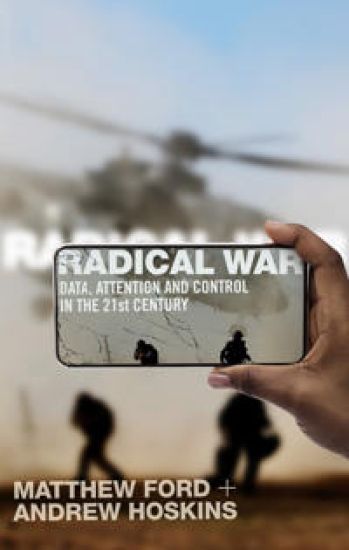
Radical War: Data, Attention and Control in the Twenty-First Century

Radical War: Data, Attention and Control in the Twenty-First Century

Matthew Ford; Andrew Hoskins

Oxford University Press
2022
nidottu
This book examines the digital explosion that has ripped across the battlefield, weaponizing our attention and making everyone a participant in wars without end. "Smart" devices, apps, archives and algorithms remove the bystander from war, collapsing the distinctions between audience and actor, soldier and civilian, media and weapon. This has ruptured our capacity to make sense of war. Now we are all either victims or perpetrators. In Radical War, Ford and Hoskins reveal how contemporary war is legitimized, planned, fought, experienced, remembered and forgotten in a continuous and connected way, through digitally saturated fields of perception. Plotting the emerging relationship between data, attention and the power to control war, the authors chart the complex digital and human interdependencies that sustain political violence today. Through a unique, interdisciplinary lens, they map our disjointed experiences of conflict and illuminate this dystopian new ecology of war.
Radical War

Radical War

Matthew Ford; Andrew Hoskins

C HURST CO PUBLISHERS LTD
2022
nidottu
This book examines the digital explosion that has ripped across the battlefield, weaponising our attention and making everyone a participant in wars without end. 'Smart' devices, apps, archives and algorithms remove the bystander from war, collapsing the distinctions between audience and actor, soldier and civilian, media and weapon. This has ruptured our capacity to make sense of war. Now we are all either victims or perpetrators. In 'Radical War', Ford and Hoskins reveal how contemporary war is legitimised, planned, fought, experienced, remembered and forgotten in a continuous and connected way, through digitally saturated fields of perception. Plotting the emerging relationship between data, attention and the power to control war, the authors chart the complex digital and human interdependencies that sustain political violence today. Through a unique, interdisciplinary lens, they map our disjointed experiences of conflict and illuminate this dystopian new ecology of war.
Weapon of Choice

Weapon of Choice

Matthew Ford

C Hurst Co Publishers Ltd
2017
sidottu
This book examines Western military technological innovation through the lens of developments in small arms during the twentieth century. These weapons have existed for centuries, appear to have matured only incrementally and might seem unlikely technologies for investigating the trajectory of military-technical change. Their relative simplicity, however, makes it easy to use them to map patterns of innovation within the military- industrial complex. Advanced technologies may have captured the military imagination, offering the possibility of clean and decisive outcomes, but it is the low technologies of the infantryman that can help us develop an appreciation for the dynamics of military-technical change. Tracing the path of innovation from battlefield to back office, and from industry to alliance partner, Ford develops insights into the way that small arms are socially constructed. He thereby exposes the mechanics of power across the military- industrial complex. This in turn reveals that shifting power relations between soldiers and scientists, bureaucrats and engineers, have allowed the private sector to exploit infantry status anxiety and shape soldier weapon preferences. Ford's analysis allows us to draw wider conclusions about how military innovation works and what social factors