Kirjojen hintavertailu. Mukana 12 309 079 kirjaa ja 12 kauppaa.

Kirjailija

Matthew Gabriele

Kirjat ja teokset yhdessä paikassa: 8 kirjaa, julkaisuja vuosilta 2011-2026, suosituimpien joukossa Edades Brillantes, Las. Vertaile teosten hintoja ja tarkista saatavuus suomalaisista kirjakaupoista.

8 kirjaa

Kirjojen julkaisuhaarukka 2011-2026.

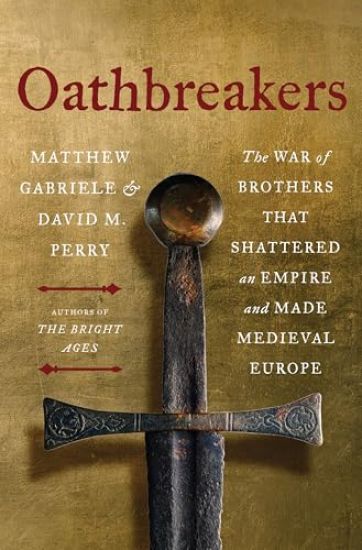
Oathbreakers

Oathbreakers

Matthew Gabriele; David M. Perry

HARPERCOLLINS PUBLISHERS INC
2026
nidottu
“Fascinating.” — The Wall Street Journal“An enlightening portrait of the medieval mindset.” — Publishers WeeklyThe authors of The Bright Ages return with a “real-life Game of Thrones” (New York Times Book Review)—the story of the Carolingian Civil War, a bloody, protracted battle pitting brother against brother, father against son, that would end an empire, upend a continent, and redefine the future of Europe By the early ninth century, the Carolingian empire was at the height of its power. The Franks, led by Charlemagne, had built the largest European domain since Rome in its heyday. Though they jockeyed for power, prestige, and profit, the Frankish elites enjoyed political and cultural consensus. But just two generations later, their world was in shambles. Civil war, once an unthinkable threat, had erupted after Louis the Pious’s sons tried to overthrow him—and then placed their knives at the other’s neck. Families who had once charged into battle together now drew each other’s blood.The Carolingian Civil War would rage for years as kings fought kings, brother faced off against brother, and sons challenged fathers. Oathbreakers is the dramatic history of this brutal, turbulent time. Medieval historians David M. Perry and Matthew Gabriele illuminate what happens when a once unshakeable political and cultural order breaks down and long suppressed tensions flare into deadly violence. Drawn from rich primary sources, featuring a wide cast of characters, packed with dramatic twists and turns, this is history that rivals the greatest fictional epics—with consequences that continue to shape our own world.Oathbreakers offers lessons of what deep cracks in a once-stable social and political fabric might reveal, and the bloody consequences of disagreeing on facts and reality. The Civil War at the heart of this tale asks: who is “in” and who is “out”? And what happens when things fall apart?
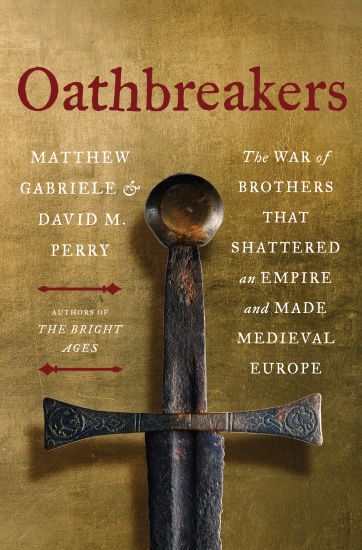
Oathbreakers

Oathbreakers

Matthew Gabriele; David M. Perry

HARPERCOLLINS PUBLISHERS INC
2025
sidottu
“Fascinating.” — The Wall Street Journal“An enlightening portrait of the medieval mindset.” — Publishers WeeklyThe authors of The Bright Ages return with a “real-life Game of Thrones” (New York Times Book Review)—the story of the Carolingian Civil War, a bloody, protracted battle pitting brother against brother, father against son, that would end an empire, upend a continent, and redefine the future of Europe By the early ninth century, the Carolingian empire was at the height of its power. The Franks, led by Charlemagne, had built the largest European domain since Rome in its heyday. Though they jockeyed for power, prestige, and profit, the Frankish elites enjoyed political and cultural consensus. But just two generations later, their world was in shambles. Civil war, once an unthinkable threat, had erupted after Louis the Pious’s sons tried to overthrow him—and then placed their knives at the other’s neck. Families who had once charged into battle together now drew each other’s blood.The Carolingian Civil War would rage for years as kings fought kings, brother faced off against brother, and sons challenged fathers. Oathbreakers is the dramatic history of this brutal, turbulent time. Medieval historians David M. Perry and Matthew Gabriele illuminate what happens when a once unshakeable political and cultural order breaks down and long suppressed tensions flare into deadly violence. Drawn from rich primary sources, featuring a wide cast of characters, packed with dramatic twists and turns, this is history that rivals the greatest fictional epics—with consequences that continue to shape our own world.Oathbreakers offers lessons of what deep cracks in a once-stable social and political fabric might reveal, and the bloody consequences of disagreeing on facts and reality. The Civil War at the heart of this tale asks: who is “in” and who is “out”? And what happens when things fall apart?
Svetloe Srednevekove. Novyj vzgljad na istoriju Evropy V-XIV vekov
Srednevekovyj mir napolnen solnechnym svetom cherez vitrazhnoe steklo. Usypannye dragotsennymi kamnjami zolotye relikvarii sverkajut pered prokhodjaschimi vojskami. Sosuschestvujut, vojujut i torgujut drug s drugom ljudi raznykh religij i verovanij. Zdes luchshie morekhody - vikingi, a na mirovom rynke v osobennoj tsene shelk, spetsii, blagovonija, dragotsennye metally, mekh, oruzhie i poraboschennye ljudi.Geografija Srednevekovja obshirna. V to vremja kogda gluboko na severe naselenie zanjato szhiganiem svoikh pogibshikh v boju pravitelej vmeste s ikh poka esche zhivymi rabami v jarkom plameni posredi shirokogo ozera, na beregakh Sredizemnogo morja, utopaja v blagoukhanii ot tsvetenija trav, rozhdajutsja muzyka i izobrazitelnoe iskusstvo.Chitatel posetit i zagljanet vo vse ugolki Svetlogo Srednevekovja - ot okruzhennoj zelenju Ravenny do kholodnykh beregov Aljaski, projdet vmeste s karavanami po beskrajnim ravninam i polnovodnym rekam i, nakonets, sostavit svoe sobstvennoe otsenochnoe suzhdenie o pochti tysjacheletnej legendarnoj epokhe.Perevodchik: Karmanova E.
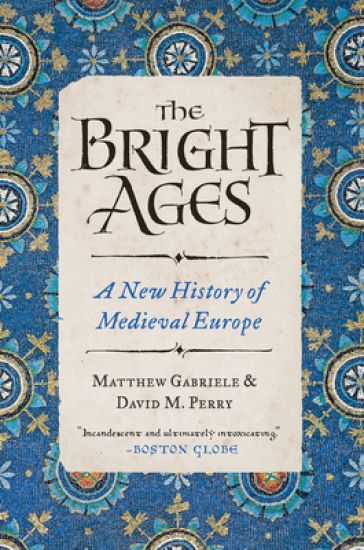
The Bright Ages

The Bright Ages

Matthew Gabriele; David M. Perry

HARPERCOLLINS PUBLISHERS INC
2022
nidottu
"The beauty and levity that Perry and Gabriele have captured in this book are what I think will help it to become a standard text for general audiences for years to come….The Bright Ages is a rare thing—a nuanced historical work that almost anyone can enjoy reading.”—Slate"Incandescent and ultimately intoxicating." —The Boston GlobeA lively and magisterial popular history that refutes common misperceptions of the European Middle Ages, showing the beauty and communion that flourished alongside the dark brutality—a brilliant reflection of humanity itself.The word “medieval” conjures images of the “Dark Ages”—centuries of ignorance, superstition, stasis, savagery, and poor hygiene. But the myth of darkness obscures the truth; this was a remarkable period in human history. The Bright Ages recasts the European Middle Ages for what it was, capturing this 1,000-year era in all its complexity and fundamental humanity, bringing to light both its beauty and its horrors. The Bright Ages takes us through ten centuries and crisscrosses Europe and the Mediterranean, Asia and Africa, revisiting familiar people and events with new light cast upon them. We look with fresh eyes on the Fall of Rome, Charlemagne, the Vikings, the Crusades, and the Black Death, but also to the multi-religious experience of Iberia, the rise of Byzantium, and the genius of Hildegard and the power of queens. We begin under a blanket of golden stars constructed by an empress with Germanic, Roman, Spanish, Byzantine, and Christian bloodlines and end nearly 1,000 years later with the poet Dante—inspired by that same twinkling celestial canopy—writing an epic saga of heaven and hell that endures as a masterpiece of literature today. The Bright Ages reminds us just how permeable our manmade borders have always been and of what possible worlds the past has always made available to us. The Middle Ages may have been a world “lit only by fire” but it was one whose torches illuminated the magnificent rose windows of cathedrals, even as they stoked the pyres of accused heretics. The Bright Ages contains an 8-page color insert.
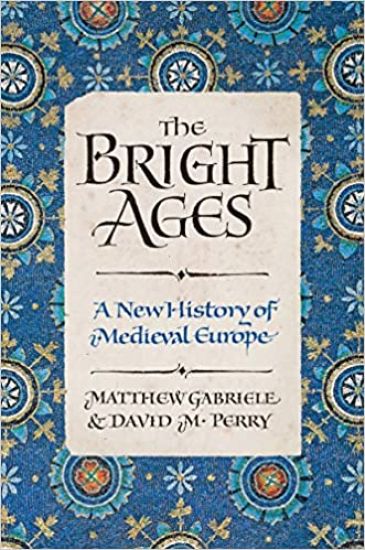
The Bright Ages

The Bright Ages

Matthew Gabriele; David M. Perry

HARPERCOLLINS PUBLISHERS INC
2022
sidottu
"The beauty and levity that Perry and Gabriele have captured in this book are what I think will help it to become a standard text for general audiences for years to come….The Bright Ages is a rare thing—a nuanced historical work that almost anyone can enjoy reading.”—Slate"Incandescent and ultimately intoxicating." —The Boston GlobeA lively and magisterial popular history that refutes common misperceptions of the European Middle Ages, showing the beauty and communion that flourished alongside the dark brutality—a brilliant reflection of humanity itself.The word “medieval” conjures images of the “Dark Ages”—centuries of ignorance, superstition, stasis, savagery, and poor hygiene. But the myth of darkness obscures the truth; this was a remarkable period in human history. The Bright Ages recasts the European Middle Ages for what it was, capturing this 1,000-year era in all its complexity and fundamental humanity, bringing to light both its beauty and its horrors. The Bright Ages takes us through ten centuries and crisscrosses Europe and the Mediterranean, Asia and Africa, revisiting familiar people and events with new light cast upon them. We look with fresh eyes on the Fall of Rome, Charlemagne, the Vikings, the Crusades, and the Black Death, but also to the multi-religious experience of Iberia, the rise of Byzantium, and the genius of Hildegard and the power of queens. We begin under a blanket of golden stars constructed by an empress with Germanic, Roman, Spanish, Byzantine, and Christian bloodlines and end nearly 1,000 years later with the poet Dante—inspired by that same twinkling celestial canopy—writing an epic saga of heaven and hell that endures as a masterpiece of literature today. The Bright Ages reminds us just how permeable our manmade borders have always been and of what possible worlds the past has always made available to us. The Middle Ages may have been a world “lit only by fire” but it was one whose torches illuminated the magnificent rose windows of cathedrals, even as they stoked the pyres of accused heretics. The Bright Ages contains an 8-page color insert.
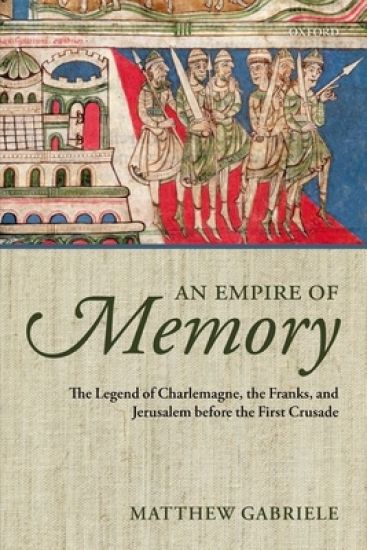
An Empire of Memory

An Empire of Memory

Matthew Gabriele

Oxford University Press
2013
nidottu
Beginning shortly after Charlemagne's death in 814, the inhabitants of his historical empire looked back upon his reign and saw in it an exemplar of Christian universality - Christendom. They mapped contemporary Christendom onto the past and so, during the ninth, tenth, and eleventh centuries, the borders of his empire grew with each retelling, almost always including the Christian East. Although the pull of Jerusalem on the West seems to have been strong during the eleventh century, it had a more limited effect on the Charlemagne legend. Instead, the legend grew during this period because of a peculiar fusion of ideas, carried forward from the ninth century but filtered through the social, cultural, and intellectual developments of the intervening years. Paradoxically, Charlemagne became less important to the Charlemagne legend. The legend became a story about the Frankish people, who believed they had held God's favour under Charlemagne and held out hope that they could one day reclaim their special place in sacred history. Indeed, popular versions of the Last Emperor legend, which spoke of a great ruler who would reunite Christendom in preparation for the last battle between good and evil, promised just this to the Franks. Ideas of empire, identity, and Christian religious violence were potent reagents. The mixture of these ideas could remind men of their Frankishness and move them, for example, to take up arms, march to the East, and reclaim their place as defenders of the faith during the First Crusade. An Empire of Memory uses the legend of Charlemagne, an often-overlooked current in early medieval thought, to look at how the contours of the relationship between East and West moved across centuries, particularly in the period leading up to the First Crusade.
An Empire of Memory

An Empire of Memory

Matthew Gabriele

Oxford University Press
2011
sidottu
Beginning shortly after Charlemagne's death in 814, the inhabitants of his historical empire looked back upon his reign and saw in it an exemplar of Christian universality - Christendom. They mapped contemporary Christendom onto the past and so, during the ninth, tenth, and eleventh centuries, the borders of his empire grew with each retelling, almost always including the Christian East. Although the pull of Jerusalem on the West seems to have been strong during the eleventh century, it had a more limited effect on the Charlemagne legend. Instead, the legend grew during this period because of a peculiar fusion of ideas, carried forward from the ninth century but filtered through the social, cultural, and intellectual developments of the intervening years. Paradoxically, Charlemagne became less important to the Charlemagne legend. The legend became a story about the Frankish people, who believed they had held God's favour under Charlemagne and held out hope that they could one day reclaim their special place in sacred history. Indeed, popular versions of the Last Emperor legend, which spoke of a great ruler who would reunite Christendom in preparation for the last battle between good and evil, promised just this to the Franks. Ideas of empire, identity, and Christian religious violence were potent reagents. The mixture of these ideas could remind men of their Frankishness and move them, for example, to take up arms, march to the East, and reclaim their place as defenders of the faith during the First Crusade. An Empire of Memory uses the legend of Charlemagne, an often-overlooked current in early medieval thought, to look at how the contours of the relationship between East and West moved across centuries, particularly in the period leading up to the First Crusade.