Kirjojen hintavertailu. Mukana 12 595 353 kirjaa ja 12 kauppaa.

Kirjailija

Matthew L. Jones

Kirjat ja teokset yhdessä paikassa: 6 kirjaa, julkaisuja vuosilta 2006-2026, suosituimpien joukossa Reckoning with Matter. Vertaile teosten hintoja ja tarkista saatavuus suomalaisista kirjakaupoista.

6 kirjaa

Kirjojen julkaisuhaarukka 2006-2026.

Reckoning with Matter

Reckoning with Matter

Matthew L. Jones

THE UNIVERSITY OF CHICAGO PRESS
2026
nidottu
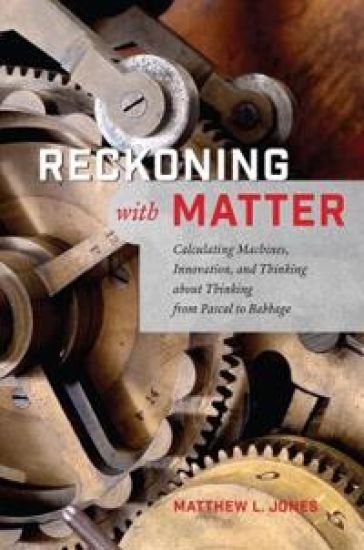
From Blaise Pascal in the 1600s to Charles Babbage in the first half of the nineteenth century, inventors struggled to create the first calculating machines. All failed—but that does not mean we cannot learn from the trail of ideas, correspondence, machines, and arguments they left behind. In Reckoning with Matter, Matthew L. Jones draws on the remarkably extensive and well-preserved records of the quest to explore the concrete processes involved in imagining, elaborating, testing, and building calculating machines. He explores the writings of philosophers, engineers, and craftspeople, showing how they thought about technical novelty, their distinctive areas of expertise, and ways they could coordinate their efforts. In doing so, Jones argues that the conceptions of creativity and making they exhibited are often more incisive—and more honest—than those that dominate our current legal, political, and aesthetic culture.
How Data Happened

How Data Happened

Chris Wiggins; Matthew L. Jones

WW NORTON CO
2024
nidottu
From facial recognition—capable of checking people into flights or identifying undocumented residents—to automated decision systems that inform who gets loans and who receives bail, each of us moves through a world determined by data-empowered algorithms. But these technologies didn’t just appear: they are part of a history that goes back centuries, from the census enshrined in the US Constitution to the birth of eugenics in Victorian Britain to the development of Google search. Expanding on the popular course they created at Columbia University, Chris Wiggins and Matthew L. Jones illuminate the ways in which data has long been used as a tool and a weapon in arguing for what is true, as well as a means of rearranging or defending power. They explore how data was created and curated, as well as how new mathematical and computational techniques developed to contend with that data serve to shape people, ideas, society, military operations and economies. Although technology and mathematics are at its heart, the story of data ultimately concerns an unstable game among states, corporations and people. How were new technical and scientific capabilities developed; who supported, advanced or funded these capabilities or transitions; and how did they change who could do what, from what and to whom? Wiggins and Jones focus on these questions as they trace data’s historical arc and look to the future. By understanding the trajectory of data—where it has been and where it might yet go—Wiggins and Jones argue that we can understand how to bend it to ends that we collectively choose, with intentionality and purpose.
How Data Happened

How Data Happened

Chris Wiggins; Matthew L. Jones

WW NORTON CO
2023
sidottu
From facial recognition—capable of checking us onto flights or identifying undocumented residents—to automated decision systems that inform everything from who gets loans to who receives bail, each of us moves through a world determined by data-empowered algorithms. But these technologies didn’t just appear: they are part of a history that goes back centuries, from the birth of eugenics in Victorian Britain to the development of Google search. Expanding on the popular course they created at Columbia University, Chris Wiggins and Matthew Jones illuminate the ways in which data has long been used as a tool and a weapon in arguing for what is true, as well as a means of rearranging or defending power. By understanding the trajectory of data—where it has been and where it might yet go—Wiggins and Jones argue that we can understand how to bend it to ends that we collectively choose, with intentionality and purpose.
Reckoning with Matter

Reckoning with Matter

Matthew L. Jones

University of Chicago Press
2016
sidottu
From Blaise Pascal in the 1600s to Charles Babbage in the first half of the nineteenth century, inventors struggled to create the first calculating machines. All failed but that doesn't mean we can't learn from the trail of ideas, correspondence, machines, and arguments they left behind. In Reckoning with Matter, Matthew Jones draws on the remarkably extensive and well-preserved records of the quest to explore the concrete processes involved in imagining, elaborating, testing, and building calculating machines. He explores the writings of philosophers, engineers, and craftspeople, showing how they thought about technical novelty, their distinctive areas of expertise, and ways they could coordinate their efforts, to argue that the conceptions of creativity and making they exhibited are often more incisive and more honest than those that dominate our current legal, political, and aesthetic culture.
The Good Life in the Scientific Revolution

The Good Life in the Scientific Revolution

Matthew L. Jones

University of Chicago Press
2006
sidottu
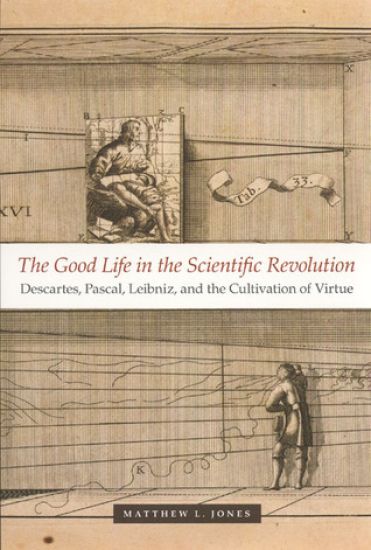
Amid the unrest, dislocation, and uncertainty of seventeenth-century Europe, readers seeking consolation and assurance turned to philosophical and scientific books that offered ways of conquering fears and training the mind—guidance for living a good life.The Good Life in the Scientific Revolution presents a triptych showing how three key early modern scientists, René Descartes, Blaise Pascal, and Gottfried Leibniz, envisioned their new work as useful for cultivating virtue and for pursuing a good life. Their scientific and philosophical innovations stemmed in part from their understanding of mathematics and science as cognitive and spiritual exercises that could create a truer mental and spiritual nobility. In portraying the rich contexts surrounding Descartes’ geometry, Pascal’s arithmetical triangle, and Leibniz’s calculus, Matthew L. Jones argues that this drive for moral therapeutics guided important developments of early modern philosophy and the Scientific Revolution.
The Good Life in the Scientific Revolution

The Good Life in the Scientific Revolution

Matthew L. Jones

University of Chicago Press
2006
nidottu
Amid the unrest, dislocation, and uncertainty of seventeenth-century Europe, readers seeking consolation and assurance turned to philosophical and scientific books that offered ways of conquering fears and training the mind—guidance for living a good life.The Good Life in the Scientific Revolution presents a triptych showing how three key early modern scientists, René Descartes, Blaise Pascal, and Gottfried Leibniz, envisioned their new work as useful for cultivating virtue and for pursuing a good life. Their scientific and philosophical innovations stemmed in part from their understanding of mathematics and science as cognitive and spiritual exercises that could create a truer mental and spiritual nobility. In portraying the rich contexts surrounding Descartes’ geometry, Pascal’s arithmetical triangle, and Leibniz’s calculus, Matthew L. Jones argues that this drive for moral therapeutics guided important developments of early modern philosophy and the Scientific Revolution.