Kirjojen hintavertailu. Mukana 12 595 353 kirjaa ja 12 kauppaa.

Kirjailija

Matthew Levering

Kirjat ja teokset yhdessä paikassa: 59 kirjaa, julkaisuja vuosilta 2002-2026, suosituimpien joukossa In Your Light We See Light. Vertaile teosten hintoja ja tarkista saatavuus suomalaisista kirjakaupoista.

59 kirjaa

Kirjojen julkaisuhaarukka 2002-2026.

In Your Light We See Light

In Your Light We See Light

Paul C Uyen; Kevin J Vanhoozer; Matthew Levering

Faithlife Corporation
2025
pokkari
"And this is eternal life, that they know you, the only true God, and Jesus Christ whom you have sent." --John 17:3 In Your Light We See Light: A Reformed Theology of Divine Illumination argues that the doctrine of illumination is Trinitarian and participatory. We cannot know God apart from God. The Triune God transfers us from darkness to light, so we may see him, ourselves, and the world anew. Illumination is not merely cognitive; it turns a heart of stone into a heart of flesh. It involves life with God--hearing and being transformed by God's word. Paul C. Uyen begins with Scripture before retrieving the doctrine of illumination from Orthodox, Roman Catholic, and Reformed traditions, and revealing their areas of tension. Uyen articulates a Reformed perspective in conversation with other traditions.
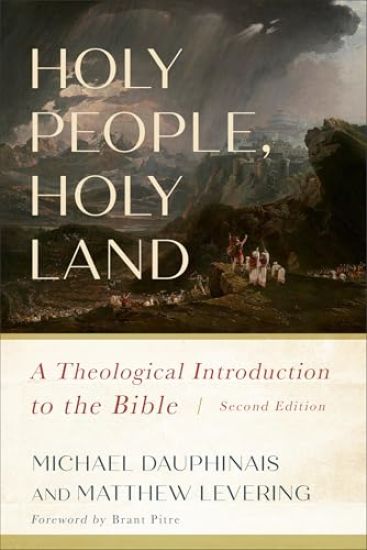
Holy People, Holy Land

Holy People, Holy Land

Michael Dauphinais; Matthew Levering; Brant Pitre

BAKER PUBLISHING GROUP
2026
nidottu
How should we understand the Bible's many intricate themes across such a breadth of history and writings? This new edition of a successful textbook offers a unified theological vision of the Old and New Testaments. With up-to-date attention to biblical scholarship, the authors present the theological meaning of the Bible from Genesis to Revelation. God shares his perfect love with his creatures in covenantal relationships. For such love to be realized, the people must love God fully with all their hearts and minds--become a holy people--and experience the indwelling presence of God--live in a holy land. The authors trace these twin themes through Abraham's promised descendants and land, Moses's law and tabernacle, David's kingship and temple, and ultimately the Son of God's incarnation and sending of his Holy Spirit. Marked by focused presentations of central books of the Bible, this book shows how the themes of holy people and holy land hold together the biblical story. Attuned to creedal theology, it is accessible to the beginner and valuable to more advanced readers. The second edition has been updated throughout and includes a new foreword by Brant Pitre. This book gives readers the tools to better understand Scripture by showing God's consistent purpose, as revealed by Scripture, to re-create his children so they might dwell with him in a communion of holiness and love through Jesus Christ. It is of special interest to Catholic readers while speaking to all Christians.
Reconfiguring Thomistic Christology

Reconfiguring Thomistic Christology

Matthew Levering

Cambridge University Press
2026
pokkari
In this book, Matthew Levering unites eschatologically charged biblical Christology with metaphysical and dogmatic Thomistic Christology, by highlighting the typological Christologies shared by Scripture, the Church Fathers, and Aquinas. Like the Church Fathers, Aquinas often reflected upon Jesus in typological terms (especially in his biblical commentaries), just as the New Testament does. Showing the connections between New Testament, Patristic, and Aquinas' own typological portraits of Jesus, Levering reveals how the eschatological Jesus of biblical scholarship can be integrated with Thomistic Christology. His study produces a fully contemporary Thomistic Christology that unites ressourcement and Thomistic modes of theological inquiry, thereby bridging two schools of contemporary theology that too often are imagined as rivals. Levering's book reflects and augments the current resurgence of Thomistic Christology as an ecumenical project of relevance to all Christians.
Paul in the Summa Theologiae

Paul in the Summa Theologiae

Matthew Levering

THE CATHOLIC UNIVERSITY OF AMERICA PRESS
2025
nidottu
Aquinas's commentaries on St. Paul are well known and have received significant attention in the past few years. It is widely known, too, that Aquinas quotes Paul often in the Summa theologiae. This aspect of the Summa, however, has not been studied in detail. This book seeks to fill that lacuna in scholarship. The book's brief introduction treats Aquinas as a biblically erudite theologian, and offers some basic statistical data regarding his use of Paul in the Summa theologiae. The book's nine chapters track in detail Aquinas's use of Pauline quotations in his theological argumentation. The first six chapters examine Paul in particular ""treatises:"" the triune God, grace, charity, the virtue of religion, the Passion of Christ, and baptism. The last three chapters investigate Pauline texts as they are used throughout the Summa: Romans 1:20, 1 Corinthians 13, and Philippians 2:5–11. Chapters 1–3 are organized by the order of the treatise; chapters 4–6 are organized by order of the Pauline letters. This multi- faceted procedure provides a rich, detailed picture of Aquinas's use of Paul in the Summa. The guiding question is whether, and if so how, we can describe Aquinas's theology as Pauline or as deeply influenced by Paul. Aquinas does not seek to understand Paul's theology in its Second Temple context, and Aquinas often uses Pauline texts in a way that takes them out of context or that uses them in response to a theological problem unknown to Paul. Levering argues that Aquinas's theology is indeed deeply Pauline, offering ample evidence that Aquinas captures the central Pauline themes and gives them a central place in his own theology.
Love Seeking Understanding

Love Seeking Understanding

Matthew Levering; Michael Waldstein

THE CATHOLIC UNIVERSITY OF AMERICA PRESS
2025
sidottu
As Catholic theology emerged from the crisis of modernity, theologians turned to both patristic and medieval sources to recover lost wisdom from the theological tradition, and adapt it to the challenges of an age that separated reason from faith, the practice of theology from the spiritual life. In time, Thomas Aquinas and Hans Urs von Balthasar became the patrons of two very different approaches to this challenge. St. Thomas Aquinas offering contemporary theologians an approach rooted in the patristic-medieval Latin synthesis of Augustine and Aristotle that also draws on the East, and von Balthasar offering contemporary theologians a patristic-modern approach rooted in the Eastern theological synthesis of Maximus the Confessor and Erich Pzrywara, that also draws on the West. Although Aquinas and Balthasar, together with their contemporary followers, sought to unite reason and faith, theology and prayer, contemporary Thomists and Balthasarians have tended to diverge widely from one another, often with a polemical spirit. How should one understand the theological genius of St. Thomas Aquinas and Hans Urs von Balthasar today? How can two of the greatest theologians in the Catholic tradition be brought together in more fruitful and peaceful dialogue? This edited volume comprises contributions from a range of scholars who elucidate the depth and breadth of two of the most prominent figures of the Catholic tradition today. A scholar from each school of thought contributes an essay on a particular theme: Metaphysics, Trinity, Revelation, Christology, Anthropology, Evil, and Eschatology. By presenting the two essays side by side, this volume provides the contemporary reader with an opportunity to better engage both thinkers and understand disagreements and areas for constructive movement forward. The tone of the volume is intentionally irenic, seeking points of constructive dialogue, and opening new pathways to the renewal of sapiential theology through a fruitful synthesis of Thomistic and Balthasarian thought.
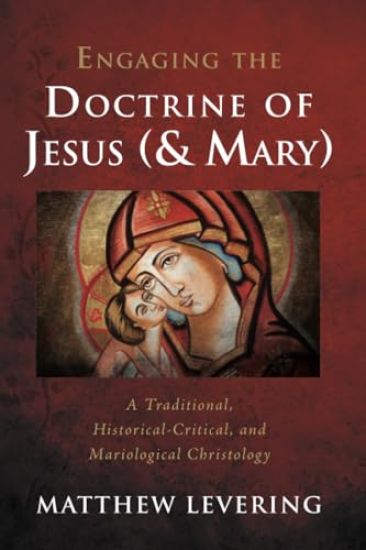
Engaging the Doctrine of Jesus (and Mary)

Engaging the Doctrine of Jesus (and Mary)

Matthew Levering

Cascade Books
2025
pokkari
The six chapters of this book focus upon Jesus' conception and birth from a virgin, his authoritative teaching, his miracles, his cross, his resurrection, and his ascension. The purpose of the book is to articulate and defend the truth of these salvific mysteries as presented to us in Scripture. In addition to conversing extensively with historical-critical biblical scholarship, the chapters make recourse to the theological tradition from the church fathers onward, with Thomas Aquinas as a touchstone. Levering seeks to make a case for believing in Jesus. At the same time, he shows how each of these mysteries is intimately linked with a truth about Mary the Mother of Jesus, thus arguing for the integral relationship of Christology and Mariology. Mary enacts the reception of the Lord by God's faithful people: the New Adam never chooses to be without the New Eve in God's new covenant family. The Christology offered in this book is therefore both attuned to historical studies of Jesus and Second Temple Judaism and, at the same time, deeply traditional in a contemporary Catholic and ecumenical way.
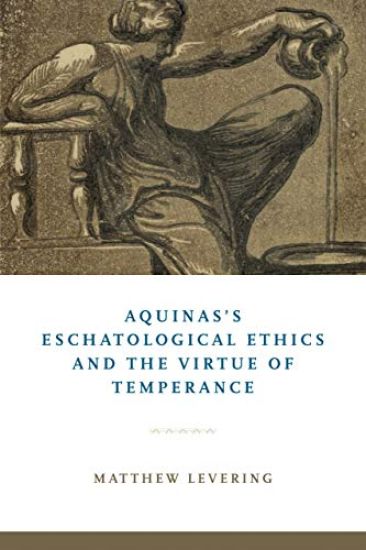
Aquinas's Eschatological Ethics and the Virtue of Temperance

Aquinas's Eschatological Ethics and the Virtue of Temperance

Matthew Levering

UNIVERSITY OF NOTRE DAME PRESS
2025
nidottu
Matthew Levering offers a biblical and Thomistic portrait of the cardinal virtue of temperance and its allied virtues, in dialogue with an ecumenical range of theologians and scholars. In Aquinas's Eschatological Ethics and the Virtue of Temperance, Levering argues that Catholic ethics make sense only in light of the biblical worldview that Jesus has inaugurated the kingdom of God by pouring out his spirit. Jesus has made it possible for us to know and obey God's law for human flourishing as individuals and communities. He has reoriented our lives toward the goal of beatific communion with him in charity, which affects the exercise of the moral virtues that pertain to human flourishing. Without the context of the inaugurated kingdom, Catholic ethics as traditionally conceived will seem like an effort to find a middle ground between legalistic rigorism and relativistic laxism, which is especially the case with the virtue of temperance, the focus of Levering's book. After an opening chapter on the eschatological/biblical character of Catholic ethics, the ensuing chapters engage Aquinas's theology of temperance in the Summa theologiae, which identifies and examines a number of virtues associated with temperance. Levering demonstrates that the theology of temperance is profoundly biblical, and that Aquinas's theology of temperance relies for its intelligibility upon Christ's inauguration of the kingdom of God as the graced fulfillment of our created nature. The book develops new vistas for scholars and students interested in moral theology.
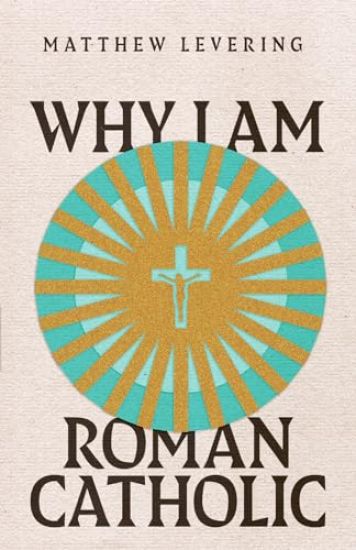
Why I Am Roman Catholic

Why I Am Roman Catholic

Matthew Levering

IVP Academic
2024
nidottu
The Roman Catholic tradition in Christianity is breathtaking, complex, and rich in insight about what it means to follow God. But what does it look like to claim this tradition as one's own? And how does this intersect with the reality of our daily and personal lives?In this vulnerable and succinct volume, theologian Matthew Levering addresses the heart of these questions. Bringing together personal memoir and theology, he reflects on why he identifies as Roman Catholic, and considers how this tradition addresses what it means to follow and participate in the life of the Triune God as a finite creature. Rather than shy away from the challenges this tradition presents, Levering presses into these challenges to offer an honest yet hopeful account of being Roman Catholic.'The Ecumenical Dialogue Series' seeks to foster ecumenical dialogue across theological differences. In each volume, contributors explore what it means to be Christian, what it means to identify with a specific tradition in Christianity (Protestant, Roman Catholic, and Eastern Orthodox), the challenges and benefits of their tradition, and how they can create dialogue and unity across historically tense division.
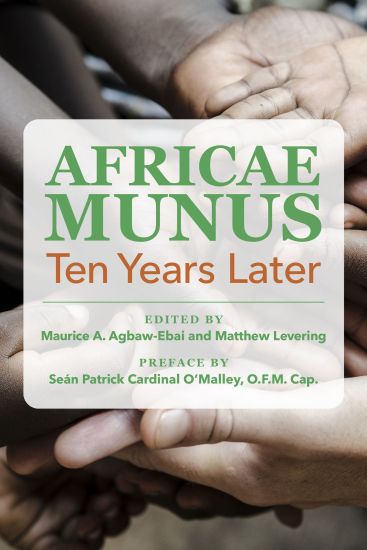
Africae Munus – Ten Years Later

Africae Munus – Ten Years Later

Maurice Ashley Agbaw–ebai; Matthew Levering

ST AUGUSTINE'S PRESS
2023
sidottu
With great foresight and vision for the Church, Pope Emeritus Benedict XVI carefully integrated theological, catechetical and pastoral themes in the Post-Synodal Apostolic Exhortation, Africae Munus. Maurice A. Agbaw-Ebai and Matthew Levering, in the introduction to this collection of reflections and studies focused on the Pope Emeritus’ themes, affirm the African continent’s status as a global center for the growth of the Catholic Church in the twenty-first century and the future of the international Catholic community. Building on the vitality and enthusiasm of the Church in Africa, it is important to lift their faith through scholarly research and academic reflections. We cannot fully appreciate the dedication, commitment and perseverance of the Catholic community throughout the African continent if we do not know the truth of their sufferings and persecution and understand their resilience in the light of faith. This collection, drawn from the halls of academia, provides an important contribution to the understanding and advancement of Catholic Africa, following the insights and enlightenment of Pope Emeritus Benedict. It is my hope that these essays will enrich your understanding and experience of the Catholic faith. — From the Preface by Seán Patrick Cardinal O’Malley
Ezra & Nehemiah

Ezra & Nehemiah

Matthew Levering

Brazos Press
2023
nidottu
This volume, like each in the Brazos Theological Commentary on the Bible, is designed to serve the church-through aid in preaching, teaching, study groups, and so forth-and demonstrate the continuing intellectual and practical viability of theological interpretation of the Bible.
Reconfiguring Thomistic Christology

Reconfiguring Thomistic Christology

Matthew Levering

Cambridge University Press
2023
sidottu
In this book, Matthew Levering unites eschatologically charged biblical Christology with metaphysical and dogmatic Thomistic Christology, by highlighting the typological Christologies shared by Scripture, the Church Fathers, and Aquinas. Like the Church Fathers, Aquinas often reflected upon Jesus in typological terms (especially in his biblical commentaries), just as the New Testament does. Showing the connections between New Testament, Patristic, and Aquinas' own typological portraits of Jesus, Levering reveals how the eschatological Jesus of biblical scholarship can be integrated with Thomistic Christology. His study produces a fully contemporary Thomistic Christology that unites ressourcement and Thomistic modes of theological inquiry, thereby bridging two schools of contemporary theology that too often are imagined as rivals. Levering's book reflects and augments the current resurgence of Thomistic Christology as an ecumenical project of relevance to all Christians.
Africae Munus – Ten Years Later

Africae Munus – Ten Years Later

Maurice Ashley Agbaw–ebai; Matthew Levering

ST AUGUSTINE'S PRESS
2022
nidottu
With great foresight and vision for the Church, Pope Emeritus Benedict XVI carefully integrated theological, catechetical and pastoral themes in the Post-Synodal Apostolic Exhortation, Africae Munus. Maurice A. Agbaw-Ebai and Matthew Levering, in the introduction to this collection of reflections and studies focused on the Pope Emeritus’ themes, affirm the African continent’s status as a global center for the growth of the Catholic Church in the twenty-first century and the future of the international Catholic community. Building on the vitality and enthusiasm of the Church in Africa, it is important to lift their faith through scholarly research and academic reflections. We cannot fully appreciate the dedication, commitment and perseverance of the Catholic community throughout the African continent if we do not know the truth of their sufferings and persecution and understand their resilience in the light of faith. This collection, drawn from the halls of academia, provides an important contribution to the understanding and advancement of Catholic Africa, following the insights and enlightenment of Pope Emeritus Benedict. It is my hope that these essays will enrich your understanding and experience of the Catholic faith. — From the Preface by Seán Patrick Cardinal O’Malley
Mary's Bodily Assumption

Mary's Bodily Assumption

Matthew Levering

UNIVERSITY OF NOTRE DAME PRESS
2022
sidottu
In Mary's Bodily Assumption, Matthew Levering presents a contemporary explanation and defense of the Catholic doctrine of Mary's bodily Assumption. He asks: How does the Church justify a doctrine that does not have explicit biblical or first-century historical evidence to support it? With the goal of exploring this question more deeply, he divides his discussion into two sections, one historical and the other systematic. Levering's historical section aims to retrieve the rich Mariological doctrine of the mid-twentieth century. He introduces the development of Mariology in Catholic Magisterial documents, focusing on Pope Pius XII's encyclical Munificentissimus Deus of 1950, in which the bodily Assumption of Mary was dogmatically defined, and two later Magisterial documents, Vatican II's Lumen Gentium and Pope John Paul II's Redemptoris Mater. Levering addresses the work of the neo-scholastic theologians Joseph Duhr, Aloïs Janssens, and Réginald Garrigou-Lagrange before turning to the great theologians of the nouvelle théologie—Karl Rahner, Hans Urs von Balthasar, Louis Bouyer, Joseph Ratzinger—and their emphasis on biblical typology. Using John Henry Newman as a guide, Levering organizes his systematic section by the three pillars of the doctrine on which Mary's Assumption rests: biblical typology, the Church as authoritative interpreter of divine revelation under the guidance of the Holy Spirit, and the fittingness of Mary's Assumption in relation to the other mysteries of faith. Levering's ecumenical contribution is a significant engagement with Protestant biblical scholars and theologians; it is also a reclamation of Mariology as a central topic in Catholic theology.
The True Christian Life

The True Christian Life

Ambroise OP Gardeil; Matthew Levering

THE CATHOLIC UNIVERSITY OF AMERICA PRESS
2022
nidottu
Although not well-known in the English-speaking world, Fr. Ambroise Gardeil, OP (1859-1931) was a Dominican of significant influence in French Catholic thought at the turn of the 20th century. Conservative theologians like Frs. Reginald Garrigou-Lagrange, OP, Michel Labourdette, OP, Jean-Hervé Nicolas, OP and many others hailed him as a careful expositor of the supernaturality of faith, a defender of the theological nature of rational apologetics, and a spiritual master.The True Christian Life provides a thorough and stirring introduction to Fr. Gardeil's work in spiritual theology. The volume was originally published posthumously through the collaboration of Fr. Gardeil's nephew, Fr. Henri-Dominique Gardeil, OP and Jacques Maritain. Fr. Ambroise, prior to beginning work on his masterpiece on spiritual experience, La Structure de l'âme et l'expérience mystique, drafted nearly eight-hundred pages that would have set forth a full presentation of moral-ascetical theology. While drafting this massive work, his reflection on the soul's receptive capacity for grace led him to the two-volume study, La Structure, and he never was able to finish his original designs for a comprehensive study of the Christian moral-spiritual life. Soon after his death, his nephew gathered several essays from the Revue thomiste and Revue de Jeunes, along with a complete-but-unpublished study on prayer. Drafting a lengthy introduction on the basis of Fr. Ambroise's unpublished notes, Fr. Henri-Dominique assembled a volume of moral / spiritual theology that sets out the principles of many important themes: divinization through grace, Christian prudence /conscience, the virtue of religion, devotion, and prayer.In this volume, the reader will find a clear and rhetorically striking presentation of the central mysteries of the spiritual life, presented with stirring and beautiful rhetoric by a theological master from the Thomist tradition.
Engaging the Doctrine of the Holy Spirit – Love and Gift in the Trinity and the Church
A Distinguished Theologian on the Doctrine of the Holy SpiritDistinguished theologian Matthew Levering offers a historical examination of the doctrine of the Holy Spirit, defending an Augustinian model against various contemporary theological views. A companion piece to Levering's Engaging the Doctrine of Revelation, this work critically engages contemporary and classical doctrines of the Holy Spirit in dialogue with Orthodox and Reformed interlocutors. Levering makes a strong dogmatic case for conceiving of the Holy Spirit as love between Father and Son, given to the people of God as a gift.
Engaging the Doctrine of Creation: Cosmos, Creatures, and the Wise and Good Creator
Distinguished scholar Matthew Levering examines the doctrine of creation and its contemporary theological implications, critically engaging with classical and modern views in dialogue with Orthodox and Reformed interlocutors, among others. Moving from the Trinity to Christology, Levering takes up a number of themes pertaining to the doctrine of creation and focuses on how creation impacts our understandings of both the immanent and the economic Trinity. He also engages newer trends such as ecological theology.